



How Businesses Are Managing Delivery Surges Using LogiNext
Delivery surges are no longer seasonal exceptions. They are now part of everyday operations. Flash sales, festive demand, same-day delivery expectations, and rapid eCommerce growth have pushed businesses to rethink how they manage logistics. This is where modern delivery software becomes critical. Companies today need real-time visibility, route optimization, automated dispatching, and scalable delivery operations to stay competitive.
According to Statista, global eCommerce sales are expected to surpass $8 trillion by 2028. At the same time, customer expectations continue to rise. Consumers want faster deliveries, accurate ETAs, and seamless communication throughout the delivery journey. Businesses that fail to meet these expectations risk losing both revenue and customer trust.
To handle these growing pressures, enterprises across retail, food delivery, logistics, manufacturing, and distribution are adopting advanced delivery management software like LogiNext.
Why Delivery Surges Create Operational Challenges
A delivery surge impacts every part of the supply chain. During high-demand periods, businesses often struggle with:
- Delayed deliveries
- Driver allocation issues
- Increased fuel costs
- Poor route planning
- Failed deliveries
- Customer complaints
- Lack of real-time visibility
Traditional systems cannot handle these complexities efficiently. Manual dispatching and spreadsheet-based tracking create bottlenecks when order volumes increase rapidly.
This is why organizations are moving toward a centralized delivery management solution that automates operations and improves delivery efficiency at scale.
The Growing Need for Smarter Delivery Operations
Modern logistics requires more than just vehicle tracking. Businesses now need intelligent systems that can predict delays, optimize routes instantly, and manage thousands of deliveries simultaneously.
A robust delivery management system helps companies:
- Automated dispatch operations
- Improve delivery accuracy
- Reduce operational costs
- Increase fleet productivity
- Provide real-time customer updates
- Scale operations during peak demand
Research from McKinsey shows that companies using AI-driven logistics optimization can reduce transportation costs by up to 15%. This makes efficient delivery software a direct contributor to profitability.
How LogiNext Helps Businesses Manage Delivery Surges
1. Real-Time Route Optimization:
One of the biggest challenges during delivery spikes is inefficient route planning. Traffic congestion, sudden order increases, and delivery time windows can quickly disrupt schedules.
LogiNext uses AI-powered route optimization to dynamically assign routes based on:
- Traffic conditions
- Delivery priorities
- Driver availability
- Vehicle capacity
- Customer locations
This enables businesses to complete more deliveries with fewer resources. Real-time optimization also reduces fuel consumption and improves on-time delivery performance.
For businesses handling large order volumes, this type of delivery software becomes essential during peak periods.
2. Automated Dispatch Management:
Manual dispatching slows down operations during surges. Dispatch teams often struggle to assign deliveries quickly and accurately when order volumes spike unexpectedly.
LogiNext automates dispatch allocation using intelligent algorithms. Orders are assigned automatically based on operational efficiency and delivery constraints.
This delivery management software reduces human intervention and minimizes dispatching errors. Businesses can process thousands of deliveries without increasing operational complexity.
Automation also helps companies scale without significantly increasing manpower costs.
3. Live Delivery Tracking and Visibility:
Customers expect complete visibility after placing an order. They want accurate ETAs, real-time updates, and proactive communication.
LogiNext provides real-time tracking dashboards that allow businesses and customers to monitor deliveries continuously. This level of transparency reduces customer anxiety and improves delivery satisfaction.
A modern delivery management solution also enables businesses to identify delays immediately and take corrective action before issues escalate.
According to Salesforce research, 88% of customers say real-time communication significantly improves their delivery experience.
4. Better Fleet Utilization:
During delivery surges, poor fleet utilization increases operational costs rapidly. Vehicles may remain underutilized while others become overloaded.
LogiNext helps businesses maximize fleet efficiency by analyzing:
- Driver performance
- Vehicle usage
- Delivery density
- Route productivity
- Idle time
With the right delivery management system, companies can improve asset utilization and reduce unnecessary operational expenses. Efficient fleet management also contributes to sustainability goals by lowering fuel consumption and carbon emissions.
5. Scalable Operations During Peak Seasons:
Many businesses struggle during festive seasons, promotional events, and large-scale sales campaigns. Delivery demand can increase overnight. Traditional logistics systems often fail under pressure because they are not designed for rapid scalability.
LogiNext offers scalable delivery management software that supports high-volume operations without compromising service quality. Businesses can manage sudden spikes efficiently while maintaining delivery performance.
This flexibility is especially valuable for:
- eCommerce companies
- Retail chains
- Food delivery brands
- Courier businesses
- Third-party logistics providers
A scalable delivery management solution ensures operational continuity even during extreme demand fluctuations.
6. Data-Driven Decision Making:
Modern logistics depends heavily on data. Businesses need actionable insights to improve operations continuously. LogiNext provides analytics dashboards that help companies monitor:
- Delivery success rates
- Fleet productivity
- SLA compliance
- Driver efficiency
- Customer satisfaction metrics
- Delivery turnaround times
This visibility enables businesses to make informed operational decisions quickly. An intelligent delivery management system transforms logistics from a reactive process into a proactive strategy.
Why Businesses Are Prioritizing Efficient Delivery Software
The logistics industry is becoming increasingly competitive. Customers now compare brands based on delivery experience, not just product quality. Businesses investing in efficient delivery software gain several advantages:
- Faster deliveries
- Lower operational costs
- Improved customer retention
- Better resource allocation
- Higher operational visibility
- Increased scalability
Companies that continue relying on outdated systems may struggle to meet growing customer expectations. A modern delivery management software platform is no longer optional. It has become a strategic requirement for businesses aiming to scale sustainably.
Industries Benefiting from LogiNext
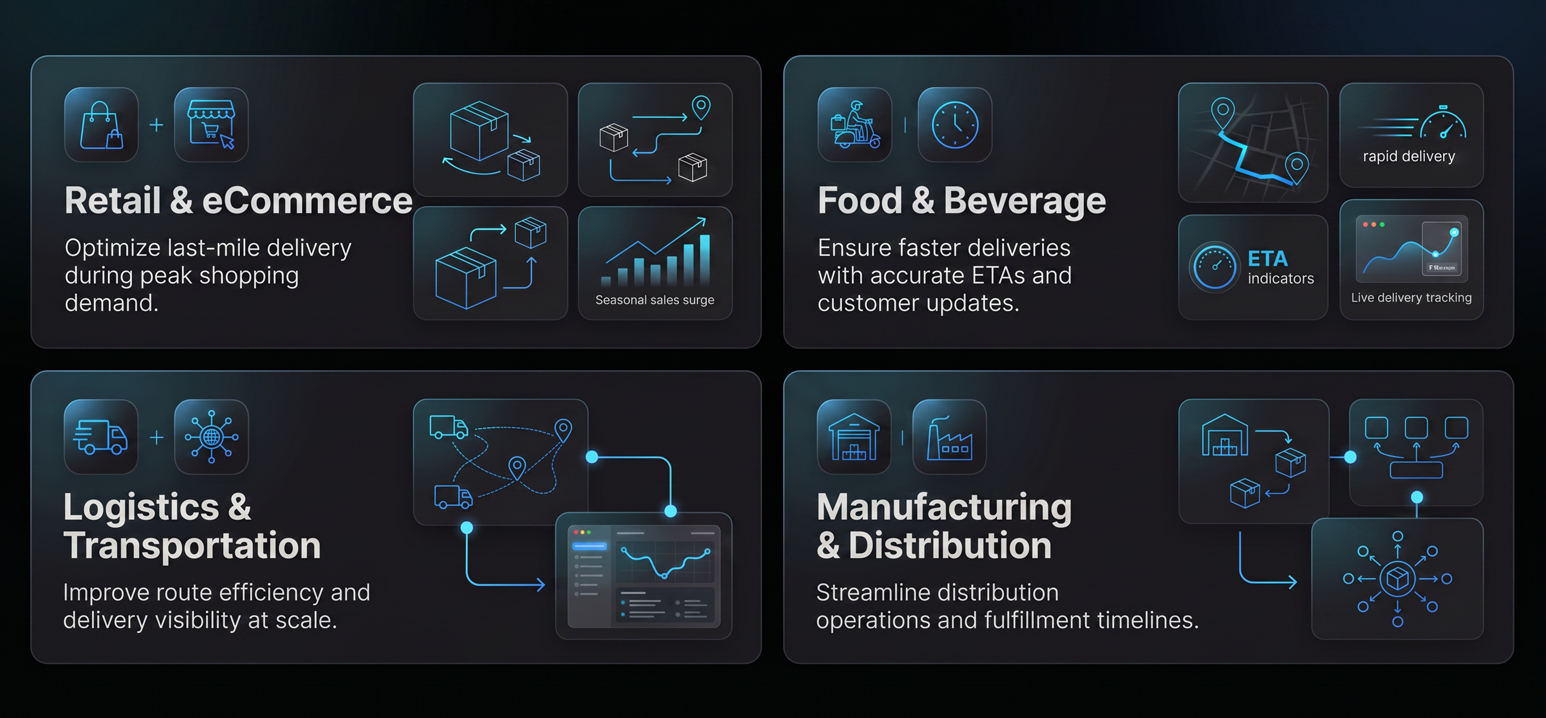
Across industries, businesses are adopting delivery management solutions to improve operational agility and reduce logistics inefficiencies.
Conclusion
Managing delivery surges requires more than additional manpower or larger fleets. Businesses need intelligent systems that can automate operations, optimize routes, and provide complete visibility across the delivery lifecycle.
LogiNext helps enterprises handle growing delivery demands with advanced delivery software built for speed, scalability, and operational efficiency. From automated dispatching to real-time tracking and AI-powered optimization, the platform enables businesses to stay ahead in an increasingly competitive logistics environment.
If your business is looking to improve delivery performance, reduce operational costs, and scale efficiently during peak demand periods, LogiNext can help transform your logistics operations with a smarter delivery management solution. Click on the red button to know more.
62

|

|

|




@LogiNext