




Why Logistics Enterprises Are Investing in Delivery Orchestration Platforms
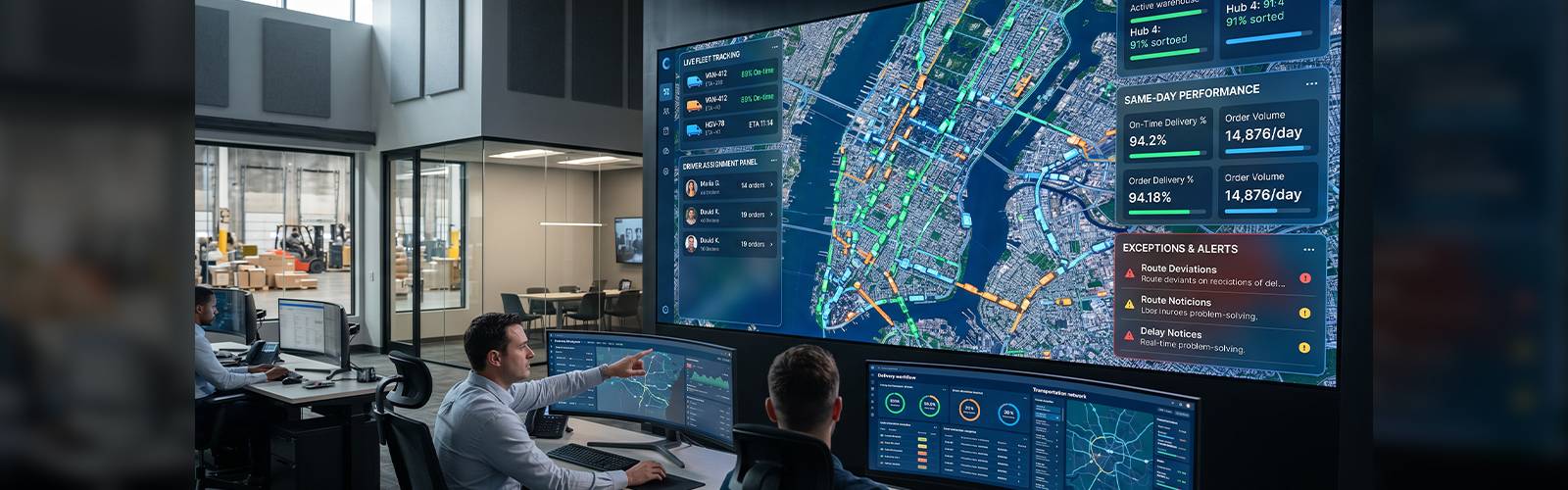
Modern logistics operations are becoming increasingly difficult to manage with traditional transportation systems. Rising parcel volumes, same-day delivery expectations, and growing operational complexity are pushing businesses toward smarter technologies. This is where delivery orchestration software is playing a critical role.
Unlike conventional routing tools, delivery orchestration software helps businesses manage routes, drivers, hubs, and delivery workflows in real time. As logistics networks scale rapidly, companies are investing in advanced logistics orchestration platforms to improve efficiency, visibility, and service reliability.
The Growing Complexity of Delivery Operations
Global parcel shipping volumes continue to rise every year. At the same time, customers now expect faster deliveries, real-time tracking, accurate ETAs and flexible delivery windows. This creates enormous pressure on logistics providers managing large-scale delivery networks.
Traditional systems often struggle because they rely heavily on static planning models. Routes generated hours earlier may become ineffective within minutes due to traffic congestion, weather disruptions, vehicle breakdowns, or sudden order spikes.
During high demand periods, even small operational disruptions can quickly lead to missed deliveries, delayed shipments and rising costs.
This is why many enterprises are adopting modern delivery orchestration solutions that continuously optimize delivery operations in real time.
Why Legacy Transportation Systems Are Falling Behind
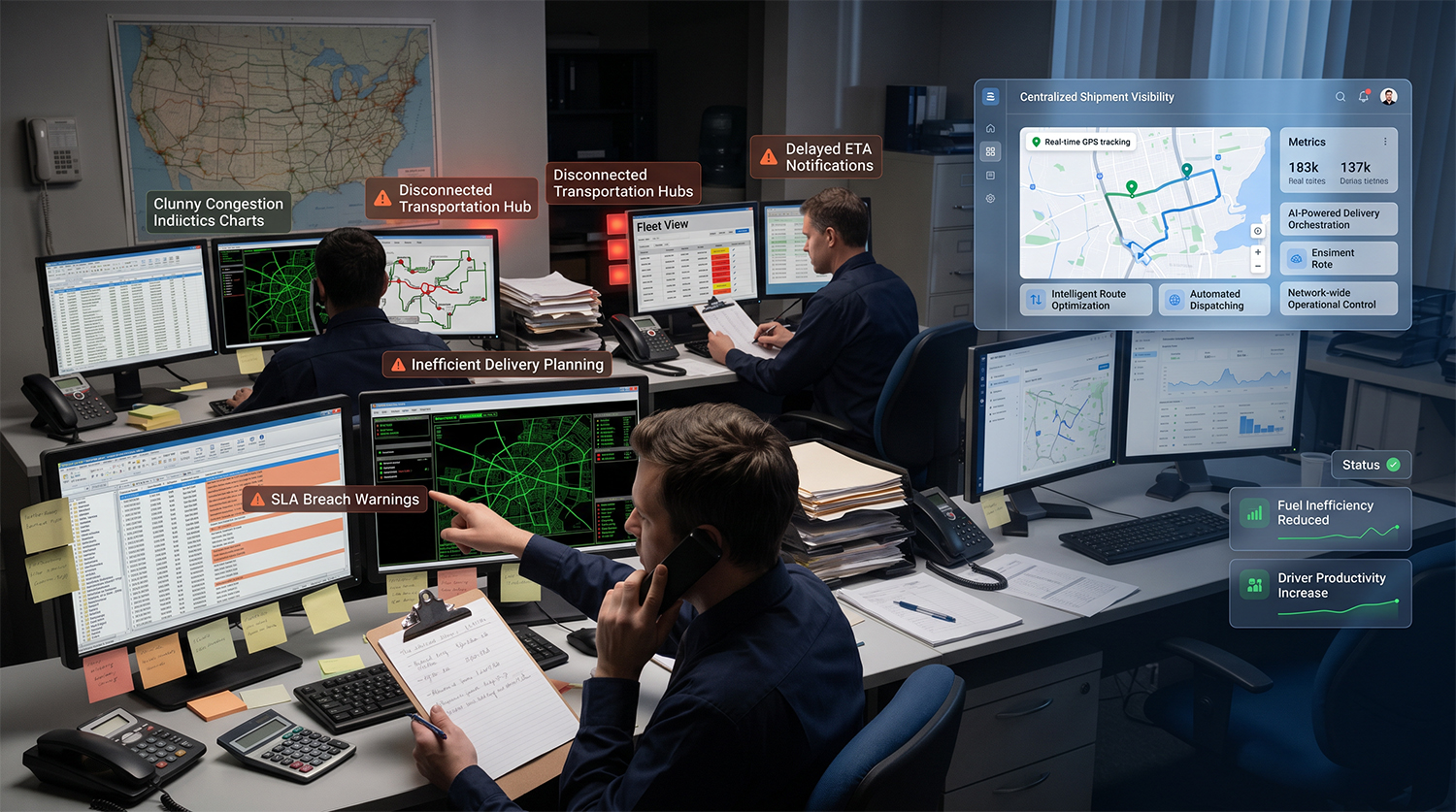
Many transportation management systems were designed for a simpler logistics environment. While they can manage basic dispatch functions, they often lack the flexibility required for modern delivery operations.
One major issue is limited visibility.
Without centralized orchestration, businesses struggle to monitor shipments moving across multiple hubs, fleets, and third-party logistics providers. This creates operational blind spots that slow decision-making during disruptions.
Scalability is another challenge.
As shipment volumes increase, legacy systems often require greater manual intervention. Dispatch teams spend valuable time adjusting routes, reallocating deliveries, and resolving operational bottlenecks manually.
This directly impacts:
- Delivery timelines
- Fuel efficiency
- Driver productivity
- SLA performance
- Customer experience
Modern parcel delivery management software addresses these issues through intelligent automation and network-wide coordination.
The Shift Toward Real-Time Logistics Orchestration
Modern delivery operations require much more than route optimization alone. Businesses now need systems capable of orchestrating the entire logistics network simultaneously.
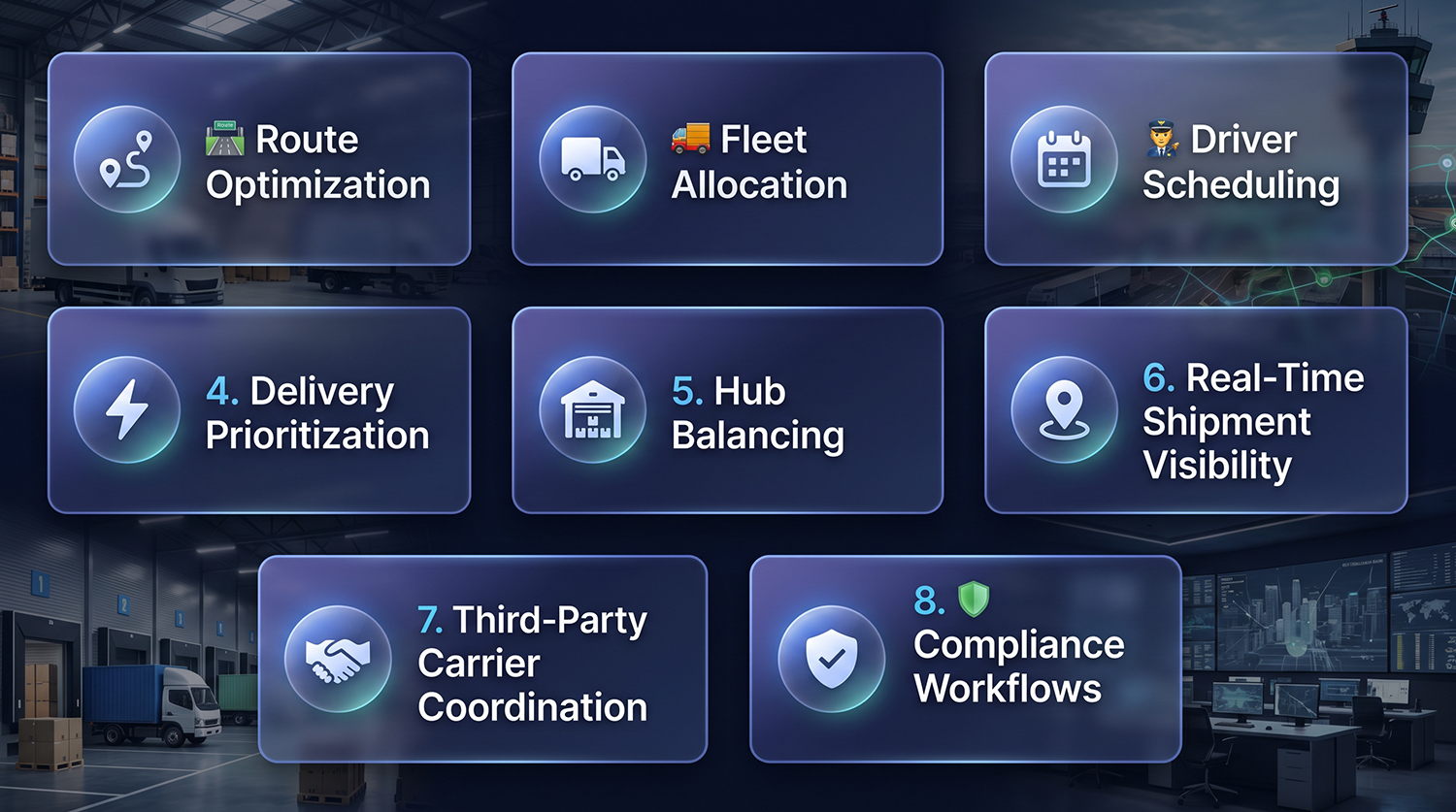
A modern logistics orchestration platform enables companies to manage:
- Route optimization
- Fleet allocation
- Driver scheduling
- Delivery prioritizaiton
- Hub balancing
- Real-time shipment visibility
- Third party carrier coordination
- Compliance workflows
This creates a centralized operational framework that continuously adapts to changing delivery conditions. Instead of reacting after disruptions occur, orchestration systems proactively rebalance operations to reduce delays and improve efficiency.
This capability becomes especially important during peak season logistics management, when delivery volumes increase dramatically within short time periods.
How Delivery Orchestration Software Improves Efficiency
One of the biggest advantages of delivery orchestration software is its ability to optimize delivery flow dynamically. Modern platforms use real-time data and intelligent algorithms to generate optimized routes while considering multiple operational variables such as:
- Vehicle capacity
- Parcel dimensions
- Delivery priority
- Traffic conditions
- Driver availability
- SLA commitments
This allows logistics businesses to improve delivery speed while reducing operational inefficiencies. Dynamic orchestration also improves network resilience.
If one facility reaches operational capacity, the system can automatically redistribute loads to alternate hubs before congestion affects downstream deliveries. This reduces bottlenecks and improves overall throughput.
For enterprises handling high shipment volumes, these capabilities significantly improve operational scalability.
The Importance of Elastic Workforce Management
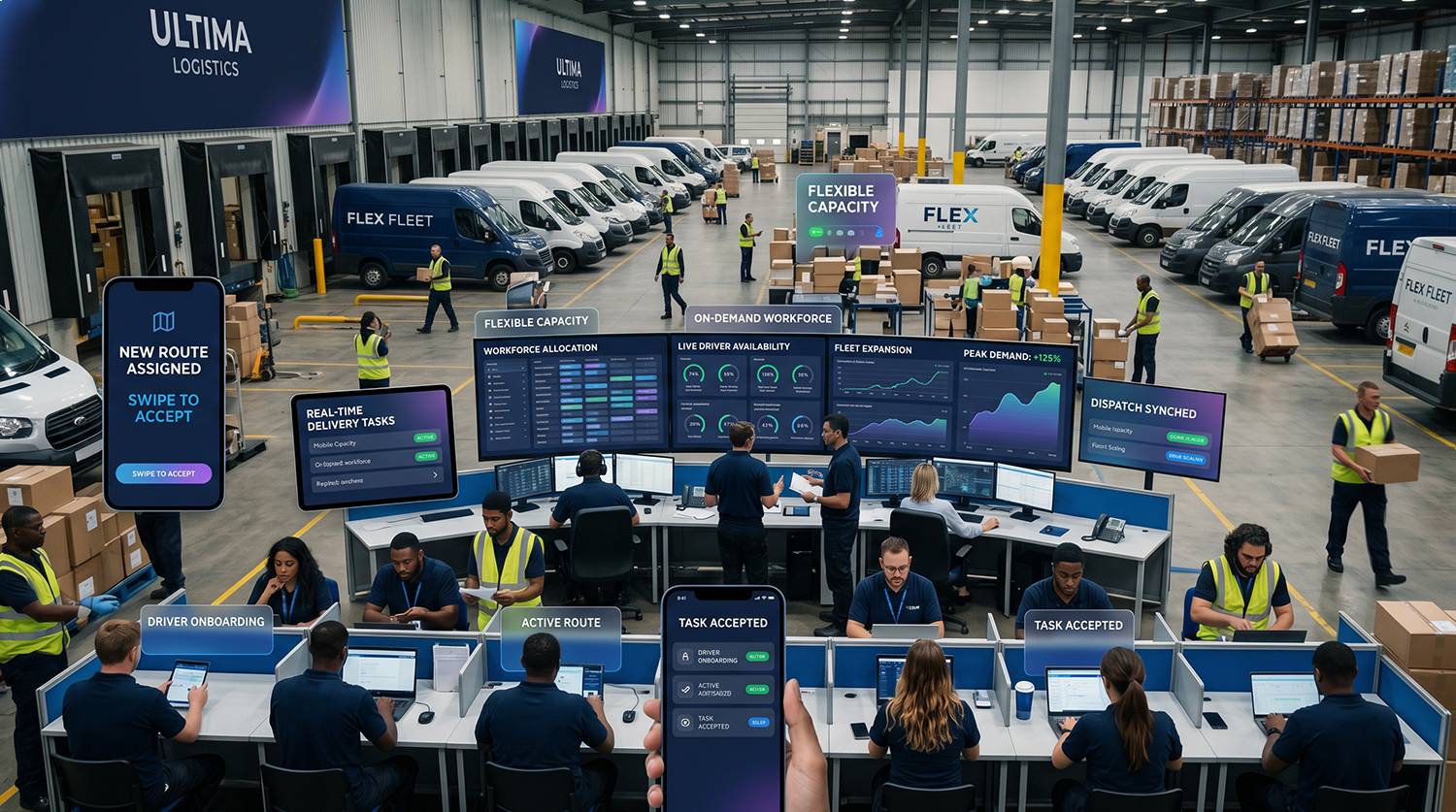
Labor flexibility has become increasingly important in logistics operations, especially during seasonal demand surges.
Many businesses now depend on gig drivers, temporary fleets, and third-party carriers to expand delivery capacity quickly. However, slow onboarding processes and disconnected systems often reduce operational efficiency.
Modern delivery management platforms simplify workforce onboarding through mobile-first workflows that allow drivers to:
- Access routes instantly
- Receive delivery assignments in real-time
- Sync with dispatch systems automatically
- Begin deliveries with minimal setup time
This allows companies to scale operations rapidly without increasing dispatch complexity. Flexible workforce management is now a key requirement for effective peak season logistics management.
Why Compliance Is Becoming a Logistics Priority
Beyond operational efficiency, compliance management is becoming a major focus for logistics companies. Regulations surrounding data privacy, biometric tracking, GPS monitoring, and labor governance are evolving rapidly.
Many businesses still manage compliance through spreadsheets, emails, PDFs, and disconnected communication systems. This creates serious operational and legal risks. Without centralized tracking, businesses may struggle to verify:
- Driver consent records
- Policy acknowledgements
- Version-controlled agreements
- Contractor compliance status
Modern delivery orchestration solutions are now integrating compliance management directly into operational workflows.
By embedding digital consent collection and automated policy enforcement into driver applications, businesses can improve governance while reducing administrative overhead. This helps logistics companies maintain stronger audit readiness and minimize compliance-related disruptions.
The Business Impact of Logistics Orchestration
Companies implementing advanced parcel delivery management software are seeing measurable improvements across multiple operational areas.
Key benefits include:
- Faster route optimization
- Improved on-time delivery rates
- Better fleet utilization
- Reduced manual intervention
- Higher shipment visibility
- Improved customer satisfaction
- Stronger compliance management
- Greater operational scalability
As delivery ecosystems become more interconnected, orchestration platforms are becoming essential infrastructure for modern logistics operations.
Conclusion
The logistics industry is shifting toward real-time, intelligent, and highly adaptive operations. Traditional systems are no longer sufficient for managing complex delivery networks at scale.
Modern delivery orchestration software helps businesses improve visibility, automate workflows, optimize resources, and scale operations efficiently during both normal and peak demand periods.
LogiNext enables enterprises to simplify complex delivery operations through intelligent automation, real-time orchestration, and scalable delivery management capabilities designed for modern logistics networks. Click on the red button to know more.
“” 74
 |  |  |




@LogiNext