




Three Smart Logistics Journeys Built for a Volatile World
Modern businesses no longer compete on delivery speed alone. They compete on resilience, visibility, and adaptability. That is why logistics management has become a boardroom priority instead of just an operational function. Rising transportation costs, labor shortages, geopolitical instability, and growing customer expectations are forcing enterprises to rethink how supply chains operate.
According to SAP, logistics is entering a phase where AI, cloud infrastructure, and automation are reshaping the future of supply chains. Businesses are now shifting from reactive operations to intelligent and predictive logistics ecosystems.
For companies managing complex transportation and warehouse networks, investing in the right logistics management software is no longer optional. It is the foundation for building agile, scalable, and future-ready operations.
Why Logistics Transformation Cannot Wait
Global logistics disruptions are now constant. Delays, inventory mismatches, fuel price volatility, and workforce shortages continue to pressure supply chains worldwide.
A recent SAP report highlighted that traditional logistics systems were originally built for efficiency. Today’s supply chains demand something more: adaptability and real-time decision-making.
This shift is changing how organizations approach logistics modernization. Businesses now need:
- Real-time visibility across transportation and warehousing
- AI-driven forecasting and planning
- Automated workflow orchestration
- Faster response to disruptions
- Lower operational costs without sacrificing customer experience
The companies that succeed will not simply move goods faster. They will make smarter logistics decisions at scale. That is where a modern logistics management solution becomes critical.
The Three Logistics Transformation Journeys
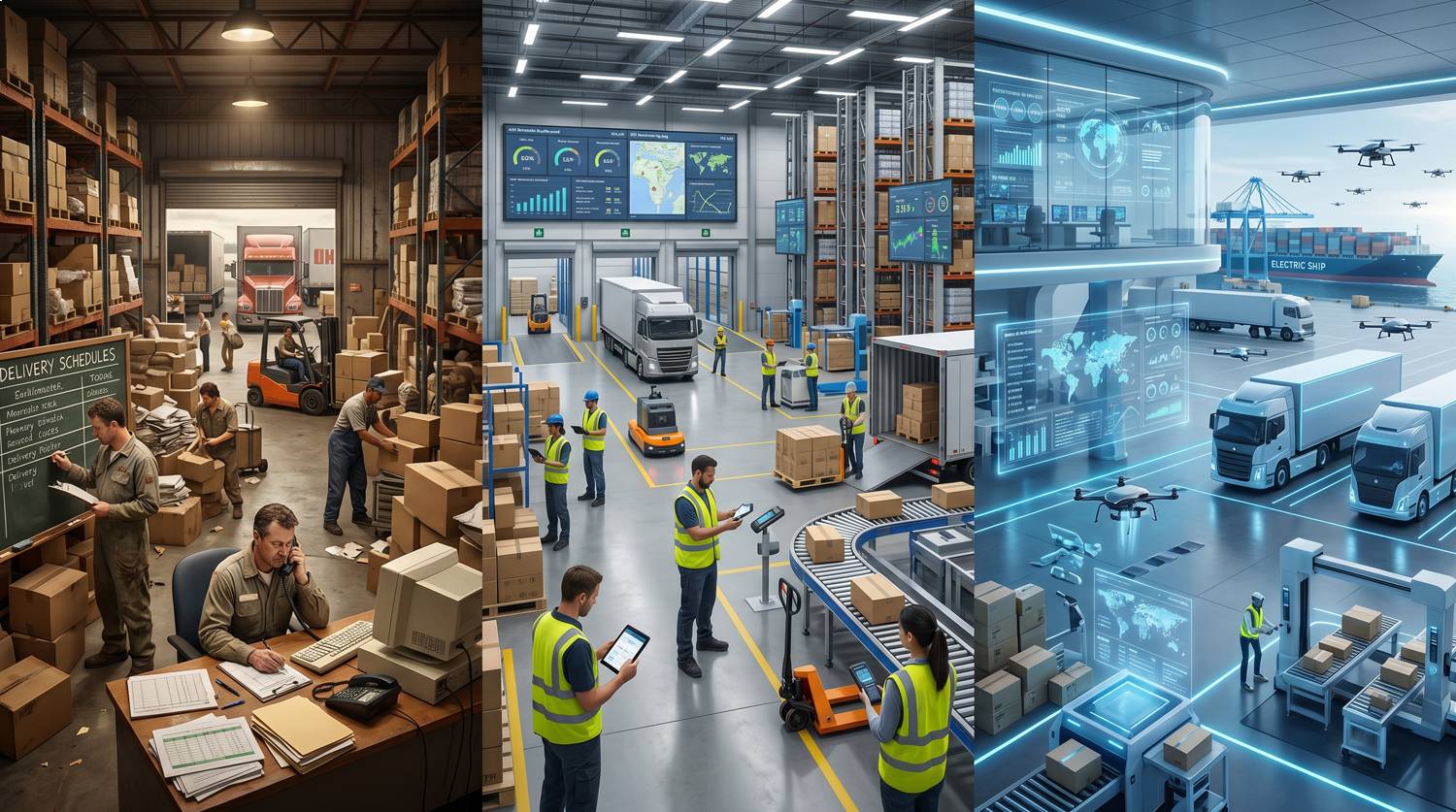
Every company operates at a different level of logistics maturity. Some still depend heavily on manual processes. Others already use automated warehousing and predictive transportation systems.
SAP’s framework outlines three distinct transformation journeys that businesses can follow depending on operational complexity, risk tolerance, and innovation readiness. These journeys offer valuable insights for enterprises evaluating the future of their own logistics management system.
Journey 1: Stabilize Existing Operations Before Modernizing
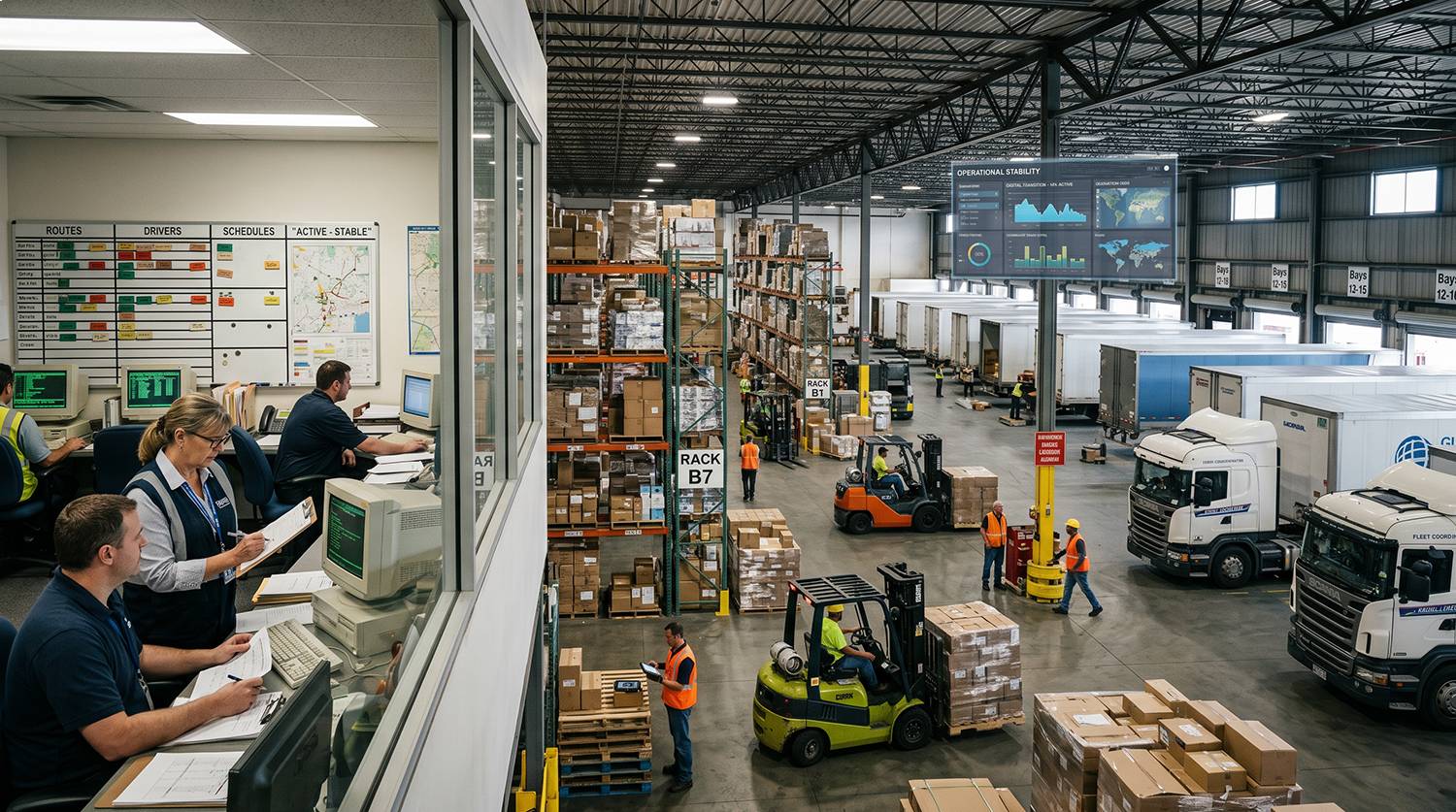
Not every business is ready for immediate digital transformation. Many enterprises still rely on legacy infrastructure that continues to support core operations effectively.
For these organizations, the first journey focuses on maintaining operational stability while preparing for gradual modernization. This approach works best for businesses that:
- Operate with moderate logistics complexity
- Need time to migrate from legacy systems
- Want controlled investment cycles
- Prioritize operational continuity
Instead of rushing transformation, companies can extend the life of existing systems while strategically planning future upgrades. However, temporary stability cannot become permanent complacency.
Legacy systems often lack:
- Real-time tracking
- Predictive analytics
- Cloud scalability
- AI-enabled automating
- Unified transportation visibility
Over time, these limitations increase operational costs and reduce agility. That is why businesses eventually transition toward a more advanced logistics software ecosystem that supports intelligent execution and real-time orchestration.
Journey 2: Modernize Logistics in Controlled Phases
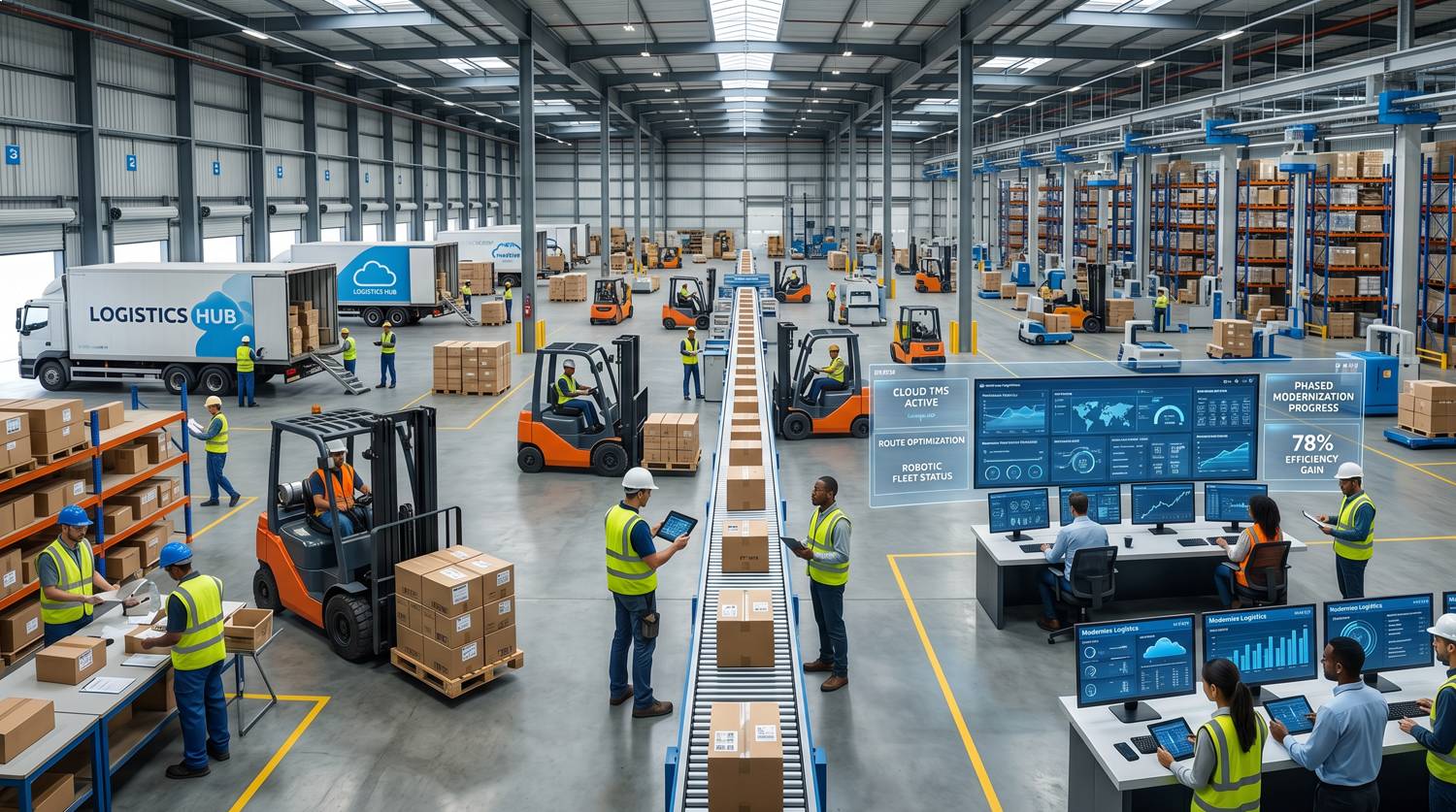
The second journey focuses on gradual modernization.
Many enterprises understand the importance of digital transformation but prefer minimizing disruption across operations. Instead of replacing everything at once, they modernize logistics in phases.
This approach includes:
- Migrating transportation and warehouse operations to cloud platforms
- Introducing automation incrementally
- Improving visibility through centralized operations
- Integrating AI-based recommendations over time.
For large organizations, this phased model reduces risk while enabling steady innovation.
Research shows that companies using cloud-based logistics platforms can reduce operational inefficiencies by up to 30% while improving delivery accuracy and warehouse productivity.
Controlled modernization also improves change management. Employees adapt gradually instead of facing sudden system overhauls. This journey is especially valuable for businesses seeking:
- Flexible deployment models
- Better integration across ERP systems
- Scalable transportation management
- Improved warehouse coordination
- Smarter route optimization
An advanced logistics management software platform enables businesses to modernize without disrupting customer commitments.
Journey 3: Build an AI-Native Logistics Ecosystem
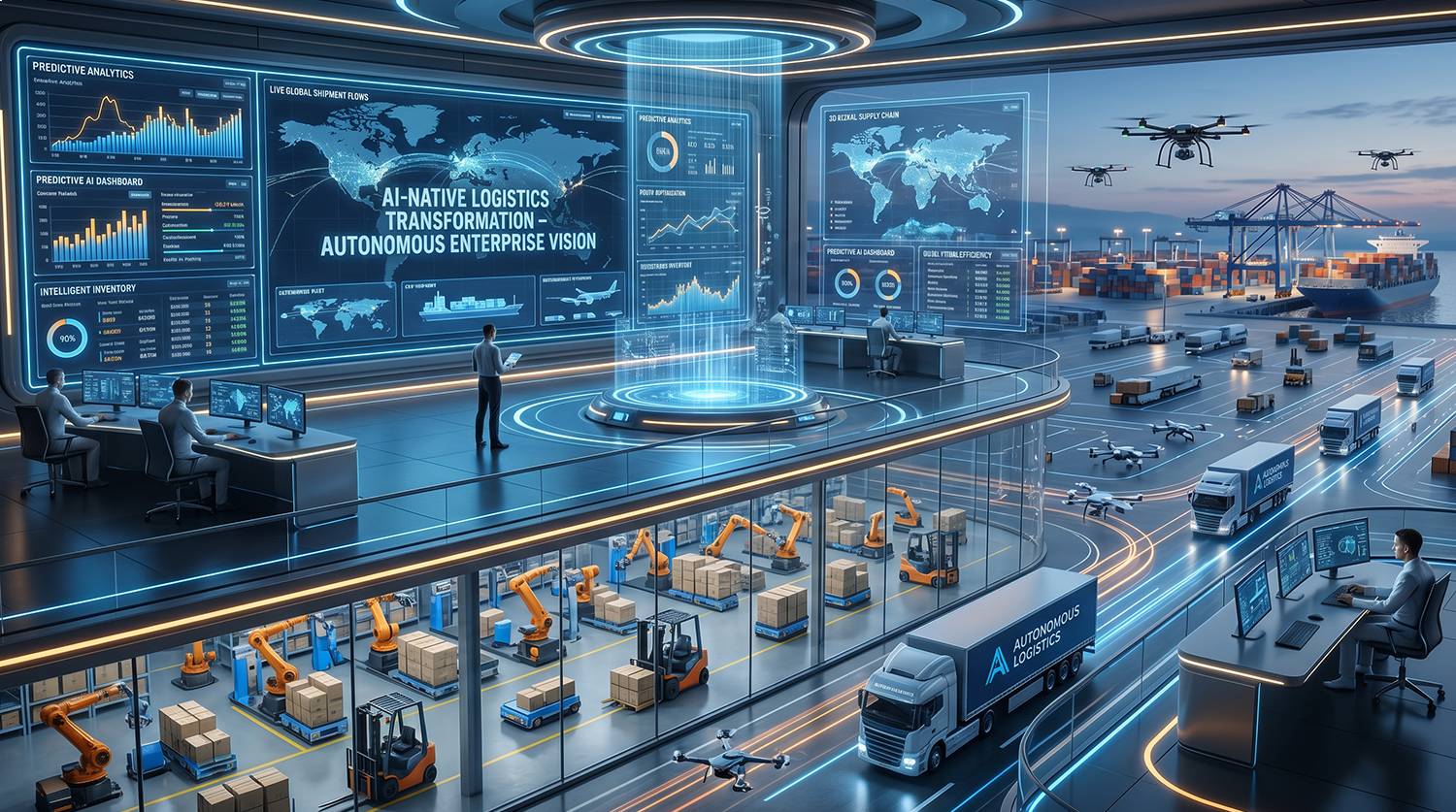
The third journey represents the future of logistics. This model is designed for enterprises ready to adopt AI-first operations across warehousing, transportation, and supply chain execution.
Instead of simply digitizing workflows, businesses build fully connected logistics ecosystems powered by:
- Embedded AI
- Predictive analytics
- Autonomous planning
- Intelligent carrier networks
- Real-time operational orchestration
SAP describes this evolution as part of the “Autonomous Enterprise” vision, where AI agents help execute business processes with greater speed and accuracy. This transformation creates several advantages:
- Faster decision-making
- Lower manual intervention
- Improved inventory accuracy
- Predictive workforce planning
- Higher transportation efficiency
AI-driven logistics is already showing measurable impact. One research study on autonomous warehouse orchestration demonstrated up to 60% reduction in processing times using reinforcement learning models in warehouse operations.
For enterprises managing high-volume logistics networks, this level of intelligence creates a major competitive advantage.
An AI-powered logistics management solution allows organizations to shift from reactive supply chains to predictive and adaptive logistics operations.
The Rise of Intelligent Logistics Management
The logistics industry is moving toward a cloud-first and AI-enabled future. But technology alone is not enough. Successful transformation requires:
- Clean operational data
- Integrated workflows
- End-to-end visibility
- Strong execution processes
- Scalable digital infrastructure
Many organizations fail because they focus only on automation while ignoring operational alignment. Efficient logistics management depends on connecting transportation, warehousing, order fulfillment, and customer communication into one intelligent ecosystem.
That is why businesses increasingly invest in:
- Transportation management systems
- Warehouse automation platforms
- Real-time fleet tracking
- AI-powered delivery optimization
- Predictive analytics engines
Modern logistics software is no longer just a backend operational tool. It directly impacts customer satisfaction, profitability, and business resilience.
The Future Belongs to Adaptive Supply Chains
The future of logistics will belong to companies that can adapt faster than disruption spreads. Traditional logistics models focused heavily on cost reduction. Modern logistics strategies focus equally on:
- Agility
- Visibility
- Automation
- Intelligence
- Scalability
Businesses that continue relying on fragmented systems will struggle to compete in increasingly volatile markets. A connected and intelligent logistics management system helps enterprises:
- Improve delivery performance
- Reduce transportation costs
- Increase warehouse efficiency
- Minimize operational delays
- Strengthen supply chain resilience
In today’s environment, efficient logistics management is not just an operational advantage. It is a business survival strategy.
Conclusion
The logistics industry is rapidly evolving through AI, cloud technology, and automation. Businesses now need scalable logistics management software that improves visibility, agility, and operational efficiency.
With real-time tracking, route optimization, and AI-driven automation, LogiNext helps enterprises build smarter, faster, and more resilient supply chains ready for modern logistics challenges. Click on the red button to book a demo today.
41

|

|

|




@LogiNext