




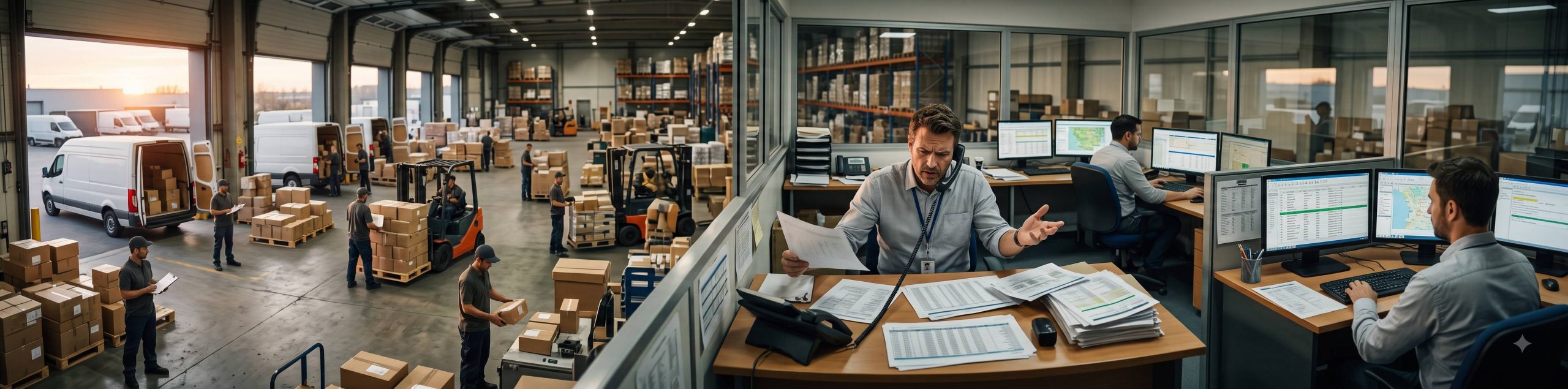
Your Logistics Isn’t Complex. It’s Undisciplined.
Most logistics challenges are not caused by complexity. They are caused by inconsistent processes, fragmented data, and decisions based on assumptions. Delivery management software helps businesses replace manual firefighting with structured operations by bringing customer data, route planning, and execution workflows into one connected system.
When Daily Operations Become Daily Firefighting
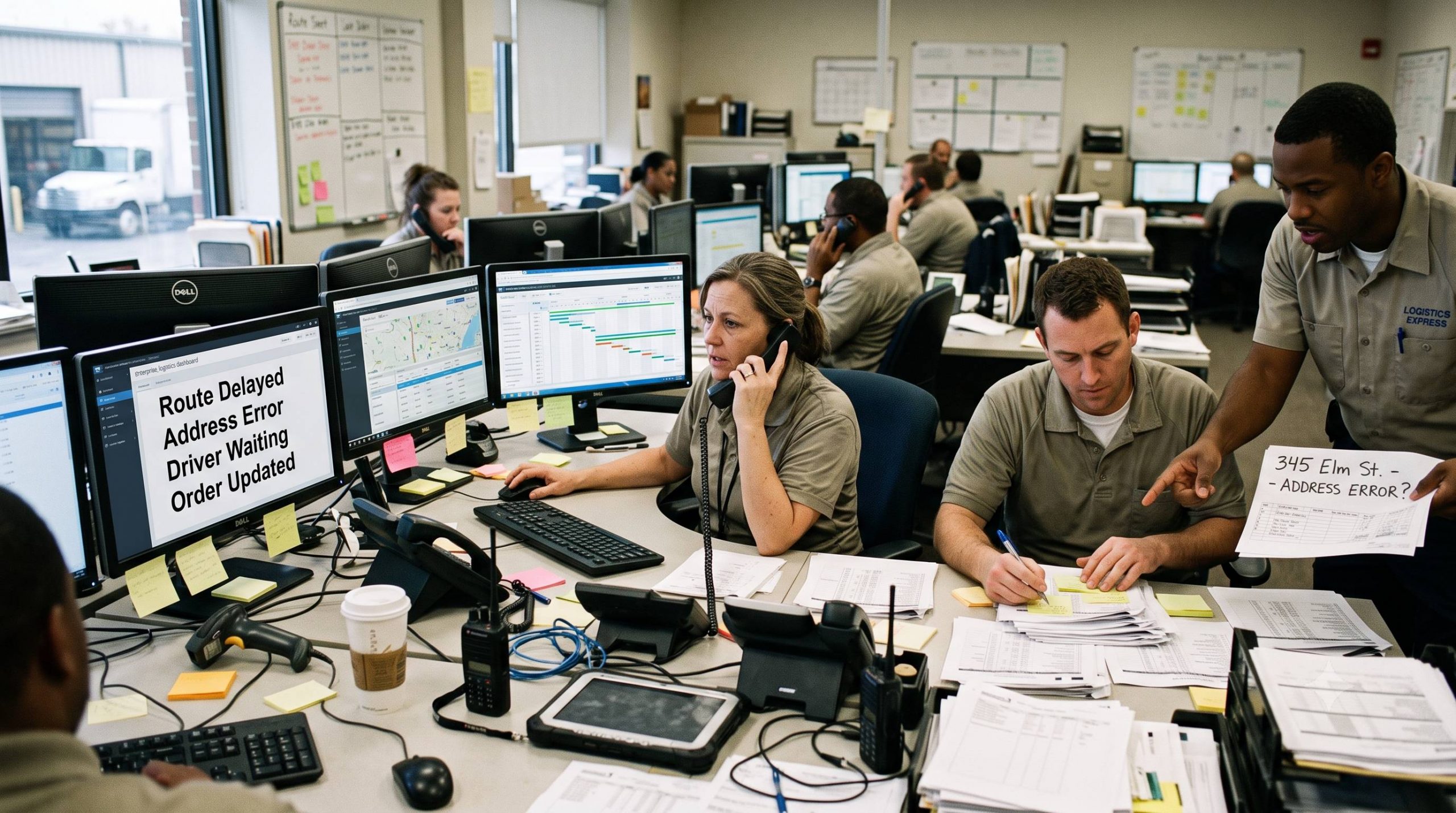
Every logistics manager has experienced mornings where everything feels urgent. Dispatchers are creating orders against the clock, planners are adjusting trips at the last minute, and drivers are already calling to verify addresses or delivery instructions. While these situations are common, they are rarely caused by demand alone. More often, they point to fragmented operational processes that force teams to react instead of plan.
The warning signs appear in small but costly ways. A customer address is entered manually for the tenth time that month. But a single typo sends a truck to the wrong location. A planner builds what looks like the perfect route, only to discover that a bridge height restriction or a vehicle weight limit makes it impossible to execute.
Drivers spend valuable time searching for loading docks. Requesting gate codes, or waiting for someone to explain site-specific instructions that should have been available before the trip began.
These delays may seem minor in isolation, but together they create a cycle of inefficiency that drains productivity every day. According to McKinsey & Company, organizations that digitize supply chain operations can significantly improve service levels while reducing logistics costs. With many of the gains coming from standardized processes rather than increased manpower.
Your Team’s Memory Isn’t a Strategy
Many logistics operations depend heavily on experienced planners who know every customer and delivery location by heart. They remember which retail store accepts deliveries only before opening hours, which warehouse requires advance security clearance, and which customer has limited vehicle access. Their experience keeps operations moving, but it also creates a fragile system.
When critical knowledge exists only in spreadsheets, handwritten notes, or the minds of experienced employees, every staffing change introduces risk. New planners repeat old mistakes, dispatch teams spend time searching for information, and operational consistency begins to decline. Growth becomes increasingly dependent on individual expertise instead of standardized processes.
This is where delivery management solution for logistics creates lasting value. Customer information becomes a permanent operational asset that is available to every planner and dispatcher. Instead of rebuilding knowledge with every order, businesses create a centralized source of truth that improves with every completed delivery.
Why “Perfect” Routes Fail in the Real World
Modern route optimization engines are capable of generating highly efficient delivery plans. However, many organizations still watch drivers abandon those routes within minutes of leaving the warehouse. The issue is not with optimization itself. It is that many plans are created without considering the operational realities drivers face on the road.
A route may ignore vehicle weight restrictions, low bridges, loading dock assignments, one-way streets, security procedures, or customer-specific unloading requirements. Drivers quickly recognize these practical limitations and begin making their own decisions. Over time, planners lose confidence in optimization, while drivers rely more on personal judgment than standardized planning.
Effective delivery management software with route optimization closes this gap by combining geographic intelligence with operational data. Routes are planned around vehicle capabilities, customer requirements, delivery windows, and access restrictions. Thereby, ensuring they are practical to execute rather than simply efficient on a map.
Operational Discipline Begins with Customer Master Data
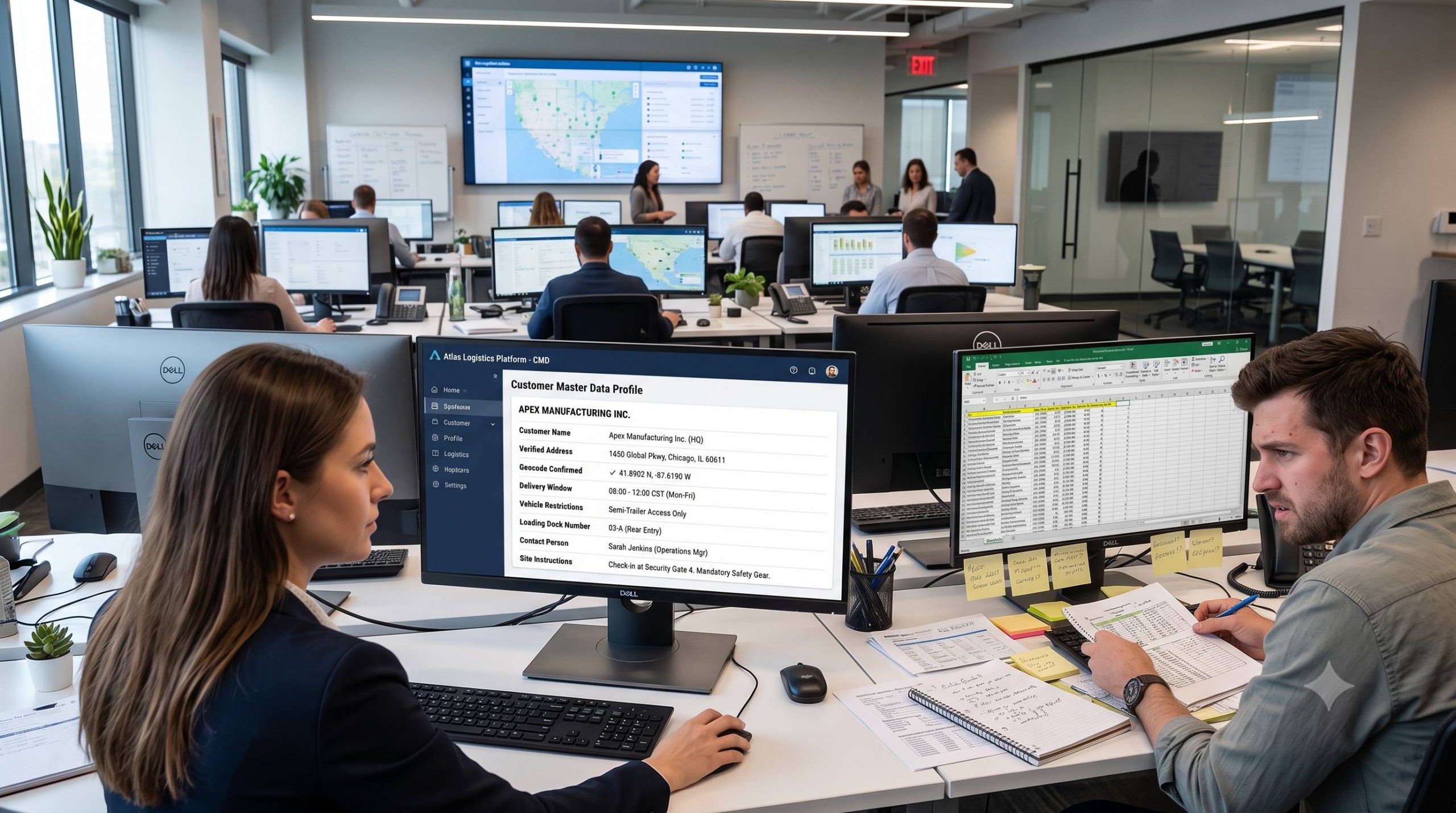
Reliable deliveries start with reliable information. Yet many organizations continue to recreate customer records every time an order is placed. Increasing manual effort while creating opportunities for errors. Repeated data entry not only slows order creation but also introduces inconsistencies that affect planning and execution.
Customer Master Data addresses this challenge by creating a centralized repository for every delivery location. Each customer profile stores verified geocodes, contact information, preferred delivery windows, vehicle restrictions, loading dock details, and site-specific operational notes. Instead of entering the same information repeatedly, planners simply select an existing customer profile and allow the system to populate every relevant detail automatically.
As a result, order creation becomes faster, more consistent, and significantly less dependent on individual knowledge. Delivery management software with customer master data ensures that valuable operational information stays within the business instead of disappearing whenever employees move on.
Location Intelligence Makes Every Route More Reliable
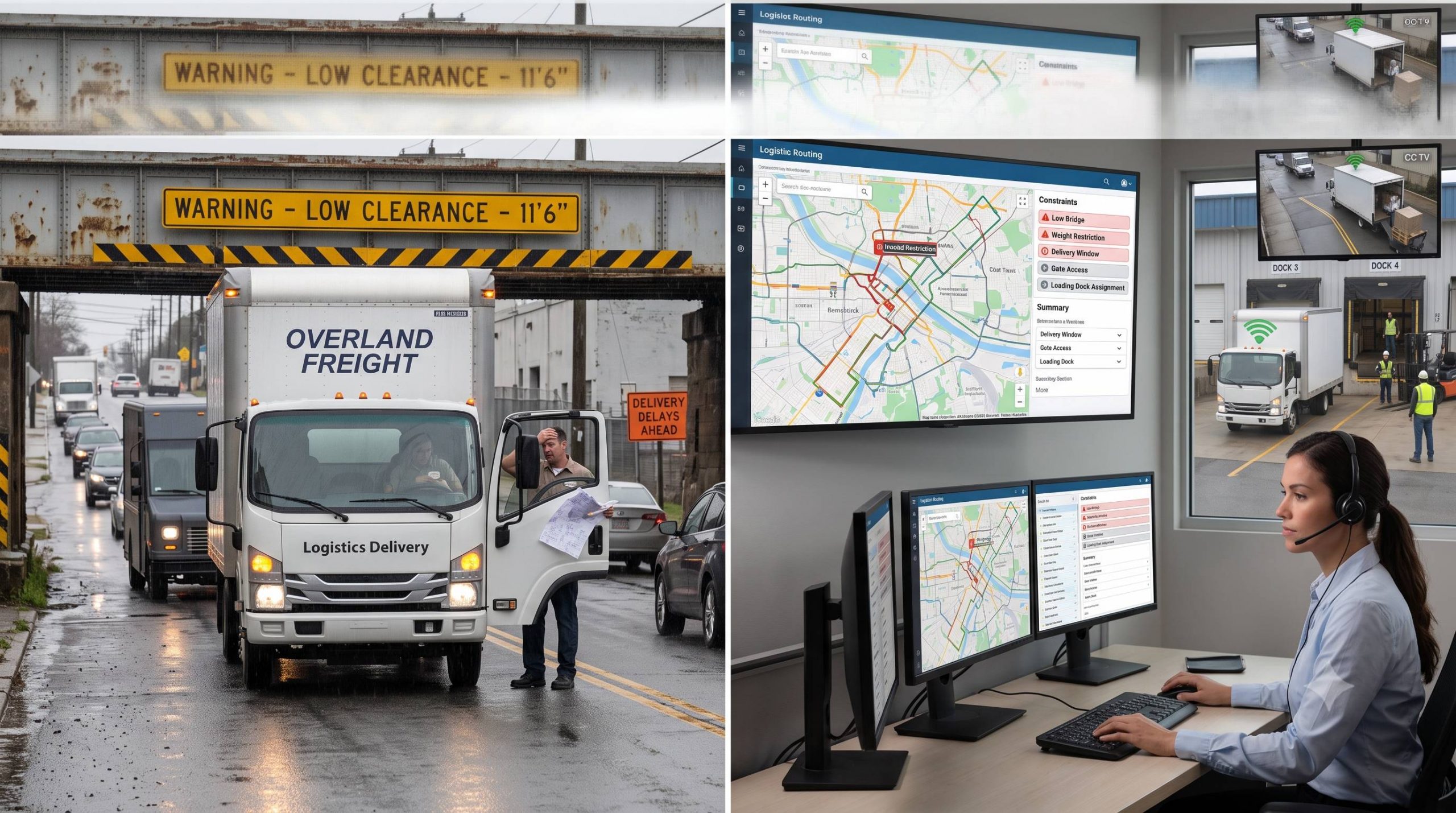
Knowing where a customer is located is only one part of successful delivery planning. Understanding how deliveries should be executed at that location is equally important. Without that context, even the most optimized route can fail once it reaches its destination.
Location Intelligence enriches every customer location with operational details that traditional mapping systems cannot provide. Delivery windows, security procedures, gate numbers, loading dock assignments, vehicle restrictions, and access requirements become part of the planning process instead of information shared through last-minute phone calls.
For example, a shopping mall may only allow deliveries before 9:00 AM, while a manufacturing plant may prohibit vehicles above a certain weight. Residential communities may restrict commercial vehicle access during school hours, and warehouses often require deliveries through designated entrances.
AI-powered delivery management software incorporates these constraints into planning automatically. Thus, allowing dispatchers to create routes that reflect real-world operating conditions instead of theoretical road networks.
Growth Without Discipline Only Creates Bigger Problems
As order volumes increase, many organizations respond by hiring more planners or dispatchers. While additional resources may help temporarily, they rarely solve the underlying problems. Manual data entry expands, inconsistent planning becomes more common, and delivery exceptions multiply because the same inefficient processes are simply being repeated at a larger scale.
According to Accenture, organizations that build digital, data-driven supply chains improve visibility, operational resilience, and overall efficiency compared to businesses that rely on disconnected manual processes. Sustainable growth comes from standardizing decisions, not from increasing the number of people making them.
This is why delivery management software for enterprises has become essential for modern logistics operations. It creates repeatable processes that maintain consistency regardless of order volume, customer growth, or workforce expansion, allowing businesses to scale without introducing additional operational chaos.
Conclusion
Operational complexity is often the result of inconsistent processes rather than business growth. By combining Customer Master Data with Location Intelligence, delivery management software transforms fragmented operational knowledge into a centralized system that supports every delivery.
Businesses benefit from faster order creation, more reliable route execution, fewer delivery exceptions, and operations that scale with confidence instead of chaos.
If you’re ready to replace manual work and operational guesswork with intelligent execution, LogiNext’s delivery management software can help. Book a demo today to discover how disciplined planning leads to smarter deliveries and sustainable growth.
15

|

|

|




@LogiNext