



Top 5 Changes to Look for in Last Mile Delivery in 2026
The last mile delivery landscape has changed dramatically over the past few years. What was once considered the final step of the supply chain has now become the defining moment of the customer experience. Consumers expect same-day deliveries, live order updates, flexible delivery windows, and seamless returns. Businesses, meanwhile, are under constant pressure to reduce costs while meeting these growing expectations.
According to Capgemini, the last mile accounts for more than 50% of total shipping costs, making it the most expensive stage of logistics. At the same time, McKinsey estimates that the global parcel volume will continue growing steadily through the decade, placing additional pressure on delivery networks.
As we move through 2026, businesses can no longer rely on traditional dispatching and manual planning. They need intelligent systems that improve visibility, optimize operations, and create better customer experiences.
The Key Trends Transforming Last Mile Delivery in 2026
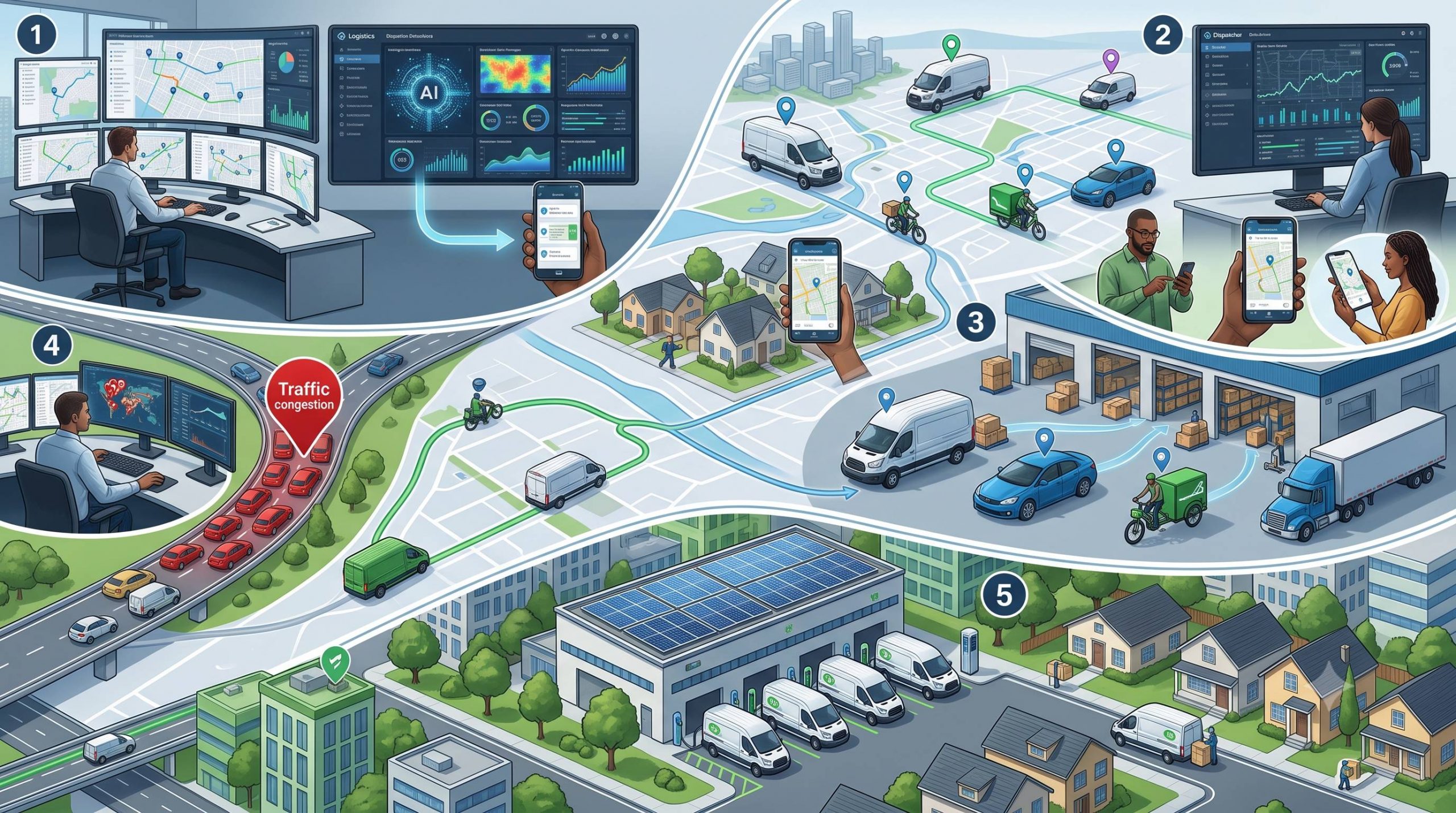
1. AI Will Move Beyond Route Optimization:
Artificial intelligence is no longer limited to calculating the fastest route.
In 2026, AI is becoming the decision-making layer across delivery operations. Modern systems continuously evaluate traffic, weather, vehicle availability, customer preferences, delivery priorities, and driver performance before recommending the best course of action.
Instead of dispatchers manually adjusting routes throughout the day, AI can automatically:
- Assign deliveries to the most suitable drivers
- Rebalance workloads across fleets
- Predict delays before they happen
- Recommend alternative delivery windows
- Optimize vehicle utilization
This allows logistics teams to spend less time reacting to disruptions and more time improving overall performance.
Businesses investing in advanced last mile delivery software are increasingly using AI not just for planning routes, but for managing exceptions, improving operational efficiency, and making real-time delivery decisions.
2. Real-Time Visibility Will Become the Standard:
Customers no longer accept vague updates like “Out for Delivery.”
Today’s consumers expect accurate delivery timelines, live tracking, proactive notifications, and instant communication whenever plans change.
Research from DispatchTrack found that 91% of consumers actively track their deliveries, making visibility one of the most important aspects of customer satisfaction.
This growing expectation extends beyond customers.
Operations managers need visibility into every moving vehicle. Customer support teams need accurate order statuses. Warehouse teams need confirmation of completed deliveries. Leadership teams need performance dashboards that highlight operational bottlenecks.
A modern last mile delivery solution connects all these stakeholders through a single platform.
Instead of waiting for drivers to report delays, businesses receive real-time updates that enable faster decision-making and proactive customer communication.
3. Delivery Networks Will Become More Flexible:
Traditional delivery operations relied heavily on fixed fleets and predefined territories. That model is becoming increasingly difficult to sustain.
Demand fluctuates significantly throughout the year because of seasonal sales, promotional events, regional demand spikes, and unexpected disruptions.
In response, companies are adopting more flexible delivery ecosystems that combine:
- Owned fleets
- Third-party logistics providers
- Gig drivers
- Regional carriers
- Micro-fulfillment centers
The challenge is no longer finding delivery capacity. The challenge is orchestrating multiple delivery partners without losing operational control.
Modern logistics platforms simplify this process by automatically selecting the most suitable carrier based on cost, service level agreements, vehicle availability, delivery location, and customer requirements.
Businesses using intelligent orchestration can scale operations during peak demand without sacrificing service quality or increasing manual effort.
4. Delivery Tracking Will Become Predictive Instead of Reactive:
Traditional tracking systems simply display where a vehicle is located. That information alone is no longer enough.
Customers want to know if their delivery will actually arrive on time. Businesses want to identify risks before customers notice them.
This is where predictive analytics is transforming last mile delivery tracking.
Rather than showing a driver’s current location, modern tracking systems analyze:
- Live traffic conditions
- Historical delivery performance
- Driver behavior
- Weather disruptions
- Route congestion
- Vehicle delays
Using these variables, businesses can predict delivery exceptions before they occur.
If an order is expected to arrive late, customers receive proactive notifications instead of waiting until the promised delivery window expires.
Operations teams can also intervene earlier by reallocating deliveries or rerouting drivers before delays escalate.
This shift from reactive tracking to predictive intelligence is making last mile delivery tracking software a strategic investment rather than just a customer convenience.
5. Sustainability Will Shift from Initiative to Business Requirement:
Sustainability is becoming an operational priority rather than a branding exercise.
Governments are introducing stricter emissions regulations. Investors are demanding environmental accountability. Customers increasingly prefer brands that demonstrate responsible logistics practices.
The International Energy Agency (IEA) estimates that freight transport contributes a significant share of global transport emissions. Thereby, making logistics optimization an important opportunity for emission reduction.
Businesses are responding by improving efficient last mile delivery through smarter planning instead of simply expanding fleets.
Key initiatives include:
- Route optimization to reduce unnecessary mileage
- Higher vehicle utilization
- Electric vehicle adoption
- Consolidated deliveries
- Dynamic order batching
- Reduced empty return trips
These improvements not only reduce emissions but also lower fuel consumption and operating costs.
Sustainability and profitability are becoming closely connected rather than competing priorities.
Companies that invest in smarter delivery operations often discover that the most environmentally responsible routes are also the most cost-effective ones.
Final Thoughts
The future of last mile delivery will be defined by automation, real-time visibility, predictive intelligence, and flexible delivery operations. Businesses that adopt these capabilities today will be better equipped to meet rising customer expectations while controlling costs and scaling efficiently.
With the right last mile delivery software, organizations can streamline operations, improve delivery performance, and build a more resilient logistics network. If you’re ready to modernize your delivery operations, explore how LogiNext can help you stay ahead in 2026 and beyond.
 |  |  |




@LogiNext