




Gartner’s Latest Last-Mile Delivery Study Validates the Long-Term Direction LogiNext Has Championed
The future of last-mile delivery is increasingly being shaped by artificial intelligence, connected ecosystems, and intelligent automation. In its latest study on emerging trends in last mile delivery software, Gartner highlights several priorities that logistics leaders should focus on, including agentic AI, API-first platform architectures, dynamic delivery orchestration, and customer-centric fulfillment.
For LogiNext, these recommendations are not new. They reinforce a vision we have been building toward for years through investments in AI-powered automation, API-driven connectivity, real-time visibility, and intelligent delivery orchestration. Gartner’s findings validate what leading logistics organizations are already recognizing: the future of delivery belongs to platforms that are intelligent, connected, and built to adapt.
Last-Mile Delivery Is No Longer Just a Logistics Function
For a long time, people thought of delivery as just a way to get things from one place to another. It was seen as a necessary expense. But now, it’s become a key part of making customers happy and keeping them loyal to a brand.
Gartner notes that the last mile delivery (LMD) technology market is evolving rapidly due to e-commerce growth, rising operational costs, changing consumer expectations, and the increasing role of AI. Customers now expect accurate delivery promises, real-time visibility, flexible delivery options, and seamless post-purchase experiences.
At the same time, logistics teams face growing complexity. Enterprises must coordinate owned fleets, third-party carriers, gig workers, micro-fulfillment centers, and emerging delivery models while maintaining service levels and controlling costs.
This change is exactly why LogiNext has always concentrated on creating a complete last mile delivery system. Rather than just a routing tool. Nowadays, delivery is a key part of a company’s business plan, and the technology that supports it needs to change and improve too.
Gartner’s AI Recommendations Reinforce a Broader Industry Shift
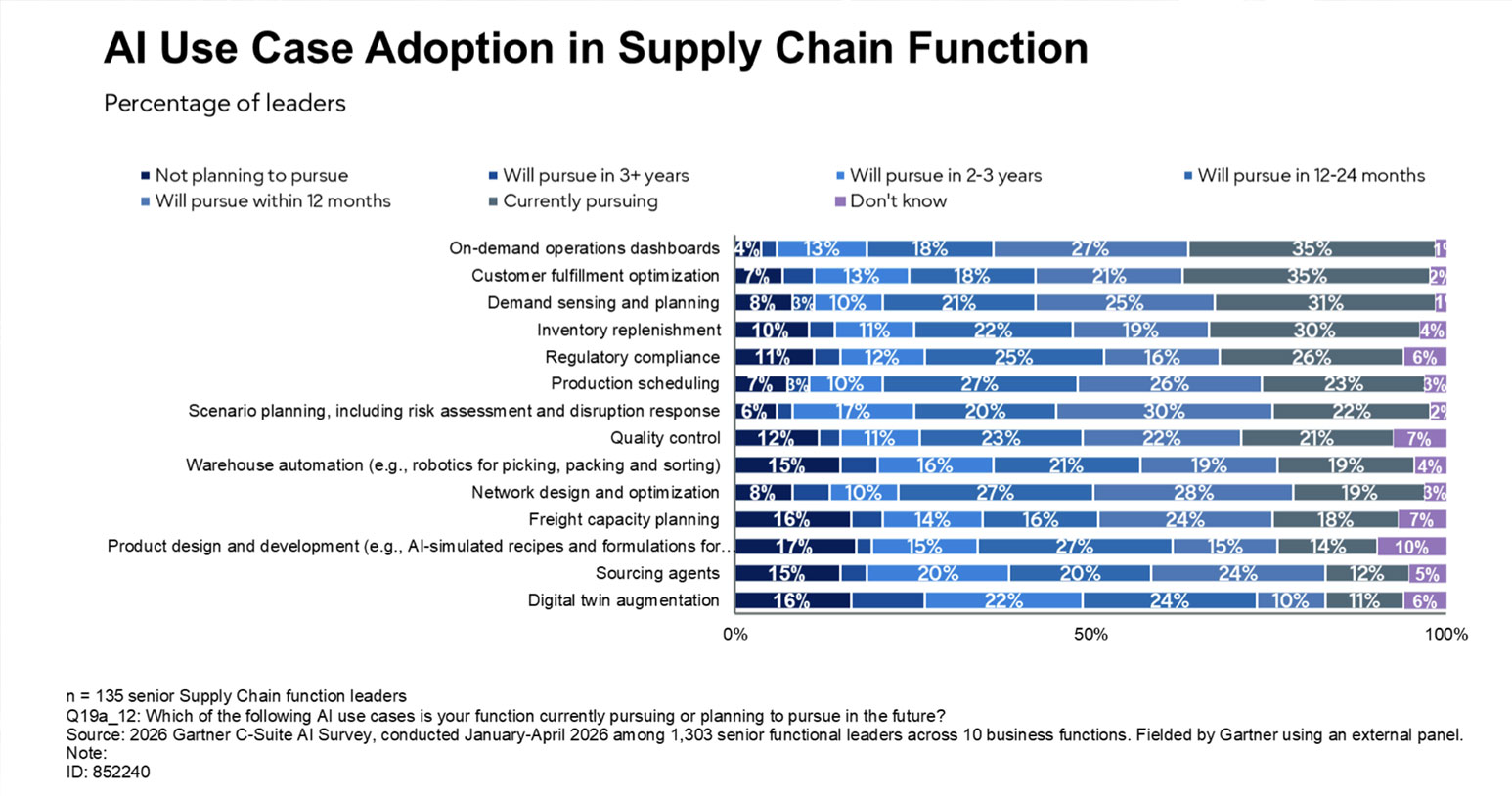
One of the strongest themes throughout Gartner’s study is the growing importance of artificial intelligence.
Artificial intelligence used to be mainly about finding the best routes and predicting when things would arrive. But now, Gartner thinks companies should use AI for more important tasks. This includes handling unexpected problems, choosing the best carriers, making sure bills are correct, talking to customers, and making decisions automatically.
These areas are becoming very important for companies to focus on. By using AI in these ways, businesses can make their operations more efficient and valuable.
This suggestion fits perfectly with what LogiNext wants to do with artificial intelligence in logistics.
As delivery volumes increase, manual intervention becomes increasingly difficult to scale. Operations teams cannot afford to spend valuable time resolving routine delivery exceptions, monitoring every route disruption, or manually coordinating carrier decisions. Intelligent automation is becoming essential.
Gartner predicts that by 2028, more than 50% of enterprise shippers will use agentic AI within their last-mile delivery platforms to autonomously resolve delivery exceptions.
That prediction validates a broader market direction. The future of efficient last mile delivery will depend on systems that can anticipate problems. Plus, recommend corrective actions, and automate operational workflows before service disruptions impact customers.
For enterprises evaluating the next generation of efficient last mile delivery software, AI is no longer an optional enhancement. It is becoming a foundational capability.
API-First Platforms Are Becoming the Backbone of Modern Logistics
Another major recommendation from Gartner centers on API-first platform architectures.
According to the study, logistics technology stacks are shifting away from fragmented point-to-point integrations. And toward cloud-based ecosystems built around real-time data exchange. Gartner specifically recommends API-based LMD platforms that offer broad connectivity across carriers, fulfillment systems, inventory platforms, and customer-facing applications.
This trend is particularly significant because delivery execution increasingly depends on seamless information flow.
A modern last mile delivery software solution must integrate with transportation management systems, warehouse management systems, order management platforms, inventory databases, customer communication channels, and carrier networks simultaneously.
LogiNext has long recognized that disconnected systems create operational bottlenecks. This is why API-driven connectivity has remained a core pillar of our platform architecture. By enabling real-time communication between systems, organizations gain better visibility, faster decision-making, and greater operational agility.
Gartner’s findings reaffirm what leading enterprises have already discovered. Successful delivery orchestration depends on connected ecosystems rather than isolated applications.
Intelligent Orchestration Is Replacing Static Delivery Models
The delivery landscape has become significantly more complex than it was just a few years ago.
Most enterprises now operate hybrid delivery environments that combine internal fleets, outsourced carriers, crowdsourced drivers, parcel lockers, and alternative fulfillment models. Managing these resources efficiently requires more than static routing rules.
Gartner highlights dynamic orchestration as a key capability for modern last mile delivery software. Organizations should leverage technology that can automatically assign deliveries based on capacity, geography, cost, service requirements, and real-time operational conditions.
This is another area where industry direction aligns closely with LogiNext’s long-term investment strategy.
The ability to intelligently orchestrate delivery resources helps enterprises reduce costs, improve service levels, and scale operations without increasing complexity. As delivery networks continue to diversify, orchestration will become one of the defining characteristics of successful logistics operations.
Delivery Promises Must Reflect Operational Reality
Customer expectations are often established before an order is even placed.
Gartner emphasizes the importance of connecting delivery promises with real-time operational conditions. Delivery windows should reflect current inventory availability, fleet capacity, fulfillment constraints, and transportation realities.
Without this synchronization, organizations risk overpromising and underdelivering.
This recommendation highlights a broader shift within the industry. Modern LMD platforms are no longer focused solely on execution. They are increasingly responsible for connecting customer experience with operational decision-making.
At LogiNext, we view delivery promise management as a critical component of delivery success. Real-time visibility and integrated planning help organizations provide accurate delivery commitments while protecting margins and improving customer satisfaction.
The result is a more reliable and scalable approach to efficient last mile delivery.
Sustainability and Alternative Delivery Models Continue to Accelerate
Gartner also identifies sustainability as a major driver of innovation within last-mile operations.
Global regulations, emissions reporting requirements, and consumer expectations are pushing organizations toward greener delivery networks. The report highlights the growing importance of parcel lockers, curbside pickup, consolidated deliveries, and alternative fulfillment models. One that reduce delivery costs and environmental impact.
The study also points to increasing adoption of autonomous delivery technologies such as drones and delivery robots. North America currently accounts for more than 44% of the autonomous last-mile delivery market, while Asia-Pacific and Europe continue to experience rapid growth.
For logistics leaders, sustainability is becoming inseparable from operational efficiency. The organizations that can optimize routes, improve drop density, reduce empty miles, and diversify delivery options will be better positioned to meet both customer expectations and regulatory requirements.
Gartner’s Findings Validate LogiNext’s Long-Term Vision
Gartner’s latest research confirms that the future of last-mile delivery will be driven by AI-powered automation, API-first connectivity, intelligent orchestration, and customer-centric fulfillment. These are the same areas where LogiNext has consistently invested. It is to help enterprises build more agile, efficient, and scalable delivery operations.
For LogiNext, Gartner’s recommendations are less a prediction of what’s next and more a validation of where the industry is already headed. As delivery networks become more complex and customer expectations continue to rise, businesses need more than traditional last mile delivery software solutions. They need intelligent, connected platforms built for the future.
If you’re looking to improve delivery efficiency, reduce operational costs, and deliver better customer experiences at scale, LogiNext can help you build the next generation of delivery operations. Click on the red button to book a demo.
“” 57
 |  |  |




@LogiNext