




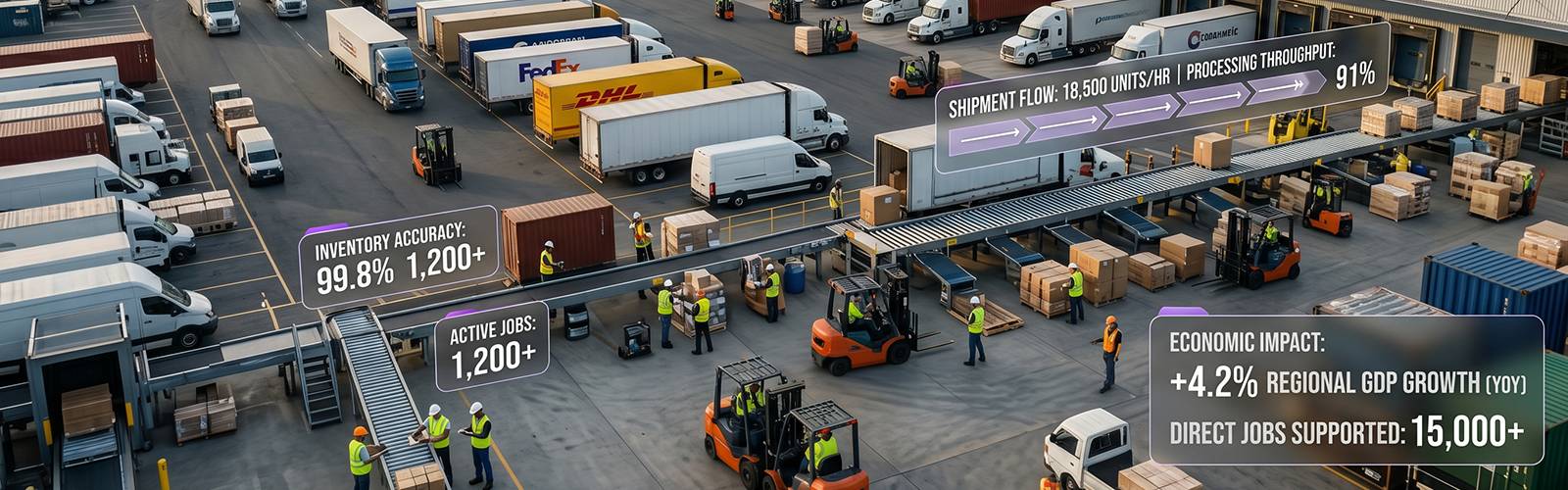
Why Smart Logistics Management Is Essential for Trade, Growth, and Jobs
In today’s global economy, logistics is no longer a back-end function. It has become a strategic driver of trade, business growth, and employment generation. From manufacturers and retailers to e-commerce platforms and exporters, every industry now depends on efficient logistics management. It depends to move goods faster, reduce costs, and meet rising customer expectations.
As global trade networks become more complex, businesses can no longer rely on manual processes and fragmented systems. They need intelligent tools that provide real-time visibility, predictive insights, and operational control. This is where modern logistics management software and AI powered logistics software are reshaping the future.
The global logistics software market, valued at over USD 17.8 billion in 2025, is expected to reach USD 35.8 billion by 2033, highlighting the rapid adoption of digital solutions across industries.
Smart logistics is not just about moving shipments. It is about enabling trade, accelerating economic growth, and creating sustainable jobs.
The Role of Logistics in Global Trade
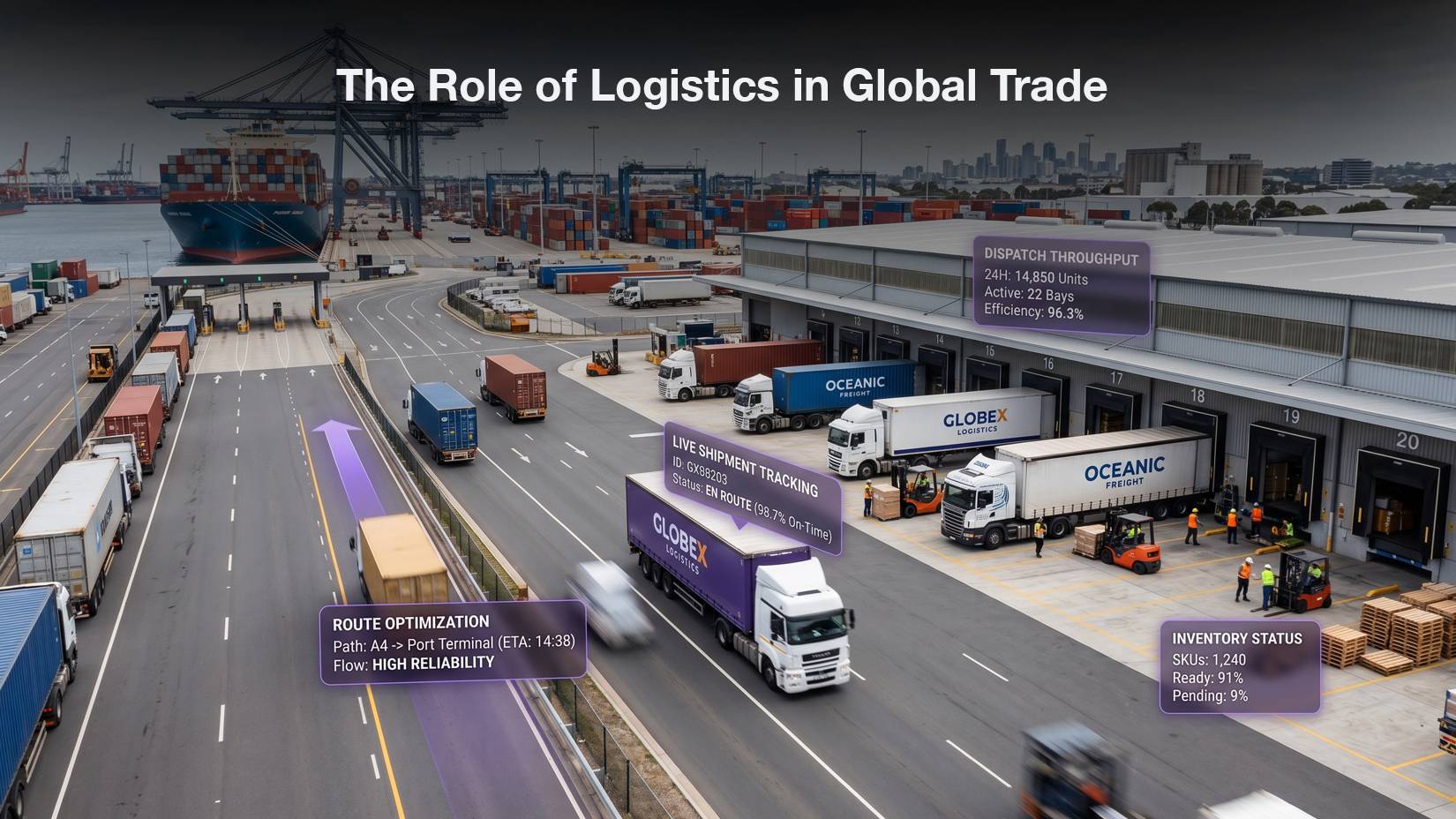
Trade thrives on reliability. Products must move across cities, countries, and continents without delays. A weak logistics network directly affects delivery timelines, customer trust, and business continuity.
According to recent global estimates, world trade crossed $35 trillion, driven by resilient supply chains and digital transformation.
This scale of movement is impossible without robust logistics management systems that coordinate transportation, warehousing, inventory, and last-mile delivery.
A smart logistics management platform helps businesses:
- Track shipments in real-time
- Optimize delivery routes
- Improve warehouse efficiency
- Manage inventory levels
- Reduce transportation costs
For importers and exporters, visibility is critical. Delays at customs, route disruptions, or warehouse bottlenecks can impact revenue significantly. A modern logistics management solution ensures faster decision-making through centralized data and automated workflows.
Simply put, better logistics means smoother trade.
Why Businesses Need Smarter Logistics Management
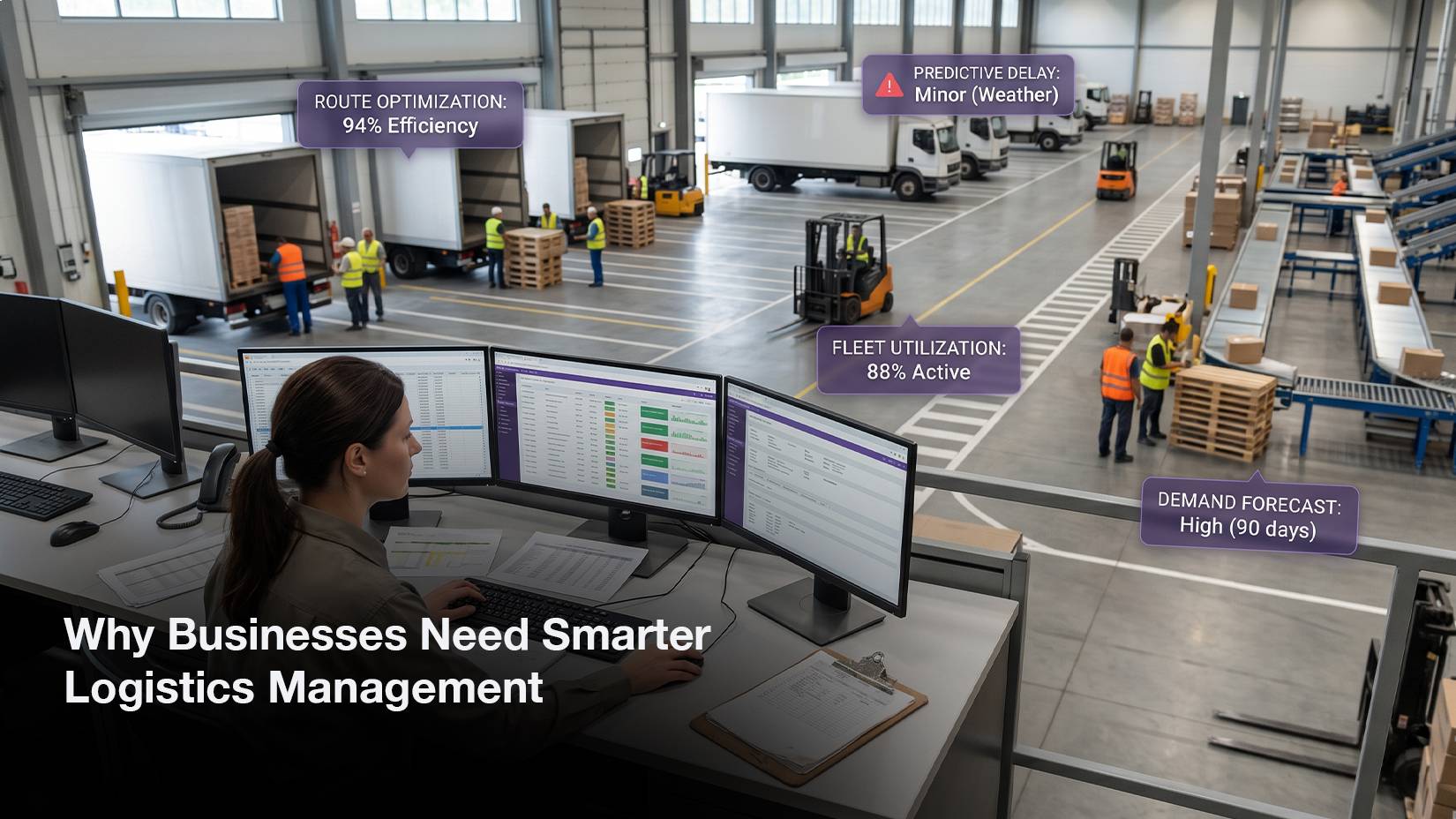
Traditional logistics models often rely on spreadsheets, disconnected teams, and delayed communication. This leads to inefficiencies such as route duplication, excess fuel costs, delayed dispatches, and poor customer experience.
Smart logistics software changes this. By integrating data across fleets, warehouses, suppliers, and customers, businesses gain end-to-end control over their operations.
For example, AI-driven route optimization can reduce delivery distances and improve on-time performance. Industry reports suggest that over 68% of logistics companies are adopting AI-driven analytics to improve efficiency and reduce operational costs.
This is why AI powered logistics software is becoming essential rather than optional.
It enables businesses to:
- Predict delivery delays
- Automate dispatch planning
- Forecast demand spikes
- Improve fleet utilization
- Reduce manual errors
The result is lower operational costs nd higher customer satisfaction
Driving Business Growth Through Logistics Efficiency
Growth is directly linked to how efficiently a company can fulfill demand. A business may have strong sales, but if it cannot deliver on time, growth slows. Poor delivery experiences often lead to customer churn and lost revenue.
Smart logistics management supports business expansion by creating scalable operations. When order volumes rise, an advanced logistics management system can absorb that growth through automation.
For example:
- Warehouses can auto-assign picking tasks
- Delivery routes can be dynamically optimized
- Order priorities can be adjusted in real-time
- SLA risks an be flagged early
This is especially important for sectors like e-commerce, retail, manufacturing, FMCG, and healthcare.
The Asia-Pacific region is expected to witness the fastest growth in logistics software adoption, with a projected CAGR above 11%, driven by manufacturing expansion and digital commerce growth.
This indicates a clear market direction: businesses investing in logistics management software are positioning themselves for faster and more sustainable growth.
The Employment Impact: How Smart Logistics Creates Jobs
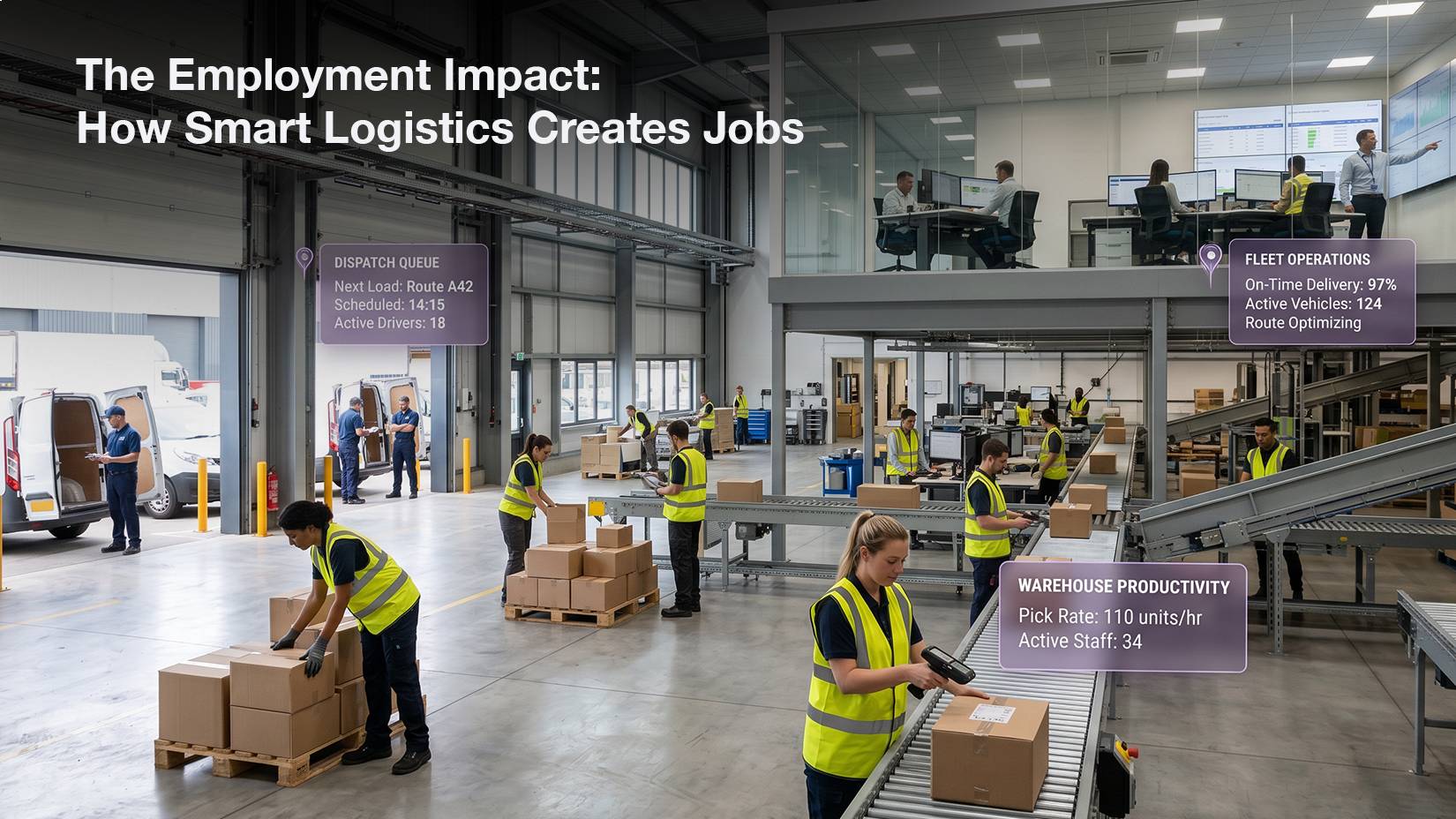
One of the most overlooked benefits of smart logistics is job creation. There is a common misconception that automation reduces employment. In reality, smarter systems often create more specialized and higher-value roles.
As logistics operations scale, demand increases for professionals in:
- Supply chain planning
- Route optimization
- Warehouse analytics
- Fleet operations
- Data management
- Customer support
- Technology integration
A sophisticated logistics management platform requires skilled teams to manage operations, analyze performance, and continuously improve efficiency. Additionally, growth in trade and e-commerce creates direct employment opportunities for drivers, warehouse staff, dispatch teams, and fulfillment executives.
The rise of AI powered logistics software is also opening new roles in data science, operations intelligence, and automation strategy. In this sense, smart logistics supports both blue-collar and white-collar job growth.
Real-Time Visibility Is Now a Competitive Advantage
Customers today expect transparency. Whether it is a B2B shipment or a consumer delivery, visibility is a core expectation.
Businesses that use advanced logistics software can provide live tracking, estimated delivery times, automated notifications, and exception alerts. This improves trust.
Real-time visibility also helps internal teams respond faster to disruptions such as traffic delays, weather events, or warehouse congestion. In volatile trade environments, this agility is critical.
As shipping costs continue to fluctuate globally, companies need better control over routing and cost planning. Recent reports have shown sharp increases in freight and shipping costs across key trade corridors.
A robust logistics management solution helps businesses adapt quickly and protect margins.
The Future of Trade Depends on Intelligent Logistics
The future of trade will be shaped by speed, resilience, and data. Businesses that continue to treat logistics as an operational afterthought will struggle to compete.
On the other hand, companies that invest in smart logistics management will unlock stronger supply chain resilience, faster growth, and better workforce productivity. The shift is already visible.
Cloud adoption, AI integration, and real-time tracking are rapidly becoming standard features of every leading logistics management platform. More than 56% of enterprises are shifting to cloud-based logistics platforms for scalability and visibility.
This is not a future trend. It is today’s business reality.
Conclusion
Smart logistics has become a core driver of trade, business growth, and job creation. It enables faster deliveries, stronger supply chain resilience, and the operational agility businesses need to scale in a fast-moving market.
As customer expectations continue to rise and supply chains grow more complex, the companies that invest in intelligent, data-driven logistics will be the ones that stay ahead.
If your business is looking to improve visibility, optimize delivery performance, and scale with confidence, LogiNext can help you get there. With AI-driven route optimization, real-time tracking, and end-to-end logistics orchestration, LogiNext empowers enterprises to turn logistics into a competitive advantage.
Ready to transform your delivery operations? Explore how LogiNext can help your business move smarter, faster, and at scale.
“” 61
 |  |  |




@LogiNext