



How TMS Evolved from a System of Record to a System of Action
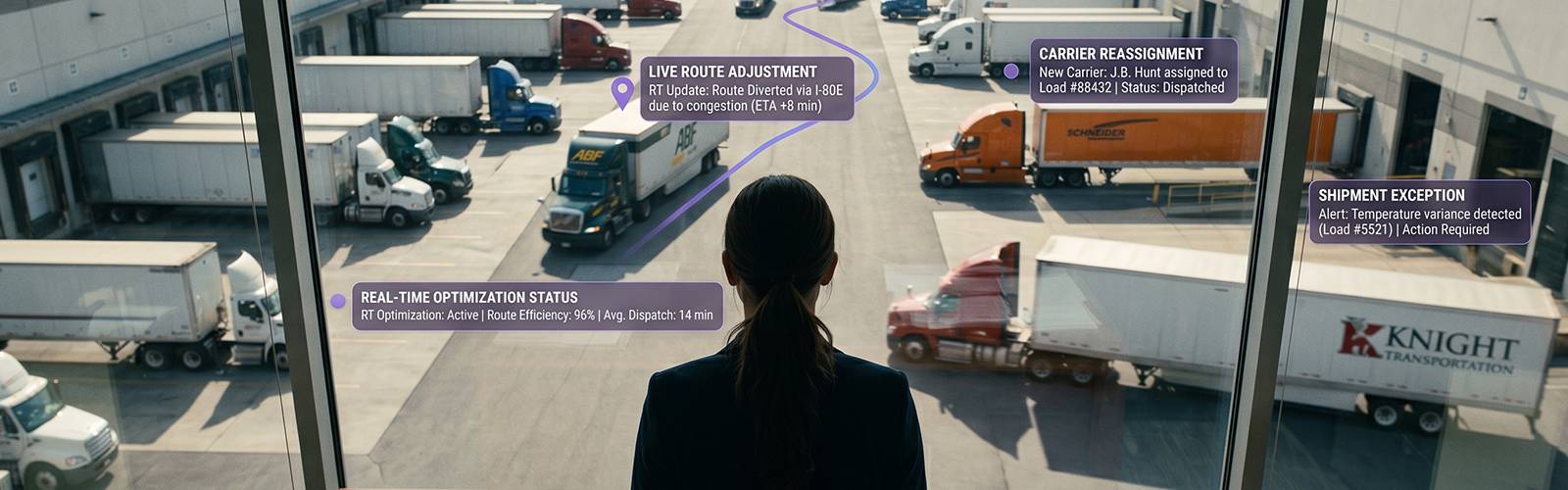
For years, TMS has served as the operational backbone of logistics teams, helping businesses manage shipments, maintain carrier records, and track freight movement. Traditionally, the transportation management system functioned as a system of record, built to capture and store transportation data. Today, it is evolving into a system of action that drives decisions, automates workflows, and optimizes transportation in real time.
This shift is reshaping modern supply chains.
The Traditional TMS: Built for Visibility and Documentation
Historically, a transportation management system was designed to bring structure and visibility to logistics operations. Its core purpose was to centralize shipment data and streamline transportation processes.
This typically included:
- Shipment creation
- Carrier allocation
- Freight billing
- Documentation management
- Delivery status updates
- Compliance records
These capabilities made transportation management significantly more organized and reduced reliance on spreadsheets and disconnected workflows.
For many businesses, adopting a transportation management solution was the first major step toward digital logistics transformation.
However, these systems were largely reactive. They captured what had already happened rather than influencing what should happen next. If a route was delayed, the system displayed the delay. If costs rose, the data reflected it after the impact had already occurred.
That limitation has become increasingly difficult to sustain.
Why the Shift Became Necessary
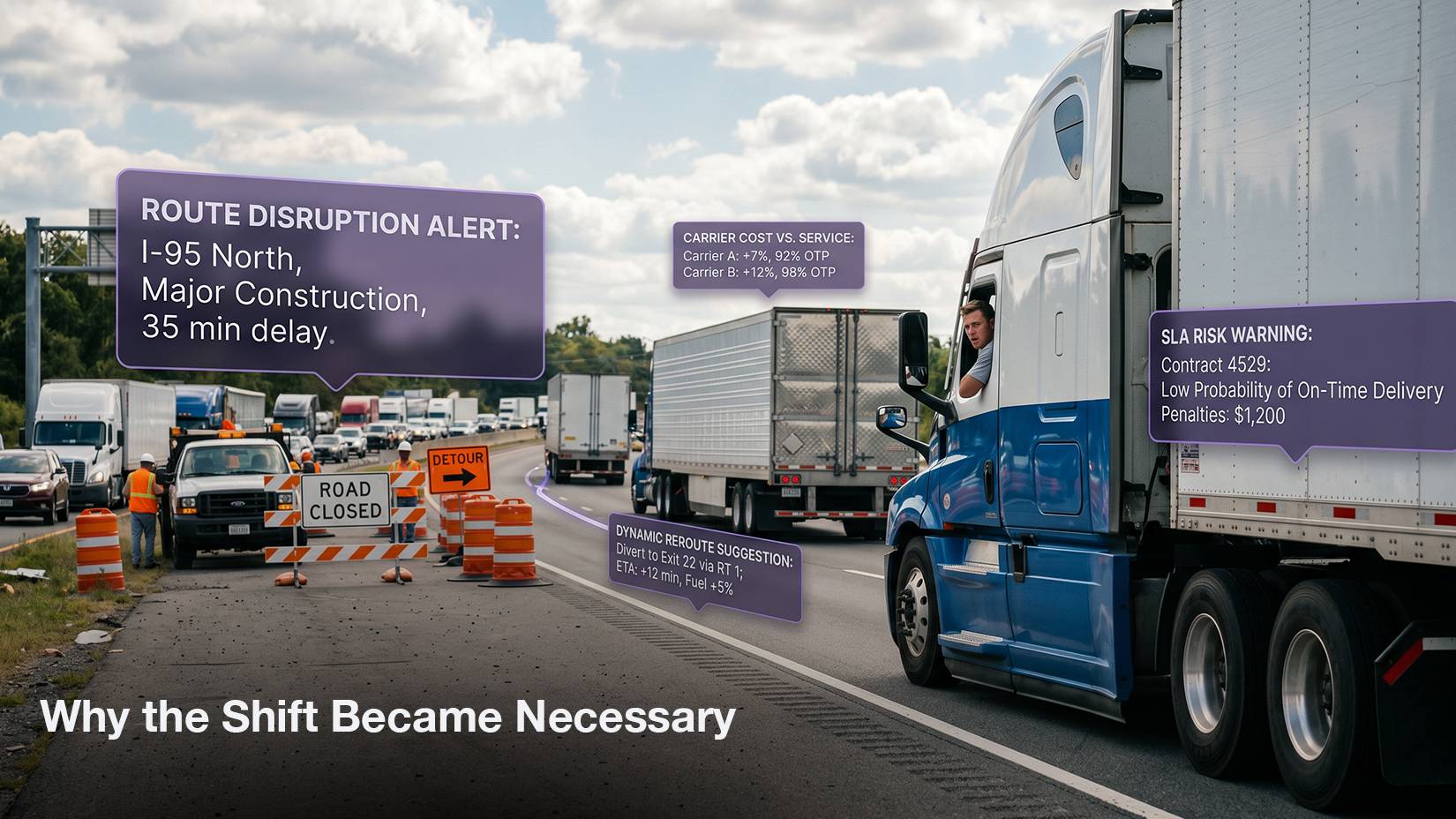
Modern supply chains operate in an environment defined by speed and uncertainty.
Customer expectations are higher than ever. Delivery windows are tighter. Fuel prices fluctuate constantly. Capacity shortages and route disruptions can emerge without warning. A legacy TMS that only stores records is no longer enough.
Today’s logistics operations require systems that can respond instantly and make informed decisions in real time.
For example:
- What happens when a route is blocked unexpectedly?
- Which carrier offers the best balance of cost and service?
- How can empty miles be reduced?
- Which deliveries are at a risk of missing SLA ommitments?
These questions require action, not just visibility.
This is why the modern efficient transportation management system must move beyond reporting and into intelligent execution.
From System of Record to System of Action
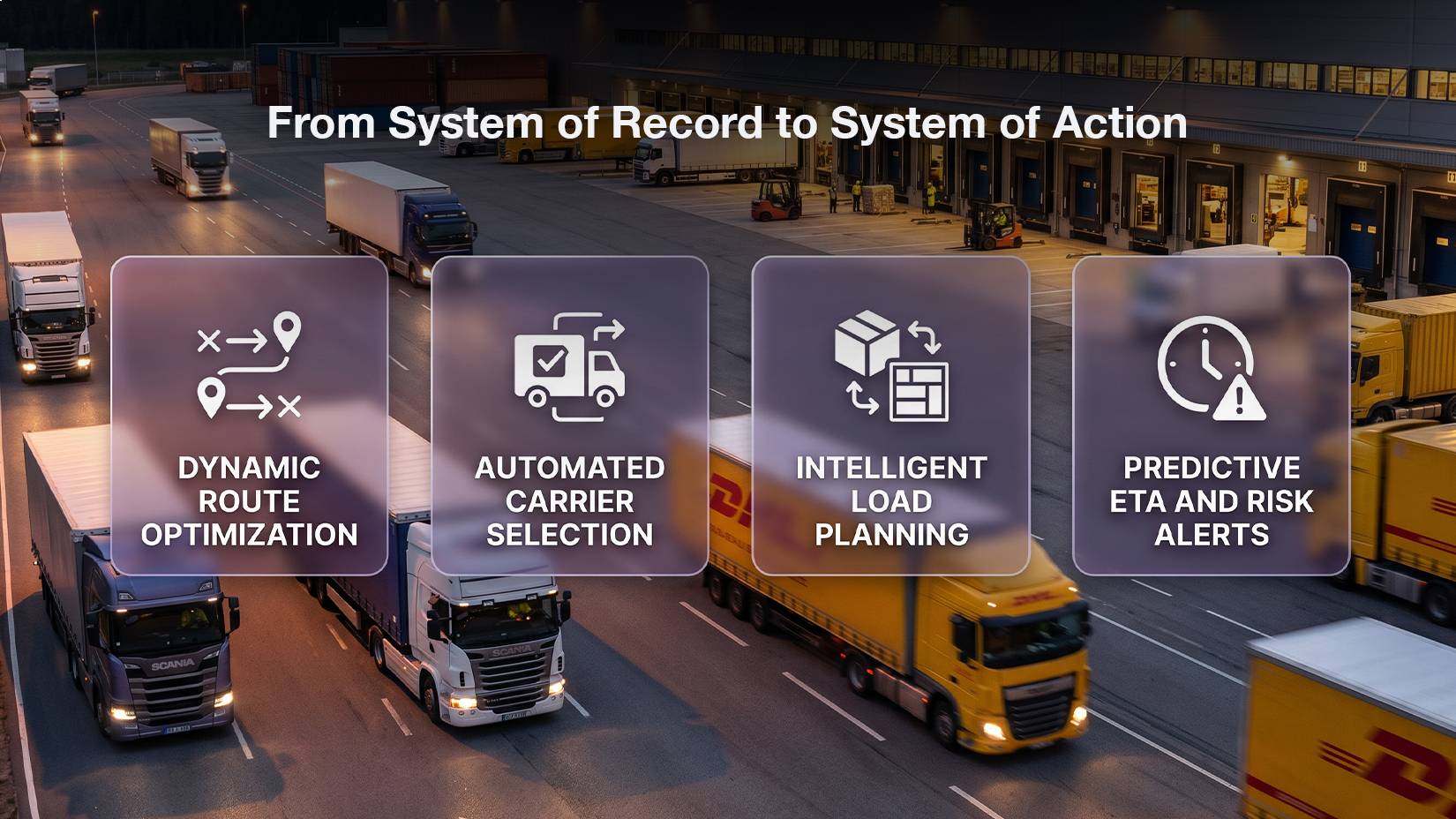
The new generation of transportation management software is designed not just to monitor operations, but to actively orchestrate them.
This is the defining shift. A system of record tells you what happened. A system of action helps determine what should happen next.
Modern TMS platforms now use automation, AI, and predictive analytics to improve decision-making across transportation workflows. This includes:
1. Dynamic Route Optimization:
Routes today cannot remain fixed. An AI powered transportation management platform continuously recalculates routes using live traffic conditions, delivery priority, driver schedules, and fuel efficiency metrics.
This helps reduce transit delays and improve ETA accuracy.
2. Automated Carrier Selection:
Instead of relying on manual carrier decisions, the system evaluates multiple variables such as:
- Cost
- SLA performance
- Lane expertise
- Live capacity
- Historical reliability
This ensures smarter and faster carrier allocation while reducing freight spend.
3. Predictive ETA and Risk Alerts:
Modern AI powered transportation management systems identify delivery risks before they impact performance.
Rather than reporting delays after they occur, the system predicts them in advance and alerts teams early enough to take corrective action. This proactive approach is what truly defines a system of action.
4. Intelligent Load Planning:
A modern transportation management solution can automatically optimize load planning, consolidate shipments, and improve asset utilization. This reduces underfilled trips, minimizes transportation costs, and improves operational margins.
The Role of AI in TMS Evolution
Artificial intelligence is central to the evolution of TMS. AI is enabling businesses to move from operational visibility to intelligent, real-time decision-making.
An AI powered transportation management platform can:
- Forecast demand spikes
- Predict delays
- Optimize dispatch schedules
- Identify cost leakages
- Recommend lternate routes
This makes transportation management significantly more proactive and scalable. What once required hours of manual planning can now be executed in seconds. That speed directly impacts cost, efficiency, and customer experience.
Business Impact: Why It Matters
The evolution of TMS is not just a technology upgrade. It directly impacts business performance.
Organizations adopting modern transportation management software are seeing measurable improvements across key logistics KPIs, including:
- Lower fuel costs
- Faster turnaround times
- Better vehicle utilization
- Reduced empty miles
- Improved on-time delivery rates
In industries such as retail, manufacturing, e-commerce, and FMCG, these gains directly improve profitability.
An efficient transportation management system is no longer just an operational tool. It has become a strategic driver of cost savings and service excellence.
The Future of TMS: Autonomous Logistics Execution
The next phase of transportation management system evolution is autonomy. Future TMS platforms will increasingly move toward self-learning and autonomous execution.
This means systems that can:
- Reassign deliveries automatically
- Reroute vehicles in real-time
- Shift carrier allocations instantly
- Update ETAs proactively
- Trigger exception workflows without manual intervention
This is where AI powered transportation management is headed. In this future state, human teams focus on strategy and optimization while the platform handles operational execution.
Conclusion
The evolution of TMS from record-keeping to intelligent execution is redefining modern logistics. Businesses now need systems that do more than track shipments. They need platforms that can predict, optimize, and act in real time.
With LogiNext’s AI-powered TMS, enterprises can move from reactive logistics to proactive transportation management. Thereby, reducing costs while improving speed, visibility, and customer experience. Click on the red button to know more.
“” 58
 |  |  |




@LogiNext