



How AI, Data, and Telematics Are Transforming Fleet Management
Modern logistics operations increasingly rely on fleet management software to monitor vehicles, optimize routes, and improve operational efficiency. As fleets grow larger and delivery expectations rise, traditional tracking and manual oversight are no longer sufficient.
The shift toward AI, telematics, and real-time analytics is accelerating this transformation. In fact, the global fleet management market was valued at about $22.3 billion in 2022 and is projected to reach $52.45 billion by 2030. This is growing at a CAGR of over 13% (Source: Gitnux).
Modern fleet management systems and AI powered fleet management software enable businesses to analyze vehicle data, monitor driver behavior, and make faster operational decisions.
The Evolution of Fleet Management Systems
Historically, fleet oversight relied heavily on spreadsheets, manual driver logs, and periodic vehicle inspections. These methods provided limited visibility into daily operations.
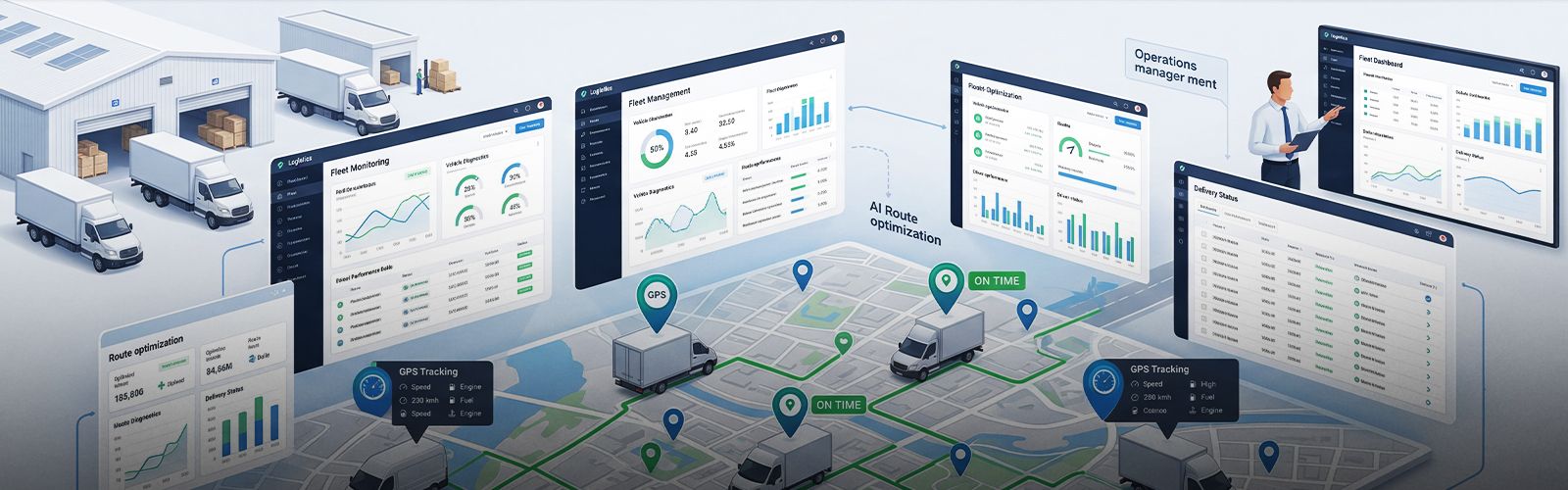
Modern fleet management systems operate differently. They combine GPS tracking, IoT sensors, and cloud analytics to collect large volumes of operational data. This data feeds into dashboards that provide real-time insights into vehicle location, fuel consumption, maintenance status, and driver behavior.
A comprehensive fleet management solution today typically includes:
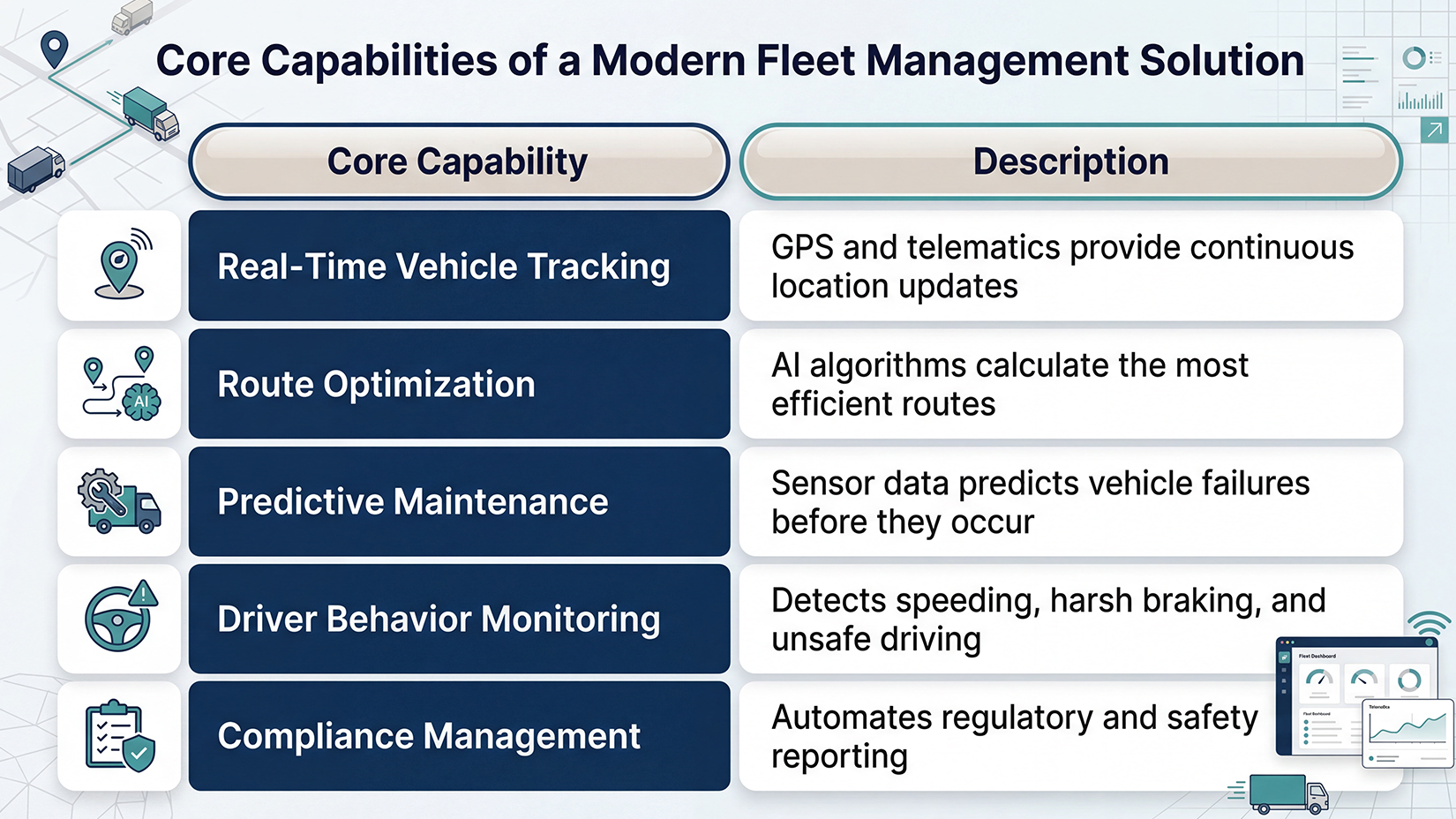
These capabilities allow businesses to transition from reactive fleet management to proactive decision-making.
The Role of Telematics in Connected Fleets
Telematics technology sits at the center of modern fleet transformation. A telematics device installed in a vehicle collects data related to location, engine performance, fuel usage, and driver behavior. This data is transmitted to a centralized fleet management system, where it can be analyzed in real time.
The benefits are measurable. Studies show that telematics adoption can:
- Reduce fuel consumption by 10-15%
- Lower accident rates by 20-30%
- Cut vehicle idle time by 20%
- Reduce maintenance costs by 25%
These improvements directly impact operational efficiency and profitability.
Telematics also improves visibility across large fleets. Managers can monitor vehicle movement, identify inefficiencies, and make faster operational decisions. This level of transparency is essential in industries such as logistics, transportation, utilities, and field services.
As more vehicles become connected, telematics is evolving from a tracking tool into a strategic component of enterprise logistics operations.
AI-Powered Fleet Management: From Data to Decisions
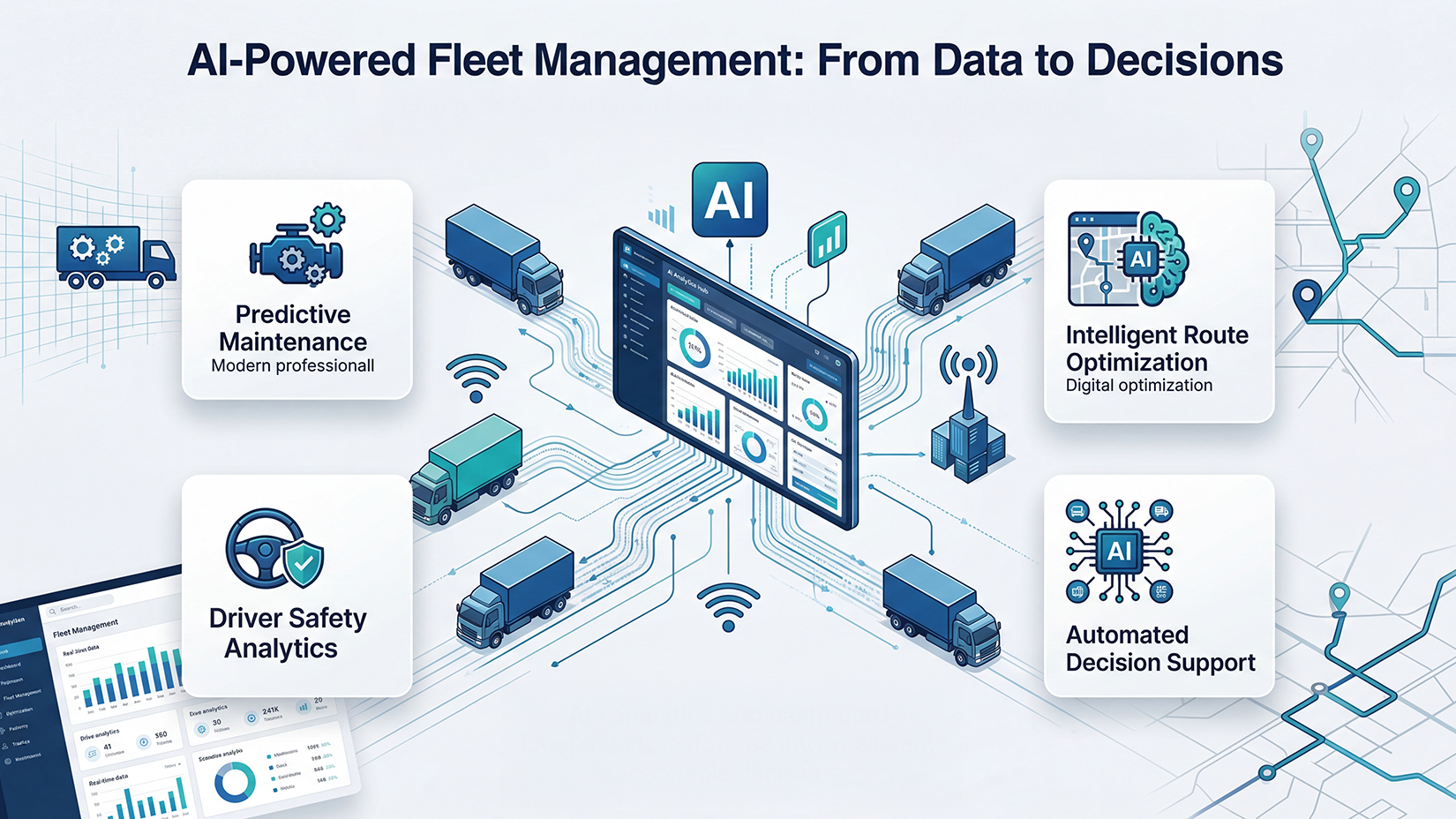
Data alone does not create value unless it can be interpreted quickly and accurately. This is where AI powered fleet management plays a critical role.
Modern AI powered fleet management software analyzes massive datasets generated by telematics systems. Machine learning models identify patterns and anomalies, enabling predictive and automated decision-making.
Key AI-driven capabilities include:
1. Predictive Maintenance:
AI algorithms analyze sensor data to detect early warning signs of component failure. Predictive maintenance models can forecast breakdowns with over 80% accuracy, allowing fleets to schedule repairs before vehicles fail on the road. This reduces downtime and improves vehicle availability.
2. Intelligent Route Optimization:
Traffic conditions, delivery windows, and driver schedules create complex routing challenges. AI-powered optimization tools dynamically calculate the most efficient routes, reducing travel time and fuel consumption. Some deployments have reduced delivery delays by up to 18% through real-time traffic rerouting.
3. Driver Safety Analytics:
AI models evaluate driver behavior patterns using telematics data. Events such as harsh braking, rapid acceleration, or excessive speeding are detected automatically. Driver scoring systems encourage safer driving habits, improving safety and reducing insurance costs.
4. Automated Decision Support:
An advanced fleet management solution can generate automated alerts and recommendations. For example, it can recommend route changes, schedule maintenance, or assign the nearest driver to a task. This reduces manual decision-making and improves operational responsiveness.
The Power of Data in Fleet Operations
Modern fleets generate enormous amounts of operational data. Sensors track engine performance, tire pressure, braking patterns, and environmental conditions. AI platforms transform this raw information into actionable insights.
A single connected truck can generate thousands of data points during a single route. Large fleet operators analyze millions of such data points daily to optimize operations and predict maintenance needs.
Industry research shows that 63% of fleet managers believe data analytics will have the biggest impact on fleet operations in the next five years.
Data-driven insights help companies:
- Improve route planning and dispatch fiiciency
- Reduce fuel consumption and emissions
- Optimize vehicle utilization
- Enhance driver safety
- Improve on-time performance
In fact, organizations using advanced fleet management software report an average 25% improvement in on-time delivery rates.
The Rise of AI Powered Fleet Management Software
The next phase of fleet transformation lies in intelligent automation.
AI powered fleet management software combines predictive analytics, telematics, and cloud computing into a unified platform. These systems continuously analyze operational data and recommend actions without requiring constant human intervention.
Several emerging trends are accelerating adoption:
1. Cloud-Based Platforms:
Cloud deployments now account for nearly 67% of fleet management system installations, enabling scalable and remote fleet oversight.
2. Connected Vehicles:
By 2025, a large share of new commercial trucks are expected to include built-in telematics hardware, expanding the available data ecosystem.
3. AI Analytics Modules:
More than 40% of new platforms now integrate AI-driven analytics, enabling advanced forecasting and optimization capabilities.
These innovations are turning AI powered fleet management into a strategic advantage for logistics providers.
The Future of Fleet Management Solutions
Fleet operations are entering a new digital era. Vehicles are no longer isolated assets but part of a connected data ecosystem.
In the near future, advanced fleet management systems will integrate even more technologies, including:
- Edge AI devices for real-time vehicle analytics
- Digital twin simulations for fleet planning
- Electric vehicle monitoring and charging optimization
- Autonomous fleet orchestration systems
These developments will further enhance operational visibility and automation.
Organizations that adopt advanced fleet management software will gain a significant competitive advantage through better efficiency, safety, and sustainability.
Conclusion
AI, telematics, and data analytics are transforming how fleets operate. Modern fleet management software enables real-time visibility, predictive insights, and smarter decision-making across operations. With AI powered fleet management software, businesses can reduce costs, improve safety, and deliver faster, more reliable services.
If you are looking to modernize your fleet operations, explore LogiNext’s AI powered fleet management solution. Its intelligent routing, real-time telematics integration, and advanced analytics help enterprises optimize fleet performance and gain complete operational visibility.
 |  |  |




@LogiNext