




Logistics Sustainability: A Guide to Resilient Supply Chains During Disruptions
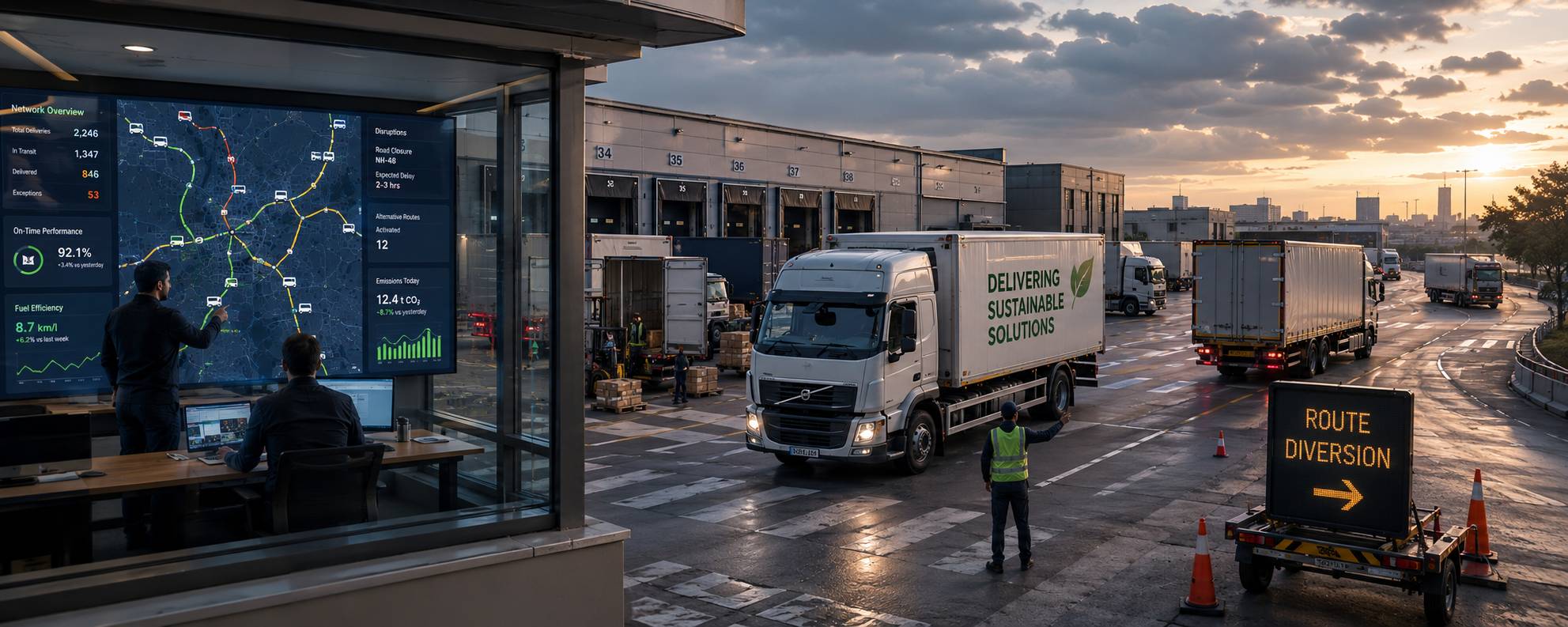
Logistics sustainability is often treated as a long-term goal, but a supply chain disruption is exactly when it matters most. When fuel prices rise, routes become unavailable, suppliers shut down, or capacity gets tight, businesses can be tempted to abandon sustainability initiatives in favor of whatever keeps shipments moving.
That approach can create higher costs and greater operational risk. Sustainable logistics practices such as route optimization, network diversification, efficient packaging, alternative transportation modes, and emissions tracking can actually make supply chains more resilient. In fact, logistics emissions from freight and warehousing account for at least 7% of global greenhouse gas emissions. This is according to McKinsey.
The smarter approach is to make sustainability part of everyday logistics management. And not a program that disappears when things get difficult.
Key Takeaways
- Logistics sustainability and supply chain resilience should be managed together.
- Route optimization can reduce unnecessary mileage while helping teams respond to disruptions.
- Supplier, carrier, and transportation-mode diversification can improve both resilience and environmental performance.
- Sustainability metrics should be visible alongside operational KPIs.
- Logistics sustainability software can help teams incorporate environmental considerations into day-to-day decisions.
- The goal is not to choose sustainability over resilience. It is to design operations where one strengthens the other.
What Is Logistics Sustainability?
Logistics sustainability is the practice of moving, storing, and delivering good. This is done while minimizing environmental impact without compromising operational and commercial performance.
It includes reducing fuel consumption and emissions, optimizing transportation networks, minimizing empty miles, using resources efficiently, reducing waste, and choosing lower-impact transportation and packaging options.
This matters because supply chains have a much larger environmental footprint than many businesses realize. The World Economic Forum has reported that eight major supply chains account for more than half of global CO₂ emissions.
Sustainability, therefore, cannot sit separately from supply chain management. It needs to be part of how transportation, inventory, suppliers, warehouses, and delivery networks are managed.
Why Does Sustainability Matter During a Supply Chain Disruption?
A disruption changes the economics of logistics very quickly. A blocked route can add miles. A shortage of vehicles can force companies to use less efficient carriers. Fuel price volatility can increase transportation costs. Expedited shipping can also increase both cost and emissions.
This is where sustainability and resilience overlap.
For example, consolidating shipments, optimizing routes, using regional suppliers, and shifting freight to more efficient modes can reduce environmental impact while also lowering exposure to capacity shortages and fuel volatility.
Sustainability initiatives such as lighter packaging, waste reduction, diversified sourcing, energy efficiency, and network optimization can directly support cost control and resilience during disruptions.
The takeaway is simple. If sustainability only works when everything goes according to plan, it is not fully integrated into the operation.
How Can Businesses Maintain Logistics Sustainability During Disruptions?
1. Optimize Routes Before Adding More Capacity:
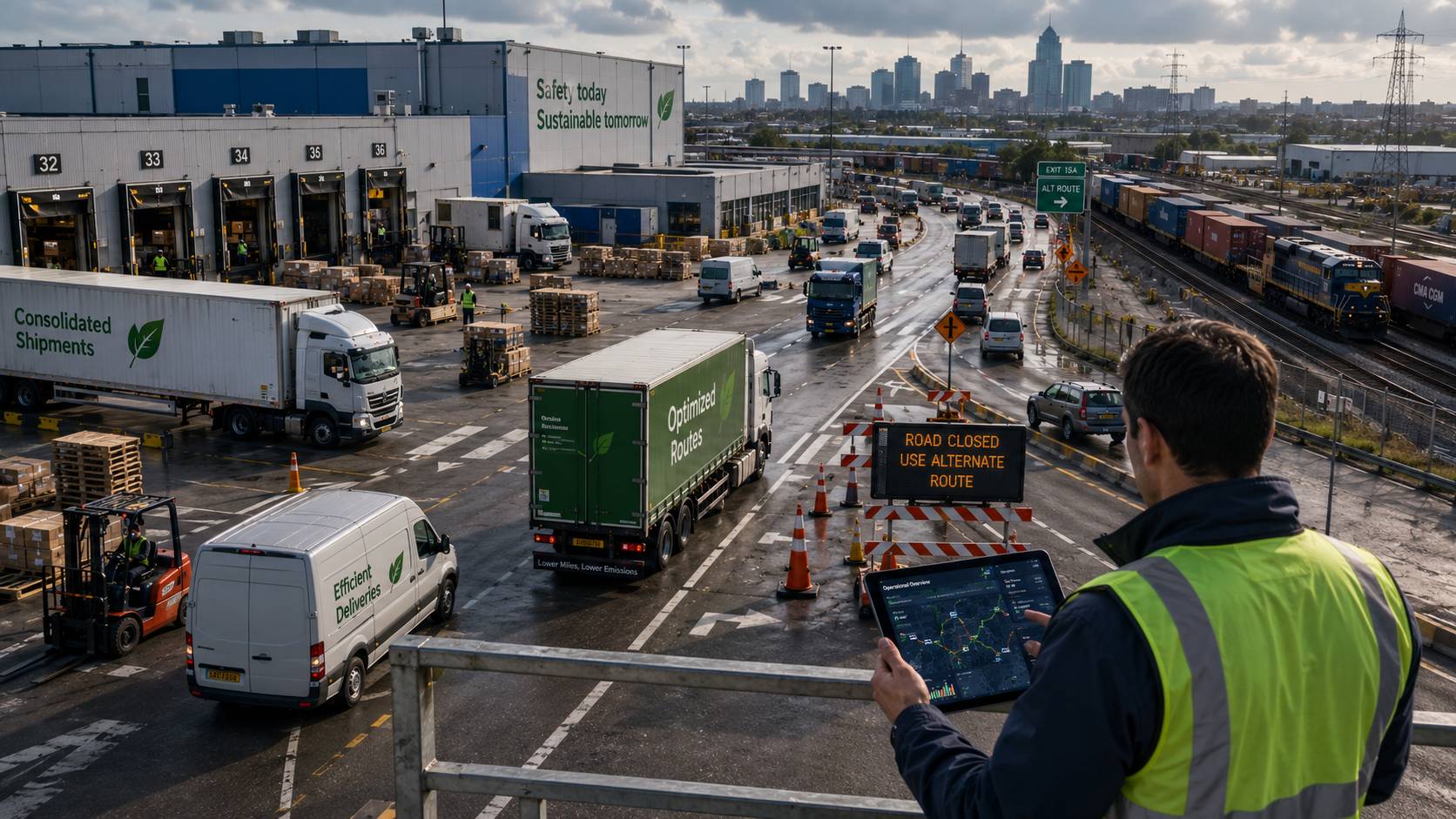
When a route becomes unavailable, the quickest response is often to add vehicles or reroute deliveries manually. That may solve an immediate problem, but it can create unnecessary mileage, fuel consumption, and costs.
Route optimization software can evaluate constraints such as vehicle capacity, delivery windows, traffic, road closures, and service priorities. This is to identify more efficient alternatives.
This becomes particularly important as road transportation remains a major source of emissions. The IEA estimates that road transport produced just over 6 gigatonnes of CO₂ in 2024.
2. Diversify Suppliers, Carriers and Transportation Modes:
Resilience and sustainability both benefit from diversification.
Regional sourcing can reduce transportation distances, while access to multiple carriers and modes gives logistics teams more options when a disruption affects one part of the network.
Intermodal transportation can also help companies move freight more efficiently when road capacity is constrained. The objective is not simply to find another way to deliver. It is to find a viable alternative that balances cost, service, resilience, and environmental impact.
3. Track Sustainability Metrics Alongside Operational KPIs:
Sustainability metrics should not live in a separate spreadsheet that nobody opens until reporting season. Businesses should monitor metrics such as:
- Fuel consumption per shipment
- CO₂ emissions per delivery or tonne-kilometer
- Empty miles
- Vehicle utilization
- Shipment consolidation rates
- Waste generated per facility
- Percentage of shipments using lower-emission transportation modes
The EPA’s SmartWay program similarly emphasizes measuring, benchmarking, and improving freight transportation efficiency as a way to advance supply chain sustainability.
When sustainability data appears alongside cost, delivery, and fleet KPIs, logistics teams can make better trade-offs during disruptions.
4. Use Logistics Sustainability Software for Faster Decisions:
Technology can make sustainability practical at an operational level.
Logistics sustainability software can bring transportation data, route planning, fleet utilization, delivery performance, and emissions-related metrics into a common decision-making environment.
For example, when a disruption forces a logistics manager to choose between three alternative routes, the best option should not simply be the fastest. It should consider distance, capacity, cost, service requirements, and environmental impact.
This is where modern logistics management platforms can help organizations move from sustainability reporting to sustainability-aware execution.
What Is the Best Strategy for Balancing Sustainability and Resilience?
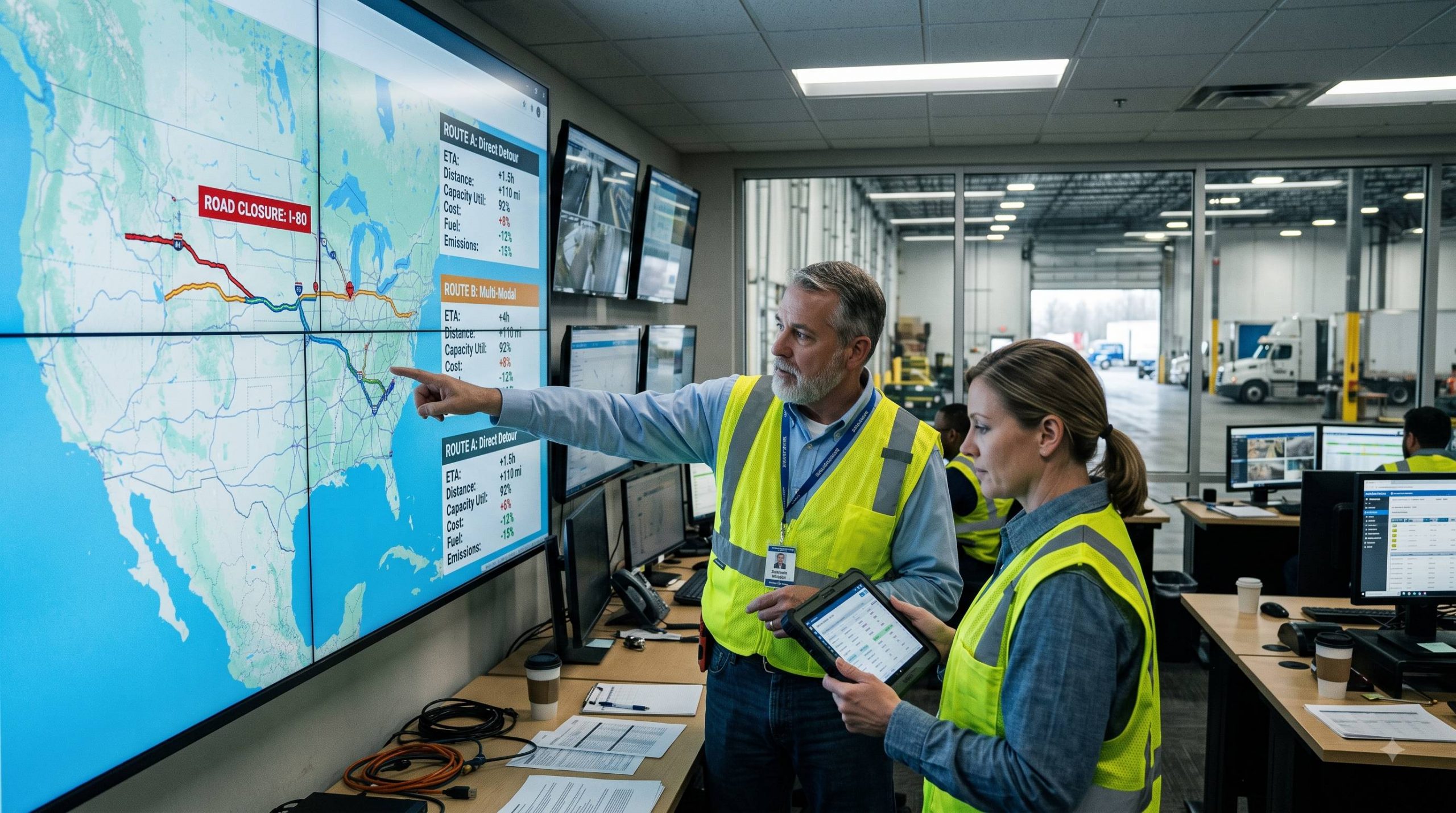
The best approach is to evaluate every disruption response across four key factors: cost, service, resilience, and sustainability.
First, consider the cost. Will the response increase transportation, fuel, or operating expenses? Next, assess service. Can customer commitments and delivery timelines still be met?
Then evaluate resilience. Does the alternative reduce dependence on a vulnerable supplier, carrier, route, or transportation mode? Finally, consider sustainability. Will the decision minimize unnecessary miles, fuel consumption, waste, and emissions?
For example, if a primary delivery route becomes unavailable, choosing an alternative route based only on distance may not be the best decision. A slightly longer route with better vehicle utilization, fewer delays, and lower congestion could deliver a better overall outcome.
This approach prevents sustainability from becoming a competing priority. Instead, it becomes one of the factors that helps logistics teams make smarter decisions during disruption.
What Are the Biggest Mistakes to Avoid?
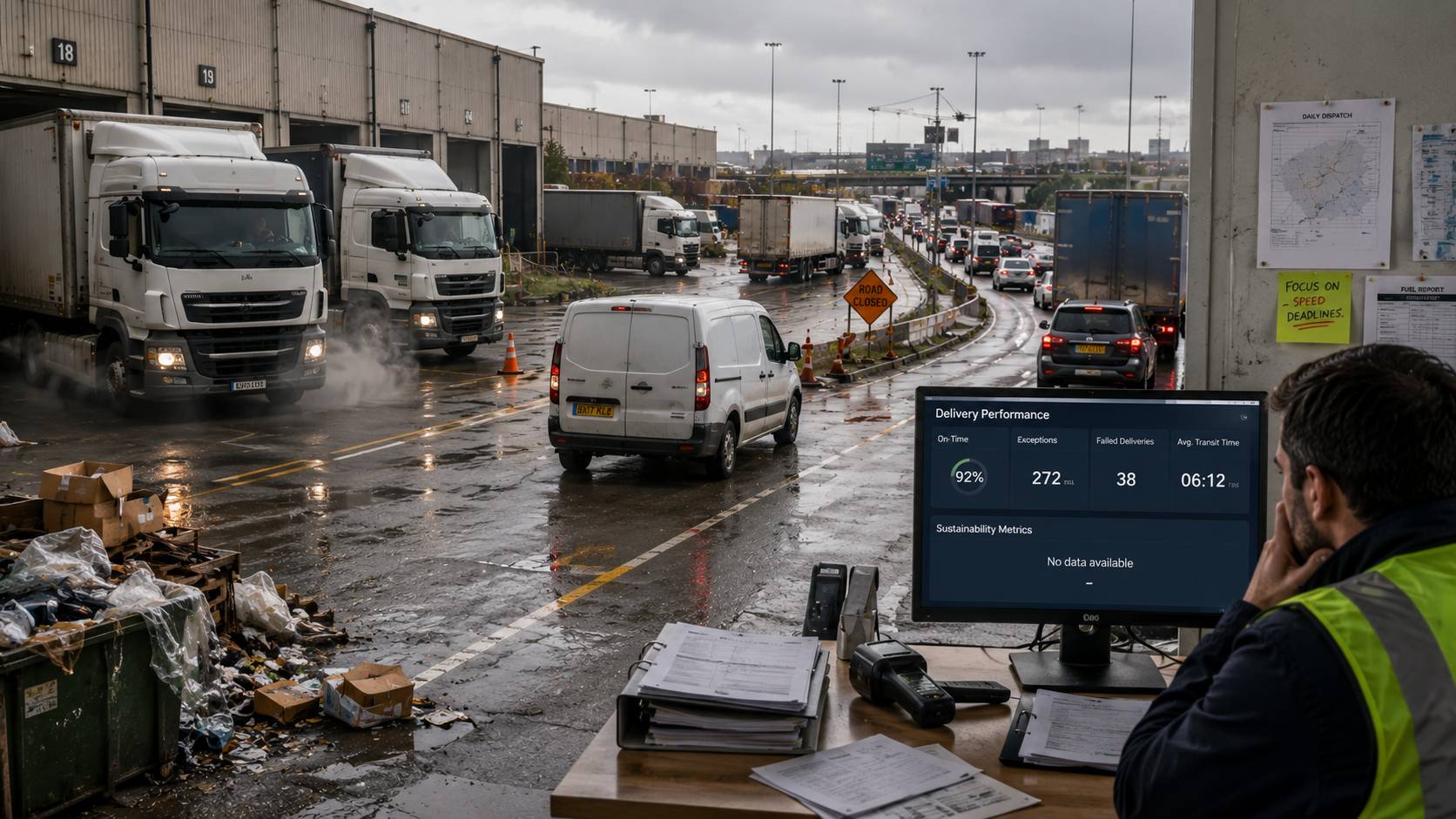
Companies commonly make three mistakes during disruptions:
Treating Sustainability as Optional:
Abandoning sustainable practices during disruptions can increase fuel use, waste, and transportation costs.
Optimizing for Speed Alone:
The fastest solution may not be the most efficient or resilient, especially when it increases unnecessary miles or fuel consumption.
Tracking Sustainability Separately:
Environmental metrics should be integrated with logistics management so they influence operational decisions, not remain isolated from day-to-day performance.
The better approach is to build sustainability into network design, carrier selection, routing, procurement, and daily performance management before a disruption occurs.
Frequently Asked Questions
1. What is logistics sustainability?
Logistics sustainability means managing transportation, warehousing, and delivery operations in ways that reduce environmental impact. This is done, while maintaining cost efficiency, service quality, and operational resilience.
2. How does a supply chain disruption affect sustainability?
Disruptions can increase transportation distances, fuel consumption, expedited shipping, waste, and inefficient asset utilization. Without proper planning, these effects can increase both operating costs and emissions.
3. Can sustainability improve supply chain resilience?
Yes. Practices such as regional sourcing, network diversification, route optimization, shipment consolidation, and efficient energy use can reduce environmental impact while lowering exposure to fuel volatility, capacity shortages, and network disruptions.
4. What does logistics sustainability software do?
Logistics sustainability software can help organizations monitor transportation activity, optimize routes, improve fleet utilization, measure environmental performance, and incorporate sustainability considerations into logistics decisions.
Conclusion
Supply chain disruptions do not have to come at the cost of sustainability. With smarter routing, better fleet utilization, and real-time visibility, businesses can improve resilience while reducing unnecessary miles, fuel use, and emissions.
LogiNext helps enterprises make smarter logistics decisions across complex delivery networks. Book a demo today to see how you can build a more efficient and sustainable supply chain.
“” 34
 |  |  |




@LogiNext