




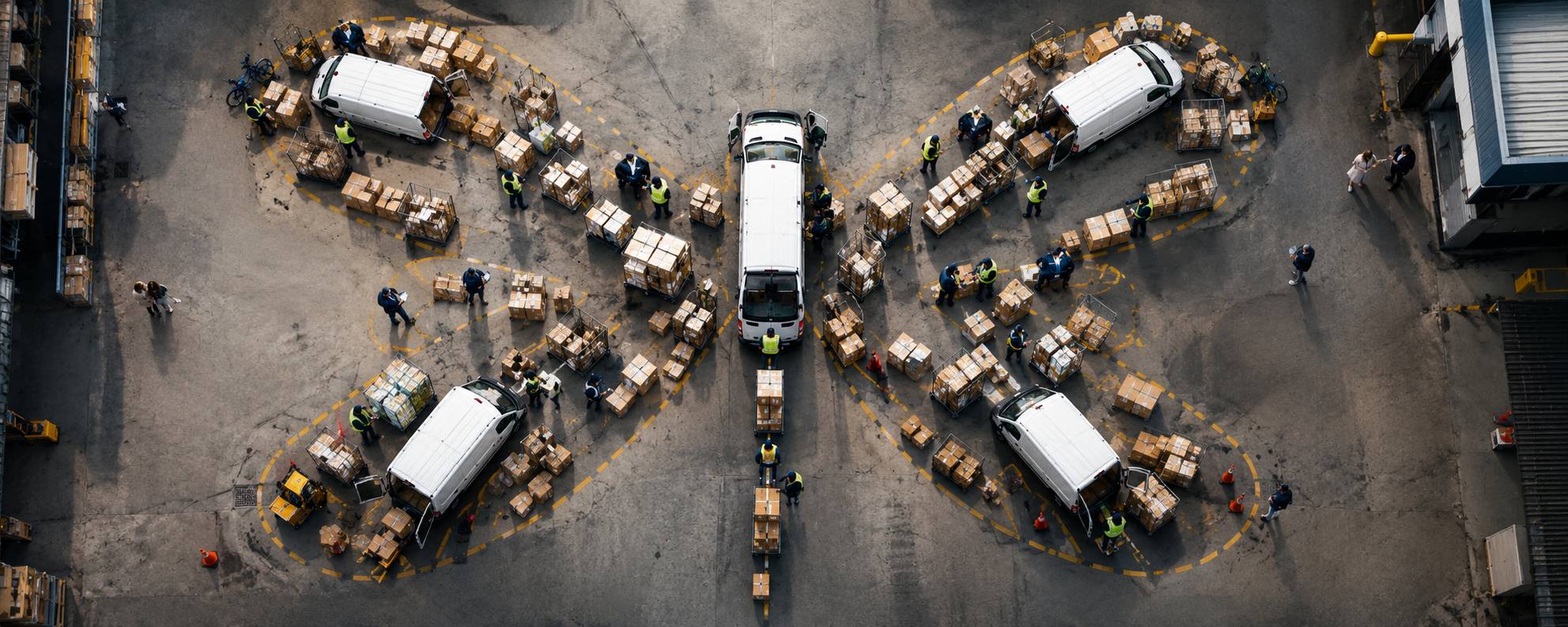
The Butterfly Effect of Last Mile Delivery: Every Move Has a Ripple
Last mile delivery can look deceptively simple: get an order from point A to customer’s doorstep. Behind the final stretch, however, sits a tightly connected chain of decisions involving orders, drivers, vehicles routes, delivery windows addresses, traffic and customer expectations. Change one small variable and the effects can travel much further than expected.
That is where the Butterfly Effect becomes an interesting way to look at last-mile operations. A seemingly minor disruption such as incorrect address or a late departure, can trigger delays, reattempts, additional costs and unhappy customers. The problem is not always the size of the original disruption. It is the size of the ripple it creates.
Key Takeaways
- The Butterfly Effect shows how small changes in complex systems can create larger downstream consequences.
- Last mile delivery is particularly sensitive because routes, drivers, customers, capacity, time windows and costs are interconnected.
- Address issues, late departures, failed deliveries and route changes can create operational ripples far beyond the original problem.
- Last mile delivery software can help businesses connect decisions, adapt plans and reduce the impact of disruptions.
- The objective is not simply faster delivery. It is a more predictable, efficient and resilient delivery.
What Is The Butterfly Effect?
The Butterfly Effect describes how a small change in a complex system can eventually lead to significantly different outcomes. The concept is associated with meteorologist Edward Lorenz and chaos theory. The famous butterfly metaphor emerged from Lorenz’s work on how tiny differences in initial conditions can produce dramatically different outcomes in weather models.
In simple terms:
Small change → chain reaction → larger consequence
That makes the Butterfly Effect a surprisingly useful lens for understanding last mile delivery.
Imagine a driver spending an extra 10 mins locating an address. Those 10 minutes do not simply disappear. They can push the next stop closer to the delivery window, affect subsequent stops, increase the likelihood of a late delivery and potentially create a reattempt if the customer is no longer available.
One small issue has now become an operational chain reaction.
Why Is Last Mile Delivery So Sensitive to Small Changes?
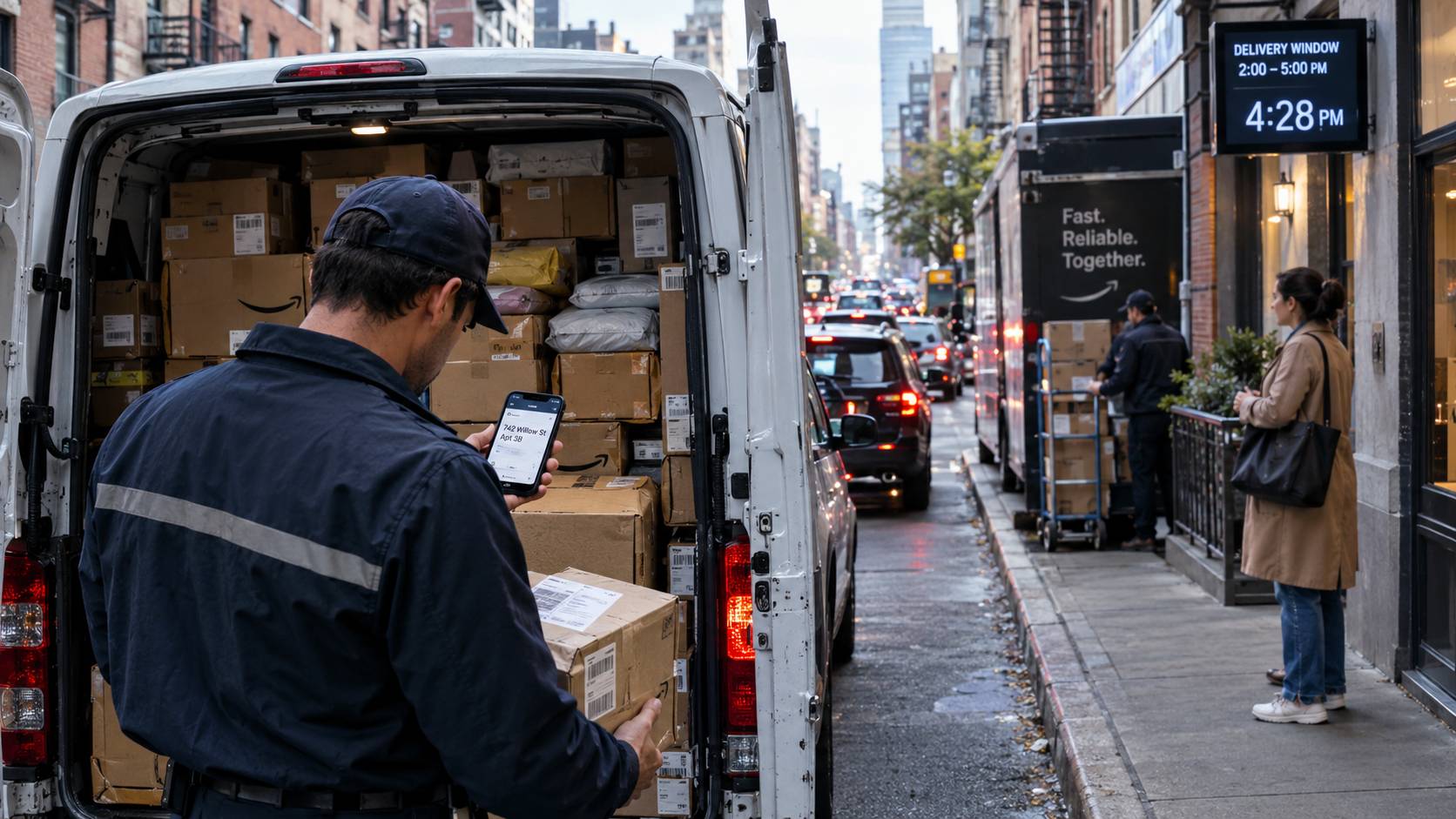
Last mile operations are interconnected by nature. A delivery plan has to balance multiple moving parts at once, including order volumes, driver availability, vehicle capacity, route sequences, customer availability, promised delivery windows and operating costs. When one element changes, another one has to adjust.
Customer expectations make that balancing act even harder. McKinsey’s 2025 survey of more than 1000 U.S consumers found that 90% were willing to wait two or three days for delivery, especially when shipping was free. The same research found that consumers placed greater importance on on-time reliability than delivery speed.
That distinction matters. Businesses do not simply need to deliver faster. They need to delivery predictably, while keeping the cost of doing so under control.
And predictability becomes difficult when small disruptions keep creating larger ones.
The Last Mile Butterfly Effect in Action
A Small Address Problem Becomes a Bigger Route Problem
An incomplete or inaccurate address may initially look like a customer data issue. For the driver, it can become several extra minutes of searching, calling or navigating, which then pushes the rest of the route closer to its promised delivery windows.
If the delay compounds, the businesses may have to deal with late deliveries, customer queries or even another delivery attempt. What started as a small data-quality issue has now affected driver productivity, route efficiency and customer experience.
A Late Start Creates Pressure Across the Route
Now consider a vehicle that leaves its starting point 20 minutes late. The first few deliveries might absorb the delay without much trouble, but that does not mean the lost time has disappeared.
It has simply moved further down the route.
As the driver progresses, the available buffer shrinks. A later stop may have a tighter delivery window, traffic may add another delay, and the final few deliveries can become increasingly difficult to complete on schedule.
This is why last mile delivery efficiency cannot be measured by individual stops alone. The bigger question is how one decision affects everything that follows.
One Failed Delivery Can Create Another Trip
A missed delivery is another classic Butterfly Effect.
The customer is unavailable, the delivery cannot be completed and the order needs another attempt. That means additional driver time, vehicle capacity and mileage. McKinsey estimates that 10% of packages delivered in last-mile logistics need to be re-delivered, with re-deliveries accounting for 1–3% of revenue for B2C carriers in its analysis.
The original failure may have been small. The resulting operational footprint is not.
One Route Change Can Affect the Entire Sequence
Routes are not simply lines connecting a collection of addresses. The sequence matters.
Add an urgent order, move one stop or change the available vehicle capacity, and the optimal sequence may change. That can affect travel time, driver workload and delivery windows across the route.
This is why last mile delivery optimization is less about finding one perfect route and more about continuously making better decisions across a connected operation.
When The Ripple Reaches The Business
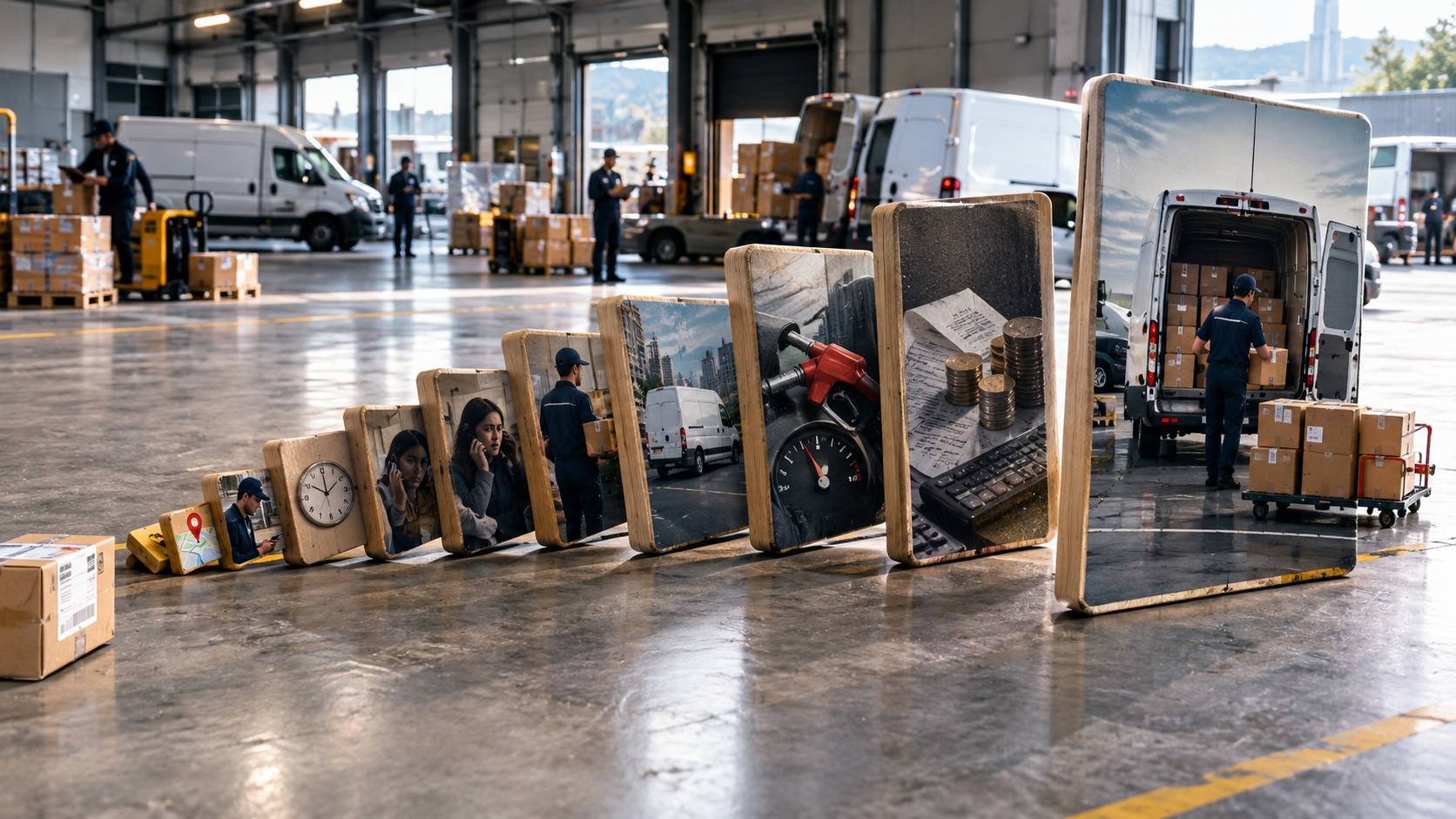
The Butterfly Effect becomes expensive when an operational disruption starts affecting multiple business outcomes at once.
Extra mileage can increase delivery costs. Reattempts consume capacity that could have been used for few orders. Manual intervention takes operations teams away from higher-value work. Repeated delays can affect customer trust, while unnecessary trips can increase fuel consumption and emissions.
Deloitte’s September 2026 research across more than 300 companies found that businesses are facing increasing difficulty balancing three competing pressures in last-mile delivery: speed, cost and customer experience, while delivery service expenses continue to rise.
The takeaway is simple: a last-mile problem should not be measured only by what happens at the point of failure. It should be measured by everything that failure sets in motion.
How Last Mile Delivery Can Break the Ripple
If small changes can create large consequences, businesses need more than a static delivery plan. They need systems that can account for changing conditions and help teams understand how one decision affects the wider operation.
This is where last mile delivery software and modern last mile delivery solutions can make a difference. Instead of relying entirely on manual intervention, businesses can use technology to connect planning, routing, execution and operational decisions.
A capable last mile delivery management software solution can help businesses:
- Adjust delivery plans as conditions change
- Optimize routes and stop sequences
- Match orders with available capacity
- Reduce repetitive manual decisions
- Identify operational exceptions earlier
- Improve delivery reliability and resource utilization
- Automate routine workflows across the delivery operation
The goal of last mile delivery technology is not to eliminate every disruption. That is unrealistic. Traffic will happen. Customers will miss deliveries. Orders will change.
The goal is to stop small disruptions from becoming unnecessarily large ones.
How Can Businesses Reduce the Last Mile Butterfly Effect?
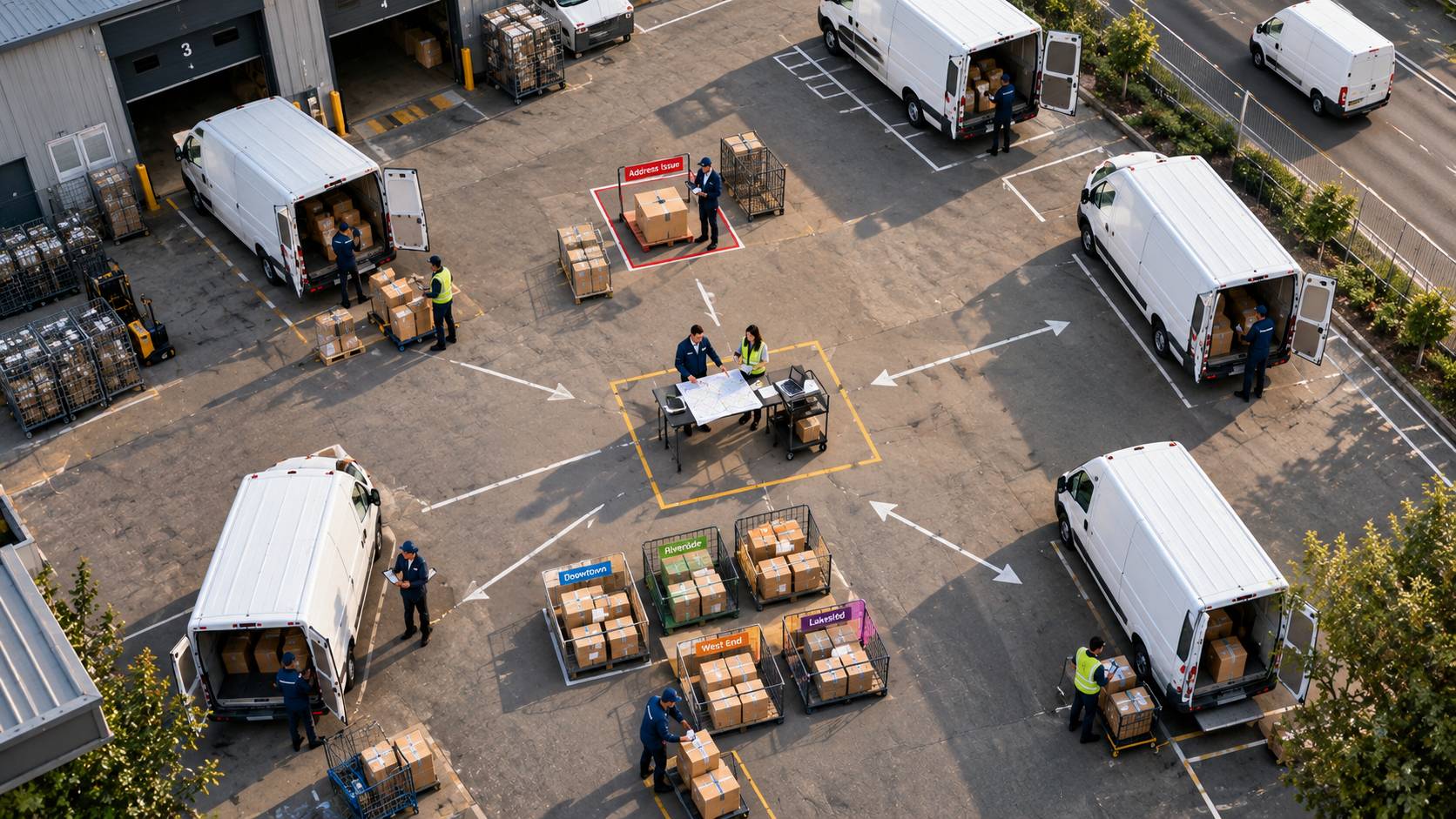
Businesses can make their operations more resilient by focusing on five principles:
1. Plan for change, not perfection. A route that looks perfect at 7 AM may not remain perfect all day.
2. Catch small problems early. An address issue identified before dispatch is very different from one discovered at the doorstep.
3. Connect operational decisions. Routing, capacity, delivery windows and driver availability should not operate as isolated decisions.
4. Automate repetitive work. The more routine decisions technology can handle, the more attention teams can give to genuine exceptions.
5. Measure the ripple, not just the incident. Instead of asking only why a delivery was late, look at what else the delay affected.
That last point is particularly important. A mature operation does not simply ask, “What went wrong?” It asks, “What did that problem cause?”
Frequently Asked Questions
1. What is the Butterfly Effect in last mile delivery?
The Butterfly Effect in last mile delivery describes how a small operational change or disruption can create larger downstream consequences. A minor delay, address issue or route change can affect subsequent deliveries, costs, driver productivity and customer experience.
2. Why is last mile delivery challenging?
Last mile delivery involves many interconnected variables, including delivery locations, route sequences, drivers, vehicles, capacity, traffic and customer availability. Changes in one area can quickly affect others, making consistent execution difficult.
3. How can last mile delivery software improve efficiency?
Last mile delivery software can help businesses optimize routes, manage capacity, automate workflows, adapt delivery plans and identify operational exceptions. This can reduce manual work and help prevent small disruptions from becoming larger operational problems.
4. How can businesses reduce last mile delivery costs?
Businesses can reduce costs by improving route and capacity utilization, limiting unnecessary mileage and reattempts, reducing manual intervention and making better operational decisions using data and automation.
5. How does technology improve last mile delivery?
Last mile delivery technology connects planning and execution, helping businesses make better decisions as conditions change. It can support route optimization, automation, capacity planning and operational analysis while improving delivery consistency.
Conclusion
The Butterfly Effect offers a useful way to rethink last mile delivery. The biggest problems do not always begin as big problems. Sometimes they start with a few extra minutes, an incorrect address, a missed handoff or a small change to a route.
What separates resilient delivery operations is how they respond to those moments. Instead of allowing every small disruption to create a wider ripple, businesses can use connected planning, last mile delivery automation and intelligent decision-making to contain the impact and keep the operation moving.
LogiNext helps businesses bring these decisions together through intelligent delivery orchestration, enabling teams to plan, optimize and manage complex delivery operations with greater control. If you’re looking to make your last mile operation more resilient, explore how LogiNext can help turn small disruptions into manageable exceptions rather than full-blown operational storms.
2
 |  |  |




@LogiNext