





What Are Digital Logistics Solutions? A 2026 Enterprise Guide
Digital logistics solutions are technology platforms and connected tools that help businesses plan, execute, monitor, and optimize logistics operations. Its done by using real-time data, automation, analytics, and AI. Instead of managing transportation, deliveries, fleets, and customer updates through disconnected systems and spreadsheets, enterprises can bring these processes into a more connected digital environment.
And the need is becoming harder to ignore. McKinsey estimates that companies implementing digital logistics capabilities can see 10-20% performance improvements in the short term. And also 20-40% within two to four years.
For enterprises managing thousands of shipments, multiple carriers, complex delivery networks, or rapidly changing demand, digital logistics is no longer just an IT upgrade. It is becoming an operating model.
Key Takeaways
- Digital logistics solutions connect technology, data, automation, and operational processes.
- They can improve planning, execution, visibility, customer experience, and cost efficiency.
- Digital logistics software is most valuable when it integrates with existing enterprise systems.
- AI is moving logistics technology from simple automation toward predictive and increasingly autonomous decision-making.
- Enterprises should evaluate platforms based on measurable business outcomes, not feature counts.
- Successful transformation requires process redesign, clean data, integration, adoption, and continuous measurement.
What Are Digital Logistics Solutions?
Digital logistics solutions use software, data, automation, and connected technologies to improve how goods, vehicles, orders, and information move through a logistics network.
In practical terms, they help logistics teams answer questions such as:
- Where is every shipment right now?
- Which vehicle or carrier should handle the next order?
- What is the most efficient route?
- Which deliveries are at risk of being delayed?
- How much fleet capacity is actually being used?
- What should the operations team do when something goes wrong?
A digital logistics solution can include logistics management software, route optimization, fleet management, real-time tracking, electronic proof of delivery, analytics, AI-powered decision-making, and system integrations.
The important distinction is that digital logistics is broader than simply buying logistics software. The objective is to connect data, decisions, and execution so that logistics teams can operate from the same version of reality.
How Do Digital Logistics Solutions Work?
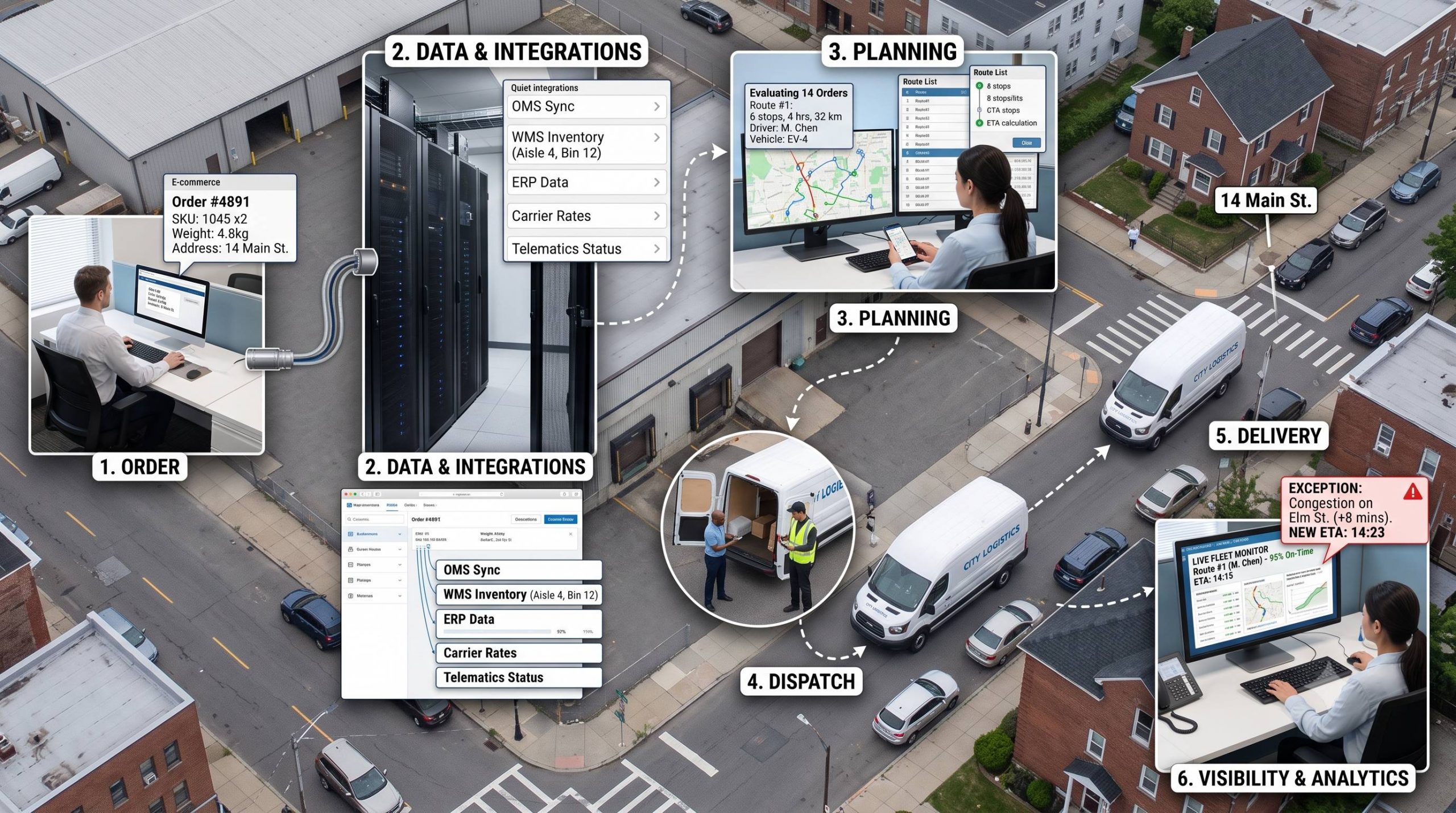
Most digital logistics environments connect several layers of the operation.
1. Data Collection:
Orders, vehicle locations, delivery status, customer information, traffic conditions, inventory data, and other operational signals are collected from different sources.
2. Integration:
The solution connects systems such as ERP, WMS, OMS, TMS, carrier platforms, telematics, and driver applications. This prevents every department from maintaining its own little island of information.
3. Planning and Optimisation:
Algorithms analyze orders, locations, vehicle capacity, delivery windows, driver availability, and other constraints to create better transportation and delivery plans.
4. Execution and Automation:
Orders can be allocated, dispatches automated, drivers notified, and customers updated without requiring teams to manually coordinate every step.
5. Visibility and Decision-Making:
Real-time dashboards and analytics show what is happening across the network. More advanced platforms can also identify exceptions, predict delays, and recommend or execute corrective actions.
This shift from seeing what happened to predicting what will happen and deciding what to do next is one of the biggest changes in modern logistics.
Key Benefits of Digital Logistics Solutions
The value of digital logistics solutions goes beyond replacing paperwork with software.
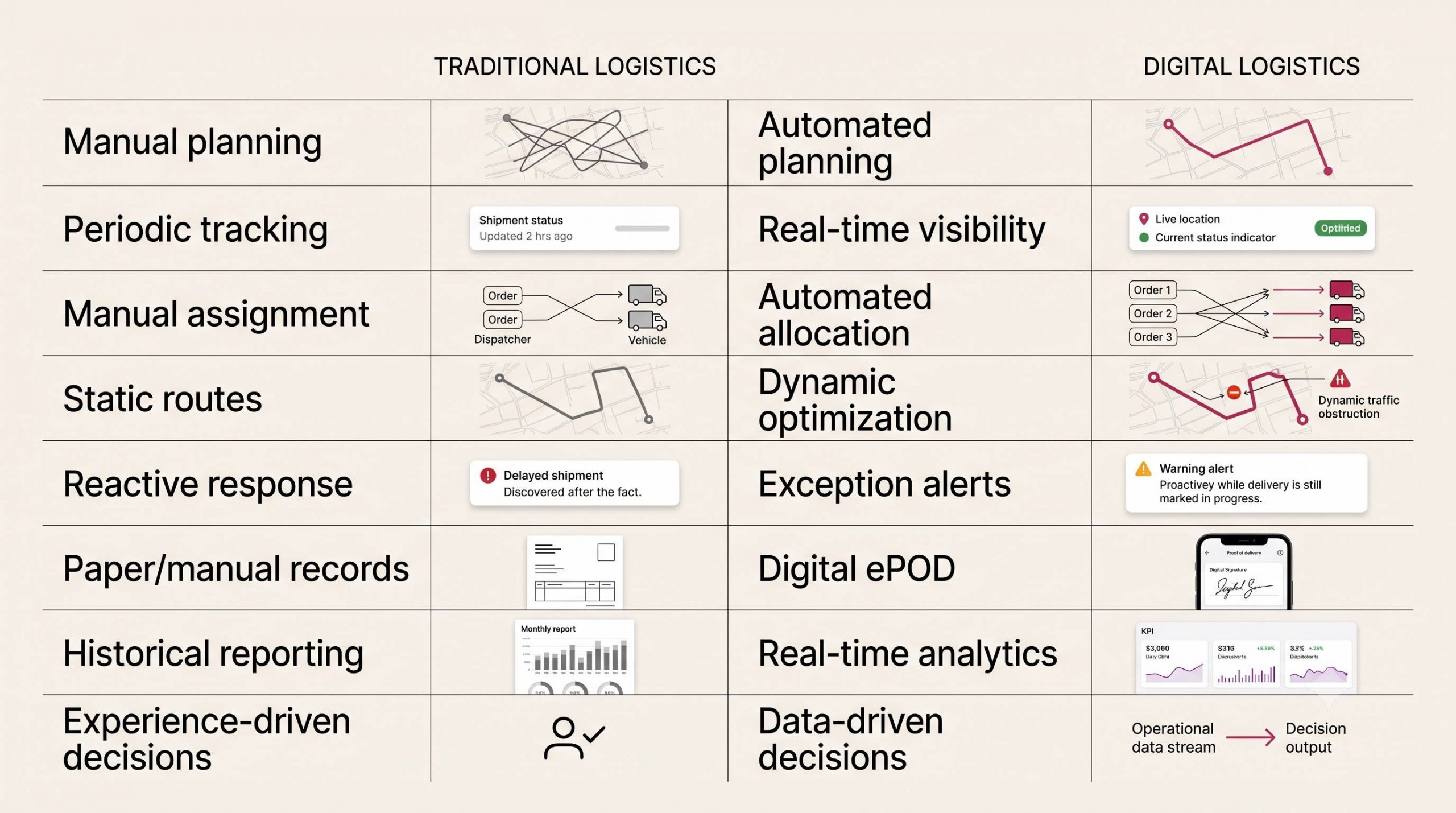
1. Low Operational Costs:
Digital tools can identify inefficient routes, underused assets, unnecessary mileage, and other sources of waste.
McKinsey estimates that digital interventions improving system efficiency and asset utilization can reduce logistics costs by 15-25% in relevant applications.
2. Better Visibility:
Real-time tracking gives operations teams a continuously updated view of shipments and vehicles. Instead of forcing them to piece together information from calls, messages, and multiple systems.
The World Bank’s logistics research also highlights how shipment-level tracking data is improving the ability to make timely decisions around routing, inventory, and supply chain operations.
3. Faster Response to Disruptions:
Traffic, weather, demand spikes, vehicle breakdowns, and missed delivery windows do not exactly respect the morning planning meeting.
Digital logistics platforms can monitor these changes and help teams reroute vehicles, reallocate orders, or adjust delivery plans as conditions change.
4. Improved Customer Experience:
Accurate ETAs, real-time tracking, automated notifications, and reliable delivery execution give customers more certainty.
That matters because visibility is no longer a luxury feature. It is increasingly part of the service itself.
What Technologies Power Digital Logistics?
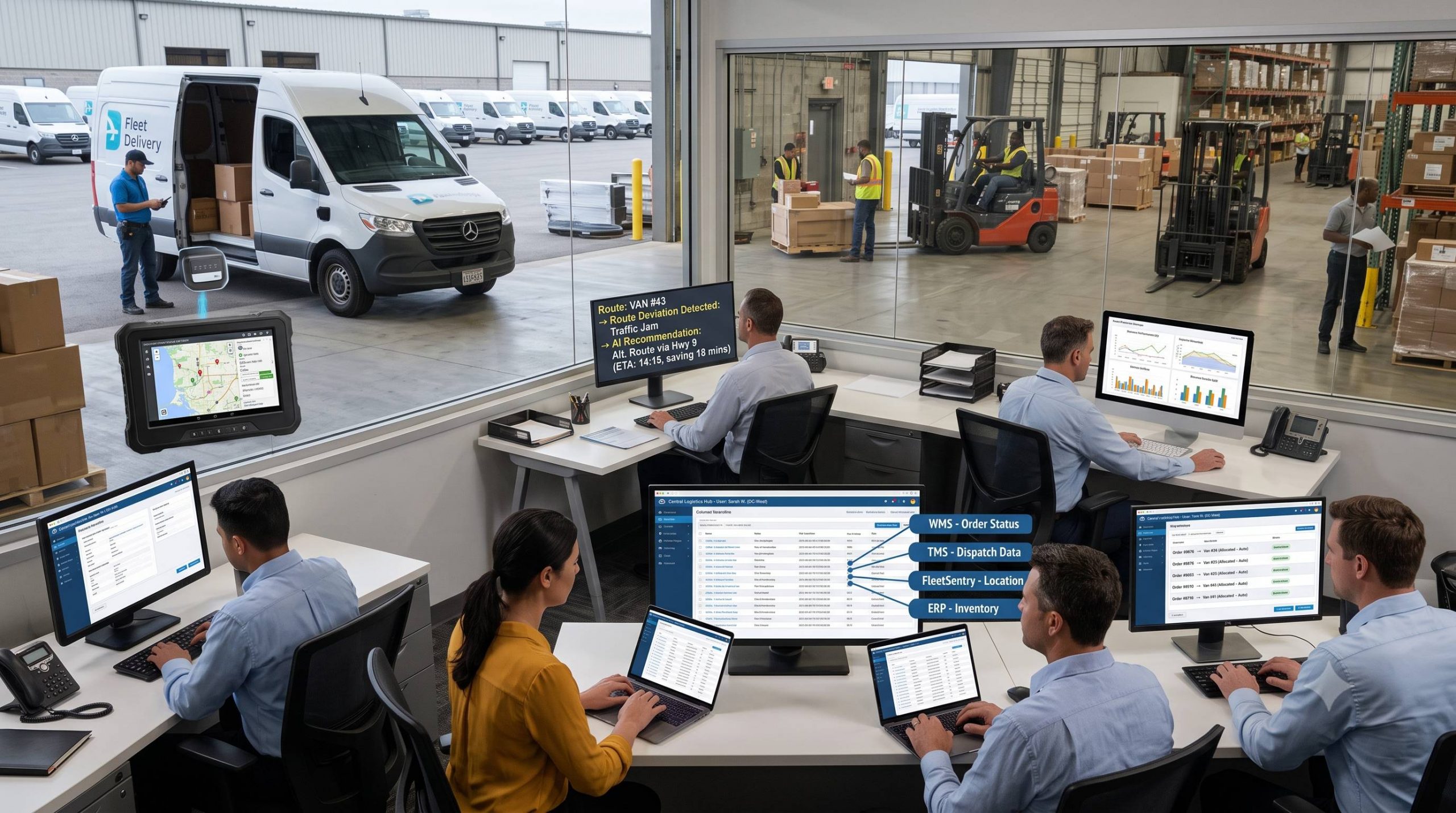
Digital logistics solutions typically combine several technologies rather than relying on one magic button.
1. Artificial Intelligence and Machine Learning:
Used for demand forecasting, route optimization, anomaly detection, ETA prediction, and increasingly autonomous decision-making based on real-time operational data.
2. Internet of Things (IoT):
Connects vehicles, sensors, and assets to capture operational data in real time, helping teams monitor location, movement, conditions, and asset utilization.
3. Cloud Computing:
Allows logistics applications and data to be accessed across locations while supporting scalability as order volumes, users, and operations grow.
4. APIs and Integrations:
Connect logistics systems with ERP, WMS, OMS, carrier, telematics, and other enterprise applications, creating a more connected technology environment.
5. Advanced Analytics:
Converts operational data into actionable insights around cost, productivity, service levels, and network performance.
6. Automation:
Reduces repetitive manual work such as order allocation, dispatching, status updates, and exception handling. Thereby, allowing teams to focus on higher-value decisions.
Gartner identified agentic AI, ambient invisible intelligence, intelligent simulation, and connected workforces among its key supply chain technology trends. Signaling where enterprise logistics technology is heading.
Gartner also predicts that 50% of cross-functional supply chain management solutions will use intelligent agents to autonomously execute decisions by 2030.
That does not mean every logistics operation needs an AI agent army tomorrow. It does mean enterprises should think beyond digitizing yesterday’s manual processes.
What Should Enterprises Look for in Digital Logistics Software?
Buying logistics software simply because it has a long feature list is a fast way to acquire an expensive dashboard nobody uses.
Instead, enterprises should evaluate whether a platform can:
1. Integrate with the Existing Technology Stack:
Look for APIs and integrations with ERP, WMS, OMS, TMS, telematics, and carrier systems.
2. Scale with Operational Complexity:
The platform should support increasing orders, vehicles, locations, carriers, and business units without forcing teams to rebuild processes.
3. Provide Real-Time Visibility:
Teams should be able to monitor orders, vehicles, delivery progress, and exceptions from a unified view.
4. Automate Decisions and not Just Workflows:
Modern logistics management software should help optimize routes, allocate resources, and respond to changing conditions.
5. Measure Business Outcomes:
Track metrics such as on-time delivery, fleet utilization, cost per delivery, route adherence, failed deliveries, and service-level performance.
A digital-first platform such as LogiNext illustrates this approach by combining route optimization, automated dispatch, real-time visibility, fleet management, analytics, and delivery execution within an enterprise logistics platform.
The broader lesson is more important than the product itself. Enterprises should look for technology that connects planning, execution, visibility, and optimization, rather than adding yet another isolated tool.
Common Challenges When Digitizing Logistics
Digital transformation is not plug-and-play. Common obstacles include:
- Poor-quality or fragmented data
- Legacy systems that cannot integrate easily
- Resistance from operational teams
- Limited digital skills
- Unclear ownership between IT and logistics
- Difficulty measuring ROI
- Over-automation of processes that still require human judgment
McKinsey’s research on logistics handovers found that inefficient interactions between parties can account for 13-19% of logistics costs. Thereby, highlighting how much waste can occur when information and responsibility are fragmented.
The answer is not to digitize everything at once. Start with a measurable operational problem, connect the relevant data, establish baseline KPIs, and expand once the business case is proven.
Frequently Asked Questions
What is a digital logistics solution?
A digital logistics solution is technology that uses software, data, automation, and connected systems to plan, execute, track, and optimize logistics operations.
What is digital logistics software?
Digital logistics software is a software platform that helps businesses manage logistics processes such as transportation planning, route optimization, dispatch, fleet management, tracking, analytics, and delivery execution.
3. What is the difference between logistics software and digital logistics solutions?
Logistics software is one component of digital logistics. Digital logistics solutions can combine software with AI, IoT, automation, integrations, analytics, and connected operational processes.
4. Why is digitalization important in logistics?
Digitalization improves visibility, reduces manual work, enables faster decisions, and helps logistics teams respond to disruptions using real-time operational data.
5. How should an enterprise start its logistics digital transformation?
Start with a specific operational problem, establish baseline KPIs, identify the required data and integrations, implement a focused use case, measure results, and then expand the digital logistics ecosystem.
Conclusion
Digital logistics solutions help enterprises connect planning, execution, visibility, and optimization through data, automation, and AI. The goal is not to add more technology, but to make logistics operations faster, smarter, and easier to manage.
For enterprises ready to modernize their logistics management, LogiNext provides a digital-first platform for route optimization, dispatch, fleet management, real-time visibility, and delivery execution.
Explore LogiNext or book a demo to see how digital logistics can work for your enterprise.
“” 36
 |  |  |




@LogiNext