




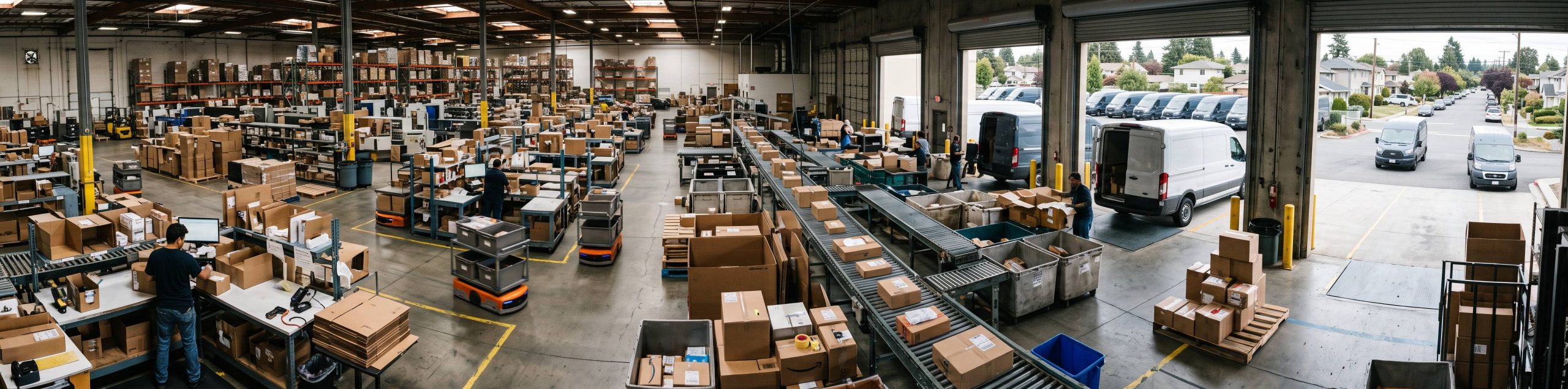
From Fulfillment to Final Mile: The Automation Shift
Logistics automation is changing how orders move from fulfillment centers to customers’ doorsteps. What once meant automating individual warehouse tasks now increasingly involves coordinating inventory, robots, labor, vehicles, routes, and deliveries as one connected operation.
The economics are compelling. ABI Research, cited in the source article, estimates that approximately half of all shipping costs are attributed to the final mile. Thereby, making fulfillment throughput, route density, and delivery sequencing critical to profitability.
At the same time, Gartner’s 2025 Future of Logistics Survey found that 86% of supply chain leaders use at least one mainstream logistics technology.
The shift is clear: automation is moving beyond the warehouse and onto the road.
Key Takeaways
- Logistics automation is expanding from warehouse processes into last-mile delivery.
- Fulfillment automation combines robotics, software, and real-time operational coordination.
- Last-mile automation relies heavily on route optimization, dispatch, tracking, and dynamic planning.
- Autonomous delivery is progressing, but software-led automation offers more immediate opportunities for most businesses.
- AI, robotics, IoT, and connected logistics platforms work best as part of one ecosystem.
- Successful automation requires strong data, system integration, clear KPIs, and a phased implementation strategy.
How Is Automation Changing Fulfillment?
The modern fulfillment center is becoming less about individual machines and more about coordination between software, robots, inventory, and people.
Automated storage and retrieval systems, autonomous mobile robots, sorting systems, and intelligent warehouse software can reduce repetitive movement. This is done while helping facilities process more orders within existing space.
The source article highlights AutoStore’s use of an intelligence layer that applies more than 20 proprietary models to live operational data to optimize robot movement and manage congestion. The interesting part isn’t simply that more robots are being used. It’s that software can improve throughput by sequencing activity more intelligently, without necessarily adding more hardware.
That’s an important lesson for businesses evaluating automation. More hardware isn’t always the answer. Sometimes, better orchestration is.
Cold-chain fulfillment offers another example. Locus Robotics developed a cold-storage modification for HelloFresh’s Factor operation that increased chilled fulfillment capacity from 100 SKUs to 500, according to the source article.
The objective is straightforward: move more orders through the same operational footprint while reducing repetitive work.
How Is Automation Transforming Last-Mile Delivery?
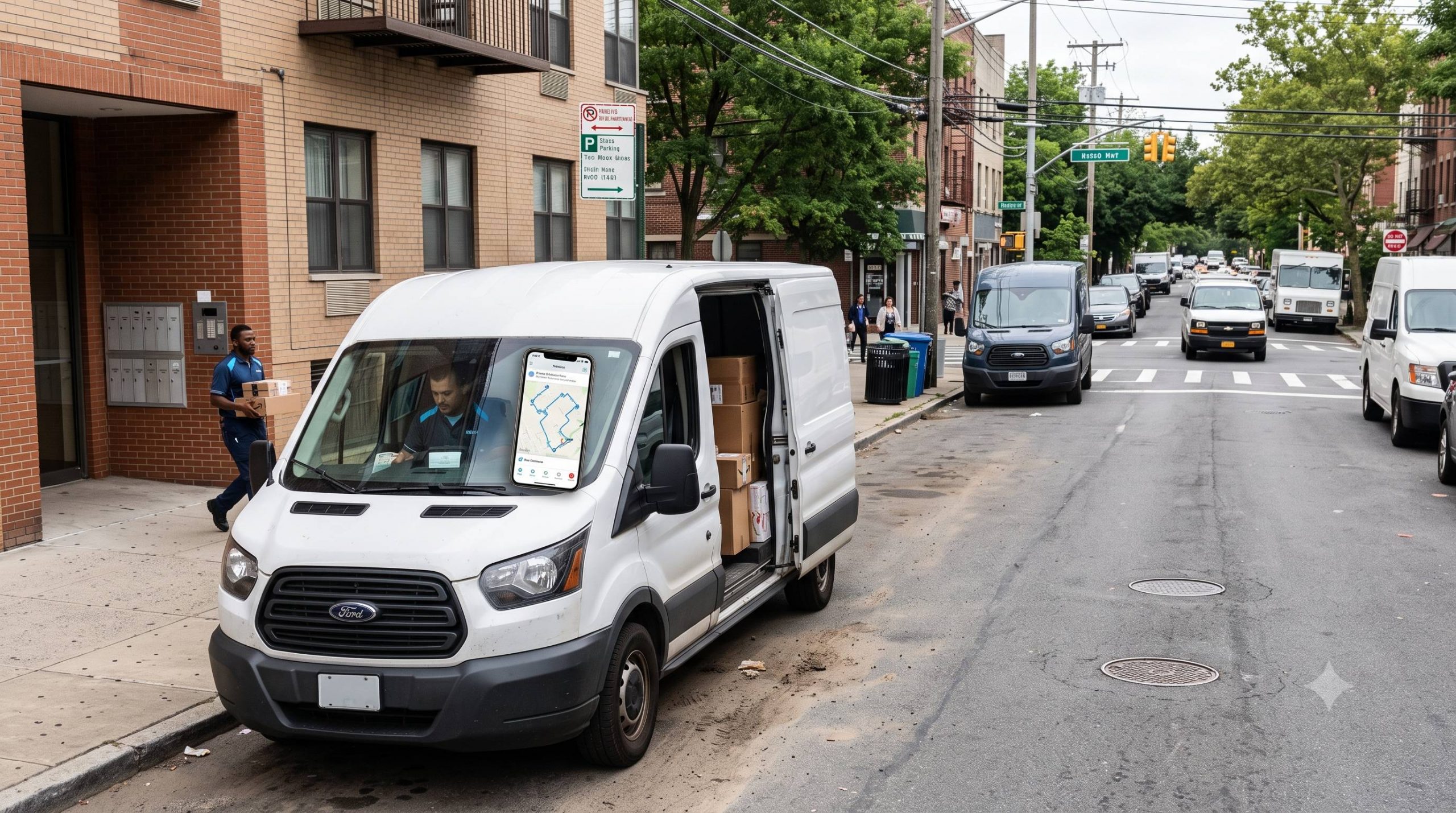
Automation becomes considerably more complicated once the package leaves the building.
Inside a warehouse, the environment is controlled. On the road, traffic changes, vehicles break down, customers aren’t always available, and delivery priorities shift.
This is where route optimization, automated dispatch, real-time visibility, and dynamic delivery planning become critical.
A logistics automation platform can evaluate factors such as:
- Driver and vehicle availability
- Delivery windows
- Traffic conditions
- Vehicle capacity
- Order priority
- Current route progress
- Service times
Instead of creating a route once and hoping the day behaves, businesses can continuously adjust plans as conditions change.
McKinsey found that one global logistics company achieved a 15% reduction in driver travel time after implementing AI-enabled daily route optimization.
AI is useful here, but it is only one component. The larger story is automated decision-making connected to real-time logistics data.
Are Autonomous Deliveries Ready to Scale?
Autonomous delivery is no longer purely experimental, although it is still far from being the default model everywhere.
The source article reports that Starship Technologies reached its 10 millionth autonomous delivery in April 2026. It was operating more than 3,000 robots across 300-plus locations in eight countries.
Starship also claims autonomous delivery can already cost 3–4 less than rider-based delivery, with a long-term target of around $1 per delivery. Those are company projections rather than industry-wide benchmarks, so they should be treated accordingly.
The bigger takeaway is not that every business should deploy delivery robots tomorrow. It is that automation is steadily moving from controlled environments into real-world delivery networks.
For most enterprises today, automating routing, dispatch, allocation, tracking, and exception management is likely to offer a more immediate opportunity than deploying autonomous vehicles.
What Are the Benefits of Automating Fulfillment and Last-Mile Delivery?
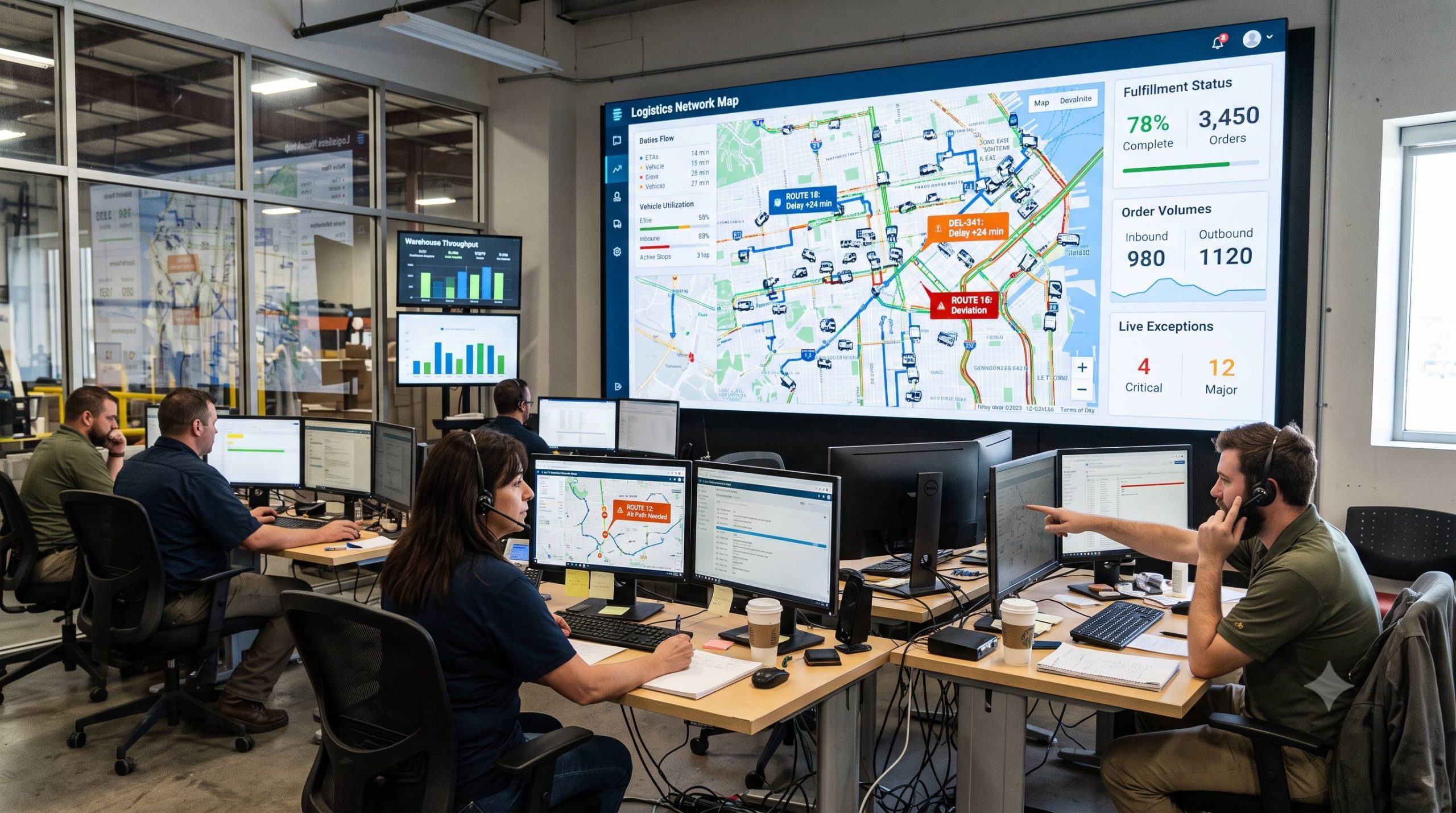
When fulfillment and delivery automation work together, businesses can target improvements across the entire order journey.
1. Higher Output:
Automation can help fulfillment centers process more orders without proportionally increasing manual movement and labor.
2. Lower Delivery Costs:
Better route sequencing and resource allocation can reduce unnecessary travel and improve cost per stop.
3. Better Asset Utilization:
Automated systems can match orders with available vehicles, drivers, warehouse capacity, and other resources more efficiently.
4. Greater Visibility:
Real-time tracking and automated alerts help operations teams identify exceptions earlier rather than discovering problems after a delivery fails.
5. More Predictable Delivery Performance:
When fulfillment, dispatch, routing, and tracking are connected, businesses have greater control over delivery commitments and customer communication.
The result isn’t simply a faster warehouse or a smarter route. It’s a more coordinated journey from order to doorstep.
What Should Businesses Consider Before Automating?
Automation isn’t a magic wand. If the underlying operation is fragmented, technology won’t automatically fix it. Three areas deserve attention.
1. Integration: Warehouse, order management, transportation, fleet, and delivery systems need to exchange data effectively.
2. Data quality: Automated decisions depend on accurate order, location, inventory, vehicle, and driver information.
3. Scalability: Businesses should choose automation that fits their actual order volume, geography, product mix, and operational complexity.
DHL’s research on logistics technology adoption also identifies cost, integration complexity, limited resources, and insufficient data among the challenges organizations face when implementing emerging technologies.
The smartest approach is therefore not to automate everything at once. Start with a measurable problem, prove the value, and expand.
How Should Businesses Approach Logistics Automation?
A focused pilot is often more useful than a giant transformation project.
1. Identify one bottleneck: Choose a process such as picking, dispatch, routing, or exception management.
2. Define the baseline: Establish metrics such as pick cycle time, cost per stop, on-time delivery, or ETA accuracy.
3. Automate the workflow: Connect the relevant systems, data, and technology.
4. Measure the outcome: Compare performance against the original baseline.
5. Scale that works: Extend automation into connected processes once the business case is proven.
The goal isn’t to collect the most robots or deploy the fanciest technology. It’s to make the journey from fulfillment center to doorstep faster, more predictable, and less dependent on manual coordination.
Frequently Asked Questions
1. What is logistics automation?
Logistics automation uses software, robotics, connected systems, and data to automate processes across fulfillment, transportation, and delivery.
2. How does automation improve fulfillment?
It can automate picking, sorting, storage, movement, and order processing while coordinating robots, workers, and inventory to increase throughput.
3. Are autonomous delivery robots widely used?
Adoption is growing, but autonomous delivery remains geographically and operationally limited. Starship’s reported 10 million autonomous deliveries demonstrate that some models have moved well beyond the pilot stage.
4. Is AI the same as logistics automation?
No. AI is one technology used within logistics automation. Robotics, route optimization, IoT, automation software, and real-time visibility are also important components.
Conclusion
The most important shift in logistics automation isn’t happening in one warehouse or one delivery vehicle. It is happening in the connection between them.
Automated fulfillment can increase throughput. Smarter routing can reduce unnecessary travel. Real-time visibility can surface problems earlier. Autonomous delivery can take automation further onto the road. But the real opportunity comes when these capabilities work together as one connected operation.
Talk to LogiNext to explore how connected automation can make your delivery operations faster, more efficient, and easier to scale.
“”  |  |  |




@LogiNext