




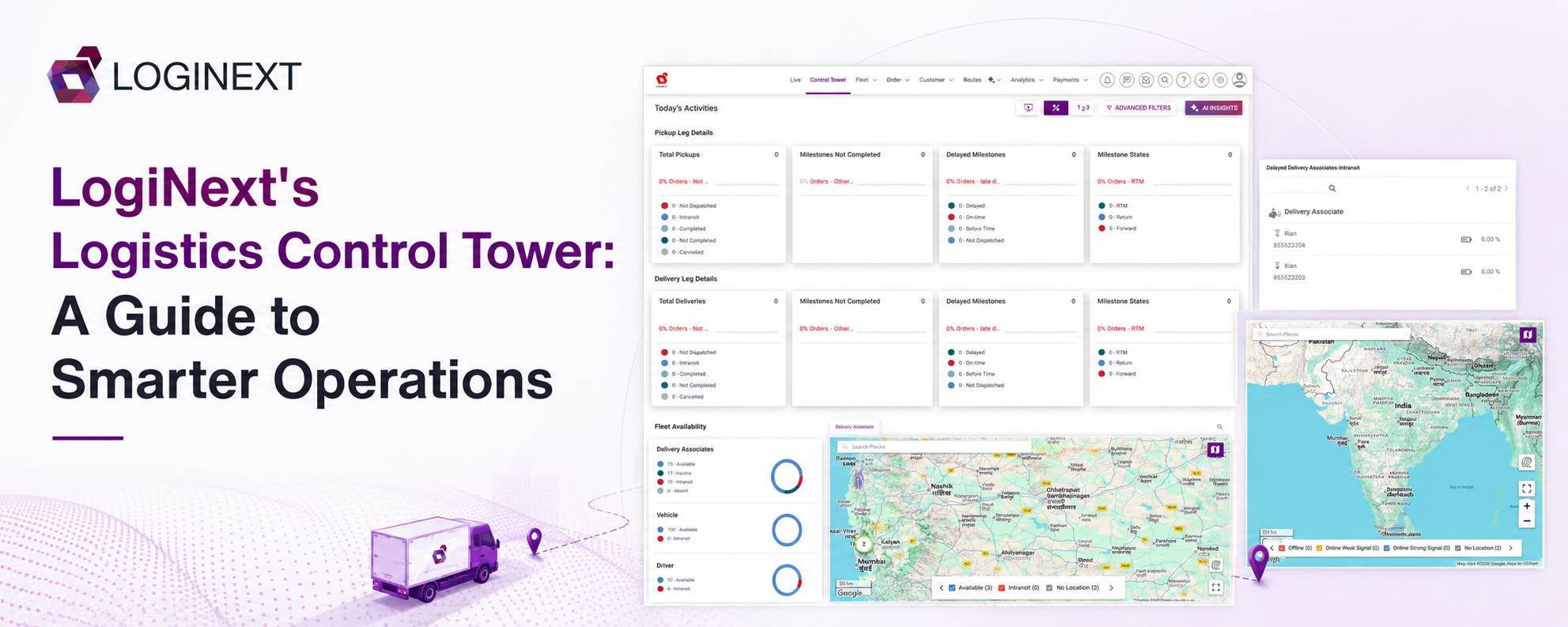
LogiNext’s Logistics Control Tower: A Guide to Smarter Operations
A logistics control tower is a centralized visibility and decision-making hub that brings together data from different parts of your logistics operation. It helps teams see what is happening across deliveries, spot risks earlier, and decide what to do next. Think of it as the information hub your operations team needs when the delivery network gets busy, unpredictable, and slightly allergic to staying on schedule.
LogiNext Control Tower brings this capability into the heart of logistics execution. By combining real-time visibility with automation, optimization, analytics, and operational workflows. Instead of making teams jump between systems, spreadsheets, maps, and carrier updates, it gives them a unified view of what is happening across their operations and the tools to act on it.
Key Takeaways
- A logistics control tower brings operational information together to improve visibility and decision-making.
- It goes beyond tracking by connecting information with actions.
- LogiNext Control Tower combines real-time visibility, workflow automation, route optimization, auto-assignment, alerts, analytics, communication, and integrations.
- Teams can use Live and Fleet Availability views to manage daily logistics operations.
- The real value of a control tower comes from helping teams spot issues earlier and act faster.
What Is a Logistics Control Tower?
A logistics control tower gathers information from multiple sources and presents it in a consistent operational view. This allows teams to monitor logistics activities, identify exceptions, and respond using defined processes and decision rules.
It is not an actual physical tower. It doesn’t directly communicate with every truck driver, captain, or pilot, and it doesn’t independently control production, storage, replenishment, or every milestone across the entire supply chain.
Instead, it acts as a centralized information and decision-making layer.
Depending on the organization, a broader supply chain control tower may cover everything. From raw material flows and inventory to manufacturing and transportation. A logistics control tower focuses more closely on the execution side of logistics. Where fleet, deliveries, trips, carriers, milestones, and customers all need to move in sync.
The core idea is simple:
Bring the right information together → identify what needs attention → make a decision → take action.
Why Do Logistics Operations Need a Control Tower?
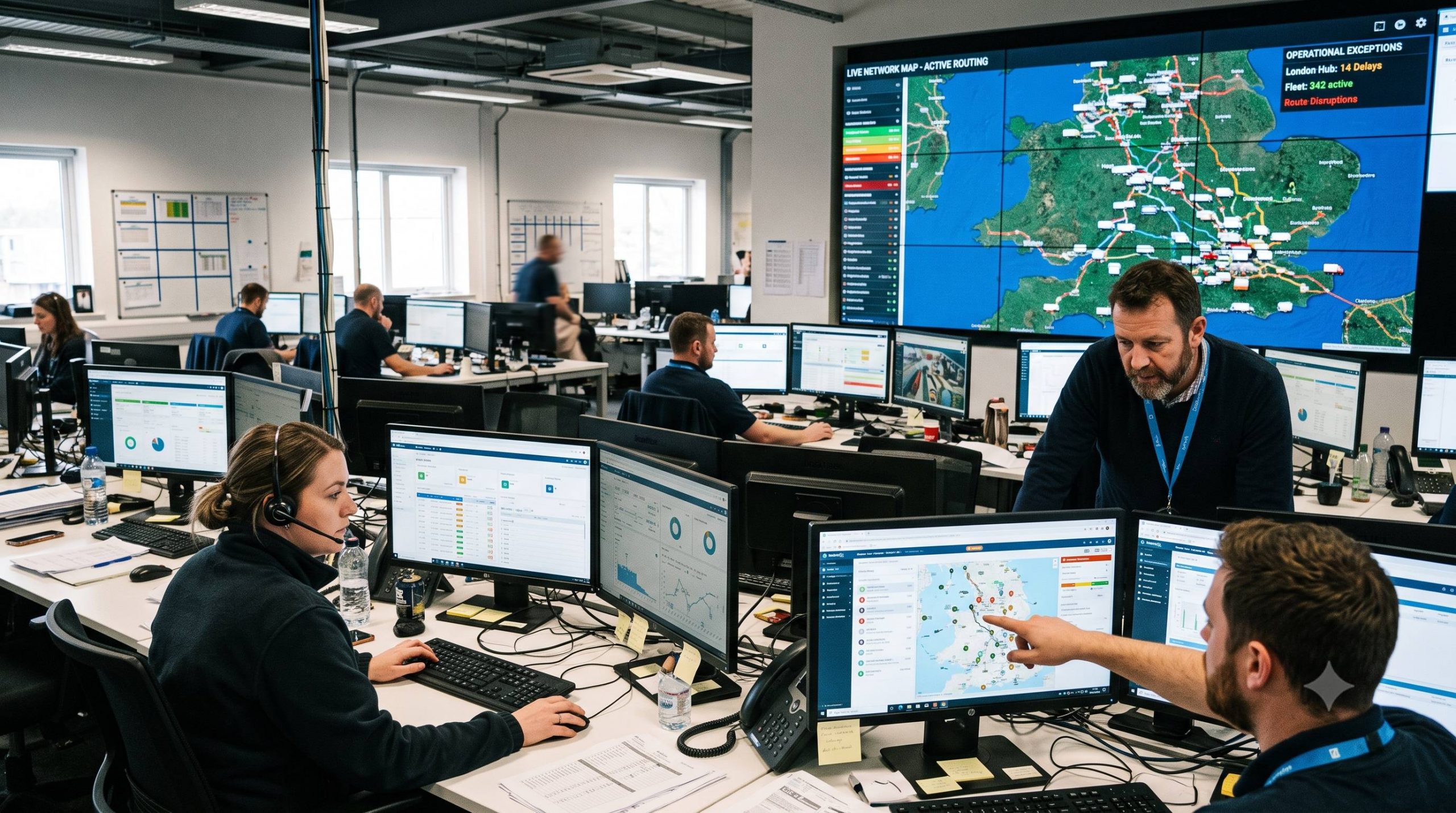
Modern logistics doesn’t exactly suffer from a lack of data.
There are GPS signals, delivery statuses, fleet information, customer updates, carrier data, warehouse systems, ERP records, and enough notifications to make your inbox question its life choices.
The problem is turning all that information into a clear operational picture.
A delayed vehicle can affect multiple deliveries. A capacity shortage can require reassignment. A missed milestone can trigger customer communication. And by the time someone pieces together what happened, the opportunity to prevent the problem may already be gone.
This is where a logistics control tower becomes valuable.
McKinsey’s research on supply-chain resilience found that companies with digital dashboards providing end-to-end visibility were twice as likely to avoid certain disruption-related problems compared with organizations without that visibility.
Visibility doesn’t eliminate disruption. But it gives teams a better chance of seeing it early enough to do something about it.
What Can LogiNext Control Tower Do?
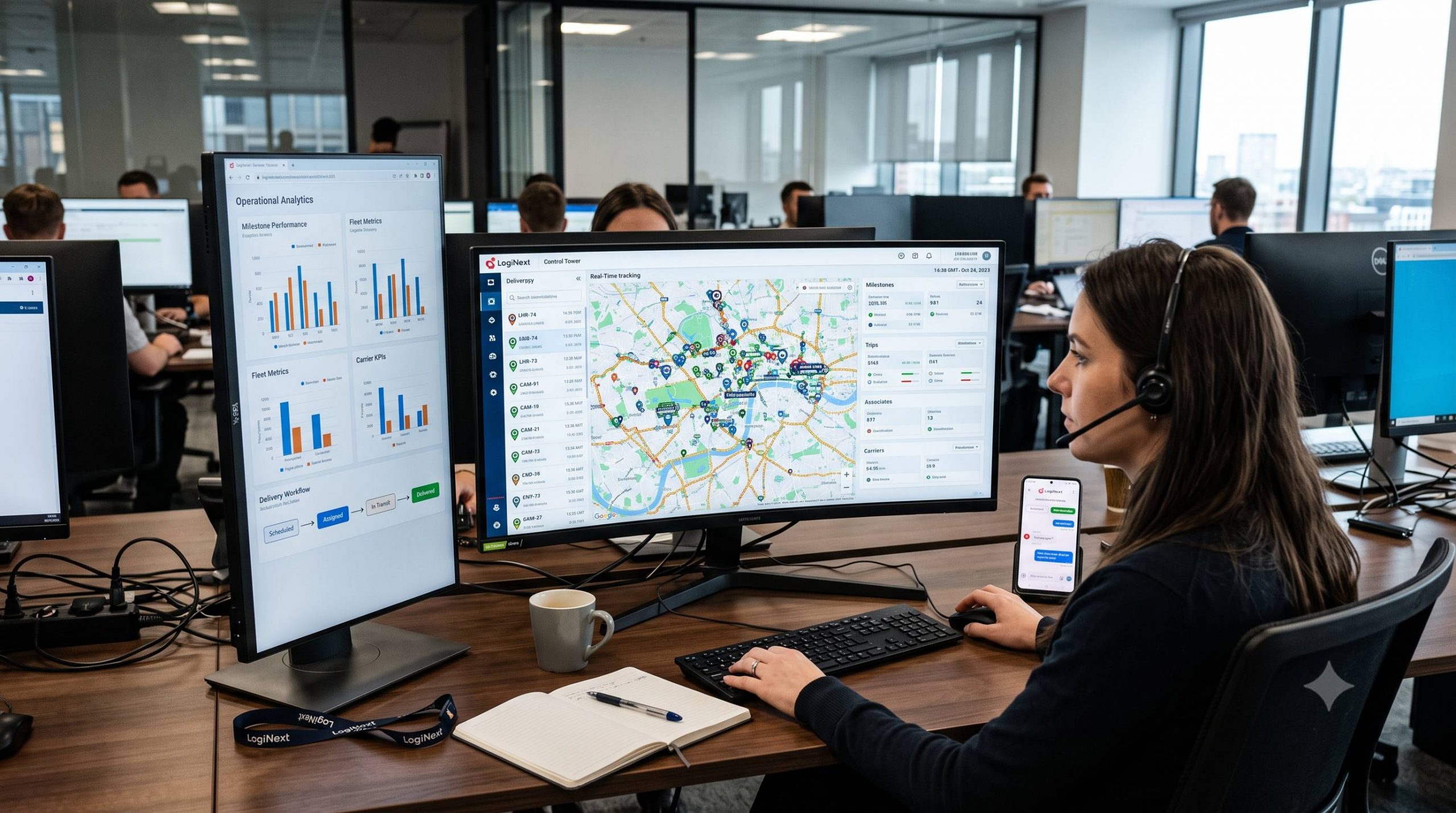
LogiNext Control Tower takes centralized visibility and connects it with the tools teams need to manage logistics execution.
Real-Time Tracking and Visibility
The first job of a logistics control tower is knowing what is happening right now. LogiNext provides granular visibility into fleet movement and Milestone status, with live movement monitoring through the map.
Teams can monitor operations through:
- Milestone card view
- Map view
- Trip card view
- Delivery associate card view
- Carrier card view
This allows teams to move from a high-level operational view to the specific milestone, trip, delivery associate, or carrier that needs attention.
And visibility isn’t limited to internal teams. Customer-facing operations can use branded tracking links that show the delivery associate’s live location. Thereby, giving customers greater transparency into their delivery.
Digitization and Workflow Automation
A logistics operation can involve hundreds of small tasks that don’t necessarily need a human making every decision.
This includes capabilities such as:
- Predictive pre-milestone ETAs
- Automated workflow steps
- Post-delivery feedback capture
- Automated customer notifications
The objective isn’t automation for automation’s sake. It’s about reducing repetitive manual work and making operational processes more consistent.
Route Planning and Optimization
A route can look perfect on a planning screen and considerably less perfect once real-world conditions enter the picture.
LogiNext uses AI and advanced algorithms to optimize delivery routes and schedules, helping teams plan around operational requirements and available resources.
Better planning can help reduce unnecessary travel, improve resource utilization, and support more reliable delivery execution.
On-Demand Dispatch and Auto-Assignment
Manual dispatch becomes increasingly difficult as delivery volumes grow. Which vehicle should handle this milestone? Which vehicle is nearby? Who has the required skill? Who still has capacity?
LogiNext’s auto-assignment engine can assign milestones to suitable fleet resources based on factors such as:
- Proximity
- Skill sets
- Current fleet capacity
This helps dispatch teams reduce manual allocation and respond faster when demand or fleet availability changes.
Customer Experience Management
The control tower isn’t only about what operations teams can see. It also affects what customers experience. LogiNext supports real-time alerts and notifications through channels such as:
- SMS
- Other supported communication channels
Customers can also receive branded tracking links that provide visibility into delivery progress and live location.
That means fewer moments where the customer has to ask, “Where is my order?” and the operations team has to start another round of detective work.
Analytics and Operational Insights
Real-time visibility tells you what is happening. Analytics can help explain why it keeps happening. LogiNext provides analytics across areas such as:
- Milestones
- Delivery fleet
- Third-party carriers
- Customer engagement
- Customer feedback
- Operational performance
This allows teams to identify patterns, measure performance, and find recurring issues that need process-level improvements.
For example, if a particular delivery area repeatedly creates delays, analytics can help reveal the pattern so teams can investigate the underlying cause instead of treating every late delivery as an isolated incident.
Integrations Across the Logistics Ecosystem
A control tower is only as useful as the information it can access.
LogiNext integrates with external systems such as ERP, WMS, payment gateways, and carriers, helping connect different parts of the logistics workflow.
This is particularly useful for businesses running hybrid operations involving both in-house fleets and third-party carriers.
Instead of checking multiple carrier portals and manually reconciling updates, teams can work from a more centralized operational view.
Operational Communication
Some delivery problems aren’t really logistics problems. They’re communication problems.
A customer may know the address, but not the correct entrance. A delivery associate may reach a building but be unable to get past security. A customer may need to communicate a last-minute instruction.
LogiNext supports integrated chat and calling between customers and delivery associates through relevant product interfaces, helping them coordinate these practical details.
Sometimes a two-minute conversation is all it takes to prevent a failed delivery.
How to Use LogiNext Control Tower
Using LogiNext Control Tower becomes straightforward once teams know where to look and what to act on. The Live view brings ongoing operations into focus, while card views, map views, fleet availability, and analytics help teams move from monitoring to action. Here’s what that day-to-day workflow looks like:
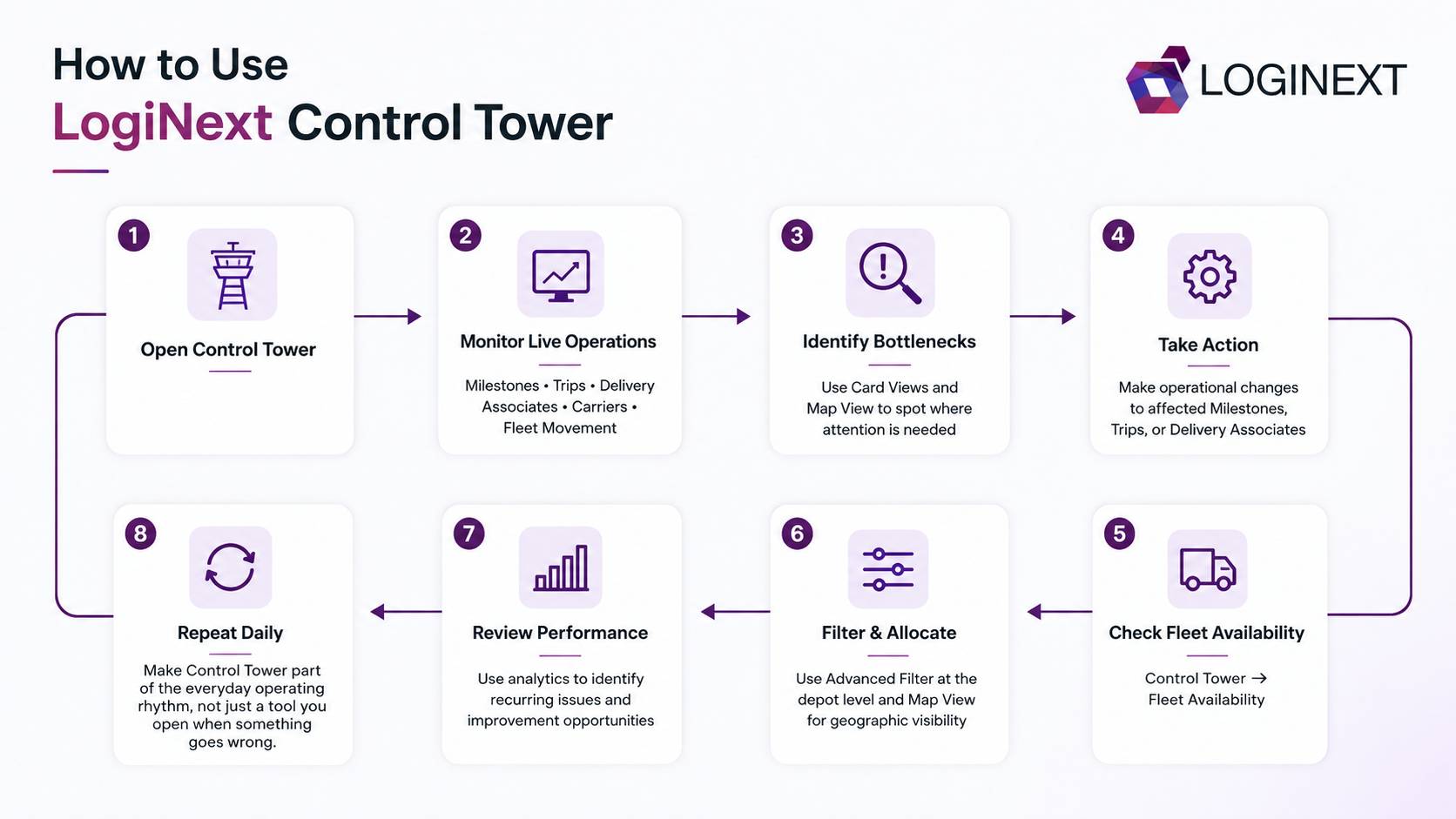
This turns Control Tower from a visibility layer into an execution engine. Thus, giving teams a consistent way to monitor operations, respond to exceptions, and use every day’s data to improve the next day’s performance.
Best Practices for Using a Logistics Control Tower
Use Real-Time Visibility Proactively:
Don’t wait for a missed delivery to investigate what happened. Monitor ongoing operations and identify potential bottlenecks while there is still time to respond.
Standardize Operational Decisions:
Define the rules that should guide assignments and responses. Factors such as proximity, skill sets, and capacity can help create more consistent dispatch decisions.
Make Fleet Availability Part of Dispatch Planning
Fleet Availability is useful not just when you’re already short on resources. Reviewing available capacity can help teams make better allocation decisions before problems emerge.
Don’t Stop at Monitoring:
A control tower shouldn’t become another dashboard people stare at while waiting for the next problem. Use analytics to identify recurring issues, automation to reduce repetitive work, and optimization to improve future execution.
The objective is to move through a continuous cycle:
Monitor → Detect → Decide → Act → Improve.
Also Read: LogiNext Logistics Software: Key Delivery KPIs for Enterprises in 2026
Frequently Asked Questions
1. What is a logistics control tower?
A logistics control tower is a centralized hub for real-time visibility and decision-making across logistics operations. It brings data from multiple sources into one view, helping teams identify risks, exceptions, and opportunities faster.
2. What does a logistics control tower do?
It provides real-time tracking, fleet visibility, route optimization, automated dispatch, alerts, analytics, and operational communication. It also connects systems such as ERP, WMS, payment gateways, and third-party carriers.
3. How does LogiNext Control Tower improve logistics operations?
LogiNext Control Tower gives teams a unified view of Milestones, Trips, delivery associates, Carriers, and fleet movement. This helps operations teams detect bottlenecks early and take action before they impact delivery performance.
4. How do you use a logistics control tower?
Teams can use the Control Tower to monitor live operations, review fleet availability, track Milestones and Trips, and identify exceptions. With automation and analytics, they can move from simply monitoring operations to continuously improving them.
Conclusion
Running logistics without centralized visibility can quickly become a game of chasing updates. By the time teams know where a problem started, it may have already affected the next delivery, customer, or trip.
A logistics control tower changes that by bringing operational signals into one place and connecting visibility with action. LogiNext Control Tower combines real-time tracking, fleet visibility, route optimization, automated assignment, workflow automation, analytics, alerts, and integrations to help teams stay ahead of exceptions and make faster decisions.
Want to see what this looks like in your operation? Talk to LogiNext and book a demo today.
 |  |  |




@LogiNext