




Insights from the Supply Chain & Logistics Summit Philippines (SCLS) 2026: How Supply Chain Management Is Evolving
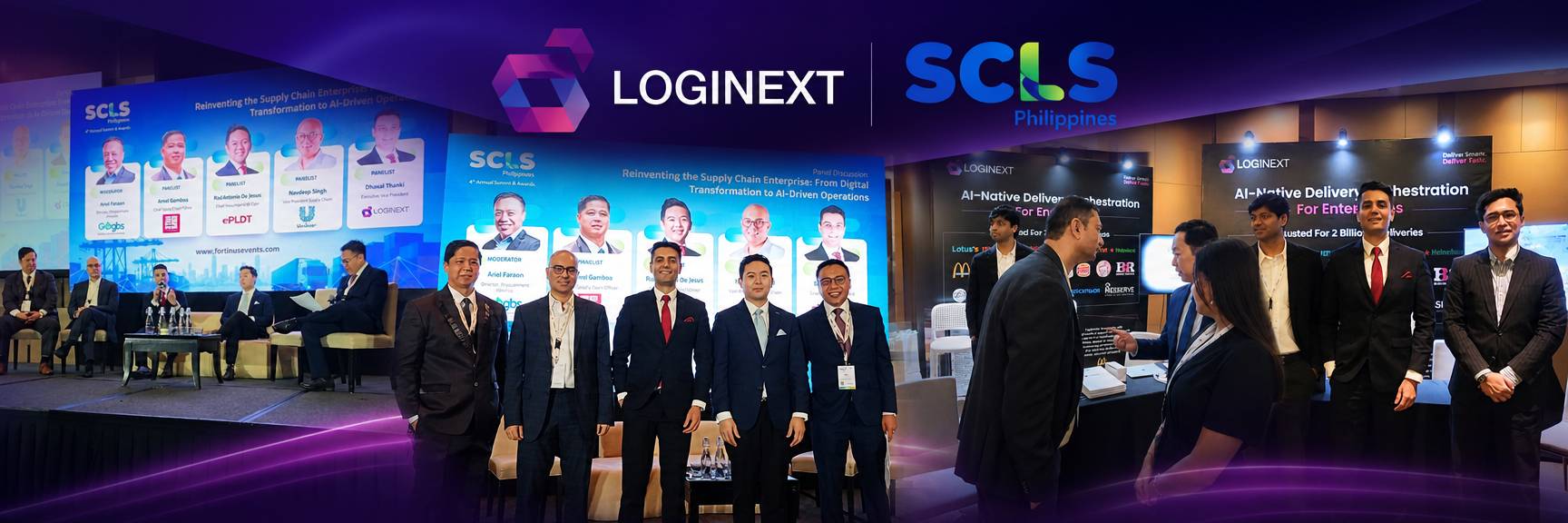
The bustling halls of the Supply Chain & Logistics Summit Philippines (SCLS) 2026 in Manila brought together logistics leaders. They represented retail, food, manufacturing, healthcare, and other enterprise industries. Across our conversations, one theme kept surfacing: supply chain management is evolving rapidly. Businesses are scaling, networks are expanding, and operations are becoming increasingly connected.
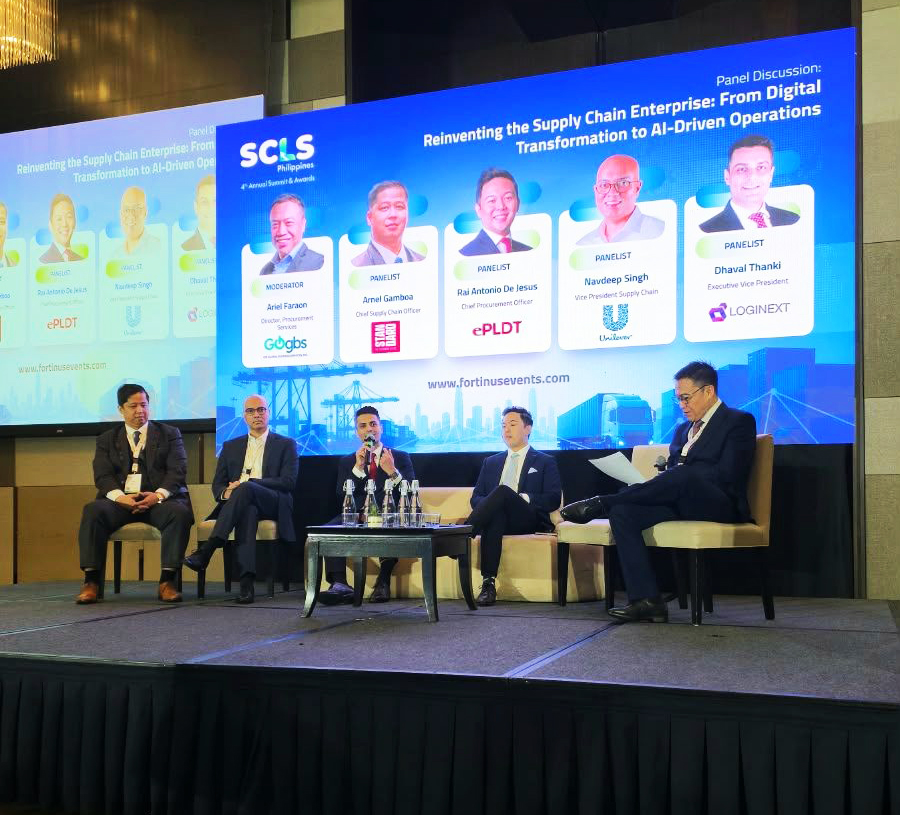
On stage, LogiNext Executive Vice President Dhaval Thanki shared our vision for AI-driven enterprise logistics. He explained how AI can move businesses beyond reactive problem-solving toward intelligent, increasingly autonomous decisions.
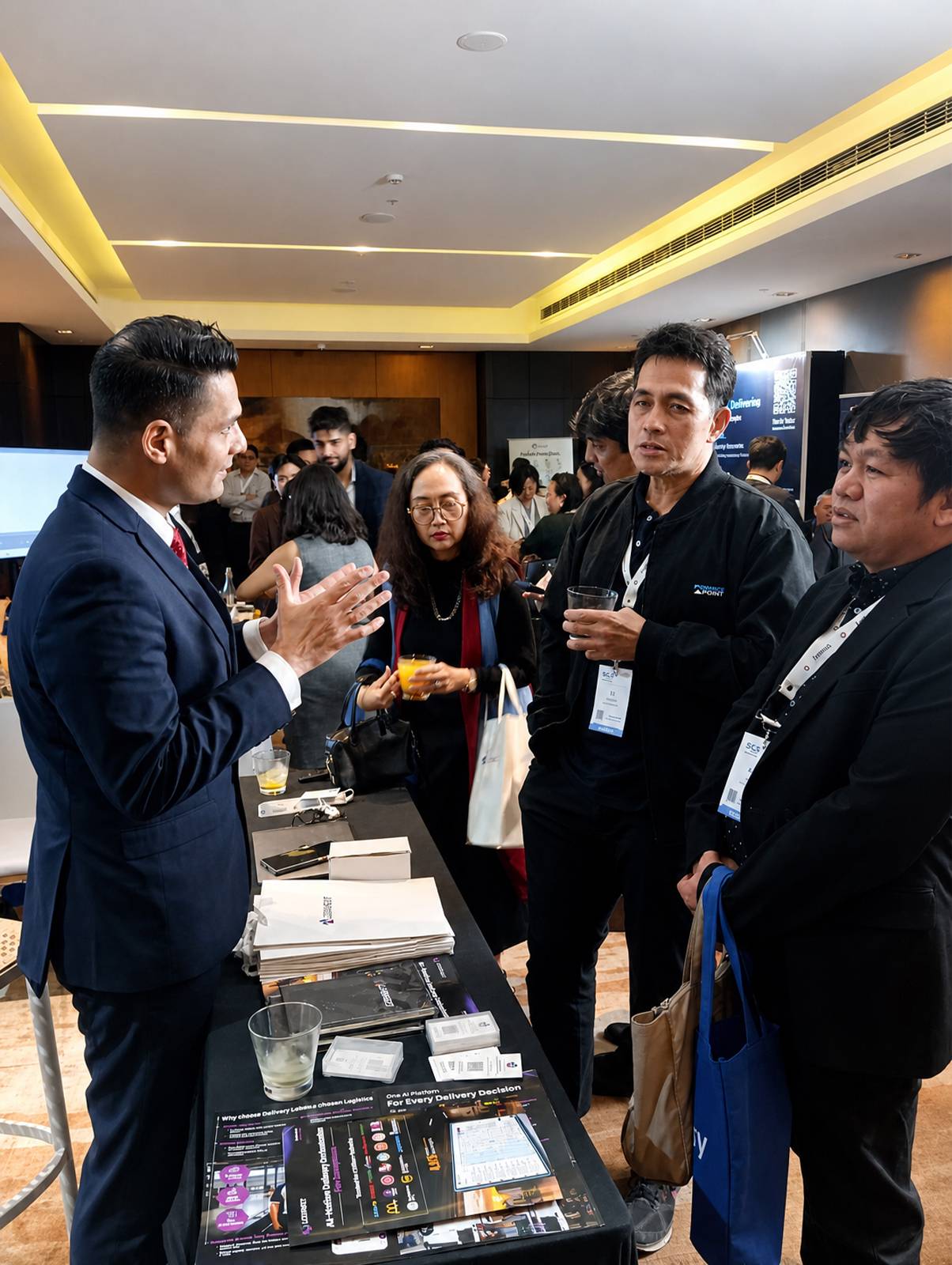
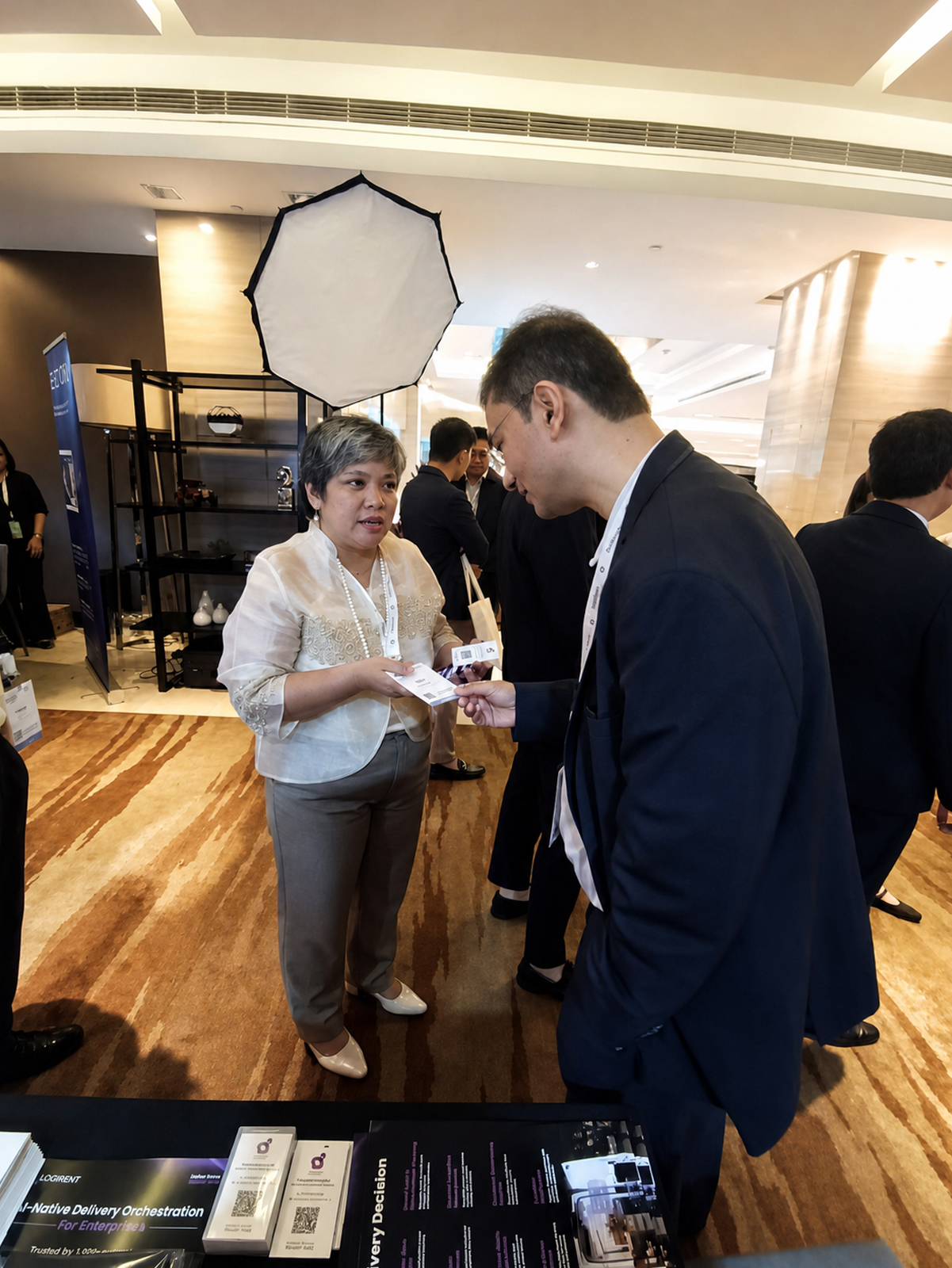
At our booth, supply chain leaders shared the challenges they face every day. These included managing outsourced fleets and replenishing thousands of stores. Others discussed coordinating complex networks across multiple facilities.
We had plenty of conversations throughout the event, each offering a different perspective on modern enterprise logistics. A few stood out for the way they brought the bigger picture into focus. Let’s take a look at some of them.
The Story of the Invisible Fleet
One of the first conversations captured the complexity of outsourced logistics perfectly. Marlowe Caronan from Del Monte shared how the business operates with a fully outsourced fleet, relying on multiple 3PL partners to move its products.
The challenge was not simply finding logistics partners. It was maintaining consistent service levels, coordinating execution and understanding what was happening across the network when the vehicles themselves were not under Del Monte’s direct control.
That creates a very different logistics problem. When fleets are owned, businesses have more direct control over vehicles, drivers and day-to-day execution. With an outsourced model, coordination becomes just as important as control.
So the question becomes: How do you maintain visibility and operational consistency when your network is spread across different partners?
That question stayed with us because, as we moved through the event, it became clear that fleet ownership was only one piece of a much larger puzzle.
When 1,000 Stores Become 1,000 Decisions
Our conversation with Gemma Ong, Distribution Center Head at Mr. DIY, brought another side of that puzzle into focus.
Mr. DIY manages around 1,000 stores through three distribution hubs, using a combination of internal trucks and third-party fleets. What sounds like a straightforward replenishment network quickly becomes a daily exercise in coordination.
Every day brings decisions around which stores need replenishment, which orders should move together, which vehicles have the right capacity, how routes should be sequenced and how available resources should be allocated.
The challenge becomes even more interesting because there was no dedicated TMS supporting the network.
At that scale, planning cannot simply depend on a team manually piecing together information every time something changes. As the number of stores and orders grows, so does the number of decisions that need to be made.
And that led naturally to another conversation where the network had even more nodes to coordinate.
The High-Stakes Recipe for Timely Deliveries
At North Point (One Food Group), Arjay Katigbak, Sr. Warehouse Manager, shared what it takes to support brands including KFC, Mister Donut and Tokyo Tokyo.
The operation runs through one mother warehouse, 10 partner facilities and 65 internal trucks.
Here, the complexity comes from the relationship between those different nodes. A delay at one facility can affect loading, dispatch and ultimately the delivery window at the other end.
That makes the problem bigger than route planning. Orders, warehouses, vehicles and delivery schedules all have to work together, often across multiple facilities and partners.
The conversation highlighted something we were beginning to see repeatedly at SCLS Philippines 2026. Optimizing one part of the network does not necessarily optimize the network itself.
The more connected the operation becomes, the more important coordination becomes.
Balancing Freshness, Frequency and Scale
Our conversation with Eric Nicolas, Vice President of Supply Chain at Starbucks Philippines (Rustan Coffee), brought yet another dimension into the picture.
With around 600 stores, 80 dedicated trucks and partner carriers, the operation manages different delivery rhythms at the same time. Pastries may need to move daily, other stock follows different replenishment cycles, while hardware shipments may operate weekly.
That means there is no single delivery pattern to optimize.
Routes need to account for delivery frequency, vehicle availability, driver schedules and changing operational conditions. At the same time, perishable products add another layer of urgency because timing directly affects freshness.
The same pattern appeared in other conversations as well. We heard about businesses serving approximately 14,000 retail locations, operations managing around 300 vehicles across five manufacturing units and networks using roughly 200 trucks to serve retail and mall locations.
The industries were different, but the underlying challenge was increasingly familiar. How do you coordinate a network when every part of it operates at a different scale, speed or frequency?
When Visibility Alone Is Not Enough
Our conversation with Kitt Kitane, Director of Procurement at UNAHCO, pushed that question even further.
The organization manages approximately 3,000 to 4,000 vehicles across its operations. It already had tracking and order technology in place, but still needed more sophisticated planning and execution capabilities for on-demand operations.
Its expansion into healthcare distribution, including operations serving around 89 hospitals, added another layer of complexity. And this is where the distinction between visibility and intelligence becomes important.
Knowing where vehicles are, what orders have been placed or what has already happened gives an enterprise visibility. But visibility alone does not necessarily answer the next question: What should we do now?
That becomes particularly important when the network is large enough for thousands of decisions to happen simultaneously.
A similar theme surfaced in another conversation around an operation processing roughly 200,000 orders every month, where parts of the process were still managed manually.
At that scale, even small inefficiencies can multiply quickly. A planning decision that takes a few extra minutes, a missed update or a delayed response can ripple across vehicles, routes, facilities and customers. The challenge is no longer simply collecting more information. It is turning that information into coordinated action.
From Visibility to Intelligent Decisions
By the time we stepped back from all these conversations, the pattern was difficult to miss.
One business was managing around 1,000 stores. Another was serving approximately 14,000 retail locations. We heard about 300 vehicles across five manufacturing units, around 200 trucks serving retail and mall networks, fleets of 3,000 to 4,000 vehicles and operations processing hundreds of thousands of orders every month.
These were different industries, networks and operating models, but the underlying question remained remarkably consistent. How do you make a growing supply chain operate as one coordinated system?
That is where Dhaval’s conversation around AI started to take on more meaning.
AI was a major theme at SCLS Philippines 2026, but simply adding AI to the technology stack is not the point. The real opportunity lies in connecting visibility with action. Anticipating what is likely to happen, adapting plans as conditions change and helping teams make better decisions faster.
For us at LogiNext, that is the promise of an AI-native approach to enterprise logistics. It is about creating a connected layer that helps businesses plan, orchestrate and respond across increasingly complex operations.
What We Took Away
What stood out most from SCLS Philippines 2026 was not any single fleet size, store count or order volume. It was how differently businesses were experiencing the same fundamental shift.
Some were dealing with outsourced fleets. Others were coordinating thousands of stores, multiple distribution hubs, partner facilities or different delivery frequencies. Some were expanding into entirely new business areas, while others were already operating at a scale where manual decision-making was becoming increasingly difficult.
Yet the need was remarkably consistent: businesses want to move beyond simply knowing what is happening across their logistics networks. They want to understand what is likely to happen next and act on it quickly.
That, ultimately, is where we see the evolution of supply chain management heading. The future is not about making individual parts of the network smarter. It is about making the entire network work better together. And that is the shift we believe AI can help enterprises make.
Want to explore what that could look like for your operation? Talk to LogiNext about building a more intelligent, connected and scalable logistics network.
 |  |  |




@LogiNext