




Customer Experience Management with LogiNext: Beyond Tracking
A customer places an order. Then comes the real test: Where is it? When will it arrive? Is the driver nearby? Can I change the address? That’s where customer experience management becomes critical.
In logistics, customer experience management is the process of managing and measuring customer interactions throughout fulfillment using tools such as delivery alerts, real-time tracking, personalized communications, feedback, and analytics. The goal is simple: give customers useful information and control before they feel the need to contact support.
And customers clearly care. DHL’s 2024 global research found that 9 in 10 online shoppers consider delivery tracking important.
In other words, silence during delivery is no longer neutral. It’s a CX problem.
Key Takeaways
- Customer experience management helps businesses manage and measure customer interactions throughout the delivery journey.
- Proactive delivery alerts across SMS, Email, WhatsApp, and IVR keep customers informed at important fulfillment milestones.
- Real-time delivery tracking gives customers visibility into order status and delivery progress while enabling useful self-service options.
- Dynamic Tags help businesses personalize customer communications with relevant delivery information such as milestone details and ETA.
- Branded tracking pages and templates create a consistent customer experience across delivery communications.
- Customer experience analytics helps businesses track engagement, feedback, opens, clicks, and trends across channels, Shippers, and Branches.
- AI Insights can help identify engagement trends, performance gaps, and potential opportunities for improving delivery CX.
- A strong last-mile customer experience strategy combines visibility, proactive communication, personalization, self-service, branding, and measurement.
What Is Customer Experience Management in Logistics?
Customer experience management in logistics is the practice of managing, personalizing, and measuring customer interactions throughout the delivery journey. It covers everything from milestone notifications and real-time tracking to feedback, branded communications, and customer experience analytics.
Think of it as the communication layer between your logistics operation and the person waiting for the order.
A strong customer experience management in logistics strategy answers the customer’s biggest questions proactively:
- Has my order been scheduled?
- Has a driver been assigned?
- Where is my delivery?
- When will it arrive?
- Has something gone wrong?
- Can i do anything about the delivery?
- How did the experience go?
The best delivery experience is often the one that prevents the customer from needing to ask these questions at all.
Why Does Customer Experience Matter in Delivery?
Delivery is no longer just the final operational step. It is part of the product experience.
McKinsey research found that consumers rank on-time delivery as more important to satisfaction than simply receiving an order faster. Around half of respondents also said they track order status to make sure shipments are progressing and remain on time.
That creates a clear lesson for logistics teams: speed without visibility is a shaky CX strategy.
Customers want reliability, transparency, and flexibility. DHL’s research also found that 95% of global shoppers say delivery options influence where they shop online.
So improving delivery customer experience isn’t about adding flashy features. It is about reducing uncertainty at every important moment.
Key Components of Customer Experience Management
A strong last-mile customer experience management strategy brings several pieces together.
1. Customer Communications and Delivery Alerts:
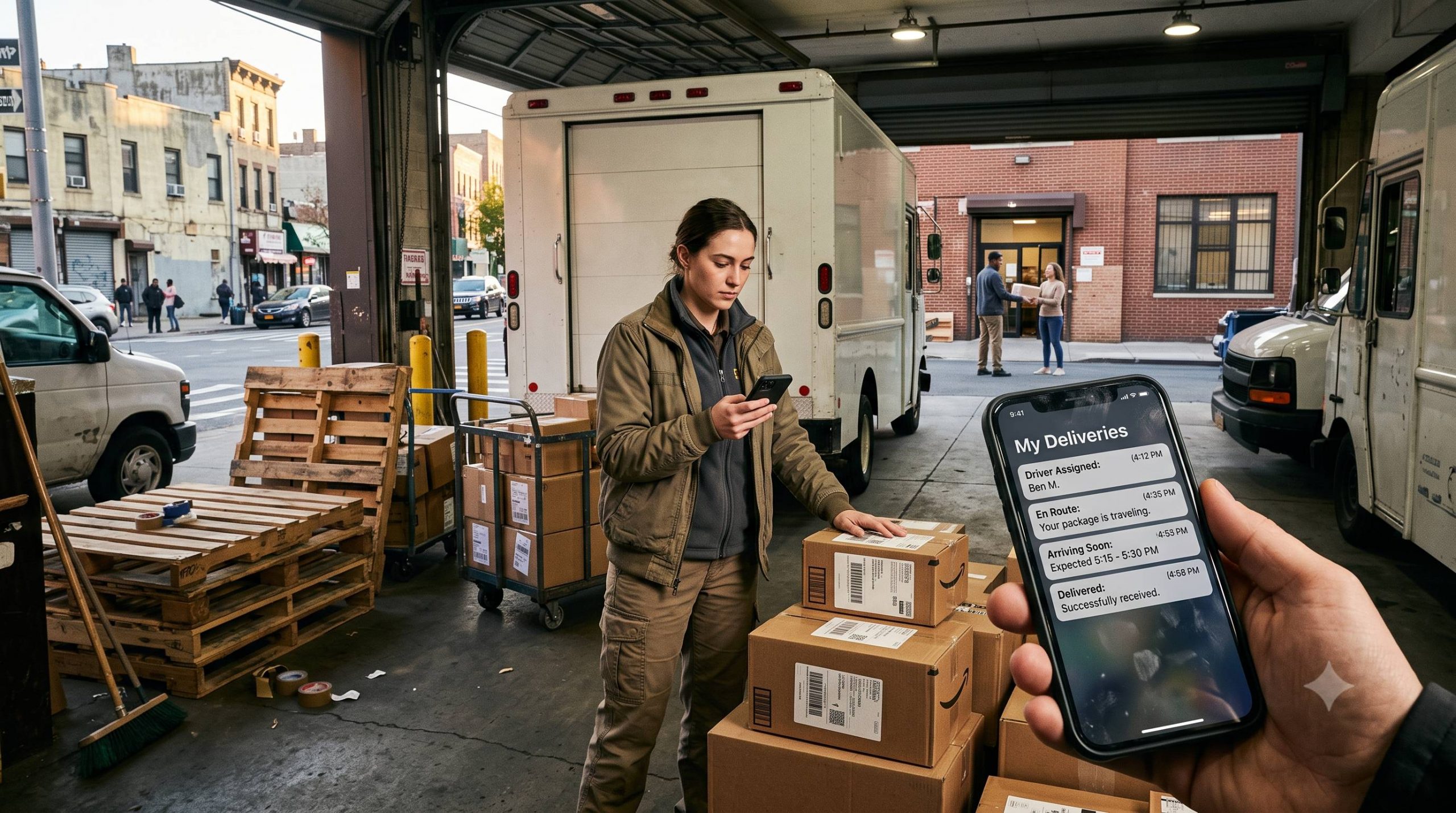
Customers shouldn’t have to keep refreshing a tracking page like it’s a stock ticker. Businesses can configure Customer Alerts and Milestone Alerts across channels such as SMS, Email, WhatsApp, and IVR.
Useful alerts can cover:
- Milestone created or scheduled
- Driver assigned
- En route
- Arriving soon
- Delay or exception
- Delivered and proof/confirmation
- Feedback request
The important part is relevance. An alert saying “Your order is moving” is less useful than one that provides the milestone, ETA, delivery area, and relevant support information.
Dynamic Tags can personalize SMS and email communications using information such as milestone references, ETA, addresses, support contacts, and custom fields.
2. Real-time Tracking and Customer Self-Service:
A customer tracking link can turn a passive delivery into an interactive experience. Depending on the configuration, customers can:
- View milestone status
- Live-track the delivery associate
- Call or chat with the delivery associate
- Update their delivery address
- Provide delivery or product feedback
This matters because customers don’t always need a human agent. Sometimes they just need the right information or one simple action.
That aligns with consumer behavior. DHL found that 9 in 10 online shoppers consider end-to-end tracking important, while its research also shows customers use multiple tracking methods, including retailer apps, delivery-provider websites, email, and text updates.
3. Consistent Branding Across the Delivery Journey:
Your customer’s experience shouldn’t suddenly look like it belongs to a completely different company after checkout.
Branding Profiles can help businesses maintain consistency across tracking pages and communications.
Businesses can configure:
- Logos
- Website and social links
- Header and footer content
- Promotional images and links
- Support information
- Branded email templates
Templates can be edited through HTML or with Template Copilot, which supports prompt-based editing and up to three reference files.
Businesses can also add a Need Help tab to the tracking experience using the id-needhelp element. Support contact details can be pulled from the Organization Profile or a Branch-level configuration.
And yes, promotions can be part of the experience too. Branding Profiles support 2–3 promotional images, with 512 × 256 pixels recommended for each image.
4. Customer Experience Analytics:
Sending thousands of notifications doesn’t automatically mean you’re delivering a great customer experience. You need to know what customers actually engage with.
In Reports & Analytics > Customer Experience Summary, businesses can analyze:
- Tracking link opens and trehnds
- SMS engagement
- IVR engagement
- WhatsApp engagement
- Customer feedback
- Promotion impressions and clicks
Teams can compare performance by day, week, month, or year, filter by specific Branches or Shippers, switch between Overall View and Shippers View, and examine historical data from the past three years. Graph-level downloads and additional data-point views can also help teams dig deeper.
This turns customer experience from a vague sentiment into something measurable.
5. AI-Powered CX Optimization:
Analytics tells you what happened. AI Insights can help identify what deserves attention next.
Teams can use AI Insights to identify engagement trends across channels, spot drops in customer engagement, and surface potential corrective actions or opportunities.
That creates a useful loop:
Communicate → Measure → Identify → Improve → Repeat
And that’s where customer experience management becomes an ongoing operating discipline rather than a one-time setup.
How to Improve Customer Experience Management

The easiest way to improve customer experience in logistics is to work through the delivery journey one moment at a time.
1. Map the Moments that Matter:
Don’t stop at “Out for Delivery” and “Delivered.”
Identify the points where customers are most likely to become uncertain: scheduling, driver assignment, delays, arrival, delivery confirmation, and feedback.
2. Standardize Delivery Alerts:
Make sure important events trigger consistent notifications across relevant channels. Use Dynamic Tags to make each message specific instead of sending generic updates that tell customers almost nothing.
3. Make Tracking Actionable:
A tracking page shouldn’t just say where the order is. Give customers useful visibility and, where appropriate, options such as driver contact, address updates, support, and feedback.
4. Personalize the Experience:
Use milestone information, ETA, location and relevant custom fields to make communications useful. The goal isn’t personalization for personalization’s sake. It’s delivering the right information at the right moment.
5. Keeping the Brand Experience Consistent:
Use Branding Profiles and templates to make tracking pages and communications feel like part of the same customer journey as the rest of the brand.
6. Measure More than Opens:
Review tracking engagement, notification performance, feedback, clicks, and trends across Shippers and Branches.
A high notification-open rate doesn’t necessarily mean customers are happy. Pair engagement data with feedback and operational performance.
7. Use AI to Find Gaps:
When engagement falls or certain channels underperform, use AI Insights to identify patterns and potential corrective actions instead of manually hunting through dashboards.
A Simple Delivery CX Maturity Framework
Businesses can think about their last-mile customer experience in five stages:
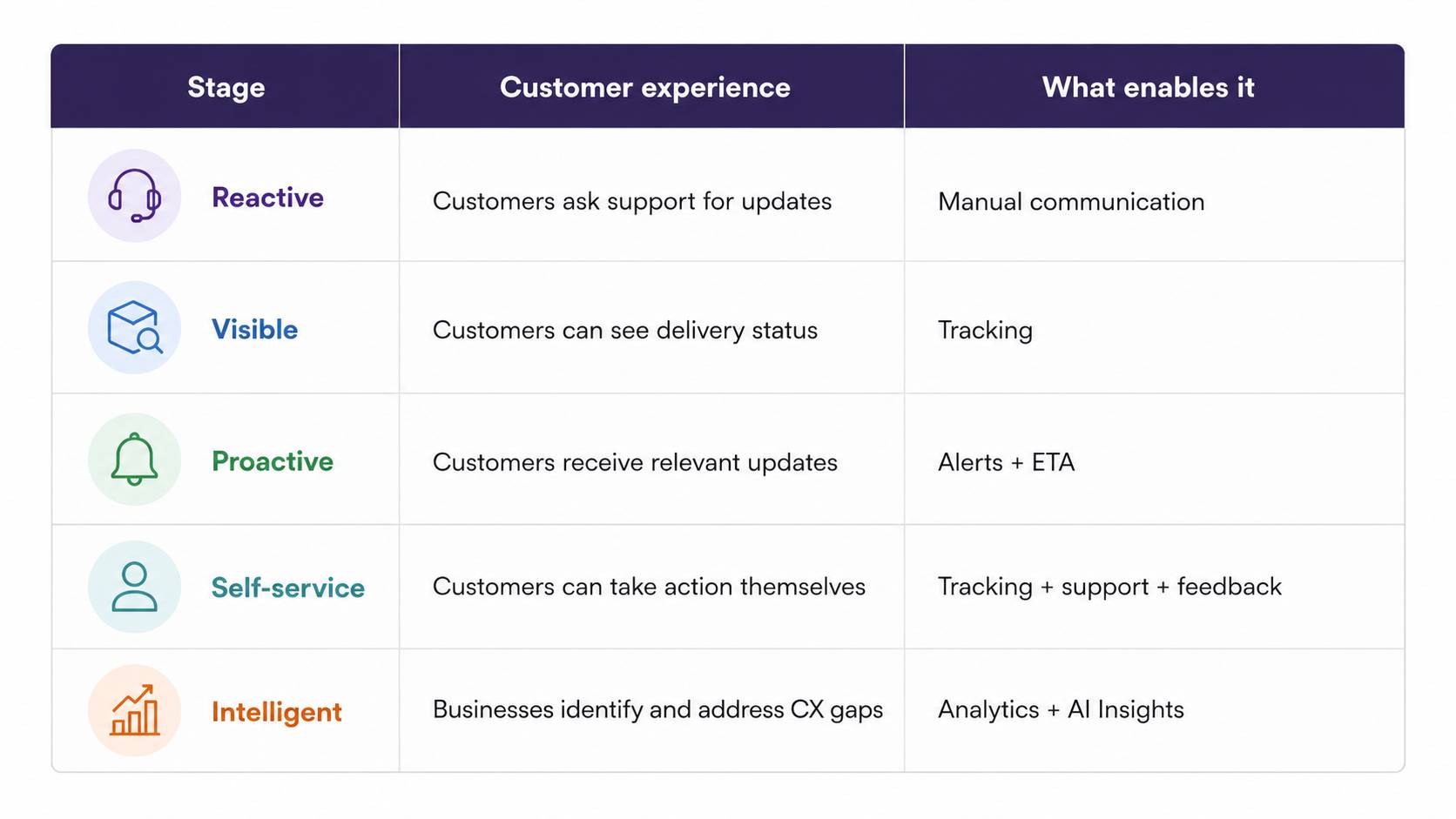
The goal isn’t to jump straight to “intelligent.”
First make the experience visible. Then make it proactive. Then make it actionable. Finally, use customer and operational data to identify where the experience can be improved.
Also Read: LogiNext Logistics Software: Key Delivery KPIs for Enterprises in 2026
Frequently Asked Questions
1. What is customer service management in logistics?
Customer experience management in logistics is the process of managing and measuring customer interactions throughout the fulfillment and delivery journey. It includes delivery notifications, real-time tracking, customer feedback, branded communications, analytics, and self-service capabilities.
2. Why is customer experience management important in delivery?
Customer experience management helps reduce uncertainty during delivery by giving customers timely information about their orders. Proactive notifications, real-time tracking, and self-service options can make the delivery experience more transparent, convenient, and reliable.
3. How can businesses improve customer experience in last-mile delivery?
Businesses can improve last-mile customer experience by providing proactive delivery alerts, real-time tracking, personalized communications, self-service options, consistent branding, and easy feedback channels. Monitoring customer experience analytics can also help identify areas for improvement.
4. How does LogiNext support customer experience management?
LogiNext supports customer experience management through customer alerts, real-time tracking links, personalized communications, branded experiences, customer feedback, CX analytics, and AI Insights. These capabilities help businesses manage customer interactions throughout the fulfillment journey.
Conclusion
Customer experience management in logistics is ultimately about removing uncertainty from the delivery journey.
Customers want to know what’s happening, when it will happen, and what they can do if something changes. Businesses need the visibility to understand how customers are engaging with their delivery communications.
By combining proactive alerts, real-time tracking, self-service, personalization, consistent branding, feedback, analytics, and AI-driven insights, businesses can create a more transparent and responsive delivery experience.
With the right technology, customer experience becomes an integrated part of the fulfillment journey rather than an afterthought.
Ready to improve your delivery experience? Explore how LogiNext can help you build a more connected, visible, and customer-focused delivery journey.
 |  |  |




@LogiNext