




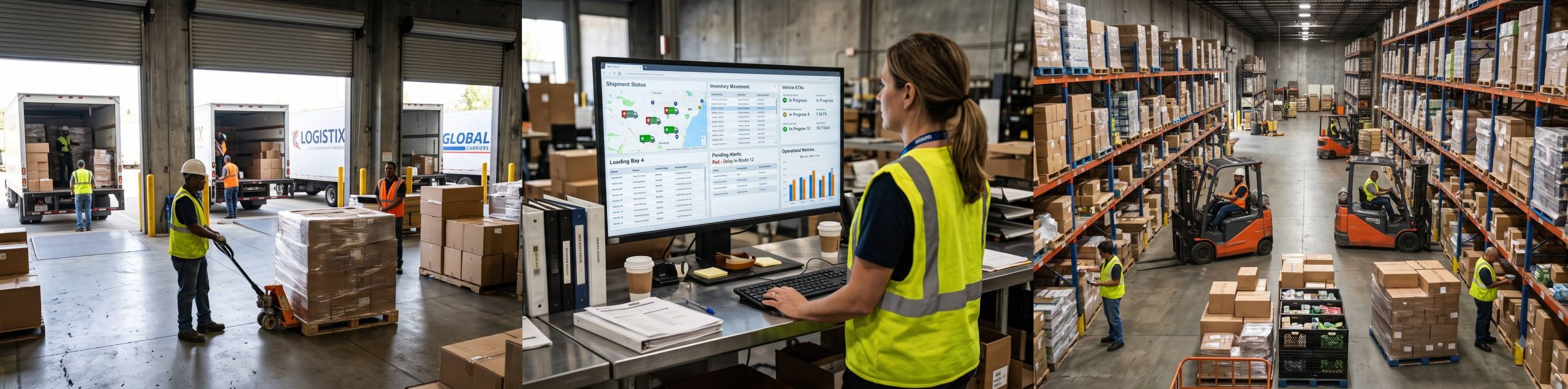
What Enterprise Leaders Are Learning From Supply Chain AI
AI in supply chain has moved beyond the “let’s see what it can do” phase. Companies are already using AI to automate order entry, answer carrier calls, monitor supplier risk, improve inventory visibility, and support operational decisions.
McKinsey research cited by Inbound Logistics estimates potential reductions of 20–30% in inventory, 5–20% in logistics costs, and 5–15% in procurement spend. But the most useful lessons are coming from the people putting AI to work. Supply chain leaders are finding that the biggest gains often come from surprisingly ordinary problems.
The question isn’t whether AI can transform supply chains. It’s what supply-chain leaders are learning about where it actually deserves to be used.
Key Takeaways
- AI delivers the clearest value in structured, repetitive, measurable workflows.
- Real-world gains already span inventory, logistics costs, procurement, order entry, carrier communication, and physical inventory operations.
- AI still has limitations when decisions require judgment, context, trust, or improvisation.
- Physical AI is extending intelligence into warehouses, inventory, assets, and shipments.
- Data, talent, system integration, governance, and ROI remain major barriers.
- The smartest approach isn’t AI everywhere. It’s AI where the economics make sense.
AI Creates the Most Value Where the Rules Are Clear
Nicolai von Bismarck, Partner at McKinsey, sees a clear pattern. AI delivers operational value in structured, rules-based environments where workflows are repeatable and outcomes are measurable.
That makes areas such as demand forecasting, freight matching, warehouse slotting, and shipment visibility natural starting points.
And the potential gains are hard to ignore:
- 20-30% reduction in inventory
- 5-20% reduction in logistics costs
- 5-15% reduction in procurement spend
The Inbound Logistics article also highlights a last-mile operator with more than 10,000 vehicles that achieved $30-35 million in savings using AI-powered virtual dispatcher agents. The reported return was 15x on a $2 million investment.
There is another useful signal. A Proxima study of more than 500 CEOs found that 51% say AI is already delivering measurable value in supplier risk monitoring. Yet the same executives identified data quality, skills, and unclear ROI as barriers to scaling AI further.
The pattern is pretty simple: When the problem is structured and the outcome can be measured, AI has something to prove.
The Best AI Use Cases May Be the Most Boring Ones
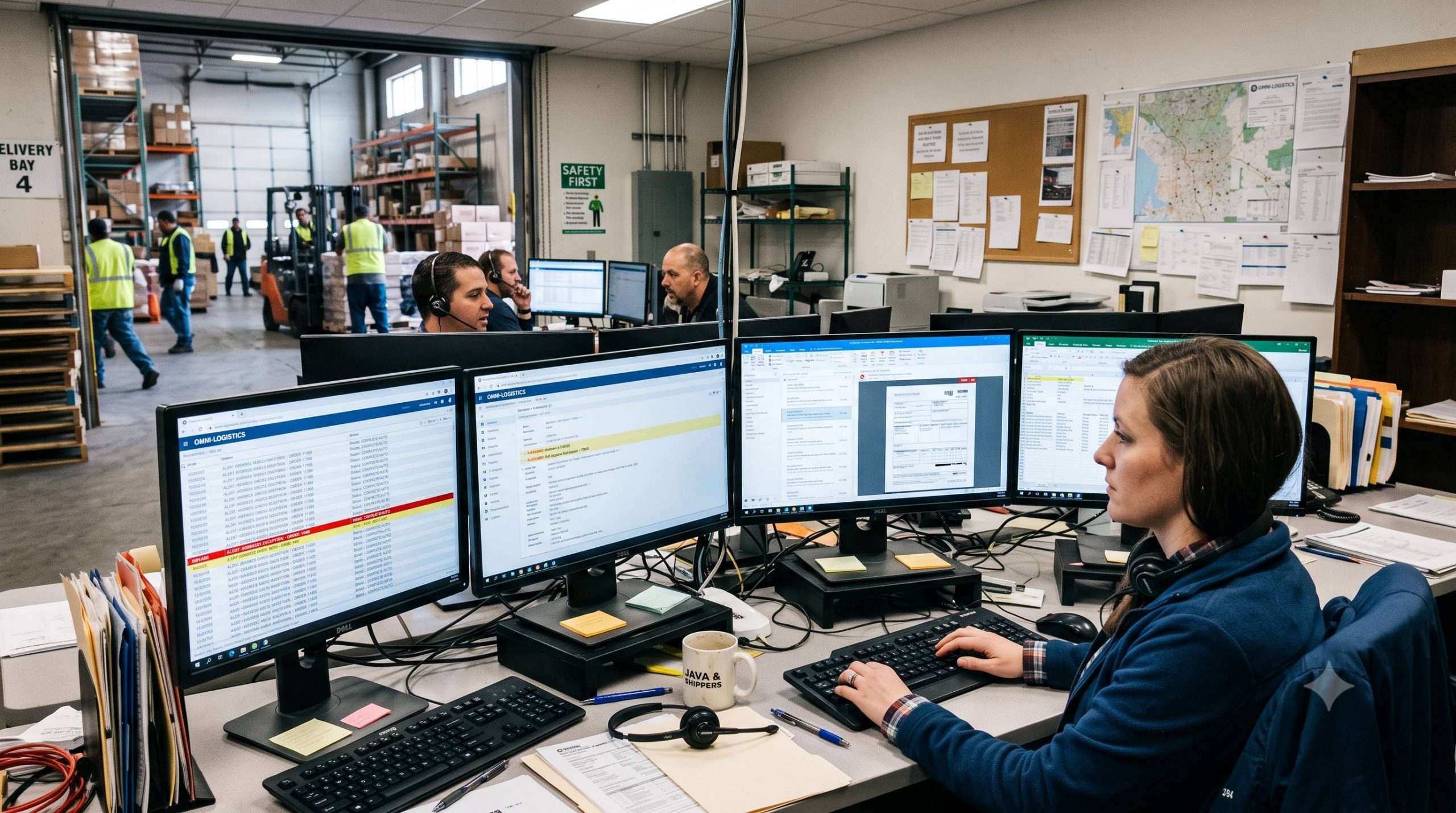
Matt Huckeba, Chief Strategy Officer at Evans Transportation, makes that point in a way that should make every AI strategist reconsider the word “exciting.” His strongest AI wins aren’t flashy. They order entry and carrier calls.
Not long ago, Evans employees manually entered 100-120 orders every day. Now, AI agents extract shipment details from emails and PDFs and send clean data into the company’s transportation management system.
Employees typically touch only one or two orders a day, stepping in when something genuinely needs human attention.
Then came the carrier calls.
Evans’ AI agents have answered more than 100,000 inbound carrier calls. Before that, the company missed roughly half of those calls. Now, it can answer nearly all of them, improving capacity coverage and surfacing pricing faster.
But Huckeba’s most important observation isn’t about call volume. By removing repetitive work, AI has freed experienced employees to focus on “relationships and trust.”
That’s a useful correction to the usual AI narrative. The win isn’t necessarily fewer people. It’s fewer people doing work that never really needed a human in the first place.
AI Still Has a Judgment Problem
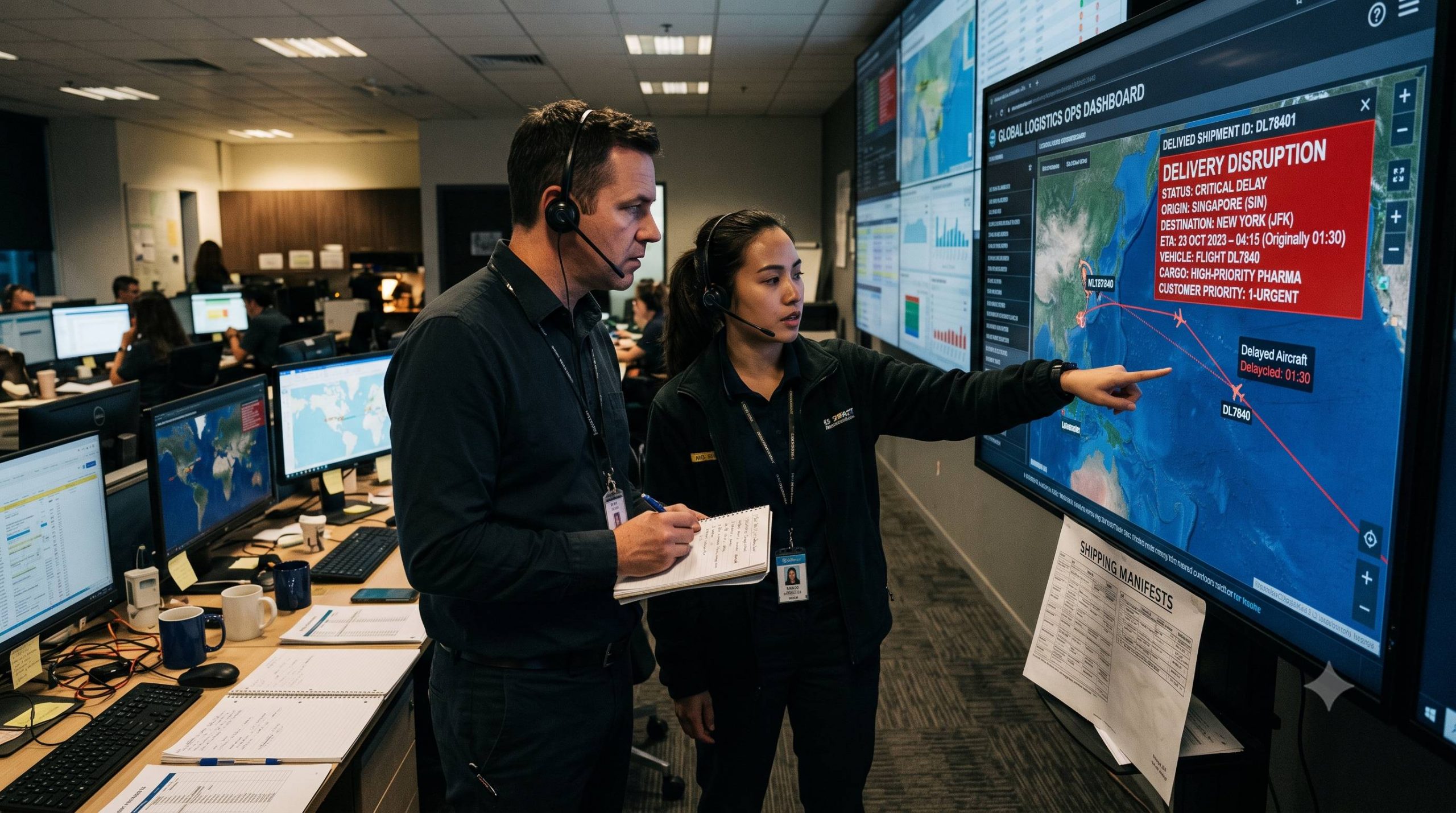
Supply chains, unfortunately, refuse to behave like spreadsheets. There are damaged shipments, unusual customer requests, customs complications, supplier negotiations, disruptions, and exceptions that don’t look anything like the examples in yesterday’s dataset.
Von Bismarck points to precisely these situations as areas where AI still struggles. Judgment-based work that requires in-the-moment decisions, nuanced expertise, or complex case management.
Milton Feliciano, Vice President of IT at iGPS Logistics, has seen AI deliver genuine gains in repetitive tasks such as exception handling, status updates, and data entry. But he also draws a line around what AI cannot yet replace.
In a business where operational knowledge is the advantage, he says, “AI doesn’t replace that (yet).” That “yet” is doing plenty of work.
Supply chains aren’t simply collections of transactions. They are networks shaped by customers, suppliers, carriers, regulations, disruptions, geography, and thousands of unusual situations that don’t neatly resemble yesterday’s data.
AI can identify a pattern. A human may still need to decide what the pattern means.
A Simple Rule for Choosing AI Use Cases
The dividing line is fairly simple.
AI is at its best when the work is repetitive, rules-based, data-rich, high-volume, and easy to measure. Humans become more valuable when the situation is unusual, the context is incomplete, or the decision depends on judgment and trust.
That gives supply-chain leaders a useful test before automating a process:
If the process happens often and follows a pattern, AI is probably worth testing. If every case is different, keep a human in the loop.
It isn’t a perfect rule. Supply chains rarely make anything that easy. But it is a useful starting point for deciding where AI should take the first swing.
The Next Lesson: AI Is Moving Into the Physical Supply Chain
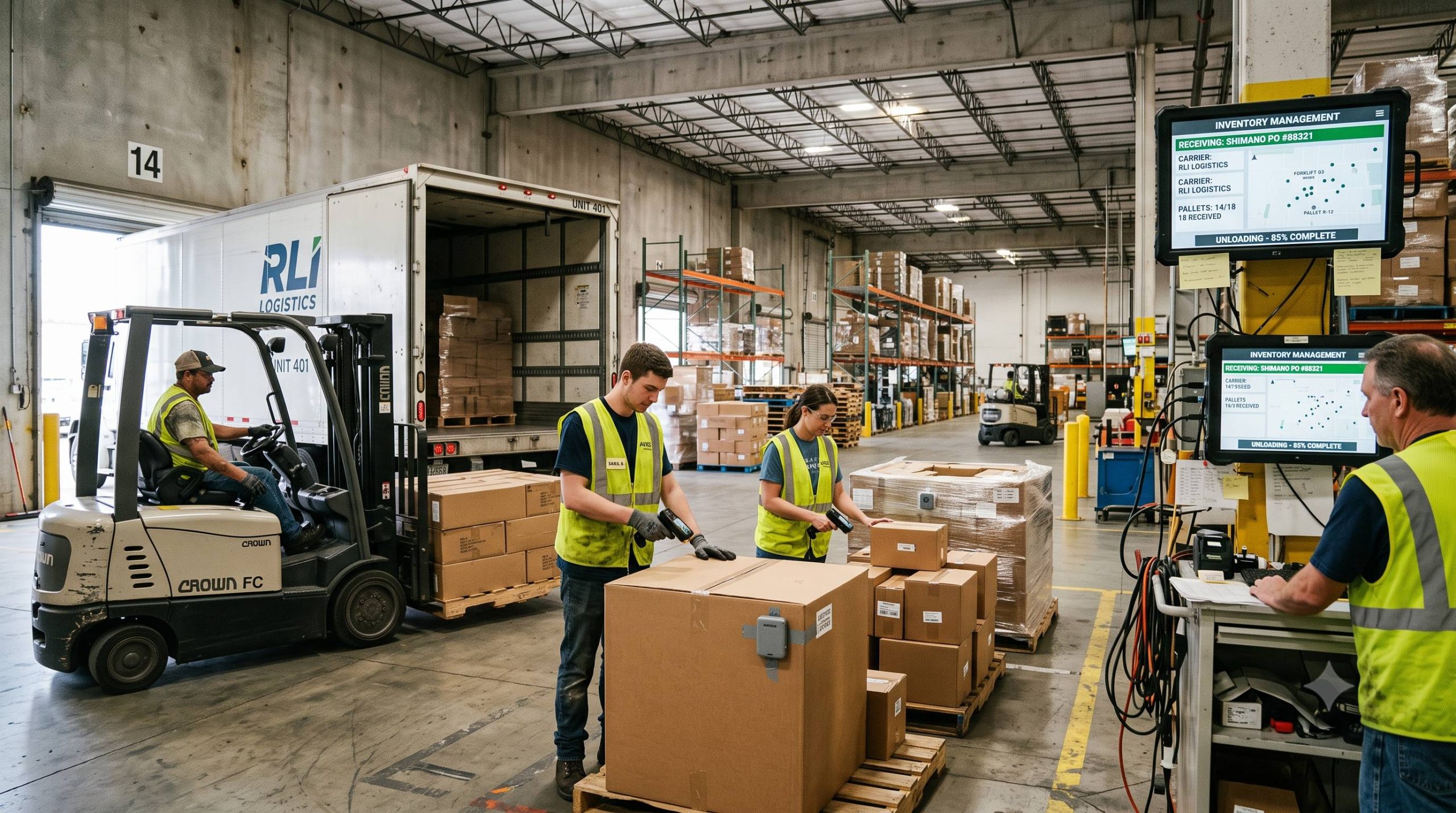
The story gets more interesting when AI moves beyond digital workflows.
Wiliot and AT&T report Physical AI deployments that have achieved 99%+ inventory accuracy, reduced dock-to-stock time from 24-48 hours to 2-6 hours, and cut receiving labor by 30–50%. Their deployments have also reported up to 90% fewer mis-shipments and a 60% reduction in lost, damaged, and delayed packages.
Here, AI isn’t simply analyzing information someone has already entered into a system.
Connected sensors continuously capture information about physical assets, while AI processes that data to generate insights and automated workflows across inventory, logistics, and operations.
Gartner identifies agentic AI and physical AI as two of the major supply-chain technology trends for 2026, pointing toward more autonomous and adaptive operations.
And the investment trajectory is moving quickly. Gartner forecasts that supply-chain management software with agentic AI capabilities will grow from less than $2 billion in 2025 to $53 billion by 2030.
The lesson here is not that every warehouse suddenly needs an AI robot. It’s that supply-chain AI is moving from understanding data to sensing and acting on the physical world.
The Biggest Barrier Isn’t AI. It’s Readiness.
Here’s where enthusiasm meets reality.
A study of 336 retail C-suite executives found that 91% believe AI will be table stakes by 2030. But only 29% have built the data and technology foundation needed to scale it. And only 11% have the AI and data-science talent required to build it.
Gartner’s research paints a similar picture across supply chains. Its survey of 140 senior supply-chain leaders found that 83% are taking an incremental approach to AI, either applying it to specific use cases or gradually scaling it into integrated processes. Only 17% are pursuing immediate transformational redesign.
The biggest obstacles are practical, too. 56% of CSCOs cite integrating AI with legacy systems and processes as a major challenge, while 50% cite limited internal AI expertise or talent.
Peddy Hashemi, Managing Director and Global Head of Customer Success at SAP Taulia, offers a pragmatic answer.
Rather than searching for one transformational AI project, the companies making progress are applying AI to real business problems: identifying supplier risks, automating routine tasks, helping identify suppliers who could benefit from early payment, or supporting better cash-flow decisions.
His philosophy is particularly relevant for supply chains: AI should be treated as a decision-support tool rather than a decision-maker, with governance and transparency built into adoption.
In other words: Don’t start with “Where can we use AI?” Start with: “What problem is worth solving?”
What Supply Chain Leaders Are Learning About AI
Across these examples, one lesson stands out: AI creates the most value when it solves a specific, measurable problem. Whether it is automating order entry at Evans Transportation, handling routine tasks at iGPS Logistics, or improving inventory visibility through Physical AI, the focus is less on using AI everywhere and more on using it where it can make a measurable difference.
For supply-chain leaders, that means starting with the problem, proving the value, and then scaling what works. The goal isn’t to automate everything. It’s to build a supply chain that knows what AI should handle and where human judgment still matters.
Also Read: LogiNext Logistics Software: Key Delivery KPIs for Enterprises in 2026
Frequently Asked Questions
1. What is AI in supply chain?
AI in supply chain uses technologies such as machine learning, predictive analytics, generative AI, and AI agents. It uses this to analyze data, automate workflows, improve decisions, and respond to changing operational conditions.
2. Where does AI work best in supply chain?
AI works particularly well in repetitive, high-volume processes with clear rules and measurable outcomes. These include demand forecasting, order processing, freight matching, inventory management, and routine exception handling.
3. Can AI replace supply-chain professionals?
AI can automate repetitive tasks, but professionals remain important for complex exceptions, negotiations, relationship management, and decisions requiring contextual judgment.
4. What are the biggest challenges to AI adoption in supply chain?
The biggest challenges include data quality, legacy-system integration, limited AI talent, governance, employee adoption, and difficulty proving ROI.
5. What is Physical AI in supply chain?
Physical AI combines AI with connected sensors, devices, and physical infrastructure to understand what is happening to goods and assets and trigger intelligent actions or workflows.
Conclusion
The most important lesson from supply-chain leaders isn’t that companies need more AI. It’s that they need better targets for AI.
The strongest results are coming from repetitive work that can be measured, while the hardest problems still demand human judgment. At the same time, Physical AI and agentic systems are pushing the technology beyond dashboards and into the physical operation itself.
The future won’t belong to companies that automate everything. It will belong to companies that know what to automate, what to measure, and what to leave to people.
Ready to put AI to work across your delivery operations? Explore how LogiNext helps enterprises automate the right workflows, improve visibility, and make smarter logistics decisions.
 |  |  |




@LogiNext