



Fleet Monitoring Software: The Difference Between Managing a Fleet and Controlling One
Every fleet manager has access to data. The real question is whether they have the right information at the right time. Fleet monitoring software has become essential because knowing where a vehicle is no longer guarantees that an operation is running smoothly.
A truck may be moving exactly as planned while its refrigeration unit begins to fail. A driver may repeatedly exceed speed limits without triggering immediate action. A GPS device may briefly disconnect, leaving an entire shipment invisible for critical minutes. These small incidents often go unnoticed until they become expensive problems.
For enterprise logistics teams, success depends less on collecting data and more on identifying operational deviations before they disrupt deliveries.
Modern Fleets Don’t Have a Data Problem
Today’s commercial vehicles generate thousands of data points every day through GPS devices, telematics, IoT sensors, electronic logging devices (ELDs), and onboard diagnostics.
The challenge isn’t a lack of visibility. It’s turning continuous streams of information into meaningful operational decisions.
According to McKinsey, advanced analytics and digital technologies can improve logistics productivity by 15% to 20% while significantly reducing operational costs. Yet many transportation teams still rely on reports that explain what happened after the damage is already done.
That approach creates blind spots throughout the supply chain.
When Small Problems Become Expensive Ones
Imagine a regional fleet manager overseeing hundreds of long-haul deliveries across multiple states.
Routes are optimized. Drivers are dispatched. Customers receive estimated arrival times. Everything appears to be running on schedule.
Then reality intervenes.
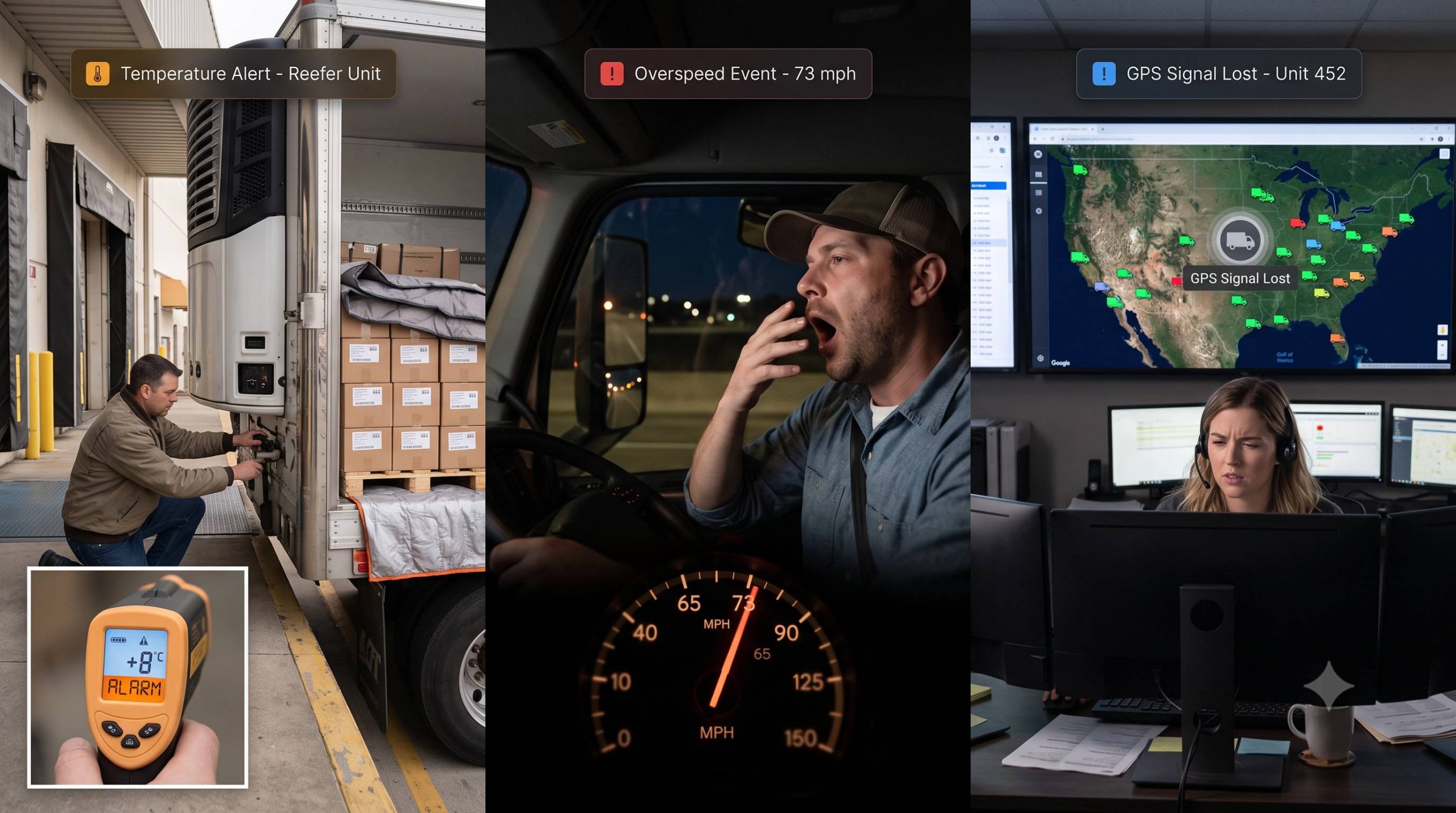
A refrigerated trailer experiences a brief temperature fluctuation during transit. It doesn’t seem serious at first, but several hours later an entire pharmaceutical shipment must be discarded.
A driver repeatedly exceeds safe speed limits throughout the week. The behavior appears in a monthly report, long after corrective coaching could have prevented future risks.
A GPS device temporarily loses connectivity midway through a delivery. The shipment effectively disappears until a customer calls asking why the vehicle hasn’t moved.
None of these failures are dramatic on their own. Together, they create costly delays, compliance risks, customer complaints, and operational inefficiencies.
Reactive Fleet Management Is No Longer Enough
Many organizations still operate with a reactive mindset.
An issue occurs. Someone notices. Teams investigate. Corrective action follows. Unfortunately, logistics rarely offers the luxury of hindsight.
The longer it takes to identify a problem, the more expensive that problem becomes. This is where fleet monitoring evolves beyond simple location tracking.
Modern operations require continuous intelligence that identifies exceptions as they occur. Thereby, allowing teams to respond before disruptions spread across the network.
What Modern Fleet Monitoring Software Actually Does
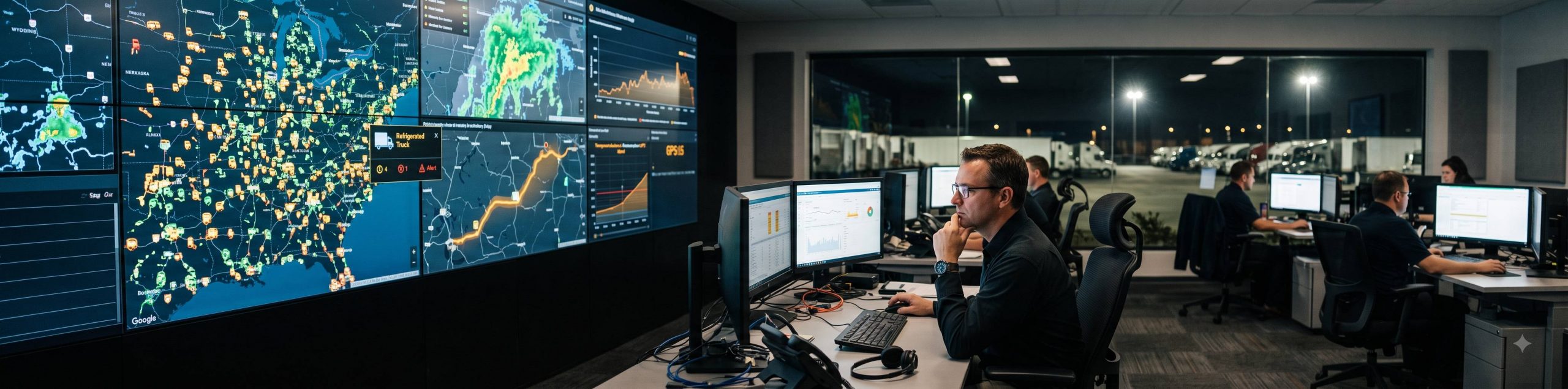
The best fleet monitoring software goes far beyond displaying vehicles on a digital map. It continuously evaluates operational health across the entire fleet.
Instead of monitoring only vehicle locations, intelligent platforms analyze multiple operational signals simultaneously. These include GPS connectivity, temperature conditions, driver behavior, route deviations, idle time, compliance events, and equipment status.
This creates an operational command center rather than a tracking dashboard. Managers no longer spend hours searching for problems. The system identifies them automatically.
Turning Data Into Fleet Intelligence
Raw data has limited value without context. This is where fleet intelligence becomes a competitive advantage.
Instead of treating every alert as an isolated incident, intelligent systems recognize patterns across vehicles, drivers, routes, and operating regions.
For example, recurring harsh braking events on a particular highway may indicate poor road conditions instead of unsafe driving.
Repeated temperature deviations on the same trailer may reveal equipment deterioration before product quality suffers.
Frequent GPS outages from one group of vehicles may point to hardware issues requiring maintenance. Rather than reacting to individual alerts, operations teams begin solving the root causes behind recurring problems.
Compliance Shouldn’t Begin During an Audit
Regulatory compliance remains one of the biggest responsibilities for fleet operators.
Hours-of-Service regulations, vehicle inspections, electronic logging, and shipment documentation all require accurate records.
According to the American Transportation Research Institute, compliance related violations continue to be among the leading causes of enforcement actions during roadside inspections.
Without centralized visibility, preparing for an audit often becomes a time-consuming exercise involving spreadsheets, disconnected systems and manual record collection.
A modern fleet management system automatically captures trip histories, deviation timelines, driver activities and operational events as they happen. Instead of assembling evidence after the fact, organisations remain audit-ready every day.
Visibility Without Complexity
Large transportation networks generate enormous volume of operational information. Finding the right insight shouldn’t require a data analyst.
Modern fleet management software allows operations managers to filter information instantly by driver, vehicle, branch, geography, delivery status or exception type.
Instead of scrolling through thousands of records, managers can focus only on the issues requiring immediate attention. The result is faster decision-making with less operational noise. Visibility becomes actionable instead of overwhelming.
How LogiNext Helps Businesses Stay Ahead
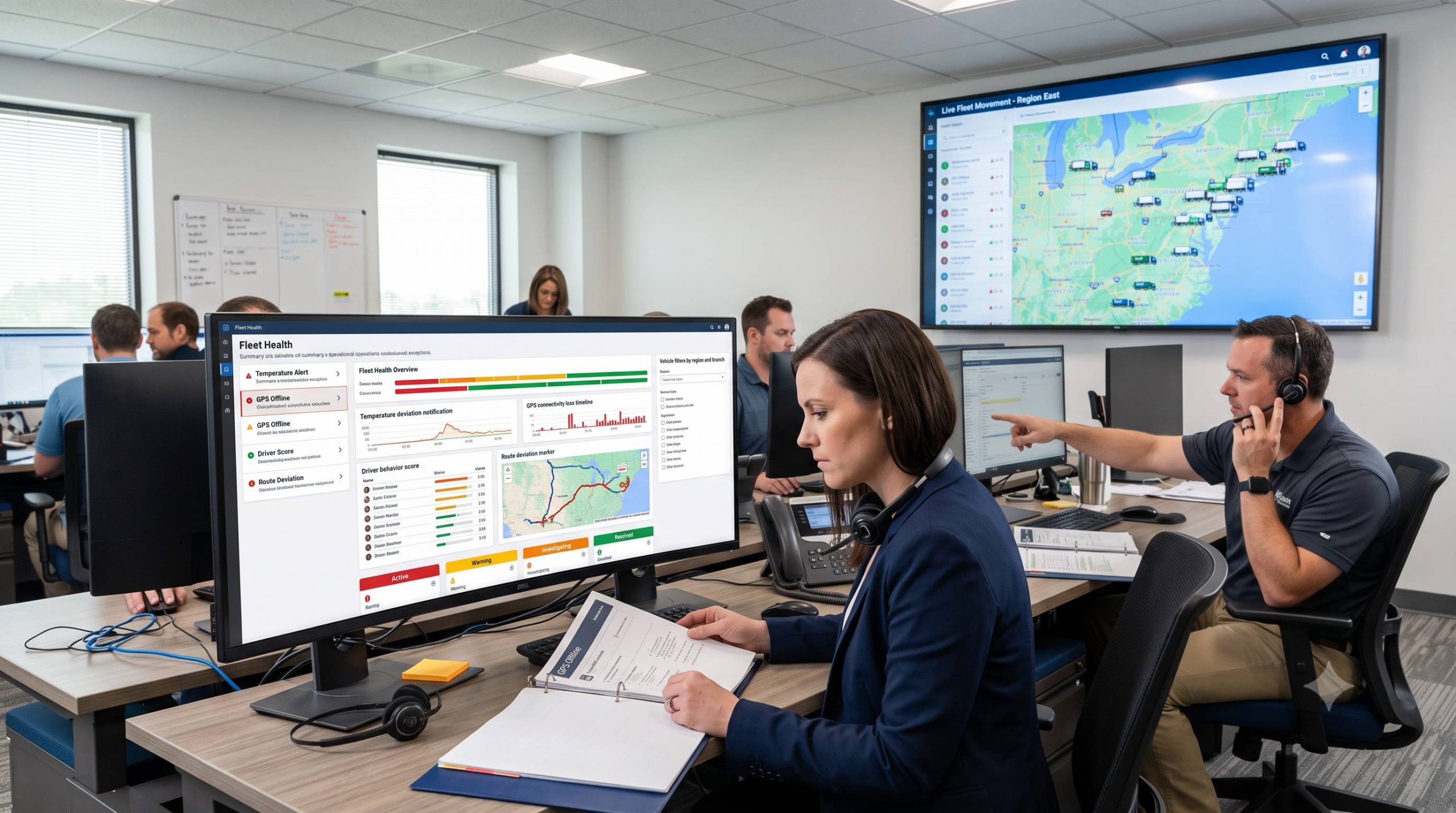
LogiNext combines intelligent monitoring, automation and analytics into a unified fleet management solution designed for enterprise logistics.
Its Deviation Intelligence capabilities continuously monitor operational exceptions instead of waiting for manual intervention.
The platform automatically detects events such as GPS connectivity failures, temperature deviations and risky driving behavior while providing structured timelines for investigation and compliance.
Managers can quickly filter operations by region, branch, driver or vehicle to understand what requires attention right now.
Rather than responding to yesterday’s reports, operations team gain the clarity to make better decisions while shipments are still in transit.
That shift transforms fleet management from reactive supervision into proactive operational control.
Conclusion
Every fleet generates data. The organizations that outperform competitors are the ones that know which data deserves immediate attention.
Fleet monitoring software enables logistics team to detect hidden operational risks, improve driver safety, strengthen compliance and protect shipment before minor issues become major disruptions.
With intelligent monitoring, businesses moving beyond tracking vehicles to building resilient data-driven operations. And every delivery matters, clarity is far more valuable than simply having more data.
Want to see how LogiNext elps enterprises gain complete fleet visibility? Schedule a demo and discover how intelligent monitoring transforms everyday operations into measurable business outcomes.
 |  |  |




@LogiNext