




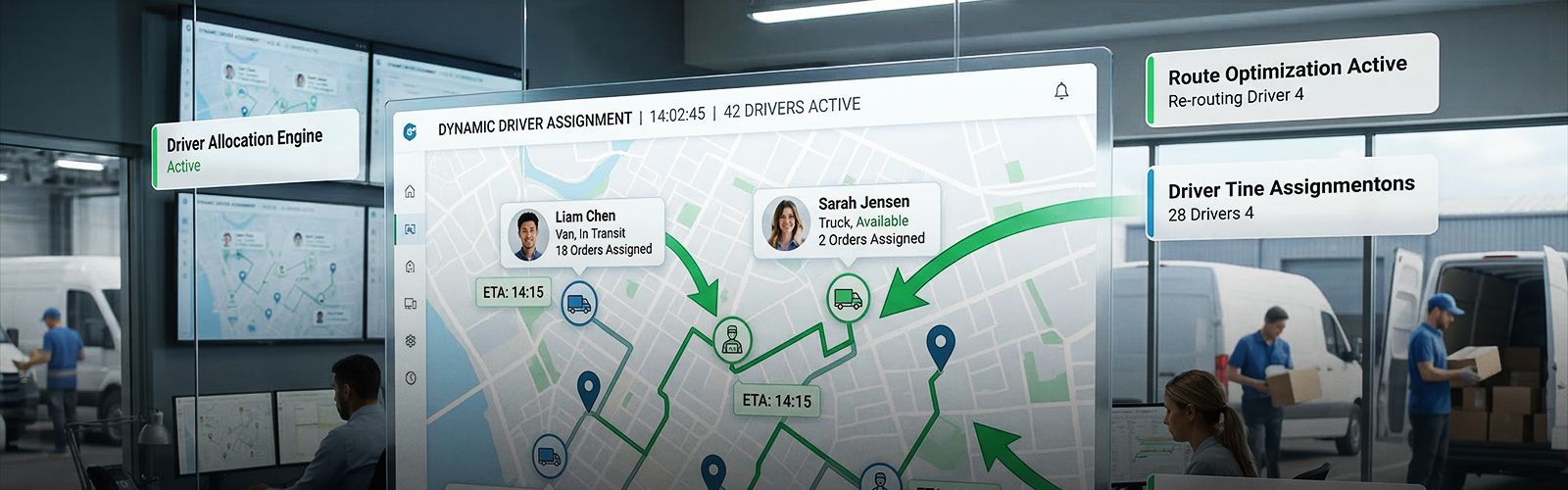
Driver Management Software: The Key to Intelligent Driver Allocation in Modern Logistics
Driver management software has become essential for logistics companies. The ones that need to coordinate drivers, assign deliveries, and maintain strict service-level agreements. As delivery volumes increase and customer expectations rise, businesses can no longer rely on manual dispatching. Instead, they need intelligent systems that automate decisions and optimize driver utilization.
Driver availability, route planning, and assignment decisions must happen in real time. Even small delays can create operational bottlenecks. This is why modern logistics companies rely on intelligent driver management platforms that continuously evaluate drivers, routes, and delivery commitments. This can help to ensure efficient operations.
The Growing Complexity of Driver Management
Driver management has traditionally relied on dispatch teams making allocation decisions manually. Dispatchers would review available drivers, check routes, and assign deliveries based on proximity or experience.
That approach no longer works at scale. Several industry trends have made driver allocation far more complex:
- High order volumes from e-commerce and quick commerce
- Tight delivery windows and SLA commitments
- Real-time traffic and route variability
- Driver shortages across global logistics markets
For example, the global logistics industry faces a severe driver shortage. According to the International Road Transport Union, the sector is missing more than 2.6 million professional drivers worldwide. Thereby, creating major operational pressure on fleets.
At the same time, demand continues to grow. Studies show 85% of logistics companies operate at or near capacity, while 69% report that driver shortages affect their ability to meet freight demand.
These pressures make efficient driver management systems essential. Companies must extract maximum productivity from every driver while maintaining delivery reliability.
What is Driver Management Software?
Driver management software is a digital platform that helps logistics companies plan, allocate, monitor, and optimize driver operations.
It integrates multiple operational elements, including:
- Driver availability and shift management
- Route and delivery planning
- Real-time driver tracking
- Delivery assignment and reassignment
- Performance analytics and reporting
Instead of relying on manual dispatching, organizations use driver software to automate operational decisions. The goal is simple: Assign the right driver to the right delivery at the right time. This is where driver allocation becomes a critical capability.
Why Driver Allocation Is a Critical Operational Decision
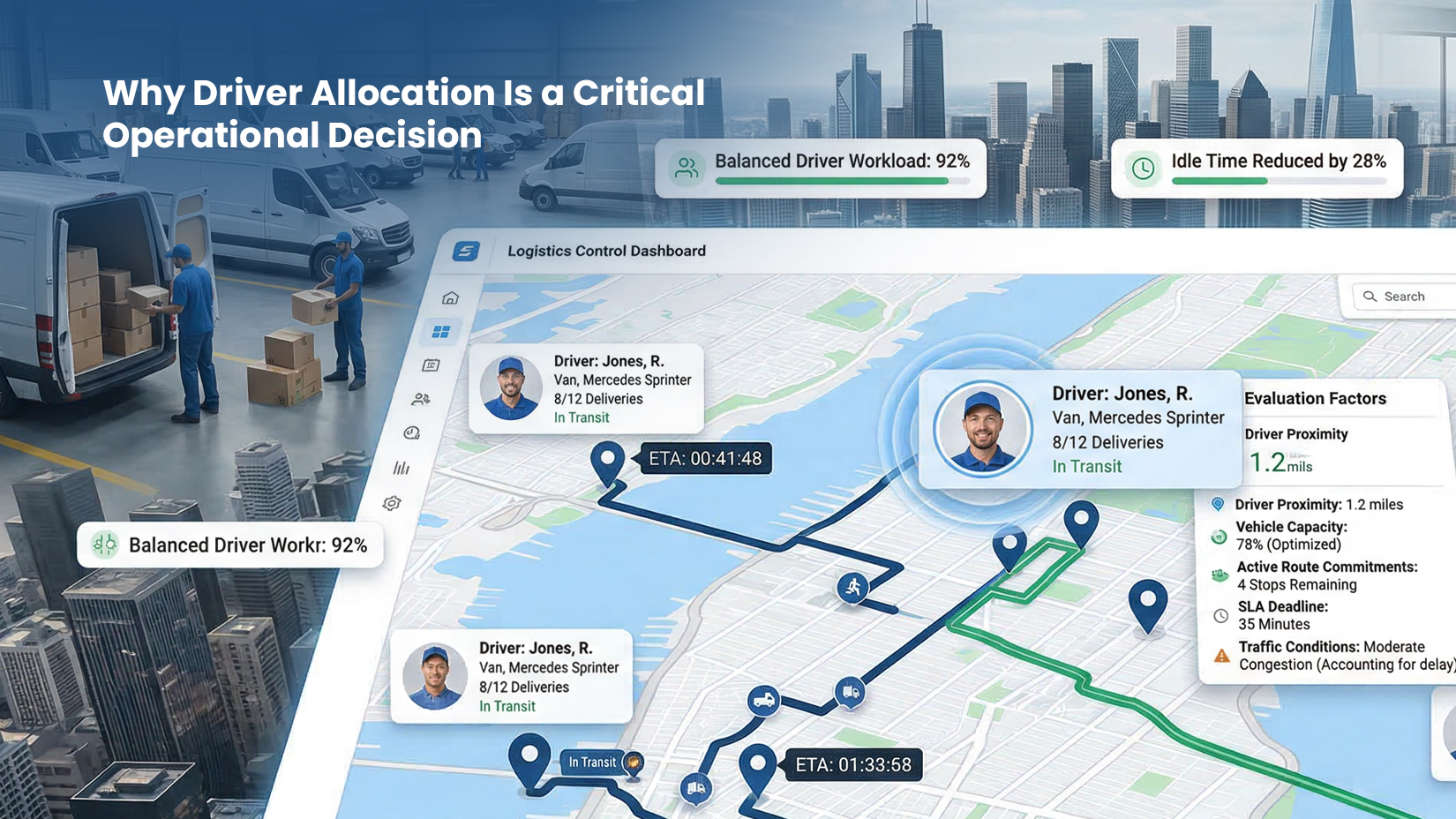
Every delivery requires a driver assignment. In large logistics operations, thousands of such decisions must be made daily.
At first glance, assigning a driver might seem simple. However, effective driver allocation must consider multiple factors simultaneously:
- Driver proximity to pickup location
- Vehicle type and capacity
- Current workload and route commitments
- Driver shift availibility
- SLA deadlines for deliveries
- Traffic and route conditions
If these factors are evaluated manually, errors become inevitable.
Poor driver allocation can lead to:
- Delayed deliveries
- Driver idle time
- Overloaded driver
- Increased operational costs
In contrast, intelligent allocation ensures balanced workloads and optimized delivery routes.
The Shift Toward Intelligent Driver Management
Modern logistics companies are moving beyond basic rule-based dispatch systems. Instead, they are adopting intelligent driver management platforms that use advanced algorithms and AI.
These systems evaluate thousands of variables simultaneously to determine the best assignment. An intelligent driver allocation engine continuously analyzes:
- Real-time driver location
- Route feasbility
- Order priority and SLA requirements
- Historical delivery performance
- Driver availability and compliance
Instead of assigning deliveries based purely on proximity, the system calculates which driver has the highest probability of completing the delivery successfully. This approach improves both operational efficiency and customer experience.
Key Features of a Modern Driver Management System
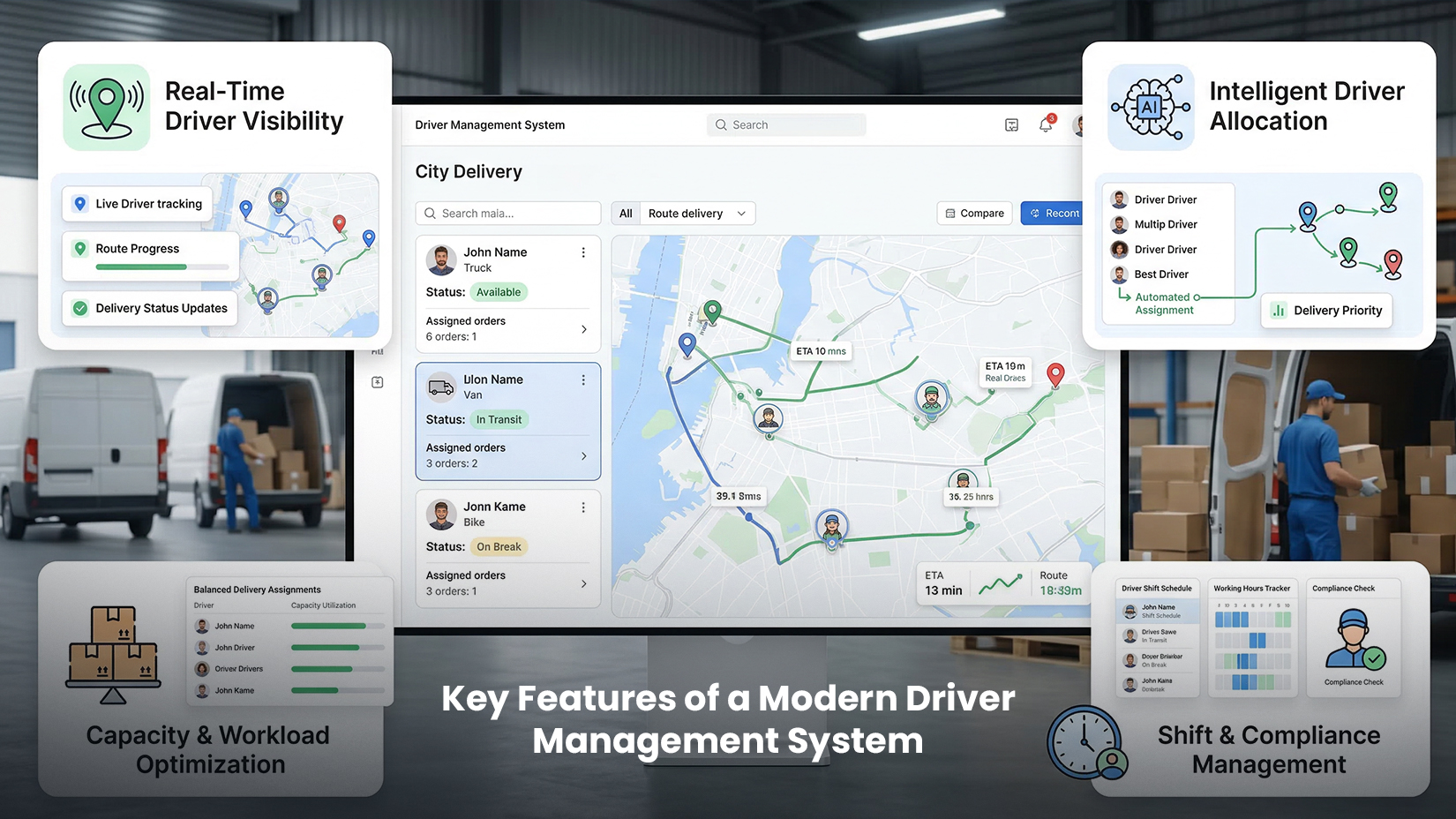
A robust driver management system includes several critical capabilities that enable efficient fleet operations.
1. Real-Time Driver Visibility:
Operations teams need live visibility into driver movements. Driver software provides GPS tracking and status monitoring, enabling dispatchers to see:
- Active deliveries
- Driver location
- Route progress
- Delays or disruptions
This transparency allows quick operational adjustments when unexpected events occur.
2. Intelligent Driver Allocation:
The core of a modern platform is its driver allocation engine. This system automatically evaluates multiple drivers and determines the most suitable assignment based on operational rules and real-time data.
Benefits include:
- Faster dispatch decisions
- Balanced driver workloads
- Improved delivery success rates
- Reduced operational costs
With intelligent allocation, dispatchers shift from manual assignment to operational supervision.
3. Capacity and Workload Optimization:
Driver utilization is a major operational challenge. Without proper optimization:
- Some drivers receive excessive assignments
- Others remain underutlized
An advanced driver management software platform ensures workloads are distributed efficiently. The system considers driver capacity, delivery time windows, and route feasibility before making assignments. This improves fleet productivity significantly.
4. Shift and Compliance Management:
Driver shifts, working hours, and regulatory requirements must be managed carefully. A modern driver management system ensures that:
- Drivers are assigned within shift limits
- Compliance requirements are met
- Scheduling conflicts are avoided
This protects both operational efficiency and regulatory compliance.
5. Performance Analytics:
Driver performance data is essential for continuous improvement. Driver software provides insights into:
- On-time delivery rates
- Driver productivity
- Route efficiency
- Delivery success rates
These analytics help operations teams identify inefficiencies and optimize driver management strategies.
Business Impact of Intelligent Driver Allocation
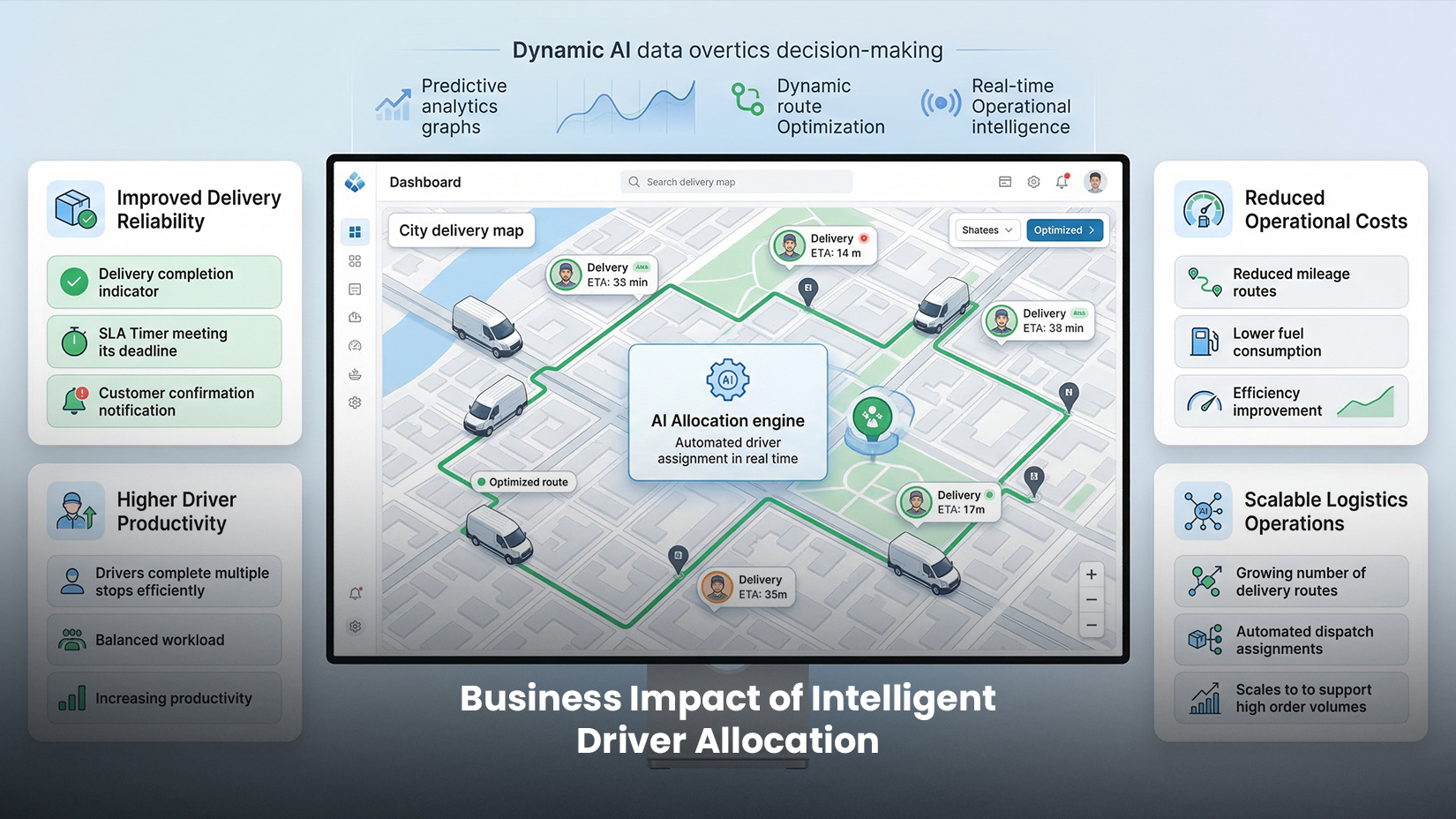
The benefits of intelligent driver management extend across the entire logistics operation.
1. Improved Delivery Reliability:
Smart allocation ensures that drivers who are best positioned to complete deliveries receive assignments. This improves SLA adherence and customer satisfaction.
2. Reduced Operational Costs:
Optimized driver allocation reduces unnecessary mileage, idle time, and inefficient routing. Industry studies show that AI-based scheduling systems can reduce driver requirements by up to 10% by maximizing fleet efficiency. This significantly lowers operational expenses.
3. Higher Driver Productivity:
Efficient driver management ensures that drivers spend more time delivering and less time waiting. Balanced workloads also improve driver satisfaction and retention.
4. Scalable Logistics Operations:
Manual dispatch systems struggle when order volumes surge. With automated driver allocation, companies can scale operations without increasing dispatch teams. This scalability is essential for modern logistics networks.
The Future of Driver Management
The next phase of logistics innovation will focus on fully autonomous decision-making. Advanced platforms will combine:
- AI-powered allocation engines
- Predictive analytics
- Dynamic route optimization
- Real-time operational intelligence
These systems will continuously learn from operational data, improving intelligent driver allocation over time. Instead of reacting to operational disruptions, logistics networks will predict and prevent them.
Also Read: How LogiNext Ensures Accurate and Fair Driver Payouts at Scale
Conclusion
Efficient driver allocation is essential for modern logistics operations. As delivery volumes grow, companies need driver management software that can automate assignments, balance workloads, and ensure reliable deliveries at scale.
With LogiNext’s intelligent driver management platform, businesses can optimize driver allocation, gain real-time visibility into fleet operations, and improve delivery efficiency. Explore LogiNext to see how intelligent automation can transform your driver management strategy. Click on the red button to know more.
4

|

|

|




@LogiNext