




What the FIFA World Cup Teaches Businesses About Surviving Logistics Chaos
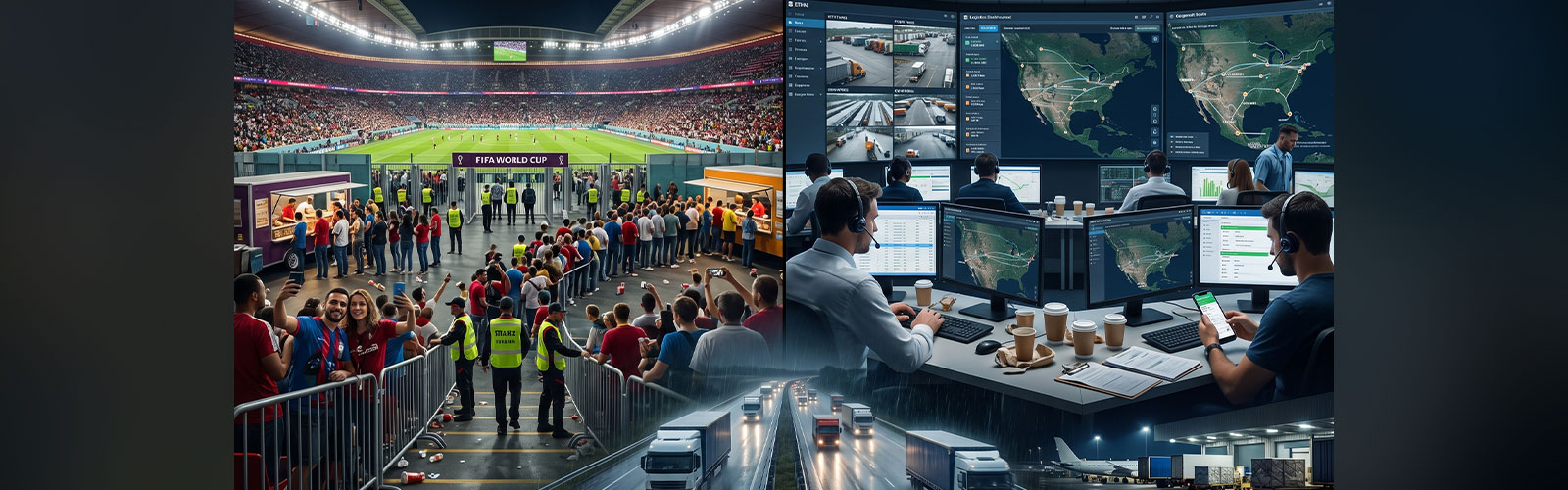
Every FIFA World Cup looks effortless on television. Packed stadiums. Perfectly timed kickoffs. Millions of fans moving across cities without seeing the operational chaos underneath it all. But behind every successful tournament sits a massive logistics management operation running nonstop.
With the 2026 FIFA World Cup spread across the United States, Canada, and Mexico, logistics complexity is about to hit a new level. Previous tournaments already exposed transportation bottlenecks, delivery pressure, and coordination challenges. For businesses, these tournaments offer valuable lessons in efficient logistics management. And why modern logistics management software is becoming essential for high-volume operations.
Lesson #1: One Traffic Jam Can Break the Entire System

Qatar 2022 Proved Why Real-Time Visibility Wins
During the 2014 FIFA World Cup in Brazil, transportation congestion became a major operational challenge. Fans dealt with delays, overcrowded transit systems, and inconsistent transportation schedules across multiple host cities.
Qatar 2022 handled things differently. Organizers invested heavily in centralized transportation monitoring, live crowd management, and real-time transit coordination. The Doha Metro carried millions of passengers while helping reduce road congestion significantly.
The lesson for businesses is simple. Static planning fails in dynamic environments.
A delivery route created in the morning can become inefficient within hours because of traffic, weather disruptions, or demand spikes. This is where logistics management software becomes essential.
Modern logistics management systems help businesses optimize routes dynamically, track fleets live, improve delivery visibility, and provide accurate ETAs in real time. Because customers may tolerate delays occasionally, but they hate uncertainty.
Lesson #2: FIFA 2026 Is About to Stress-Test Global Logistics

Bigger Tournament. Bigger Pressure.
The upcoming 2026 FIFA World Cup will be the largest tournament in football history:
- 48 teams
- 104 matches
- 16 host cities
- 3 countries hosting simultaneously
Unlike Qatar 2022, where venues were relatively close together, FIFA 2026 will involve long-distance coordination across North America. That means higher transportation demand, larger delivery volumes, and more operational complexity.
Previous tournaments already showed what happens when systems fail to scale. Brazil 2014 struggled with transportation readiness in several cities, while South Africa 2010 faced logistical pressure due to long travel distances between venues.
Businesses face the same issue during festive sales and delivery surges. Operations that handle normal order volumes comfortably often struggle during peak demand.
This is why scalable logistics software matters. A strong logistics management solution helps businesses automate dispatching, optimize fleet allocation, and maintain operational control even during high-volume periods.
Lesson #3: Fans Remember the Journey More Than the Match

Last-Mile Logistics Defines the Experience
Fans rarely think about backend operations during a FIFA tournament. They remember whether they reached the stadium on time. That is exactly how customers think about deliveries.
Previous World Cups showed how transportation delays and poor routing directly impacted fan experience. Businesses face the same reality every day. Even if warehouse operations work perfectly, a failed final delivery experience damages the overall customer journey.
That is why efficient logistics management software focuses heavily on last-mile execution.
Capabilities like:
- Real-time driver tracking
- AI-powered route optimization
- Automated customer notifications
- Electronic proof of delivery
- Dynamic rerouting
…have become essential for modern logistics.
Customers expect transparency, accurate ETAs, and proactive communication at every stage. Businesses that fail to provide visibility lose trust quickly.
Lesson #4: Data Is the New Operations Manager

Smart Logistics Teams Predict Problems Early
Modern FIFA tournaments rely heavily on operational analytics. Organizers monitor crowd movement, transport demand, venue congestion, and traffic patterns continuously to avoid disruptions.
The same applies to enterprise logistics management.
Companies using data-driven logistics management systems improve delivery efficiency, reduce fuel costs, and identify disruptions before they escalate. AI-powered logistics software helps businesses forecast demand spikes, predict delivery delays, improve route efficiency, and reallocate fleets dynamically.
Efficient logistics management today is no longer just about speed. It is about making smarter operational decisions continuously.
The companies leading modern logistics are not always the biggest fleets. They are usually the businesses using data more effectively than everyone else.
Lesson #5: Coordination Beats Complexity Every Time
A World Cup Runs on Connected Systems
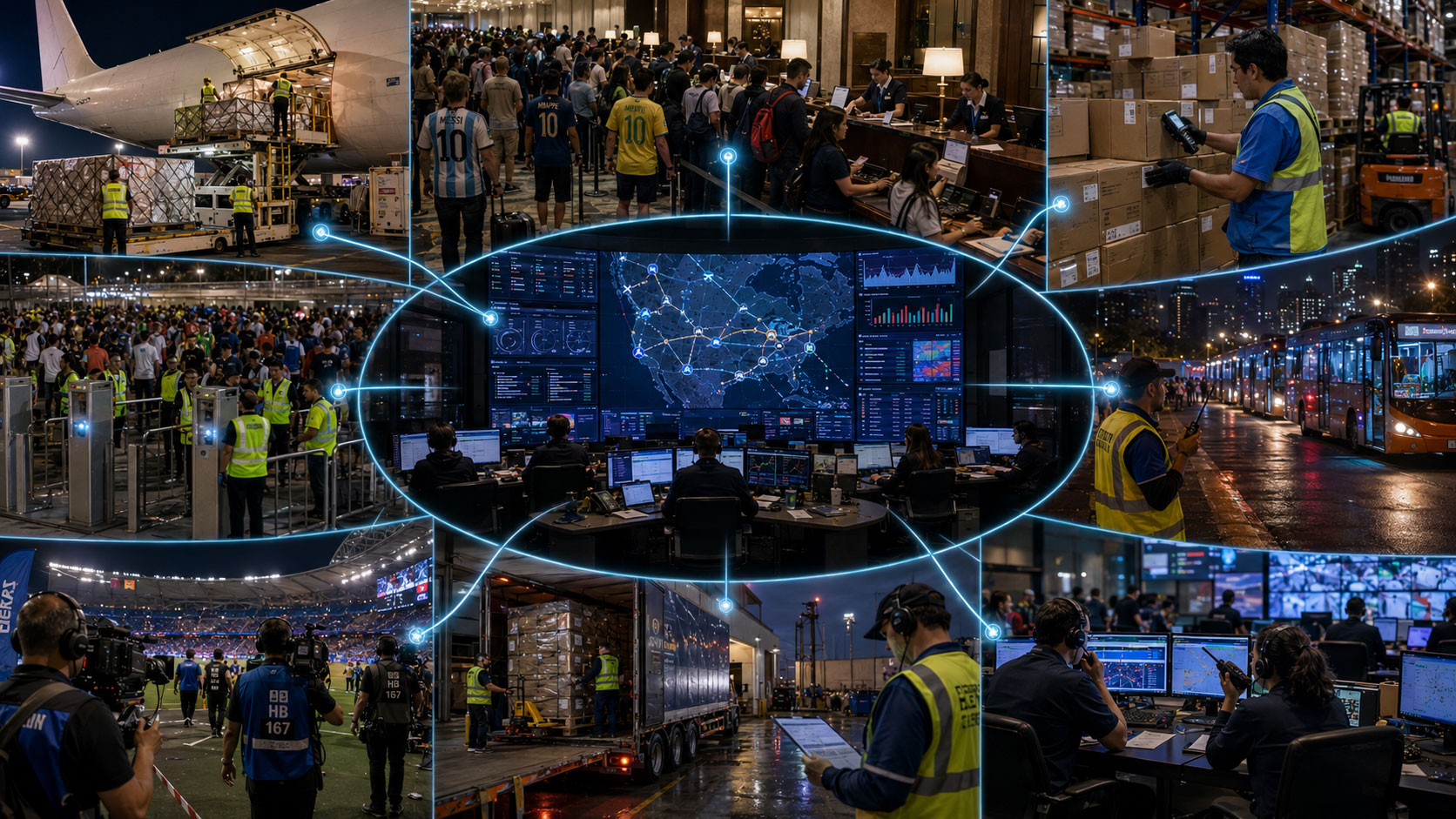
A FIFA World Cup requires coordination between airlines, hotels, stadium operators, transit authorities, vendors, security teams, broadcasters, and logistics providers.
Without centralized systems, operations become chaotic very quickly.
Businesses face similar fragmentation daily. Warehouses, delivery teams, customer support, and drivers often operate separately with disconnected tools and limited visibility. The result is operational inefficiency.
A centralized logistics management solution connects operations into one ecosystem. Dispatch teams gain live fleet visibility, customer support accesses real-time delivery updates, and operations managers monitor performance centrally.
When systems communicate properly, businesses move faster, respond quicker, and reduce disruptions significantly. Simple systems scale better. Disconnected systems create delays.
What Businesses Should Prepare for Before FIFA 2026
The 2026 FIFA World Cup will test logistics at an entirely new scale. With matches spread across three countries, operations will involve longer routes, higher transportation demand, and massive coordination challenges.
Businesses already face similar pressure today.
Customers expect faster deliveries, accurate ETAs, and real-time visibility throughout the delivery journey. This is why companies are increasingly investing in intelligent logistics management software and connected logistics management systems that improve automation, visibility, and operational efficiency at scale.
Final Whistle: Logistics Always Decides the Winner
Every FIFA World Cup proves the same thing repeatedly: logistics defines experience.
As operational complexity grows, businesses can no longer depend on fragmented systems and manual coordination. Modern logistics management software and intelligent logistics management systems are now essential for scalable operations.
With AI-powered route optimization, automated dispatching, and real-time visibility, LogiNext helps enterprises build faster, smarter, and more efficient logistics management operations for modern demand. Click on the red button to know more.
44

|

|

|




@LogiNext