




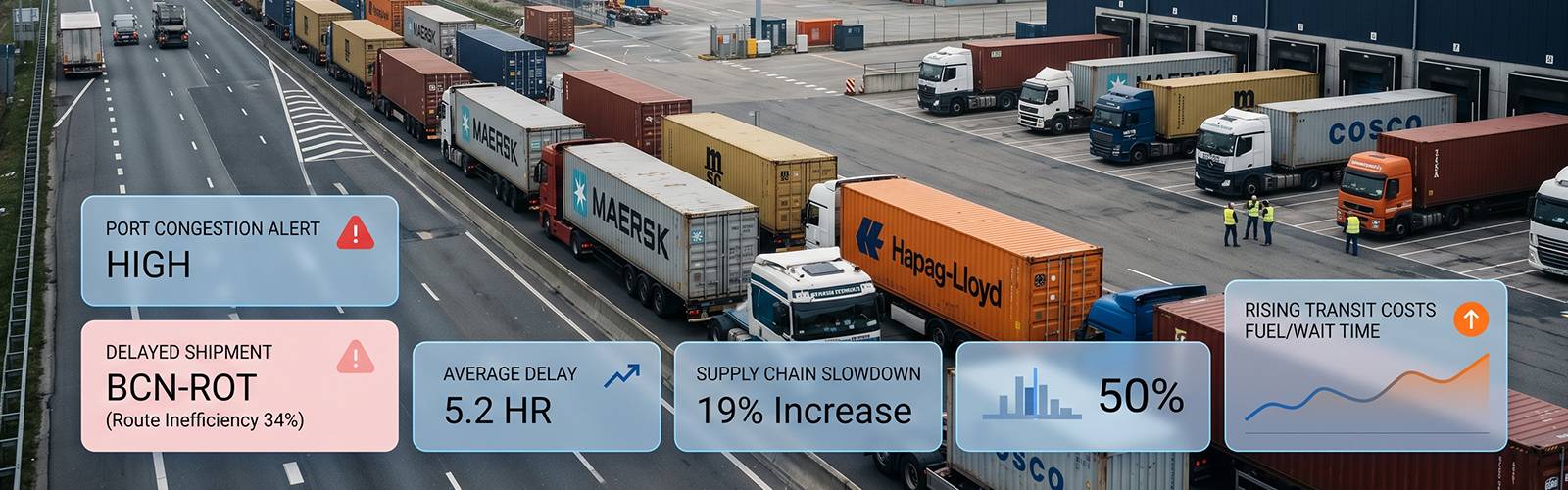
Why Poor Logistics Infrastructure Hurts Trade Competitiveness
Global trade depends on one thing more than ever before: efficiency. Businesses today are under constant pressure to deliver faster, reduce costs, and maintain supply chain visibility across regions. This is why logistics software has become a critical investment for enterprises managing complex transportation and delivery operations.
However, even the most advanced systems struggle when logistics infrastructure is weak. Poor roads, congested ports, fragmented transportation networks, and inefficient warehousing systems continue to slow down trade and increase operational costs worldwide.
As global competition intensifies, countries and businesses with inefficient logistics systems risk falling behind.
Poor Infrastructure Creates a Cost Burden Across Supply Chains
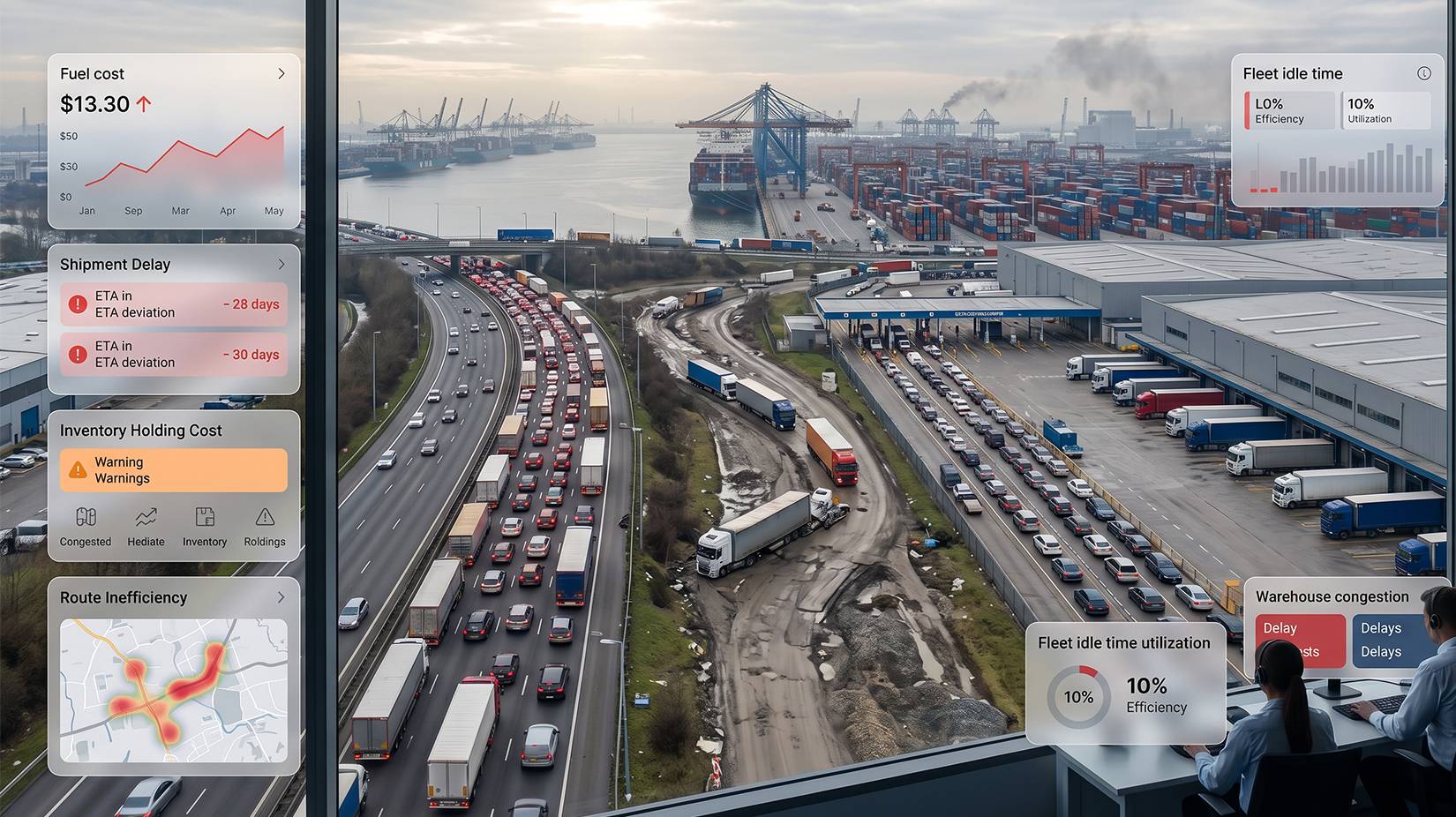
Weak logistics infrastructure directly impacts the movement of goods. Delays in transportation increase fuel consumption, labor costs, inventory holding expenses and shipment turnaround time. Businesses are often forced to maintain higher safety stock levels because delivery timelines become unpredictable.
According to the World Bank, countries with efficient logistics ecosystems consistently perform better in international trade due to lower transportation costs and faster cargo movement. In contrast, infrastructure bottlenecks reduce supply chain efficiency and hurt export competitiveness.
Some of the most common logistics infrastructure challenges include:
- Congested highways and ports
- Delayed customs processing
- Poor road connectivity
- Lack of multi modal transport integration
- Limited warehouse infrastructure
- Inefficient fuel utilizaiton
These issues create ripple effects across the entire supply chain. A delayed shipment at a port can disrupt manufacturing schedules, delay retail deliveries, and increase customer dissatisfaction.
To overcome these challenges, businesses are increasingly adopting logistics management software. Ones that provide better shipment visibility, route optimization, and operational control.
Why Delayed Deliveries Hurt Trade Competitiveness
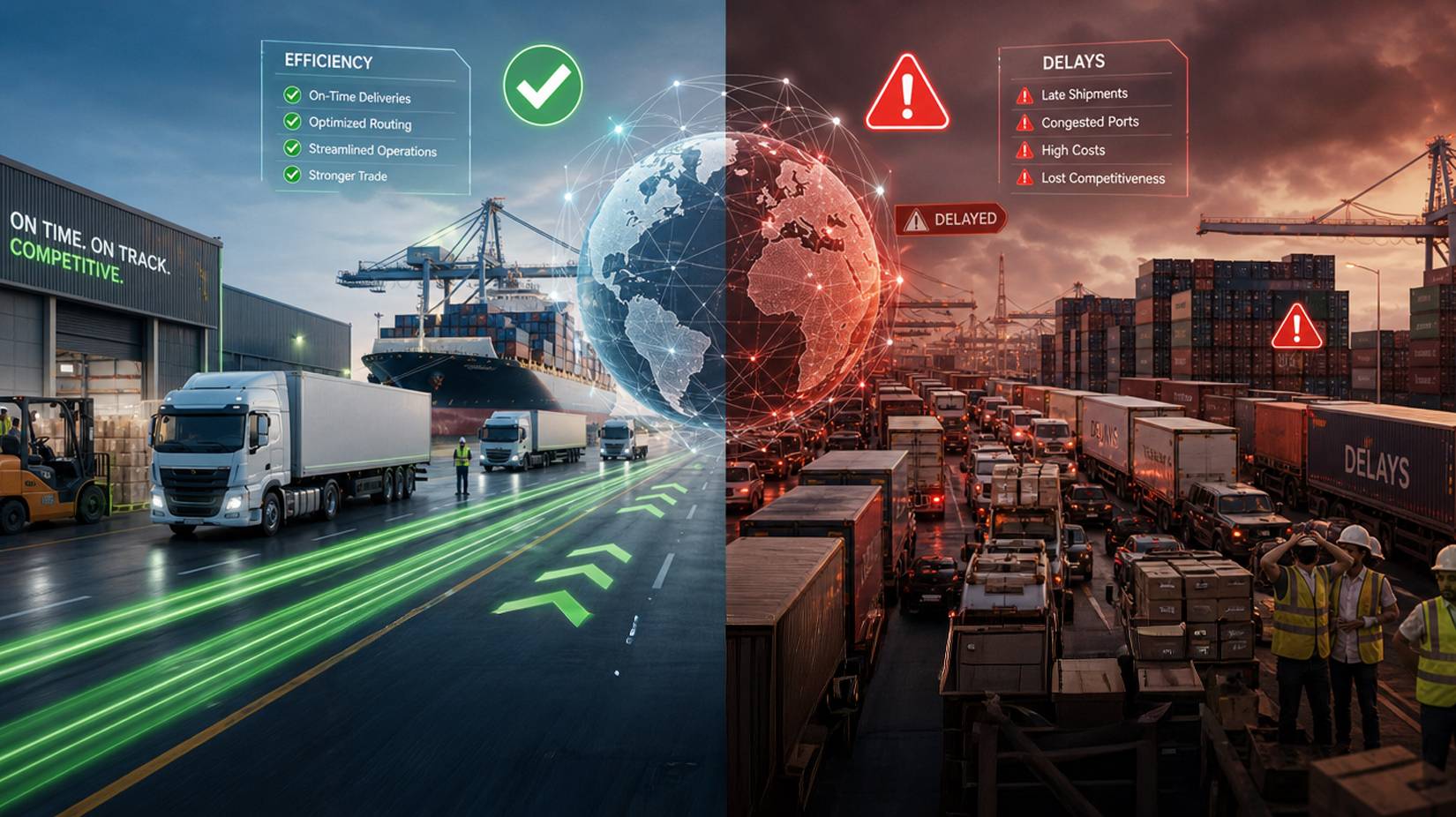
Modern supply chains operate on strict delivery timelines. Industries like manufacturing, retail, pharmaceuticals, FMCG, and e-commerce rely heavily on timely movement of goods. When infrastructure slows down transportation, businesses lose operational efficiency and customer trust.
Late deliveries often result in:
- Missed delivery commitment
- Increased transportation costs
- Highway inventory carrying expenses
- Lower customer retention
- Reduced export performance
For exporters, delays can be even more damaging. International buyers prioritize suppliers that can deliver consistently and predictably. A weak logistics network makes it difficult for businesses to compete with companies operating in regions with stronger infrastructure.
This is where logistics software plays a major role. Businesses using intelligent logistics systems can improve operational planning, monitor shipment movement in real time, and reduce the impact of infrastructure inefficiencies.
At the same time, advanced logistics management software enables companies to automate dispatch operations, optimize delivery routes, and improve fleet productivity despite transportation challenges.
Digital Transformation Is Reshaping Logistics Operations
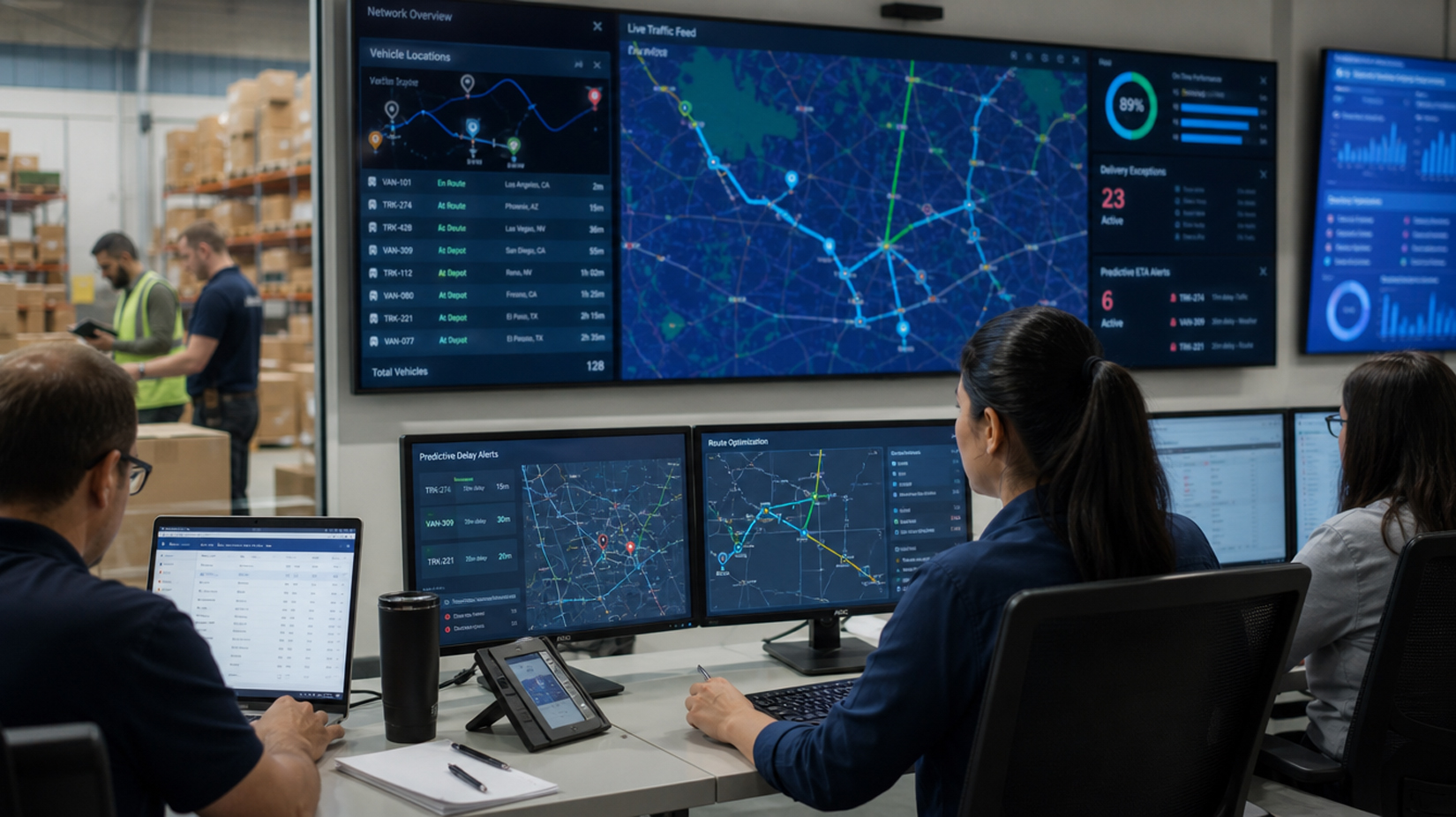
Physical infrastructure development takes years. Roads, ports, rail networks, and warehouses require large-scale investments and long implementation timelines. Businesses cannot afford to wait for infrastructure improvements while customer expectations continue rising.
As a result, organizations are increasingly investing in digital technologies. Tech like AI logistics software to improve operational efficiency and supply chain agility.
Modern AI logistics software uses real-time data and predictive analytics to improve decision-making across logistics operations. Instead of relying on manual planning, businesses can use AI-driven systems to dynamically optimize routes, predict delays, and allocate resources more effectively.
Key capabilities of AI logistics software:
- Dynamic route optimization
- Predictive delivery scheduling
- Automated dispatch management
- Real-time fleet monitoring
- Demand forecasting
- Delivery exception management
Businesses adopting AI-driven logistics systems are better equipped to handle disruptions caused by poor infrastructure while maintaining service quality.
Why Businesses Are Moving Toward AI-Powered Logistics Platforms
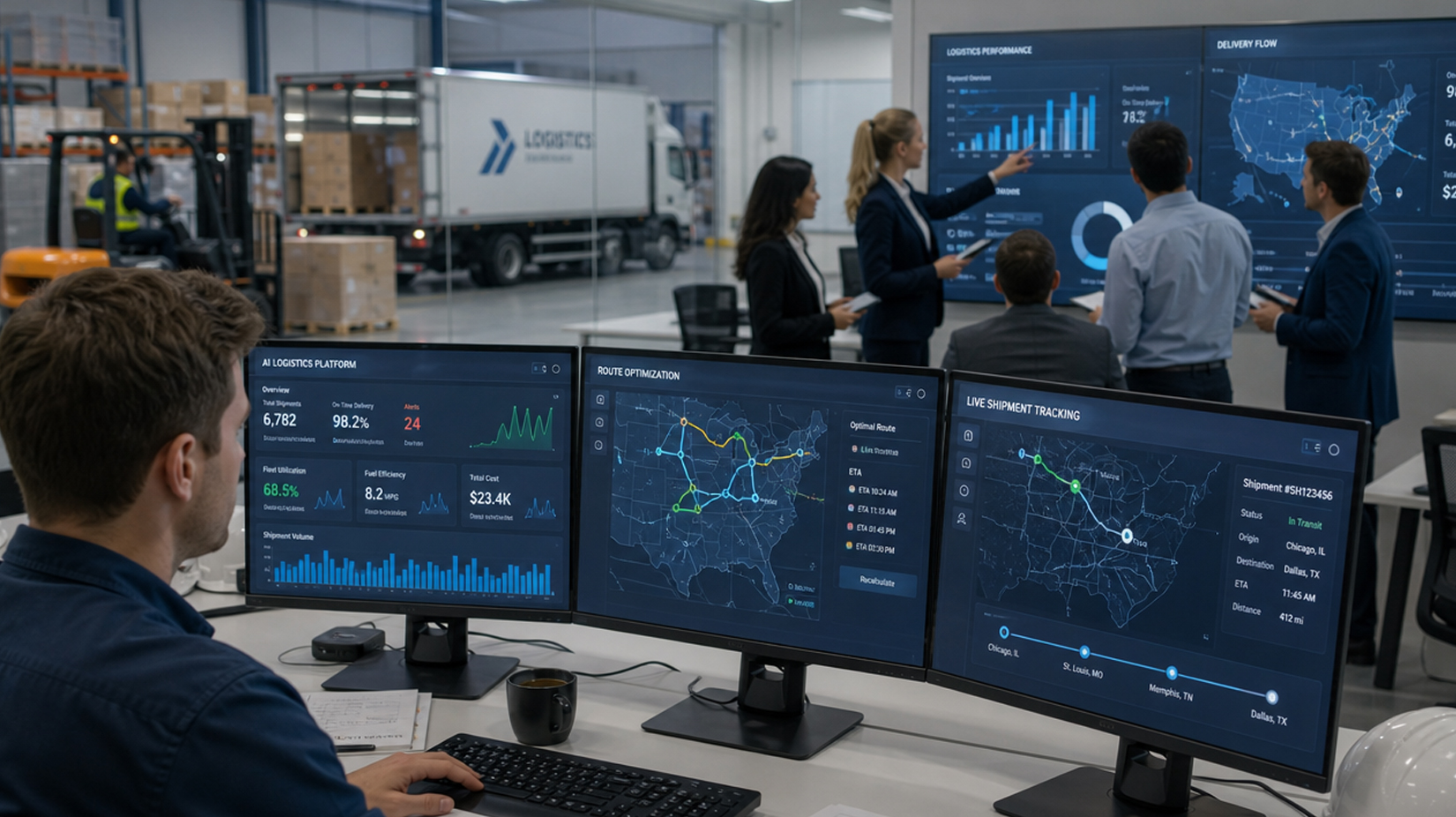
Traditional logistics operations often rely on fragmented systems and manual coordination. This creates delays, communication gaps, and operational inefficiencies.
To improve supply chain performance, enterprises are increasingly deploying AI powered logistics software that connects transportation, warehousing, and delivery operations through a centralized platform.
An advanced AI powered logistics software platform helps businesses:
- Improve route planning accuracy
- Reduced fuel consumption
- Increase on-time deliveries
- Improve fleet utilization
- Enhance customer visibility
- Reduce operational costs
Unlike conventional systems, AI-enabled platforms continuously analyze operational data and recommend faster, more efficient logistics decisions.
Customer expectations continue shifting toward same-day and next-day delivery models. For this, businesses are using AI powered logistics software to gain a stronger competitive advantage in both domestic and global markets.
The Growing Importance of LMS in Supply Chain Management
As logistics operations scale, businesses need centralized systems that improve visibility and coordination across the supply chain. This is where an advanced LMS becomes essential.
A modern LMS helps businesses manage transportation operations, shipment tracking, fleet performance, and delivery workflows from a single platform. Instead of relying on disconnected systems, companies can gain end-to-end operational visibility.
Businesses using a scalable LMS often achieve:
- Faster delivery turnaround times
- Better resource allocation
- Higher fleet productivity
- Reduced operational inefficiencies
An intelligent LMS also improves communication between dispatch teams, drivers, warehouses, and customers. Thereby, helping businesses respond quickly to disruptions caused by infrastructure limitations.
Logistics Solutions Are Becoming a Competitive Necessity
The logistics industry is undergoing rapid digital transformation. Businesses are no longer treating technology adoption as an optional upgrade. It has become a business necessity.
A modern logistics solution helps organizations reduce operational complexity, improve delivery performance, and increase supply chain resilience. Businesses operating with outdated processes often struggle with delayed shipments, rising transportation costs, and limited operational visibility.
An intelligent logistics solution enables companies to:
- Improve shipment visibility
- Optimize delivery operations
- Automate workflows
- Reduce transportation inefficiencies
- Improve customer communication
- Scale logistics operations efficiently
As trade volumes continue growing globally, businesses with stronger logistics capabilities will be better positioned to compete in increasingly demanding markets.
Conclusion
Poor logistics infrastructure continues to be one of the biggest barriers to trade competitiveness. Delayed transportation, inefficient warehousing, fragmented delivery systems, and rising operational costs directly impact business performance and customer experience.
While governments continue investing in infrastructure development, businesses must strengthen their operations through technology adoption. Companies investing in modern logistics technologies will be better prepared to reduce costs, improve delivery performance, and compete effectively in global markets.
With AI-driven automation, real-time visibility, advanced route optimization, and enterprise-grade delivery intelligence, LogiNext helps businesses build smarter, faster, and more resilient logistics operations at scale. So, click on the red button and book a demo today.
40

|

|

|




@LogiNext