




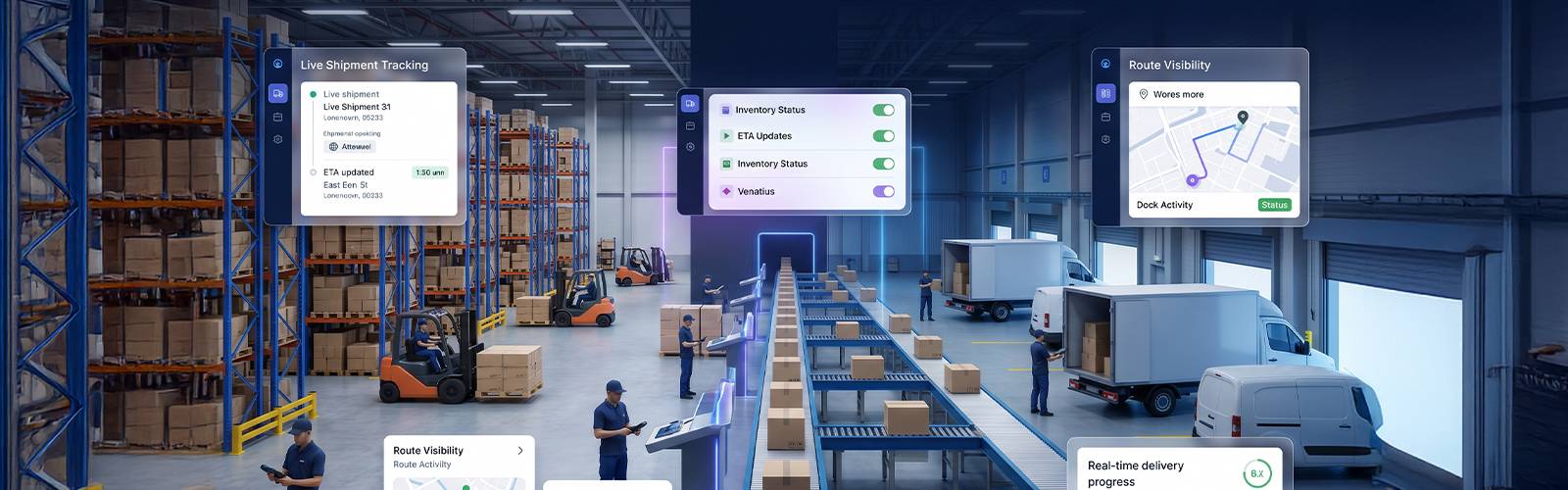
How Real-Time Visibility Is Transforming Logistics And Warehousing
Real-time visibility is transforming and changing how logistics and warehousing operations function. Businesses today need accurate, live updates across shipments, inventory, warehouse management and deliveries. All of this is needed to meet rising consumer expectations and avoid costly disruptions.
Traditional systems that rely on delayed reporting and manual coordination often create inefficiencies across the supply chain. To solve this, companies are investing in smarter technologies that provide faster decision-making, better operational control, and greater transparency across logistics networks.
What is Real-Time Visibility in Logistics?
Real-time visibility refers to the ability to monitor shipments, inventory, vehicles, warehouse operations and delivery performance across the supply chain. Instead of waiting hours or days for updates, businesses can access live operational data through a centralized dashboard or a real-time visibility platform.
This includes visibility into:
- Shipment movement
- Inventory levels
- Fleet location
- Delivery ETAs
- Warehouse workflows
- Order fulfilment status
- Operational bottlenecks
With modern logistics management software, businesses can connect transportation, warehousing, and customer communication into one unified system. The result is faster response times and smarter decision-making.
The result is faster response times and smarter decision-making.
Why Traditional Logistics Systems No Longer Work
Many companies still rely on disconnected spreadsheets, manual communication, and outdated tracking systems. These methods create visibility gaps that impact operational efficiency. Some common challenges include:
- Delayed shipment updates
- Inventory mismatches
- Poor warehouse coordination
- Inefficient route planning
- Lack of customer communication
- Higher operational costs
In fast-moving supply chains, even small delays can create significant disruptions. For example, a delayed shipment notification may prevent warehouse teams from planning labor efficiently. Similarly, inaccurate inventory data can lead to stockouts or overstocking.
Without real-time visibility in logistics, businesses often operate reactively instead of proactively. That approach is becoming unsustainable.
How Real-Time Visibility is Transforming Warehousing
Warehousing operations are evolving rapidly due to increasing order volumes and growing customer expectations. Modern warehouses are no longer just storage facilities. They are dynamic fulfillment centers that require precision, speed, and continuous coordination.
This is where real-time visibility is creating major operational improvements.
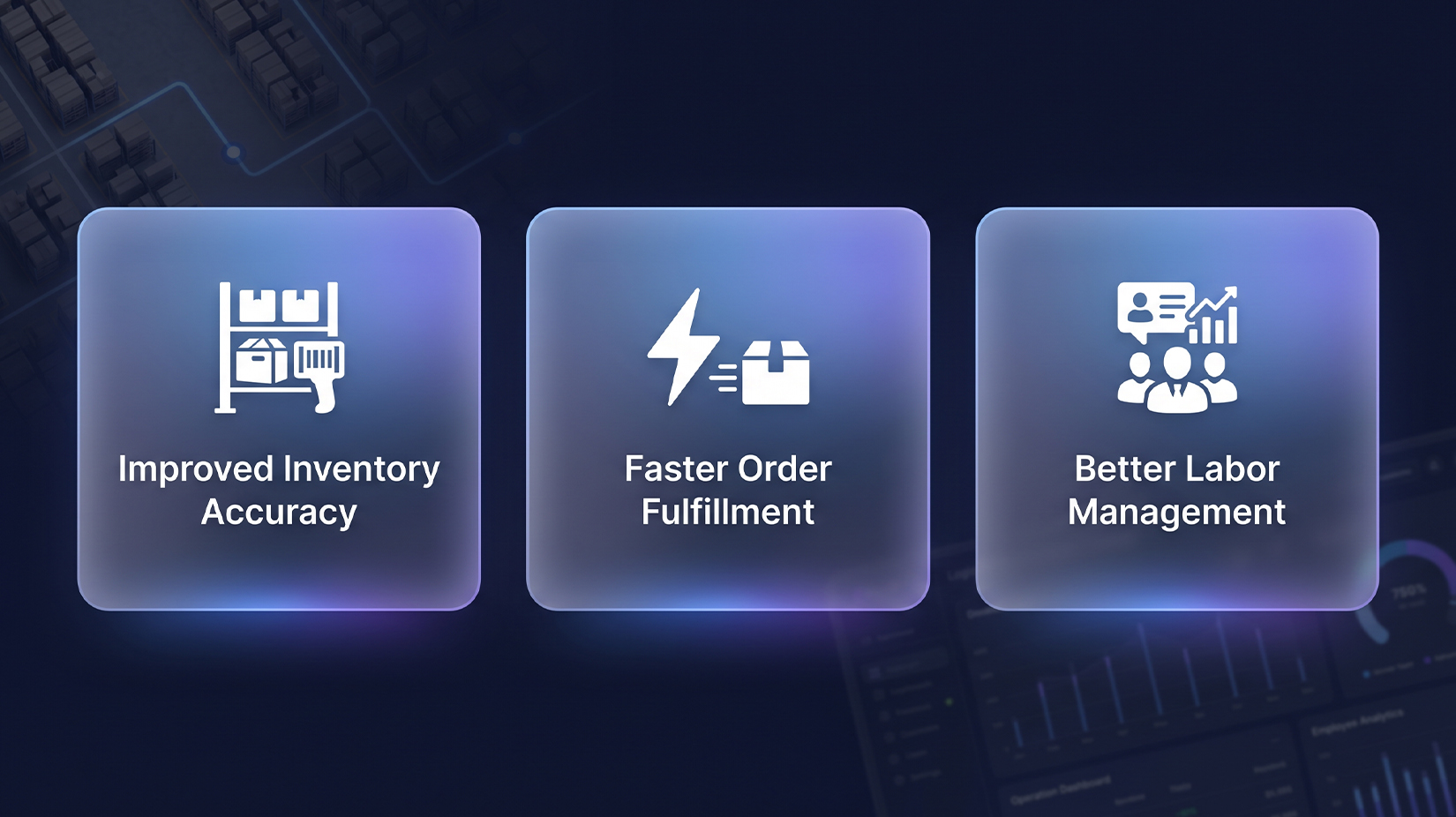
1. Improved Inventory Accuracy:
Inventory accuracy is critical for efficient warehouse operations. A real-time visibility platform allows businesses to monitor stock levels continuously across multiple locations. Warehouse managers can instantly identify low inventory, excess stock, or misplaced items.
This reduces manual errors and improves order fulfillment accuracy. According to Zebra Technologies, nearly 76% of warehouse operators say real-time inventory visibility is essential for meeting customer expectations.
With integrated logistics management software, businesses can also automate replenishment decisions and reduce inventory carrying costs.
2. Faster Order Fulfilment:
Speed is now a competitive advantage in logistics. Real-time warehouse data helps businesses streamline picking, packing, and dispatch operations. Teams can prioritize urgent orders, allocate labor more effectively, and reduce processing delays.
This becomes especially important during peak demand periods. Advanced logistics software can also optimize warehouse workflows using AI and automation. Businesses gain better coordination between warehouse teams and transportation networks. The outcome is faster deliveries and improved operational efficiency.
3. Better Labor Management:
Labor shortages continue to affect warehouse operations globally. With real-time visibility, warehouse managers can monitor workforce productivity and allocate resources based on live operational demands.
For example:
- High-volume zones an receive additional staffing
- Picking delays can be identified instantly
- Workflow bottlenecks can be resolved faster
This improves workforce efficiency while reducing unnecessary labor costs.
The Impact of Real-Time Visibility on Transportation
Transportation is one of the most unpredictable areas of logistics management. Traffic congestion, weather disruptions, route inefficiencies, and failed deliveries can all impact customer experience.
This is why real-time visibility in logistics has become essential for fleet and transportation operations.
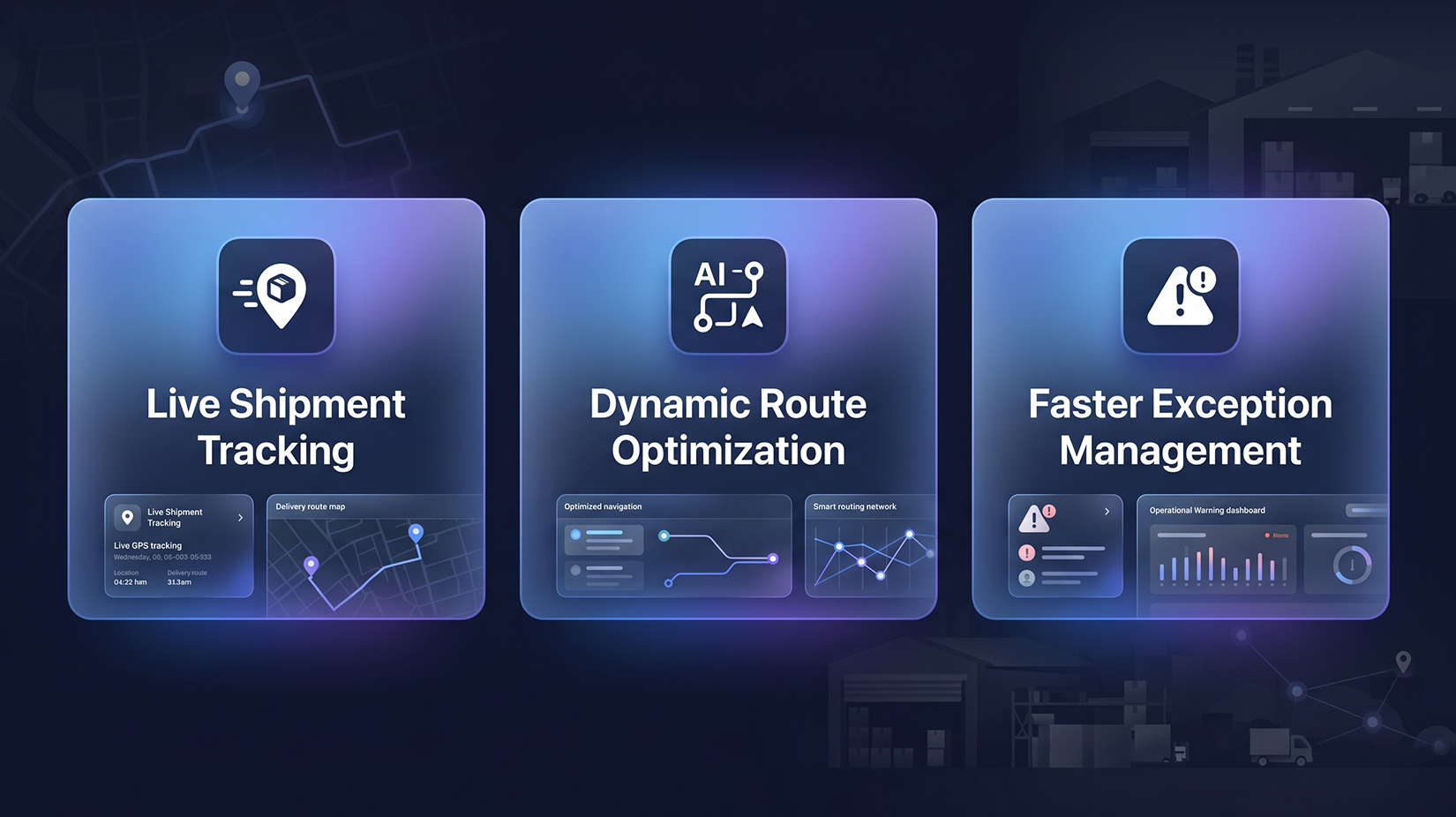
1. Live Shipment Tracking:
Customers now expect complete transparency throughout the delivery journey. Modern logistics management software enables businesses to provide live shipment tracking and accurate ETAs.
This improves customer trust and reduces support inquiries. A study by Project44 found that supply chain visibility solutions can reduce customer service calls related to shipment tracking by nearly 25%.
2. Dynamic Route Optimization:
Real-time transportation data allows businesses to optimize delivery routes continuously. Instead of relying on static planning, modern logistics software can adjust routes based on:
- Traffic conditions
- Delivery priorities
- Vehicle availability
- Weather disruptions
This helps reduce fuel costs, improve delivery speed, and increase fleet productivity.
3. Faster Exception Management:
Disruptions are inevitable in logistics. What matters is how quickly businesses can respond. A real-time visibility platform allows operations teams to identify issues immediately and take corrective action before disruptions escalate.
For example:
- Delivery delays an trigger automated alerts
- Warehouse teams can prepare for late deliveries
- Customers can receive proactive updates
This level of agility improves operational resilience significantly.
The Role of AI and Automation
Artificial intelligence is accelerating the adoption of real-time visibility across logistics networks. AI-powered systems can analyze large volumes of operational data instantly and generate predictive insights.
This helps businesses:
- Forecast delays
- Predict inventory shortages
- Optimize warehouse capacity
- Improve route planning
- Reduce operational costs
Combined with automation, logistics management software can also eliminate repetitive manual tasks.
For example, automated alerts, smart dispatching, and predictive maintenance reduce human intervention while improving efficiency. As supply chains become more complex, AI-driven visibility will become even more important.
The Future of Real-Time Visibility in Logistics
The future of logistics will be driven by connected ecosystems, predictive intelligence, and automated decision-making. Emerging technologies like IoT sensors, AI analytics, digital twins, and cloud-based logistics software are already reshaping supply chain operations.
Businesses that fail to invest in real-time visibility in logistics may struggle to compete in increasingly fast-paced markets.
Visibility is no longer optional. It is becoming the foundation of modern logistics management. As customer expectations continue to rise, businesses will need smarter systems that provide instant operational insights across transportation and warehousing networks.
Conclusion
Real-time visibility is no longer a competitive advantage alone. It is becoming a core requirement for efficient logistics and warehousing operations. Businesses that invest in advanced logistics software and scalable real-time visibility platforms can improve operational efficiency, reduce disruptions, and deliver better customer experiences.
With AI-driven insights and connected supply chains shaping the future, companies need smarter systems to stay ahead.
Looking to improve real-time visibility in logistics and optimize your supply chain operations? LogiNext offers intelligent logistics management solutions designed to help businesses streamline warehousing, transportation, and last-mile delivery with complete real-time visibility. Click on the red button and book a demo today.
“” 59
 |  |  |




@LogiNext