




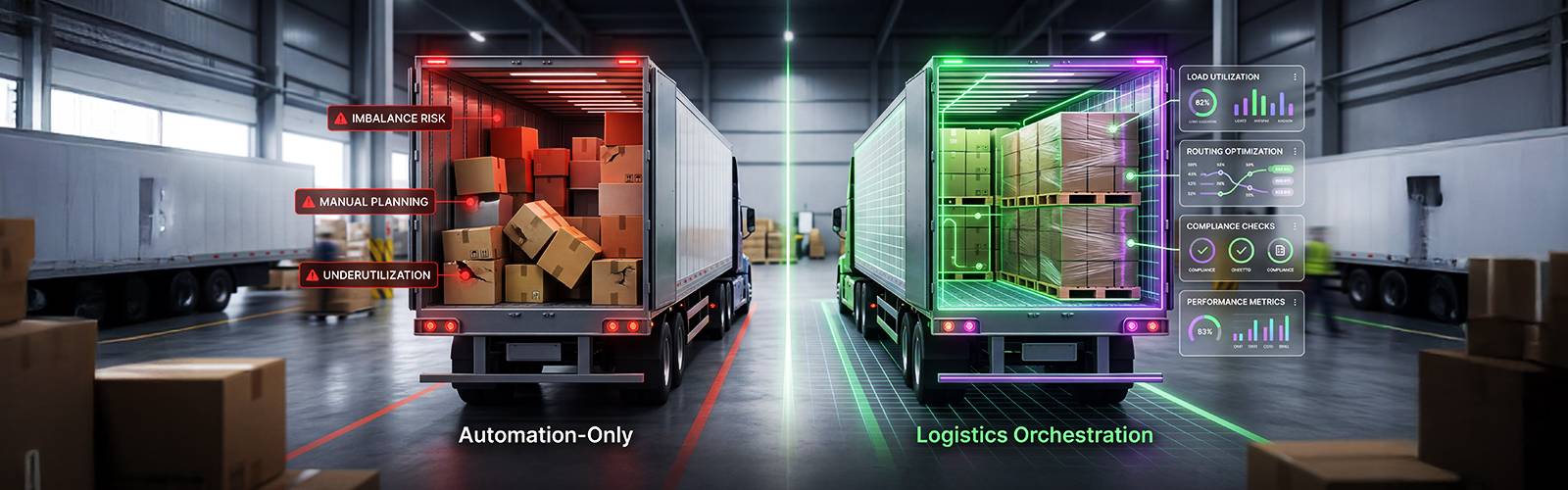
Why Automation Alone Isn’t Enough: The Case for Logistics Orchestration
Logistics orchestration is quickly becoming a necessity rather than a choice in modern supply chains. Automation had its moment, it streamlined repetitive tasks, reduced manual errors, and improved operational efficiency. But today’s logistics environment is far more complex.
With rising customer expectations and constant disruptions, businesses need more than isolated efficiency gains. They need coordination, adaptability, and real-time decision-making, something only orchestration can deliver.
Automation Solves Tasks. Orchestration Solves Complexity.
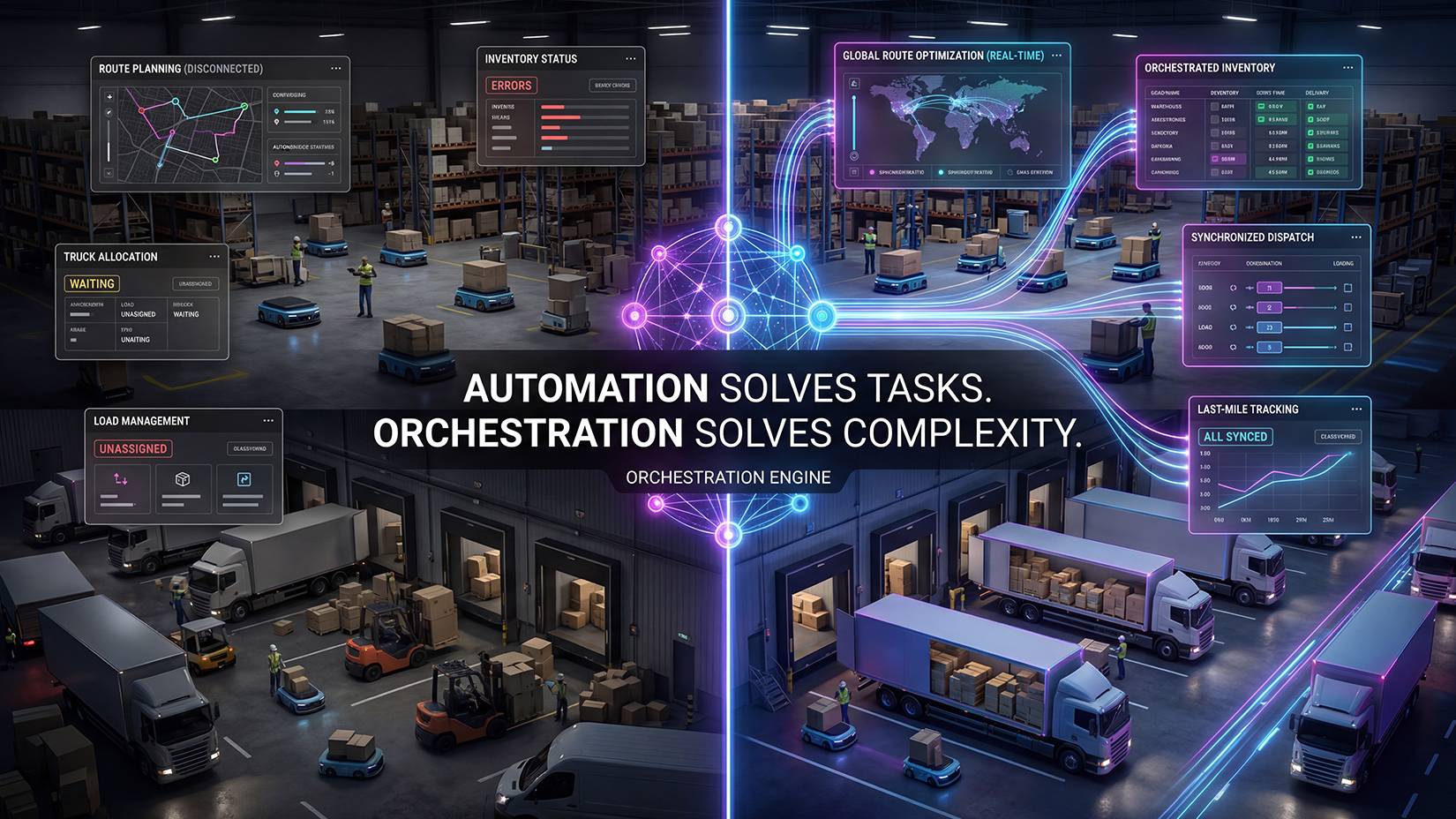
At its core, logistics automation focuses on efficiency. It automates individual processes such as order entry, route planning, or dispatching. This is valuable, but limited. Each automated function often operates in isolation, creating silos within the broader logistics management system.
Orchestration, on the other hand, brings everything together. It ensures that every component of logistics management from warehouse operations to last-mile delivery, works in sync. It connects data, aligns decisions, and adapts execution dynamically.
According to a report by McKinsey, companies that adopt end-to-end supply chain integration can reduce operational costs by up to 15% and improve service levels significantly. This level of impact is not achievable through automation alone.
The Problem with Isolated Logistics Automation
Most businesses today rely on multiple tools within their logistics software stack. There is a system for route optimization, another for warehouse management, and yet another for tracking and analytics. While each tool may be efficient, the lack of coordination between them creates friction.
This leads to:
- Delayed decision-making
- Poor visibility across operations
- Inefficient resource allocation
- Increased risk of disruptions
For example, a delay in warehouse dispatch may not immediately reflect in route adjustments. A driver may still follow an outdated plan, leading to missed delivery windows. This is not a failure of logistics automation, it is a failure of coordination.
Logistics orchestration addresses this gap by ensuring that systems do not just function, but communicate and adapt together.
Real-Time Decision Making Is No Longer Optional
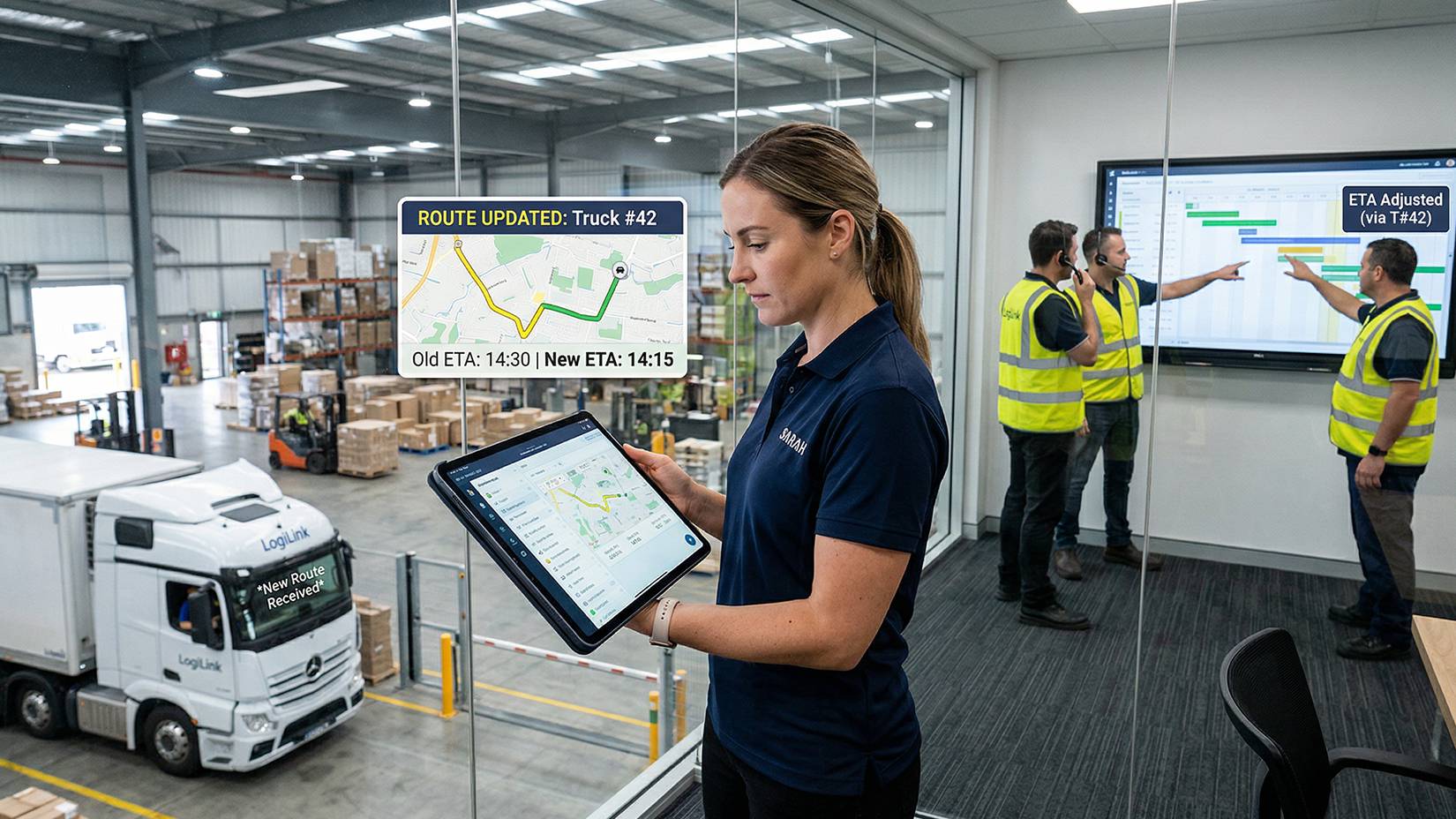
Modern logistics operates in real time. Traffic conditions change. Customer availability shifts. Weather disruptions occur without warning. Static plans, even when automated, cannot keep up.
A study by Gartner highlights that organizations investing in real-time supply chain visibility see up to a 20% improvement in on-time delivery performance. This is where logistics orchestration becomes critical.
It enables:
- Continuous monitoring of operations
- Real-time data sharing across systems
- Dynamic decision-making based on current conditions
Instead of reacting to disruptions, businesses can proactively adjust operations. This is a fundamental shift from automation to orchestration.
Orchestration Enhances Logistics Management Software
Traditional logistics management software is designed to execute predefined workflows. It performs well in stable environments. But in volatile conditions, rigid workflows become a limitation.
Logistics orchestration enhances these systems by adding intelligence and flexibility. It allows businesses to:
- Integrate multiple systems into a unified platform
- Create adaptive workflows hat evolve with real-time inputs
- Prioritize tasks based on changing business needs
Instead of reacting to disruptions, businesses can proactively adjust operations. This is a fundamental shift from automation to orchestration.
Breaking Down Silos in Logistics Management
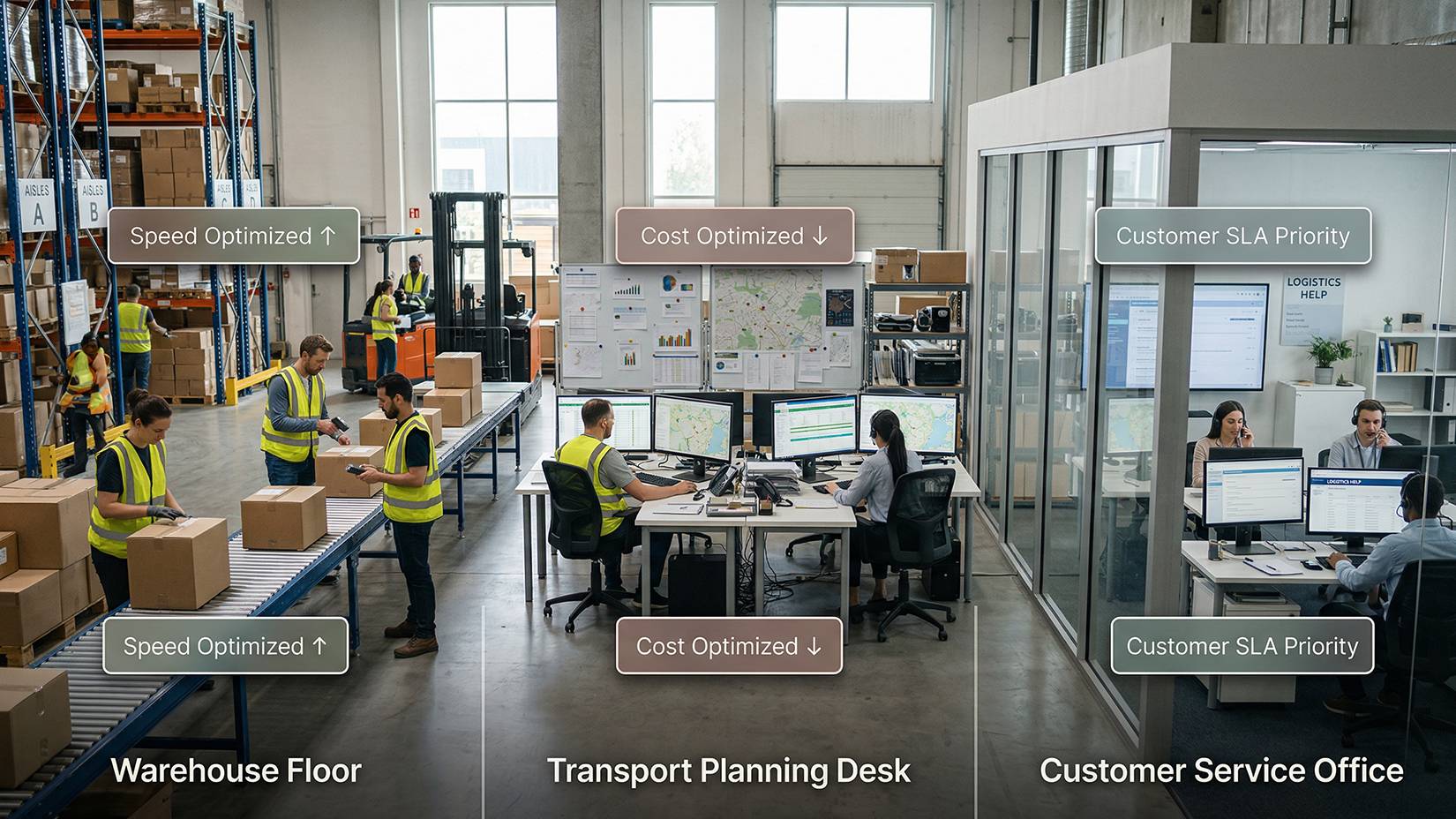
Silos are one of the biggest challenges in logistics management. Different teams operate with different tools and datasets. This lack of alignment leads to inefficiencies and miscommunication.
For instance:
- The warehouse team may optimize for speed
- The transportation may optimize for cost
- Customer service team may prioritise experience
Without orchestration, these priorities often conflict.
Logistics orchestration aligns these functions. It creates a single source of truth and ensures that all teams operate with the same data and objectives. This improves collaboration and drives better outcomes across the board.
From Execution to Intelligent Coordination
The role of logistics software is evolving. It is no longer enough to execute tasks efficiently. Businesses need systems that can think, adapt, and coordinate.
This is where orchestration stands out.
It enables:
- Predictive planning based on historical and real-time data
- Automated decision-making with human oversight
- Continuous optimization across the supply chain
According to Deloitte, companies that implement advanced supply chain capabilities, including orchestration, can achieve up to 30% faster order fulfillment. This is a clear indicator of the value orchestration brings beyond traditional logistics automation.
Customer Expectations Are Driving the Shift
Customers today expect speed, accuracy, and transparency. Same-day delivery is becoming the norm. Real-time tracking is no longer a premium feature, it is a baseline expectation.
Meeting these demands requires more than efficient processes. It requires coordinated execution.
Logistics orchestration ensures that:
- Orders are fulfilled based on priority and constraints
- Routes are optimized dynamically
- Customers receive accurate delivery updates
Without orchestration, even the most advanced logistics management system will struggle to deliver consistent customer experiences.
The Future is Orchestrated Logistics
The logistics industry is at a turning point. Automation has laid the foundation, but it is not enough to handle the complexity of modern supply chains.
The future belongs to businesses that can orchestrate their operations.
This means:
- Moving beyond isolated logistics automation
- Investing in integrated logistics software platforms
- Adopting intelligent logistics management systems that enable real-time coordination
Logistics orchestration is not just a technology upgrade. It is a strategic shift. It changes how businesses plan, execute, and optimize their operations.
Also read: Super Bowl Sunday Is Not Chaos. It’s a Logistics Software Audit.
Conclusion
Automation made logistics faster, but it is no longer enough to manage the growing complexity of modern supply chains. Disruptions, rising customer expectations, and fragmented systems demand more than isolated efficiency.
Logistics orchestration enables businesses to connect their entire ecosystem, make real-time decisions, and ensure every function operates in sync. It shifts logistics from reactive execution to intelligent coordination.
Ready to move beyond automation? With LogiNext, you can bring your entire logistics operation onto a single, unified platform, powered by real-time visibility and intelligent decision-making. Orchestrate smarter, deliver faster, and stay ahead of disruptions.
Book a demo today and experience logistics orchestration in action. Click on the red button to know more.
1

|

|

|




@LogiNext