



Supply Chain Management: Backbone of Modern Commerce
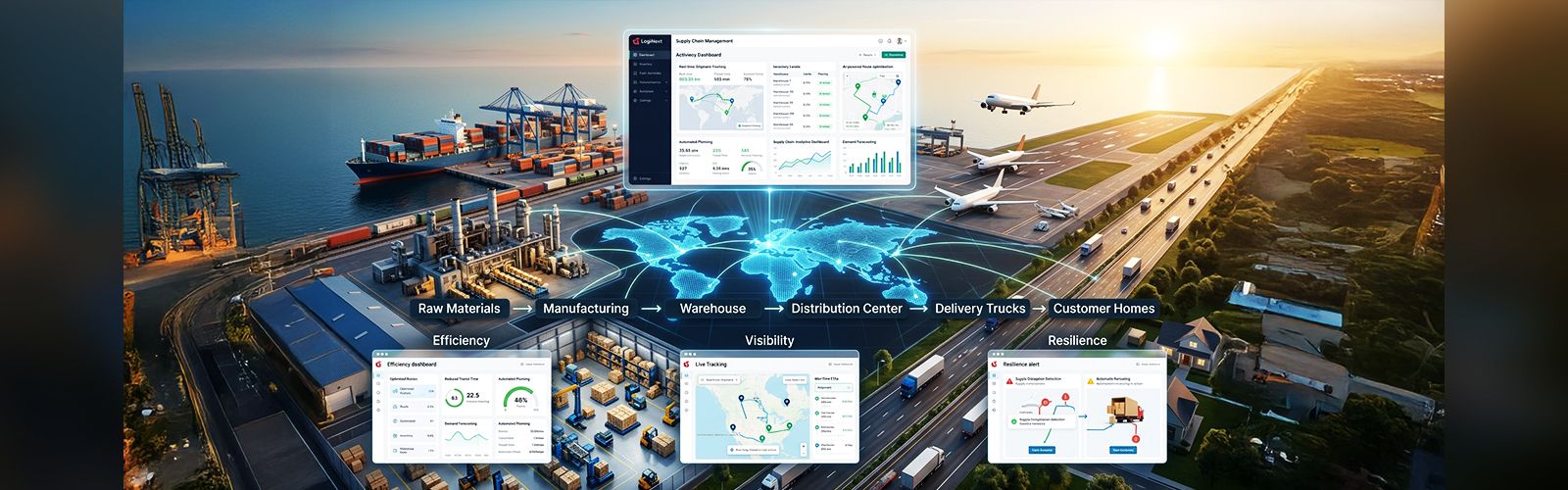
Supply chain management (SCM) is not a buzzword. It is the strategic core of how products move from raw materials to customers’ hands. In an increasingly interconnected world, supply chains stretch across continents and industries, supporting everything from groceries to high-tech devices. As markets evolve, complexity increases.
At the centre of supply chain excellence lies the need for efficiency, visibility, and resilience. Companies that invest in advanced supply chain management software consistently outperform competitors in cost control, delivery speed, and customer satisfaction.
Why Supply Chain Management Matters More Than Ever
At its core, supply chain management is about delivering the right product to the right place at the right time. In reality, it requires coordination across demand forecasting, procurement, warehousing, transportation, and customer communication.
Customer expectations have shifted dramatically. Fast and reliable deliveries now influence brand loyalty more than price in many sectors. The pressure is strongest in last mile delivery, where timing and visibility determine whether customers return or switch.
A single delayed shipment can trigger refunds, negative reviews, and lost lifetime value. In competitive markets, that risk cannot be ignored.
Last Mile Delivery: The Most Expensive Stage
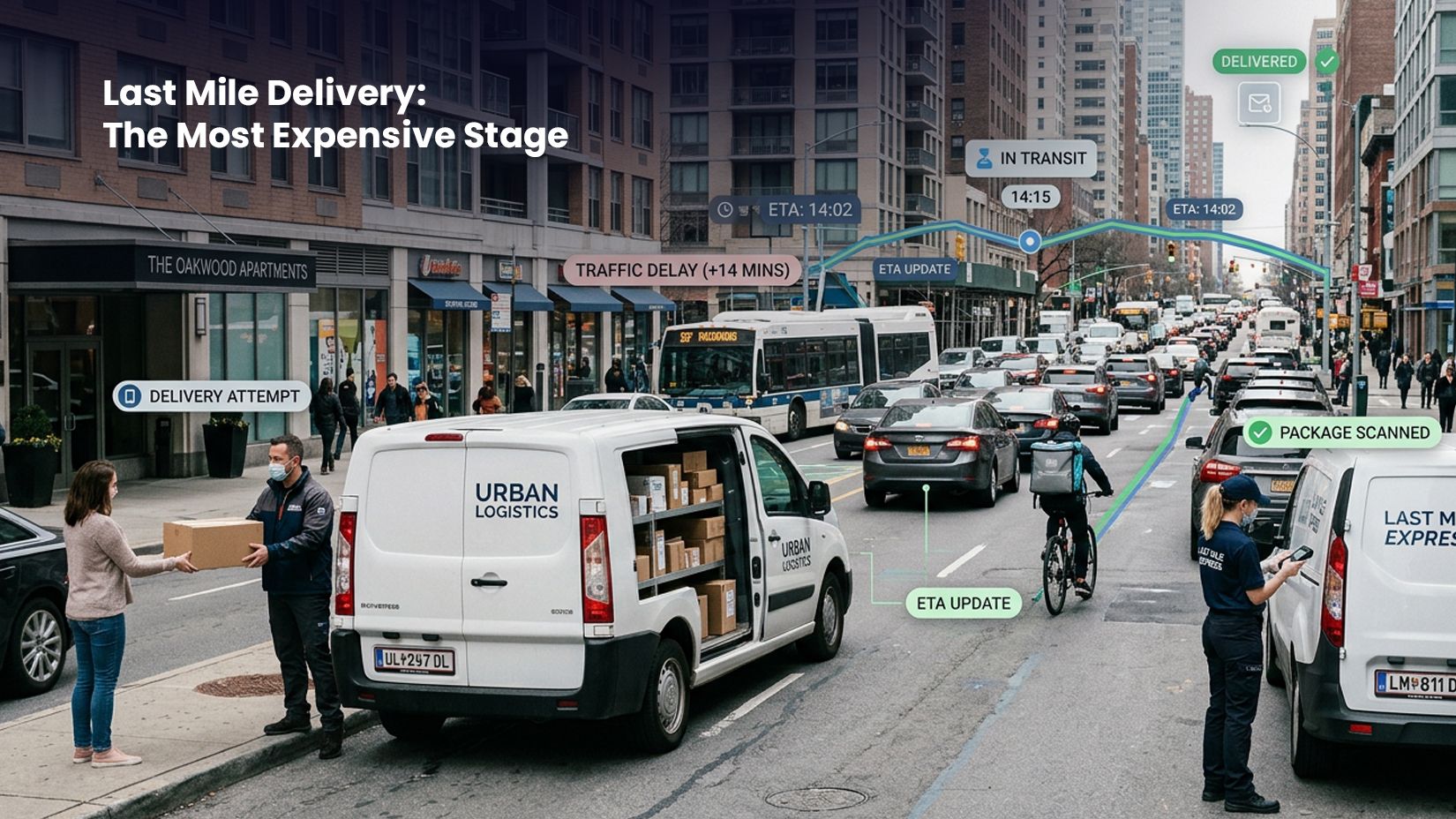
Last mile delivery refers to the final step of transporting goods from a distribution centre to the end customer. It may be the shortest physical distance in the journey, but it is often the most complex.
Industry data shows that last mile delivery can account for more than 50 percent of total shipping costs. Urban congestion, failed delivery attempts, driver shortages, and tight delivery windows increase operational strain.
Common challenges include:
- Traffic congestion in urban areas
- Missed or failed deliveries
- High fuel and labor expenses
- Limited real-time visibility
When customers cannot track their orders accurately, confidence declines quickly. Visibility is no longer optional. It is expected.
The Role of Supply Chain Management Software
Traditional tools cannot manage modern supply chains. Manual spreadsheets and disconnected systems create delays and blind spots. This is where supply chain management software becomes essential.
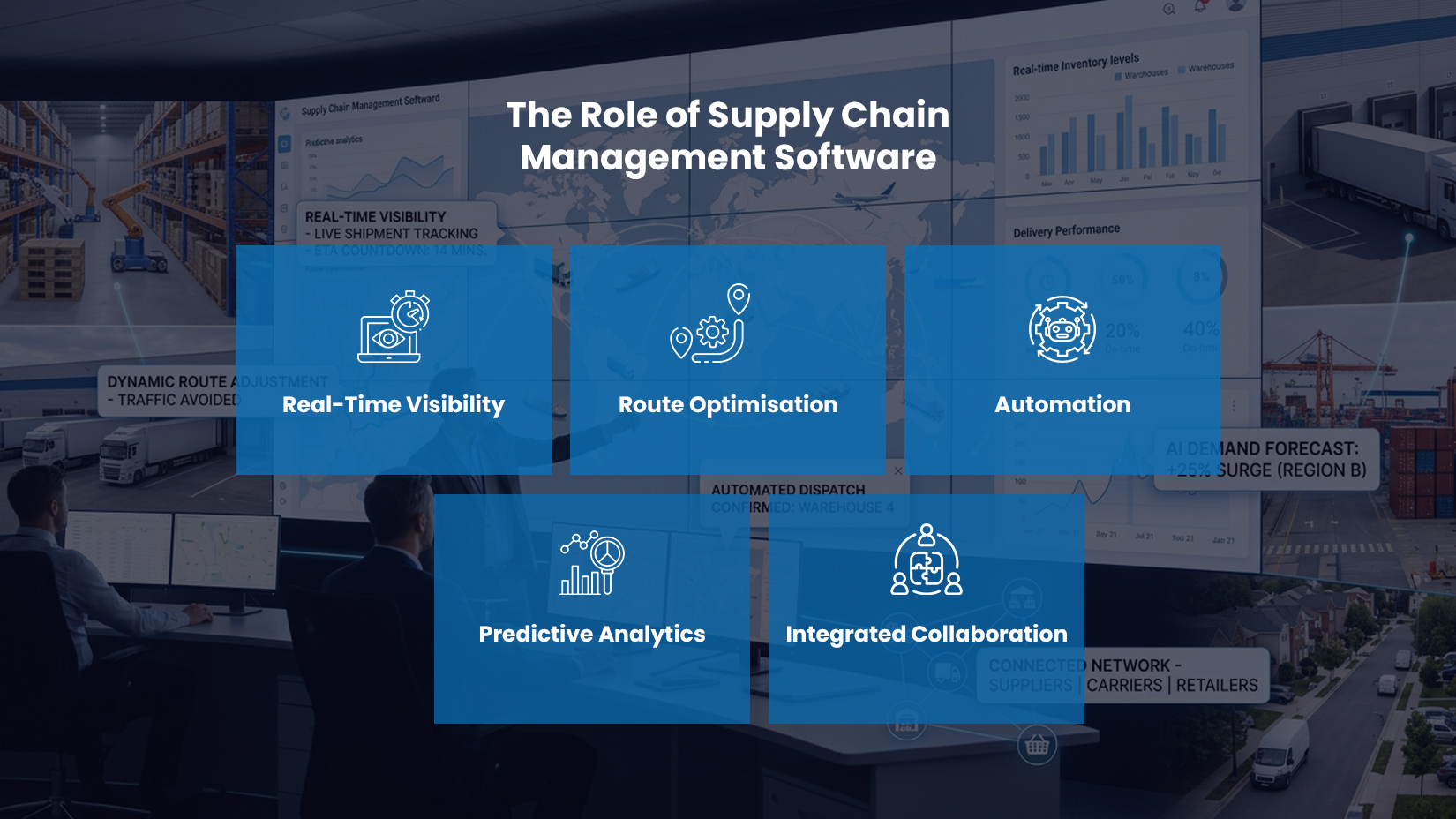
A modern supply chain management system delivers:
1. Real-Time Visibility:
Leaders gain live insights into inventory, shipments, and delivery performance. Real-time dashboards reduce uncertainty and support proactive decision-making.
2. Route Optimization:
Advanced supply chain software uses algorithms to optimise delivery routes. This reduces fuel consumption, shortens delivery times, and improves driver productivity.
3. Automation:
A supply chain management system automates dispatching, replenishment, and order processing. Automation reduces human error and accelerates execution.
4. Predictive Analytics:
Data analytics tools forecast demand, anticipate disruptions, and recommend corrective actions. This improves planning accuracy and reduces excess inventory.
5. Integrated Collaboration:
Supply chain software connects suppliers, warehouses, carriers, and customer service teams on one platform. Silos are eliminated. Decisions become data driven.
Companies that rely on disconnected tools struggle to scale. Those using integrated supply chain management software build agility into operations.
Technology as the Key to Last Mile Success
Specialized last mile delivery capabilities are critical within a broader supply chain management system. This is because last mile delivery absorbs such a high percentage of total costs.
Key benefits include:
- Dynamic route adjustments based on traffic conditions.
- Automated delivery scheduling
- Live customer tracking links
- Digital proof of delivery
- Performance analytics for continuous improvement
Consumers increasingly expect same-day delivery options. Studies show that nearly three-quarters of shoppers prefer faster shipping when available. Meeting that expectation without technology would require unsustainable labour and transportation costs.
By embedding last mile delivery intelligence within supply chain software, businesses gain control over both cost and customer experience.
Beyond Delivery: End-to-End Supply Chain Visibility
While last mile delivery attracts attention, supply chain management covers the entire product lifecycle.
A comprehensive supply chain management system supports:
- Demand planning and forecasting
- Supplier coordination
- Warehouse management
- Transportation planning
- Returns and reverse logistics
Integration across these stages reduces friction. For example, accurate demand forecasting lowers stockouts. Coordinated procurement shortens replenishment cycles. Efficient warehouse picking speeds up dispatch times.
When every component connects through unified supply chain software, performance improves across the board.
The Financial Impact of Optimised Supply Chains
The financial implications are significant.
- Last mile delivery can exceed 50 percent of total delivery costs.
- Poor route planning increases fuel expenses and labour hours.
- Inventory mismanagement ties up working capital.
On the other hand, companies that adopt advanced supply chain management software often report measurable improvements. Which is seen in on-time delivery rates, inventory turnover, and cost reduction.
Improved visibility also strengthens resilience during disruptions. Whether facing demand spikes, supplier delays, or transportation bottlenecks, organizations with robust supply chain management systems respond faster.
Sustainability and Supply Chain Software
Modern supply chains are also under pressure to reduce environmental impact. Efficient routing reduces fuel usage. Accurate forecasting limits waste. Optimised warehouse operations lower energy consumption.
Supply chain software supports sustainability goals by providing measurable data. Businesses can track emissions, delivery efficiency, and resource utilization in real time. Transparency improves compliance and strengthens brand reputation.
Conclusion
Strong supply chains rely on clear visibility, seamless coordination, and consistent delivery performance, especially in the last mile where customer expectations are highest. Without the right technology, managing these moving parts becomes increasingly difficult.
With LogiNext, companies can bring real-time visibility and smarter delivery planning into their operations. Explore LogiNext to build a faster, more efficient supply chain. Click on the red button to know more.
2

|

|

|




@LogiNext