




Stop Paying for Air: How Smart Load Planning Fixes Half-Empty Trailers
At first glance, your operations may look efficient. Your team plans routes, dispatches drivers, and tracks deliveries. But without transportation management software, you still overlook one critical piece: the way you load your trailers. And that is where margins quietly disappear.
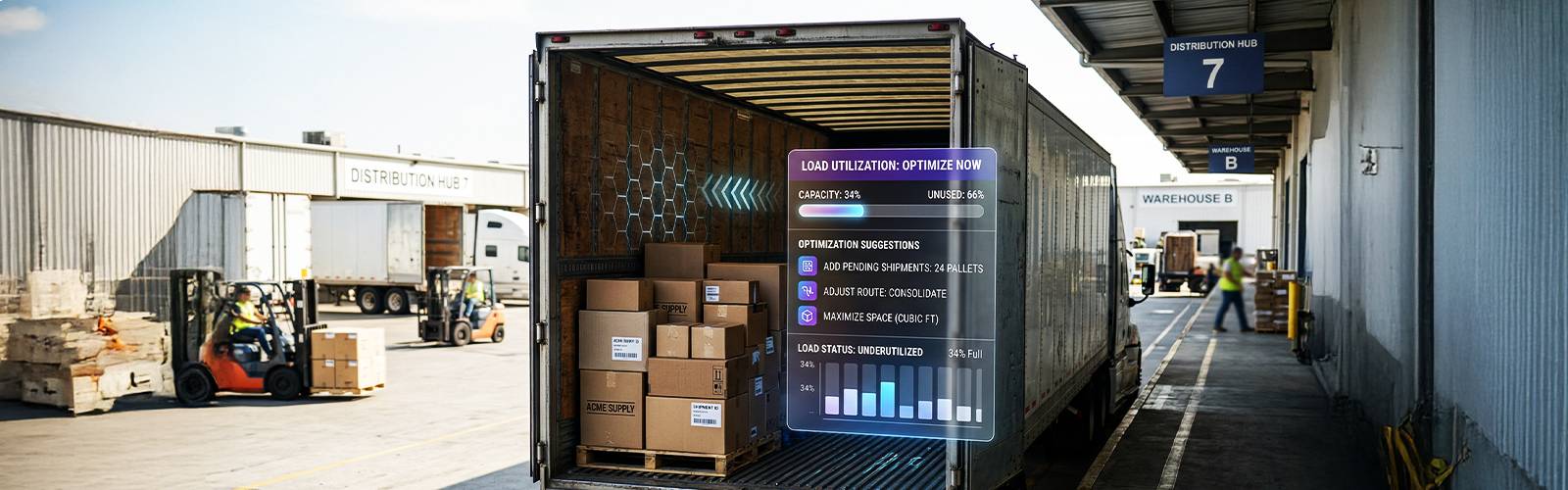
Across the logistics industry, underutilized trailer space drives massive hidden costs. According to the U.S. Department of Energy, trucks in the U.S. alone run empty or partially loaded nearly 20–35% of the time. That is not just inefficiency, it is lost revenue per mile, wasted fuel, and avoidable emissions.
This is where modern transportation management software (TMS) platforms go beyond routing and into something far more impactful: intelligent payload management.
What’s Really Happening at the Dock
Picture a typical cross-dock at peak hours. Time is tight. Loaders are under pressure. Freight is moved based on instinct, not intelligence.
Crates are stacked wherever they fit. Heavy goods end up on fragile ones. Temperature-sensitive shipments are placed in the wrong zones. There is no standardized logic, no digital validation, and no real-time visibility.
By the time the truck leaves, the damage is already done.
- The trailer hits weight capacity with only 60% volume optimization
- Fragile goods get damaged before transit even begins.
- Teams violate multi-temperature compliance.
- The first delivery gets buried behind five others.
This is not a transport problem. It is a load optimization failure.
The Cost of Operating Without Intelligent Load Planning
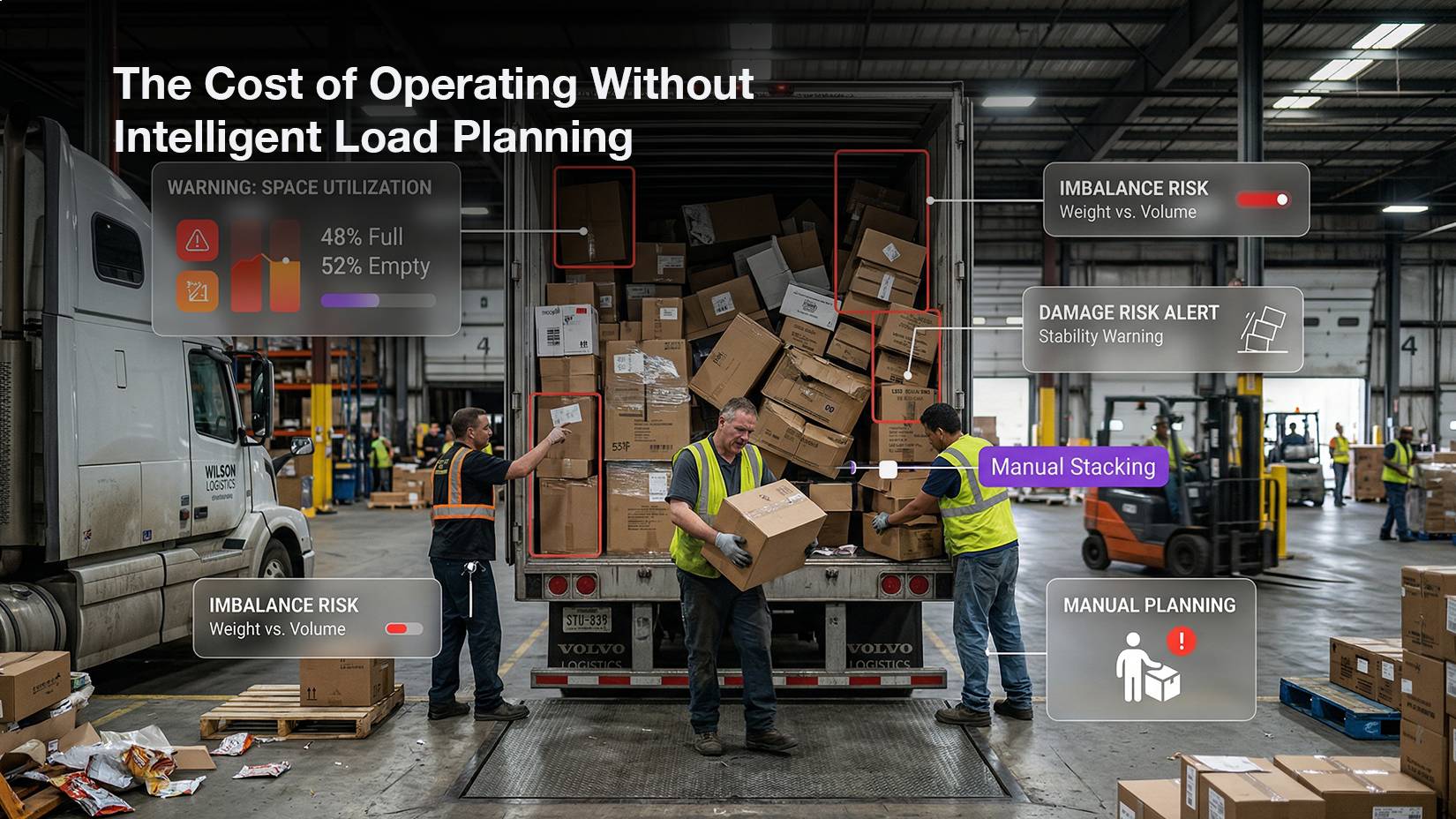
Without transportation software that includes trailer load optimization, logistics teams operate reactively. The consequences stack up quickly.
1. The Weight vs Volume Imbalance:
Dispatchers often struggle to balance weight and space. Without fixed crate dimensions and constraints, trailers either “gross out” too early or “bulk out” inefficiently.
The result? You pay to move air.
According to McKinsey, improving load utilization by just 10% can reduce transportation costs by up to 5%. Yet most operations leave far more on the table.
2. The Insurance and Damage Trap:
In high-pressure environments, labels like “fragile” or “spill-proof” are ignored. Not intentionally, but inevitably. A single misplaced crate can lead to:
- Damaged goods
- Full shipment rejection
- Expensive insurance claims
What should be preventable becomes normalized as a “cost of doing business.”
3. Thermal Compliance Failures:
Multi-temperature logistics adds another layer of complexity. Mixing ambient, chilled, and frozen goods without system-driven enforcement is risky.
A report by the Food and Agriculture Organization (FAO) estimates that 14% of global food is lost between harvest and retail. Much of it due to supply chain inefficiencies, including temperature mismanagement.
Without intelligent payload controls, one mistake can wipe out an entire shipment.
4. Manual Load Planning Bottlenecks:
Many warehouses still rely on clipboards or basic spreadsheets for load planning. Decisions are based on experience, not data.
This creates:
- Slow loading processes
- High dependency on individulas
- Zero scalability
In an era where speed defines competitiveness, manual planning simply cannot keep up.
How LogiNext Enables Trailer Load Optimization
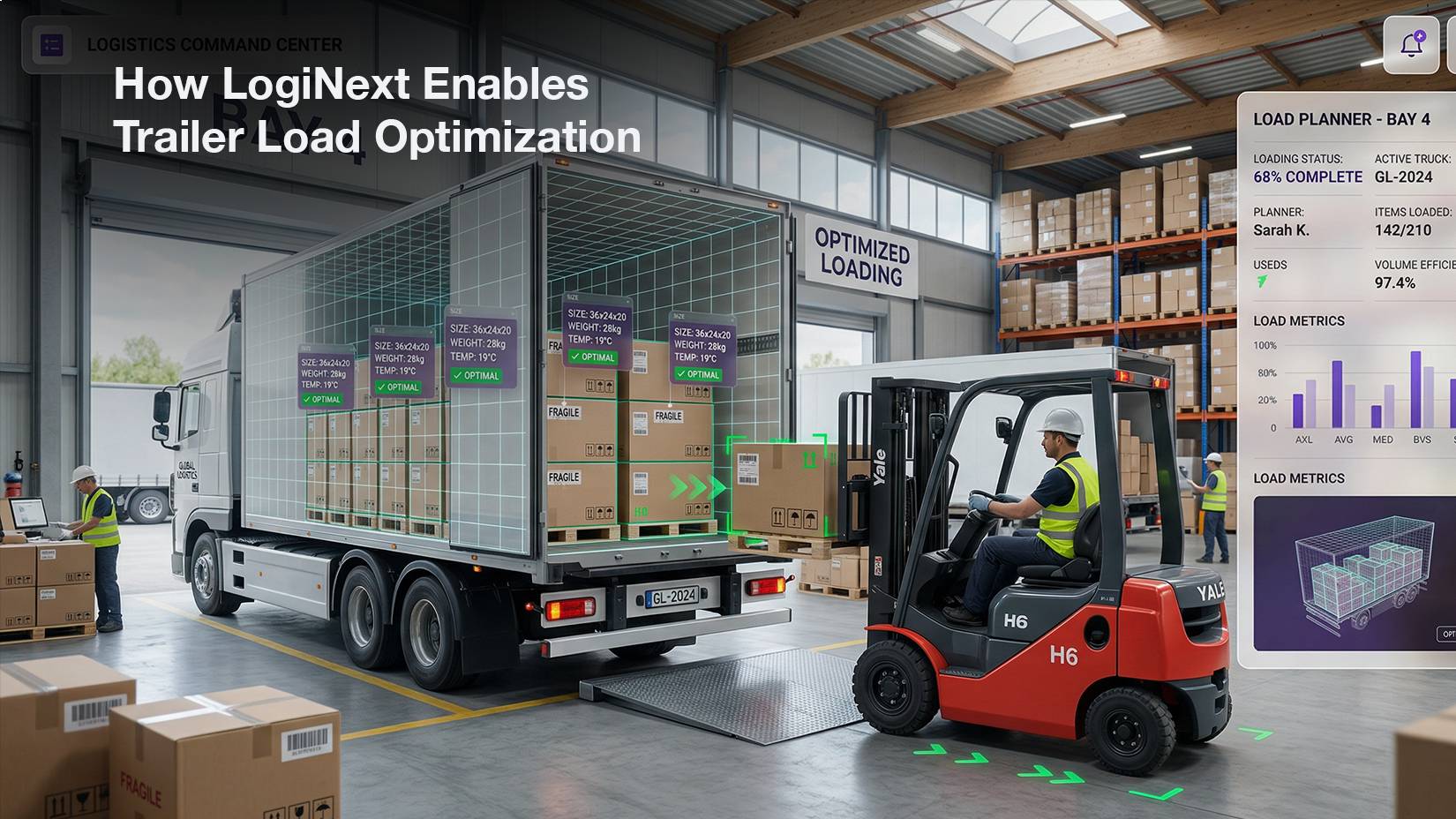
LogiNext brings precision into the loading process by turning every crate into a data-driven entity within a unified transportation management software (TMS).
1. Digital Twin Configuration:
Each crate is digitally defined with:
- Exact dimensions
- Maximum weight limits
- Temperature requirements
- Handling constraints
This creates a “digital twin” of physical assets. This ensures that every decision is supported by structured data, not guesswork.
2. 3D Physics-Based Load Planning:
Instead of simply deciding what fits, LogiNext calculates how it fits. The system uses 3D modeling to:
- Optimize spatial arrangements
- Ensure proper weight distribution
- Prevent unsafe stacking
Teams position heavy crates at the base. They protect fragile items. They use every inch of space intelligently.
3. Smart Asset Categorisation:
Whether it is LTL shipments or specialized cold-chain logistics, the platform automatically matches freight with the right container type.
This eliminates mismatches such as:
- Chilled goods in dry vans
- Hazardous materials near food-grade items
It ensures compliance without slowing down operations.
4. Centralized Command and Bulk Control:
Managing thousands of crates manually is impossible. LogiNext simplifies this with:
- Bulk updates via excel uploads
- Centralized dashboards for asset tracking
- Real-time utilization insights
This provides a complete view of performance across the network, enabling continuous optimization.
Real-World Scenarios: Where It Makes the Difference
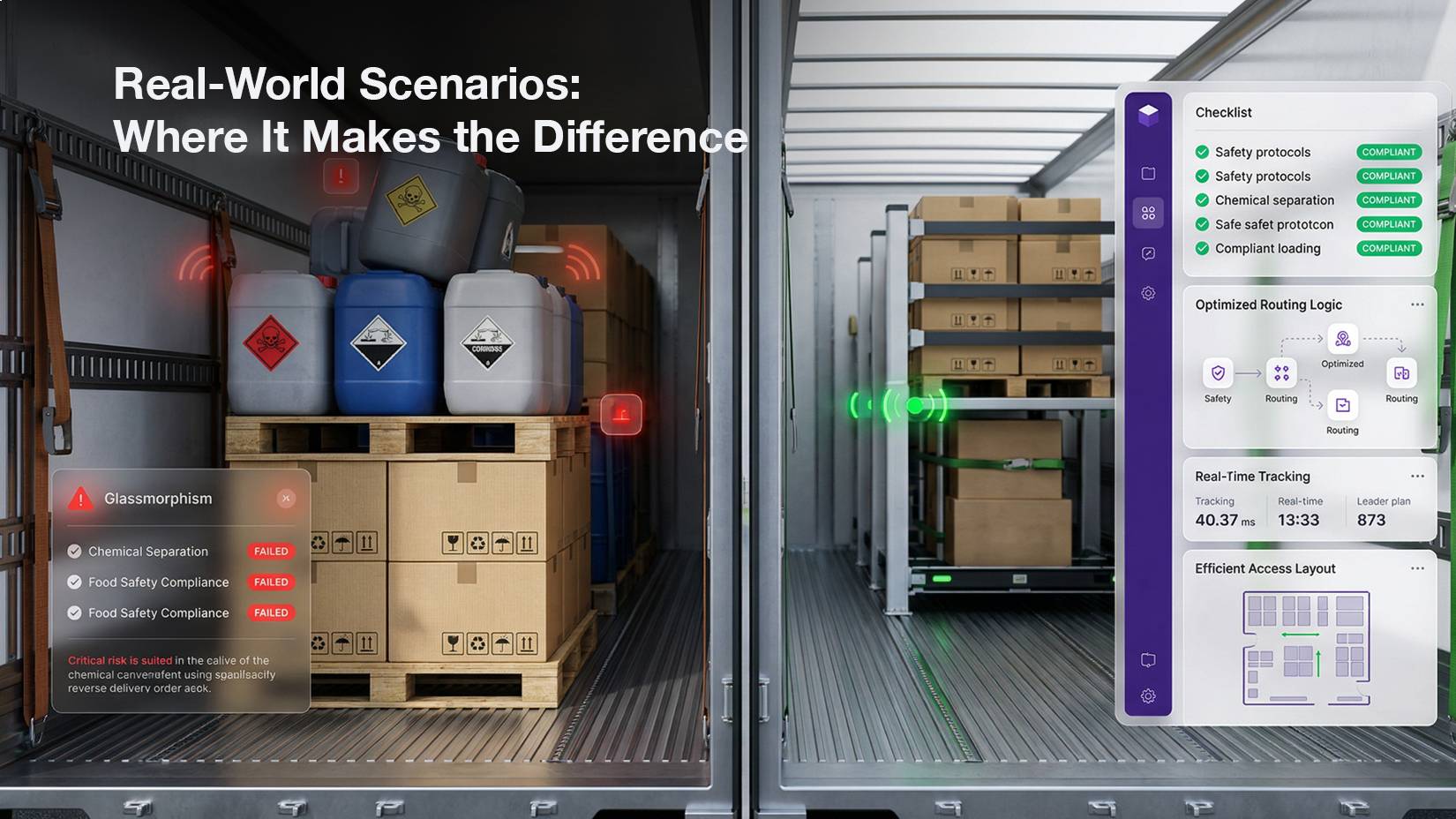
Scenario 1: Preventing Hazardous Cross-Contamination
A logistics provider transporting mixed freight accidentally places industrial chemicals above food-grade goods.
The Result?
- Shipment rejection
- Regulatory risk
- Massive financial loss
Intelligent payload management predefines incompatibility rules. The system simply does not allow such combinations. Compliance becomes automatic.
Scenario 2: Eliminating Inefficient Unloading
When teams execute trailer load optimization effectively, results become immediate and measurable:
- Higher Payload Utilization: Maximize every cubic inch of space
- Reduced Damage Rates: Physics-driven packing eliminates errors
- Improved Compliance: Temperature and safety rules are enforced automatically
- Faster Turnaround Times: Visual loading plans speed up execution
Deloitte reports that digital supply chain transformations can improve operational efficiency by up to 30%. Load optimization is a key driver of that impact.
Conclusion: Pack Smarter, Not Harder
Logistics performance today depends on how well you use every asset in motion. Empty space, poor load distribution, and preventable damage directly impact profitability. When teams plan loads with precision, every shipment becomes more efficient, compliant, and reliable from the start.
LogiNext brings this intelligence into your operations with data-driven planning and automated load optimization. It helps you reduce waste, improve utilization, and gain better control over your transport operations. Click on the red button to know more.
Like

|

|

|




@LogiNext