




Adapt or Die: AI’s Rapid Reinvention of Fleet Management
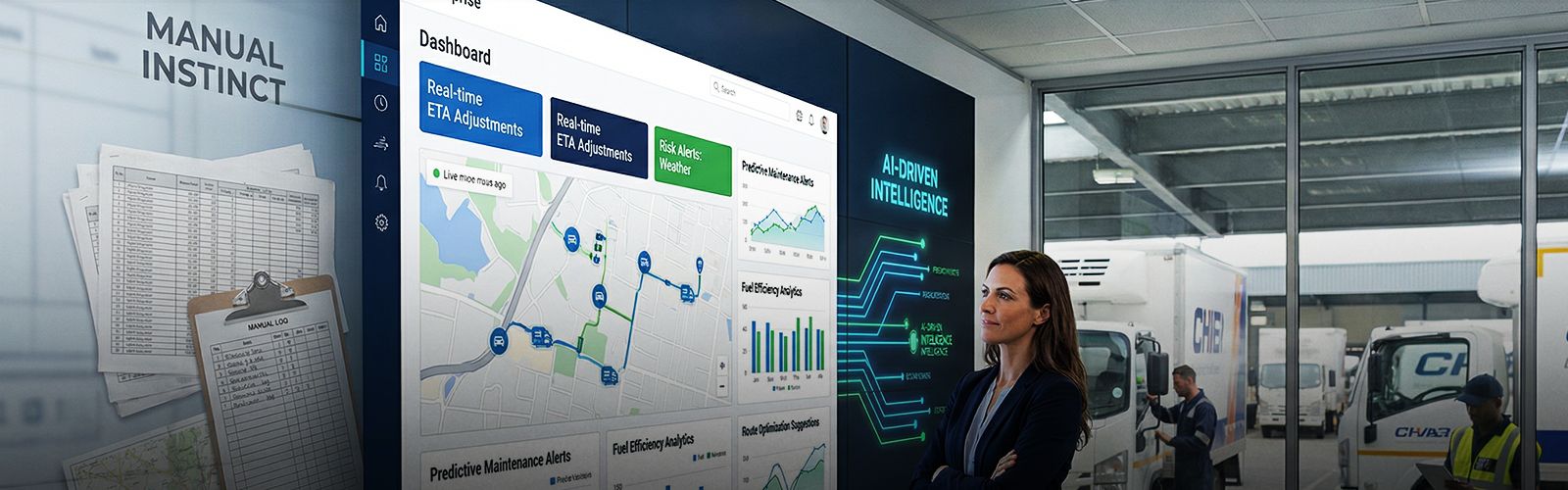
The logistics world is transforming at an unprecedented pace. Traditional fleet operations that once depended on manual planning and gut instinct are now under siege by data, machine learning, and automation. The message for operators is clear: adapt or die. At the heart of this shift is fleet management, the strategic process of monitoring, maintaining, and optimizing commercial vehicles.
But it’s no longer enough to track miles and fuel. Today’s leaders are turning to software and AI powered fleet management solutions to survive in an increasingly competitive environment.
This blog examines how artificial intelligence (AI) is reshaping fleet operations. And also why companies that fail to adopt new technologies risk falling behind.
Why Traditional Fleet Management Is No Longer Enough
Historically, it relied on spreadsheets, manual logs, and reactive maintenance. That model worked when fleets were small and routes were simple. But the landscape has accelerated:
- Deliveries have become more time-sensitive.
- Customer expectations have risen.
- Compliance and sustainability pressures have increased.
- Labor and fuel costs have surged.
According to industry analytics, fleets that leverage advanced systems can reduce operating costs by up to 20-30% compared to those using legacy processes. That’s not a small advantage, it’s a market-changing one.
Fleet operators now need systems that can handle real-time complexity. That’s where modern systems and AI come in.
What AI Brings to the Table
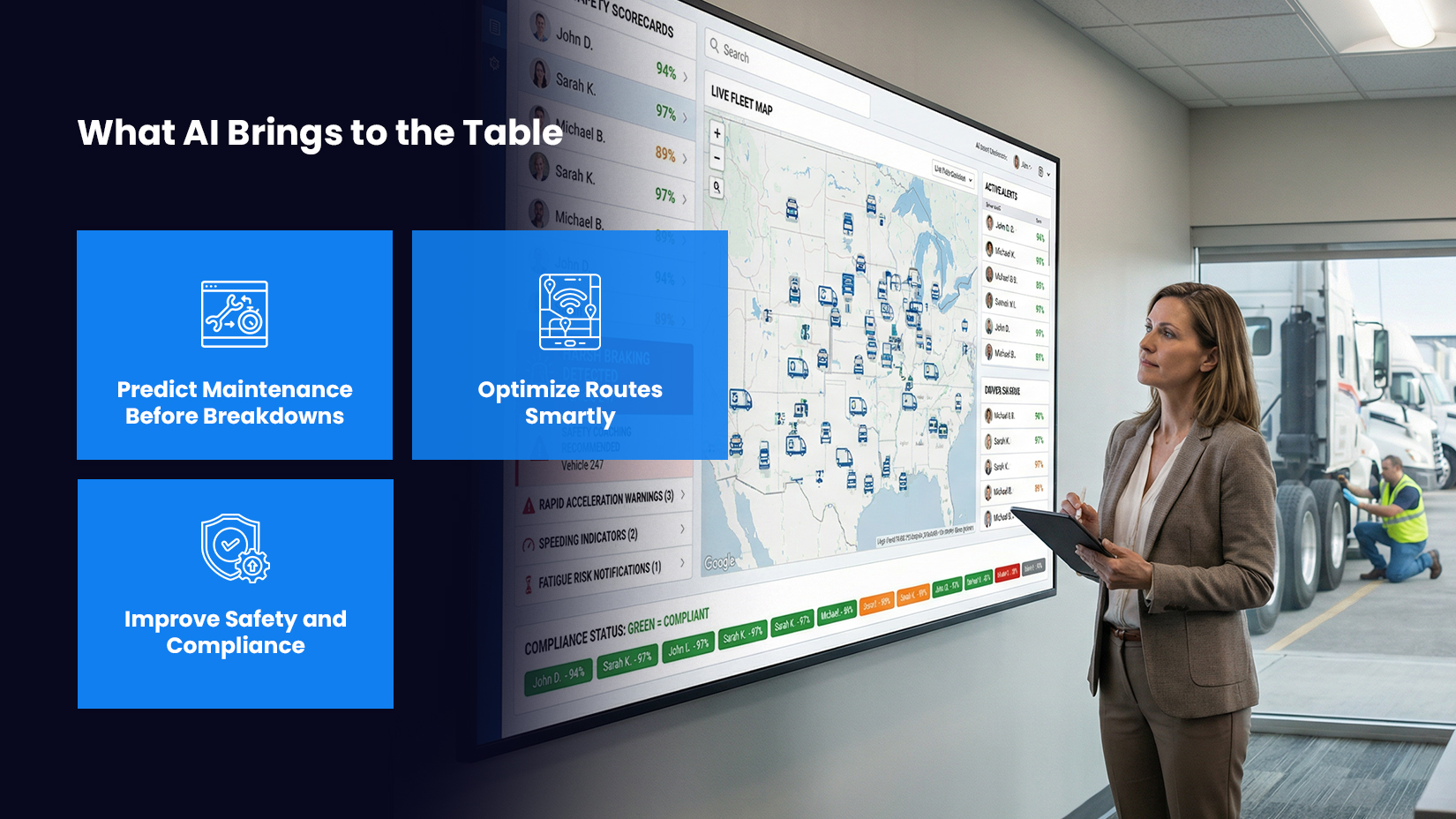
Artificial intelligence does more than automate tasks. It translates data into decisions. It enables predictive insights instead of reactive fixes.
AI powered fleet management transforms raw information into measurable business value. It enables fleets to:
1. Predict Maintenance Before Breakdowns:
Unplanned downtime is expensive. A vehicle off the road can cost hundreds or even thousands per day in lost revenue and repairs. Traditional maintenance is scheduled by mileage or time. AI goes further. It analyzes sensor data from engines, brakes, and fluid systems. It predicts failures before they happen.
This shift from reactive to proactive maintenance is one of the most potent benefits of AI powered fleet management software.
2. Optimize Routes Smartly:
Most fleets already use basic route planning. But AI takes this a step further.
AI can:
- Adjust routes in real time based on traffic patterns.
- Account for weather, customer preferences, and delivery windows.
- Reduce idle time and fuel use.
One study found that fleets using AI-enhanced routing solutions improved delivery efficiency by up to 15-25%. That kind of improvement directly impacts the bottom line.
3. Improve Safety and Compliance:
Accidents and violations cost money and reputation. AI can monitor driver behavior and flag risky patterns like harsh braking or rapid acceleration. Automated alerts help managers coach drivers before incidents occur.
A fleet using AI to enforce safe driving could potentially see accident rates drop by 30% or more. That’s fewer claims, lower premiums, and better uptime.
The Role of Fleet Management Software Today
At its core, fleet management software centralizes data. It connects vehicles, sensors, drivers, dispatchers, and managers on a single platform. But not all fleet management solutions are equal. Early platforms offered basic tracking. Today’s systems must handle dynamic data at scale.
A modern system should deliver:
- Real-time tracking and geofencing.
- Predictive analytics and AI insights.
- Dashboard visualizations for KPIs.
- Integration with ERP and TMS systems.
- Mobile access for drivers and field technicians.
Without these capabilities, fleets risk losing ground to competitors who streamline operations and cut costs with data-driven tools.
Why AI Powered Fleet Management Software Is a Game Changer
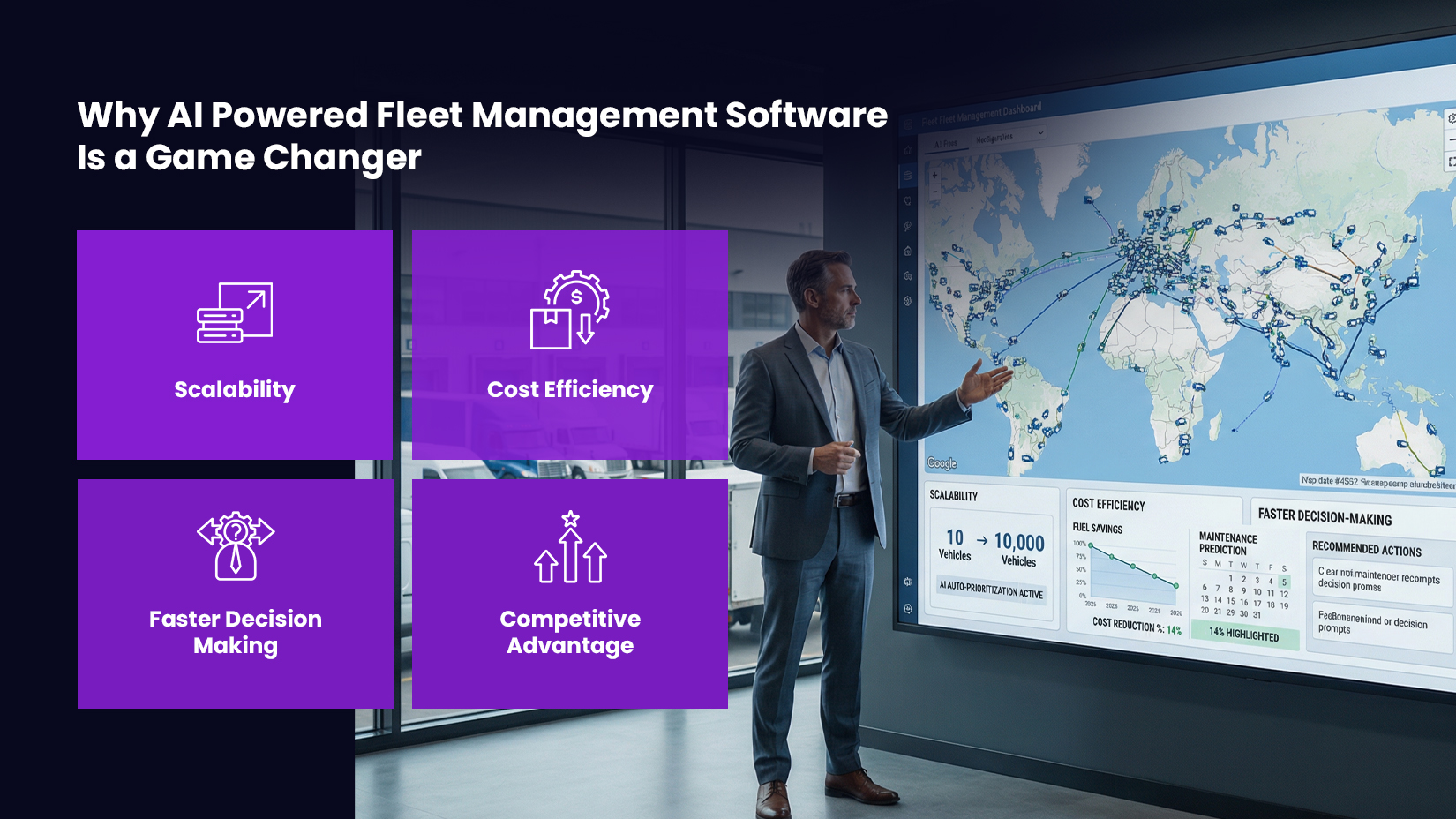
AI capabilities are no longer optional add-ons. They are prerequisites for growth.
Here’s why:
1. Scalability:
AI helps fleets manage complexity at scale. Whether you run 10 vehicles or 10,000, AI prioritizes where attention is needed and automates what can be automated.
2. Cost Efficiency:
AI doesn’t just track expenses. It predicts cost drivers, such as fuel spikes and maintenance windows, before they occur.
Studies show that companies with advanced fleet management platforms can reduce fuel costs by up to 10-15% through AI-driven planning alone.
3. Faster Decision Making:
AI enriches human decision-making with predictive insights. Managers get actionable recommendations instead of raw data dumps. That means quicker responses to disruptions and fewer costly mistakes.
4. Competitive Advantage:
Industries like e-commerce, logistics, and last-mile delivery are more competitive than ever. Companies that integrate AI into their fleet management system can outperform peers in speed, reliability, and cost control.
In contrast, companies stuck in manual processes risk losing contracts, market share, and profitability.
Challenges and Roadblocks to Adoption
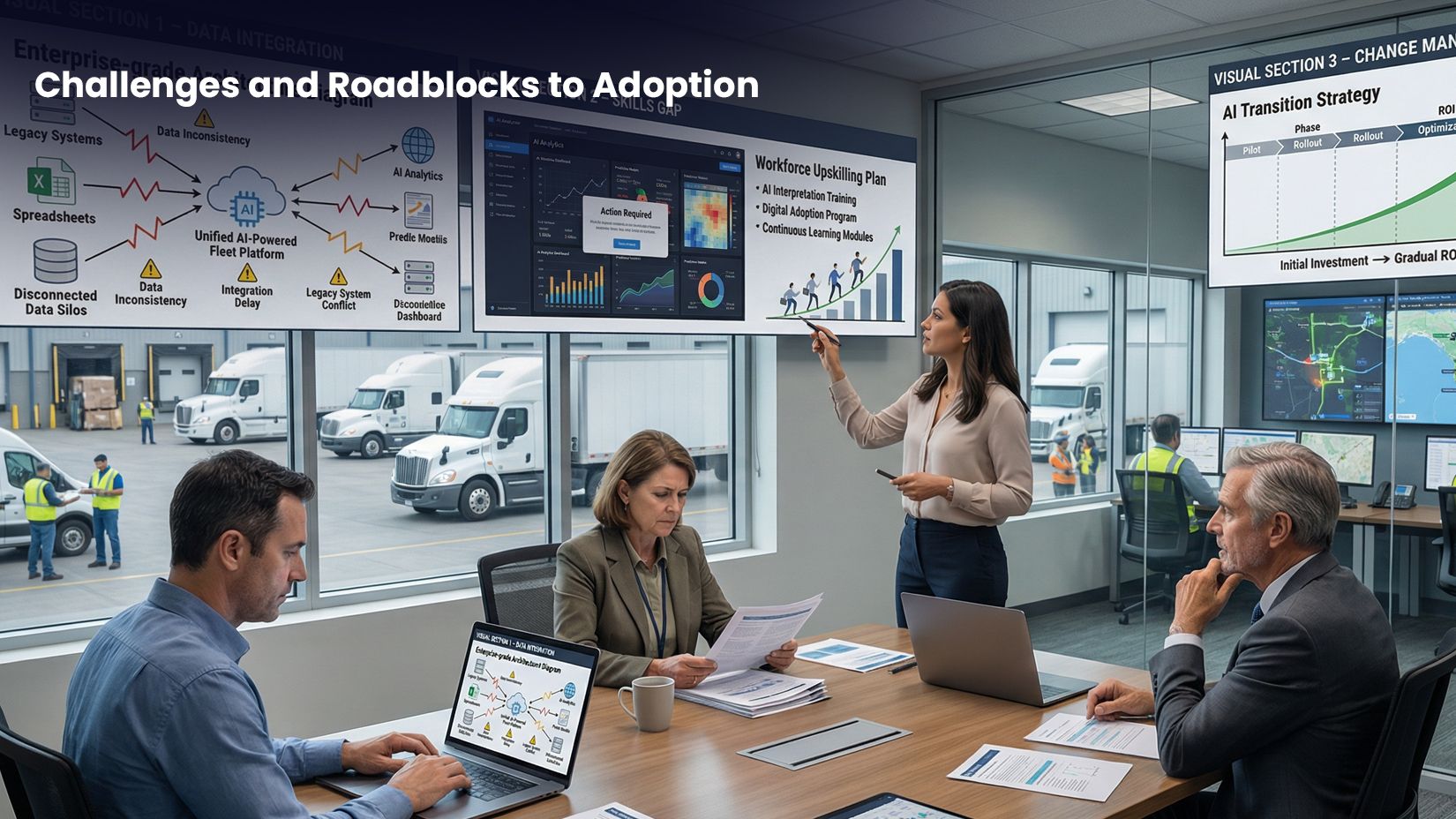
AI isn’t a silver bullet. Implementation does come with challenges:
1. Data Integration:
Legacy systems can resist integration with next-gen platforms. Some fleets still operate on siloed data sources. Consolidating that information into a unified fleet management platform requires time, resources, and technical support.
2. Skills Gap:
AI solutions require a workforce capable of interpreting insights and taking action. Training and upskilling are critical.
3. Change Management:
Companies must overcome resistance to change. Leaders need to communicate clearly why the transition matters and how it adds value.
The good news? The ROI on AI investments often justifies early adoption costs.
How to Choose the Right Fleet Management Platform
Selecting the correct technology stack is a strategic decision.
Here are practical criteria:
- Scalability: Can it grow with your business?
- AI Capabilities: Does it offer predictive analytics and machine learning?
- User Experience: Is it intuitive for drivers and managers alike?
- Integration: Can it connect with existing tools (ERP, TMS, telematics)?
- Support & Training: Is the vendor committed to your success?
The best solutions today are AI powered fleet management software suites that combine real-time data, analytics, and automation in a seamless experience.
The Bottom Line: Innovate or Disappear
The fleet management landscape is evolving rapidly. Real-time data, connectivity, and AI now define operational success. Companies that depend on outdated processes will face rising costs and shrinking margins. Those that invest in advanced fleet management software, modern fleet management systems, and AI powered fleet management solutions gain efficiency, control, and resilience.
If you are ready to move beyond reactive tracking, it is time to act. Discover how LogiNext’s AI driven fleet management platform delivers real-time visibility, intelligent optimization, and measurable results. The future of fleet management is not approaching. It is already here.
4

|

|

|




@LogiNext