


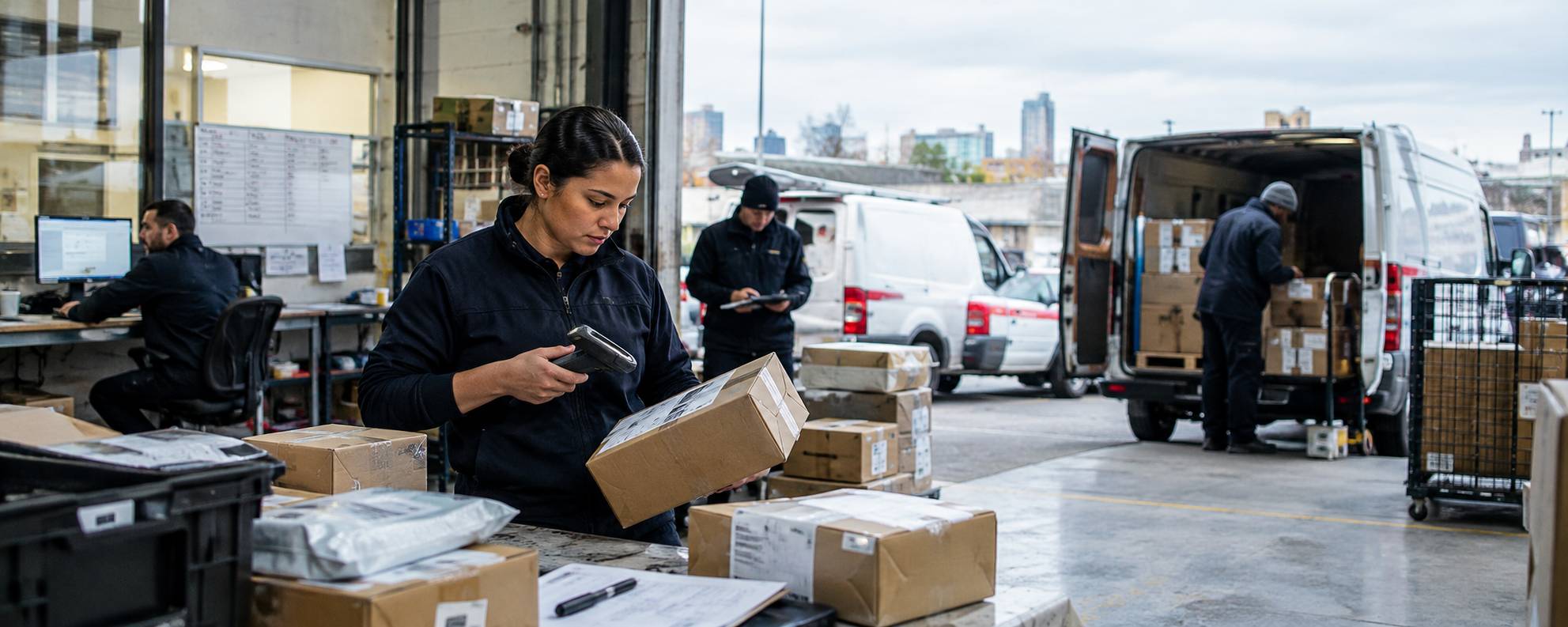
Courier Software: Better Deliveries, Happier Customers
Courier software helps businesses coordinate dispatch, optimize delivery routes, manage drivers, and keep customers informed throughout the delivery journey. When these activities work together, courier companies can improve logistics efficiency without losing sight of the people waiting for their parcels. \
The challenge is that customers rarely see the planning behind a successful delivery. They simply expect their orders to arrive as promised. From coordinating hundreds of daily shipments to confirming a parcel has reached the right doorstep, modern courier operations need connected technology to make reliable service repeatable.
Key Takeaways
- Improve delivery efficiency: Courier software helps coordinate dispatch, plan routes, and allocate deliveries more effectively.
- Give drivers better tools: Mobile workflows simplify delivery updates, parcel scanning, and proof of delivery.
- Keep customers informed: Delivery tracking and timely notifications help customers understand when to expect their orders.
- Make better operational decisions: Delivery data helps teams identify inefficiencies, monitor performance, and improve service quality.
- Scale without adding unnecessary complexity: Courier management software helps businesses coordinate growing delivery volumes and more complex operations.
Why Are Courier Operations Becoming More Complex?
A courier’s job sounds simple: collect a parcel and deliver it to the right address. Multiply that task across hundreds of shipments, multiple service areas, different delivery commitments and a fleet of drivers, and the picture changes quickly.
Dispatchers must balance driver availability, delivery priorities, pickup schedules and vehicle capacity. Drivers need accurate instructions. Managers need to understand performance. Customers want updates without having to chase the company for answers.
The volume of parcels adds another layer of complexity. According to Pitney Bowes’ Parcel Shipping Index, US parcel volume reached 23.1 billion shipments in 2025, growing 3.3% year over year. That is a lot of parcels to coordinate, even before accounting for failed delivery attempts, customer requests and changing routes.
Manual processes and disconnected systems make this coordination harder. When information sits in separate tools, teams spend more time exchanging updates and less time improving how deliveries are executed.
Courier management software brings these activities into connected workflows, helping businesses manage growing volumes with greater operational control.
How Does Courier Software Make Deliveries More Efficient?
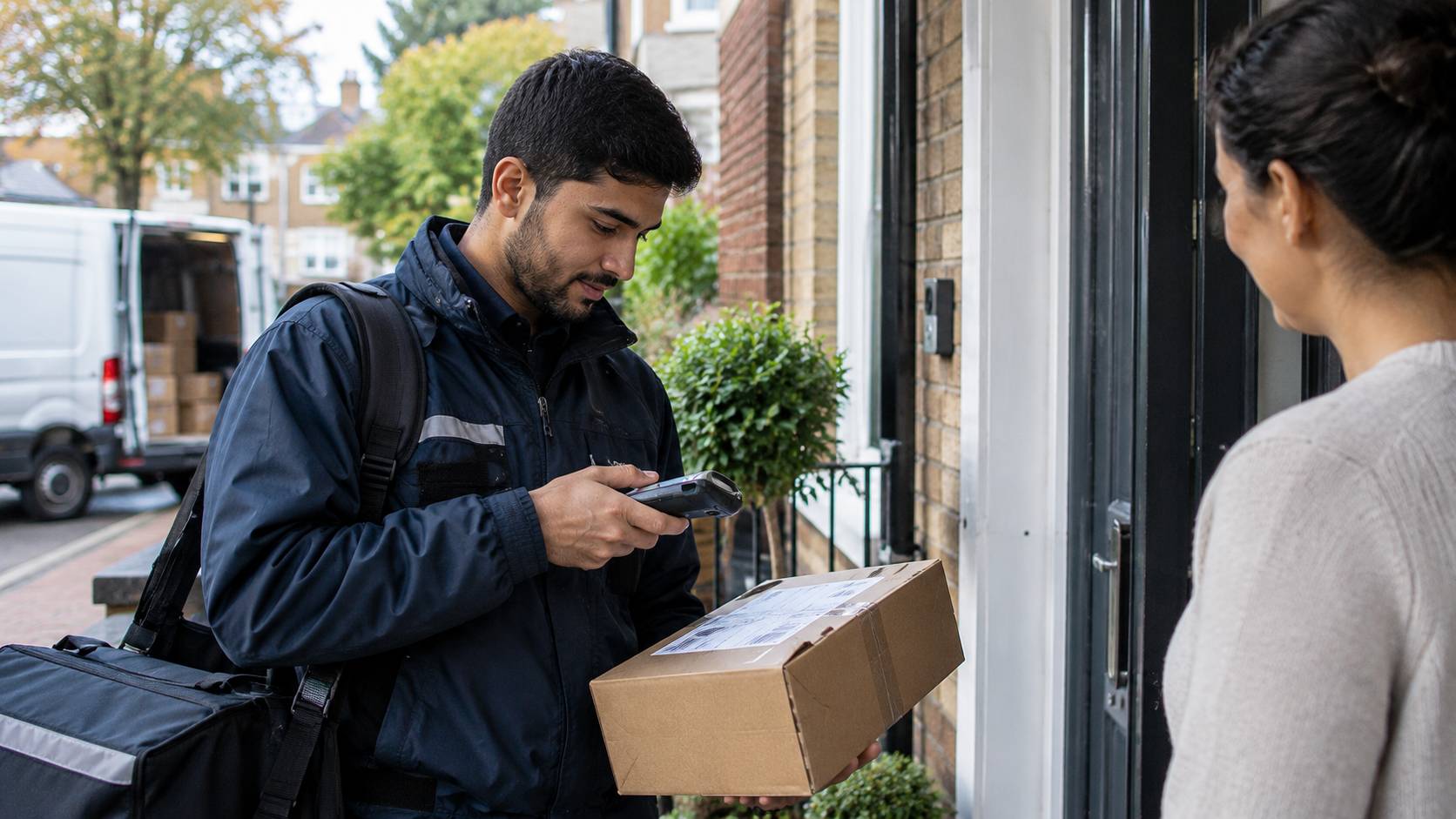
The biggest advantage of courier software is how it connects decisions across the delivery process. Dispatch, routing, driver coordination, and shipment updates no longer need to operate as separate activities.
1. Smarter Dispatching:
Courier dispatch software helps teams assign delivery jobs based on factors such as driver availability, location, capacity, and delivery commitments. Automation can reduce repetitive administrative work, allowing dispatchers to focus on exceptions and service priorities
2. More Practical Route Planning:
Route optimization software considers delivery locations, time windows and available resources to help build efficient routes. Better planning can reduce unnecessary mileage and improve fleet utilization without treating the shortest route as the only measure of success.
3. Connected Driver Workflows:
Mobile applications can give drivers access to navigation, delivery instructions, barcode scanning, and status updates. Proof of delivery software can capture electronic signatures, photos, or other delivery evidence, depending on the solution.
4. Clearer Shipment Visibility:
Delivery tracking software helps operations teams monitor progress and communicate relevant updates. When dispatchers have better information about delivery activity, they can coordinate work more effectively and give customer service teams clearer answers.
The result is not simply more automation. There is less friction between the people and processes responsible for getting every parcel to its destination.
What Makes a Good Delivery Experience for Customers?
Customers do not judge a courier company by its dispatch system. They judge it by whether the parcel arrives when expected, whether they receive useful updates and whether resolving a delivery issue is straightforward.
DHL’s 2025 E-Commerce Trends Report, based on 24,000 shoppers across 24 markets, found that 81% of global shoppers would abandon a purchase if their preferred delivery option were unavailable. The report also found that 79% would abandon a purchase if the returns process did not meet their expectations.
These findings underline how closely logistics is connected to the customer experience. Delivery options, reliable communication and convenient returns can influence purchasing decisions before a parcel even enters the courier network.
Courier software can help businesses support that experience through timely notifications, more accurate delivery estimates, and delivery confirmation. When customers can see what is happening with their orders, they have less reason to wonder whether the parcel has disappeared into a logistics black hole.
Reliability also matters more than speed alone. McKinsey’s research into US e-commerce delivery preferences found that 90% of surveyed consumers were willing to wait two or three days for delivery, particularly when doing so helped them avoid shipping costs. Customers may accept a reasonable wait when expectations are clear. An unnecessarily expensive or poorly communicated delivery experience is harder to justify.
How Can LogiNext Help Connect the Delivery Journey?
LogiNext provides logistics orchestration and delivery management capabilities designed to help businesses coordinate delivery planning and execution. LogiNext Mile supports delivery operations through capabilities such as scheduling, route optimization, delivery tracking and operational analysis.
These capabilities can help courier businesses connect planning with activity in the field. Dispatch teams can coordinate delivery assignments, drivers can work with delivery information, and managers can use operational data to understand how routes and deliveries are performing.
For example, a courier operation managing multiple service areas needs more than a list of completed deliveries. It needs to understand how resources are being used, where delivery performance can improve, and how daily execution compares with operational targets. Connected planning and analytics can help teams investigate these questions and make more informed decisions.
The aim is to make delivery operations easier to coordinate as business requirements grow, while supporting consistent service across the delivery journey.
What Does Better Courier Management Look Like in Practice?
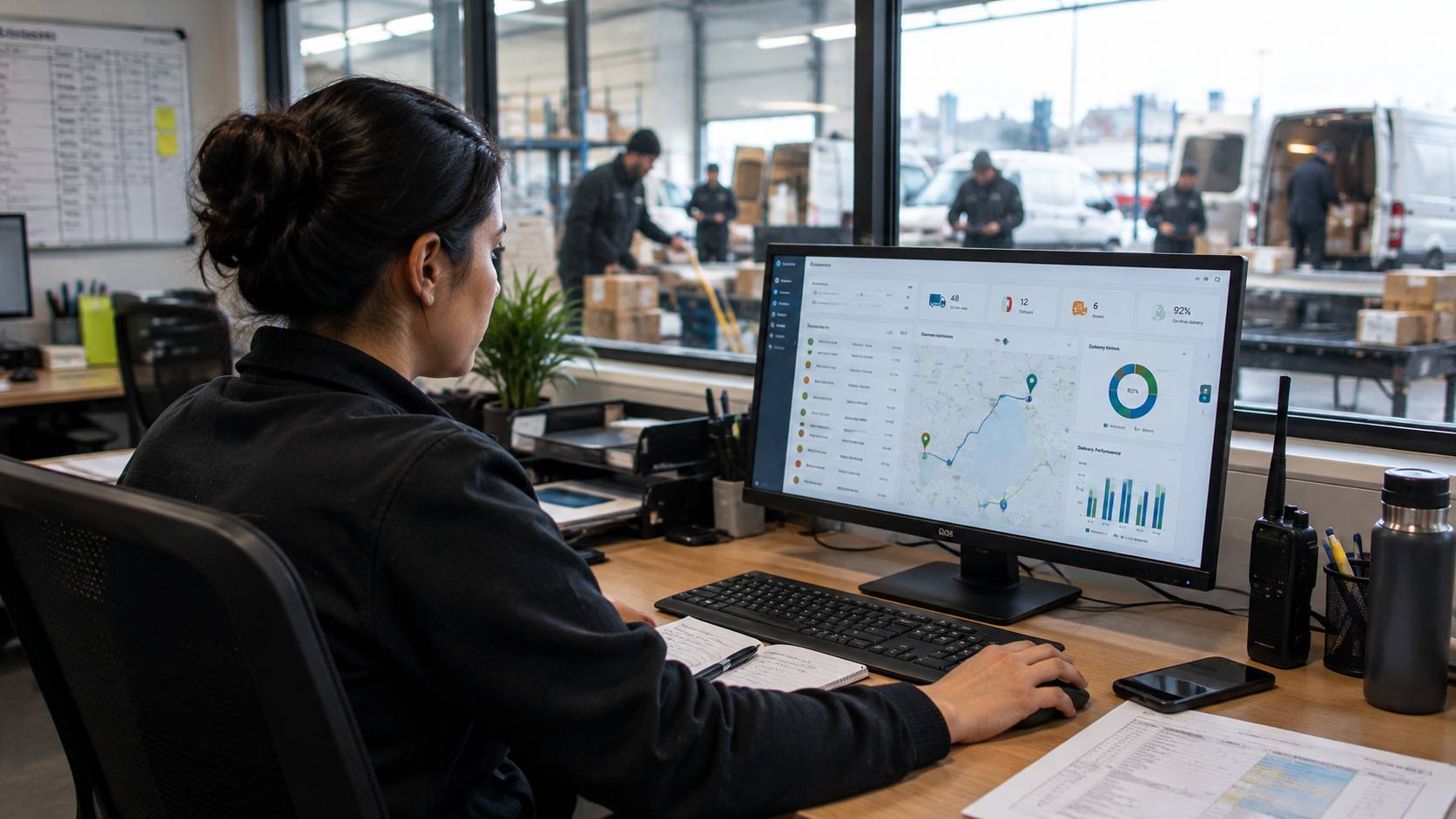
Imagine a courier company handling a growing number of business and residential deliveries. Its dispatchers are juggling assignments, drivers are calling for updated instructions, and customer service representatives are checking shipment statuses across different systems.
A connected delivery operation changes how these teams work together. Dispatchers can coordinate assignments using current operational information. Drivers can access the instructions they need. Delivery updates can be shared through appropriate channels, while managers can review performance data to identify opportunities for improvement.
The company can then track meaningful outcomes, including on-time delivery rates, first-attempt success, cost per delivery, route adherence, and customer inquiries.
These metrics turn operational improvement into something measurable. Instead of assuming that a new system is working because it automates tasks, businesses can assess whether it is improving service, resource utilization, and the customer experience.
Courier software is most valuable when it helps every part of the operation contribute to the same goal. Dependable deliveries delivered efficiently.
Frequently Asked Questions
1. What is courier software?
Courier software helps businesses manage delivery scheduling, dispatch, route planning, shipment tracking, driver workflows, and delivery confirmation through connected digital tools.
2. How does courier software improve customer satisfaction?
It supports more reliable delivery coordination, timely shipment updates, clearer delivery estimates, and better access to delivery confirmation.
3. Can courier software help reduce delivery costs?
Route optimization, improved resource utilization, and reduced manual administration can help control operating costs. Actual savings depend on the business’s existing processes and implementation.
4. What features should courier businesses prioritize?
Dispatch automation, route optimization, driver applications, shipment visibility, proof of delivery, integrations, and operational analytics are useful capabilities to consider based on business needs.
Conclusion
Better deliveries rarely happen because of one feature working in isolation. They happen when dispatchers have the right information, drivers have the tools to do their jobs, managers can measure performance, and customers know what to expect.
Courier software helps bring these moving parts together, supporting efficient operations and more dependable customer experiences. For businesses looking to improve how deliveries are planned, executed, and monitored, the opportunity lies in connecting the entire journey rather than optimizing individual tasks.
Ready to make every delivery work harder for your business? Explore LogiNext’s delivery management capabilities and connect with the team to see how its platform can support your delivery operations.
 |  |  |




@LogiNext