




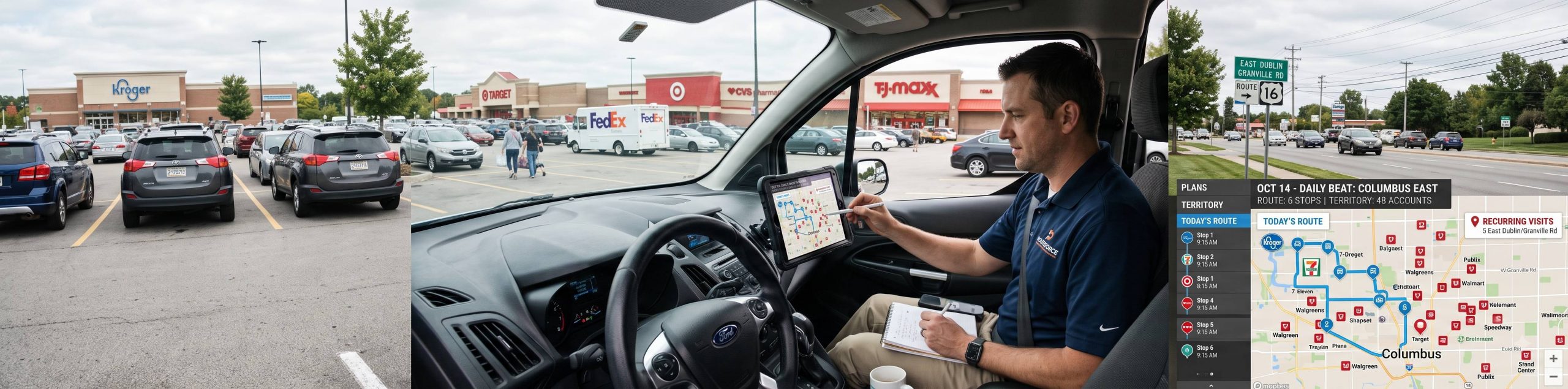
When Route Optimization Isn’t Enough: Enter Beat Planning
Route optimization helps field sales teams find efficient ways to travel between customer locations. But what if the problem isn’t how efficiently reps travel? What if the problem is that they aren’t visiting the right stores often enough?
That is where beat planning comes in. While route optimization focuses on the movement between stops, beat planning creates a recurring structure for which accounts should be visited, how often, and by whom. For field sales organizations managing hundreds or thousands of retail locations, combining the two can turn unpredictable daily planning into a disciplined coverage strategy.
Key Takeaways
- Route optimization improves the efficiency of daily travel between customer locations.
- Beat planning establishes recurring account visits and coverage frequency.
- Route optimization alone does not guarantee that high-value accounts receive consistent visits.
- Beat planning converts territory knowledge into a repeatable operating model.
- Combining recurring visit schedules with optimized routes creates a more complete field sales planning process.
- LogiNext connects territory planning, recurring journeys, route optimization, and field execution in one platform.
Route Optimization and Beat Planning Solve Different Problems
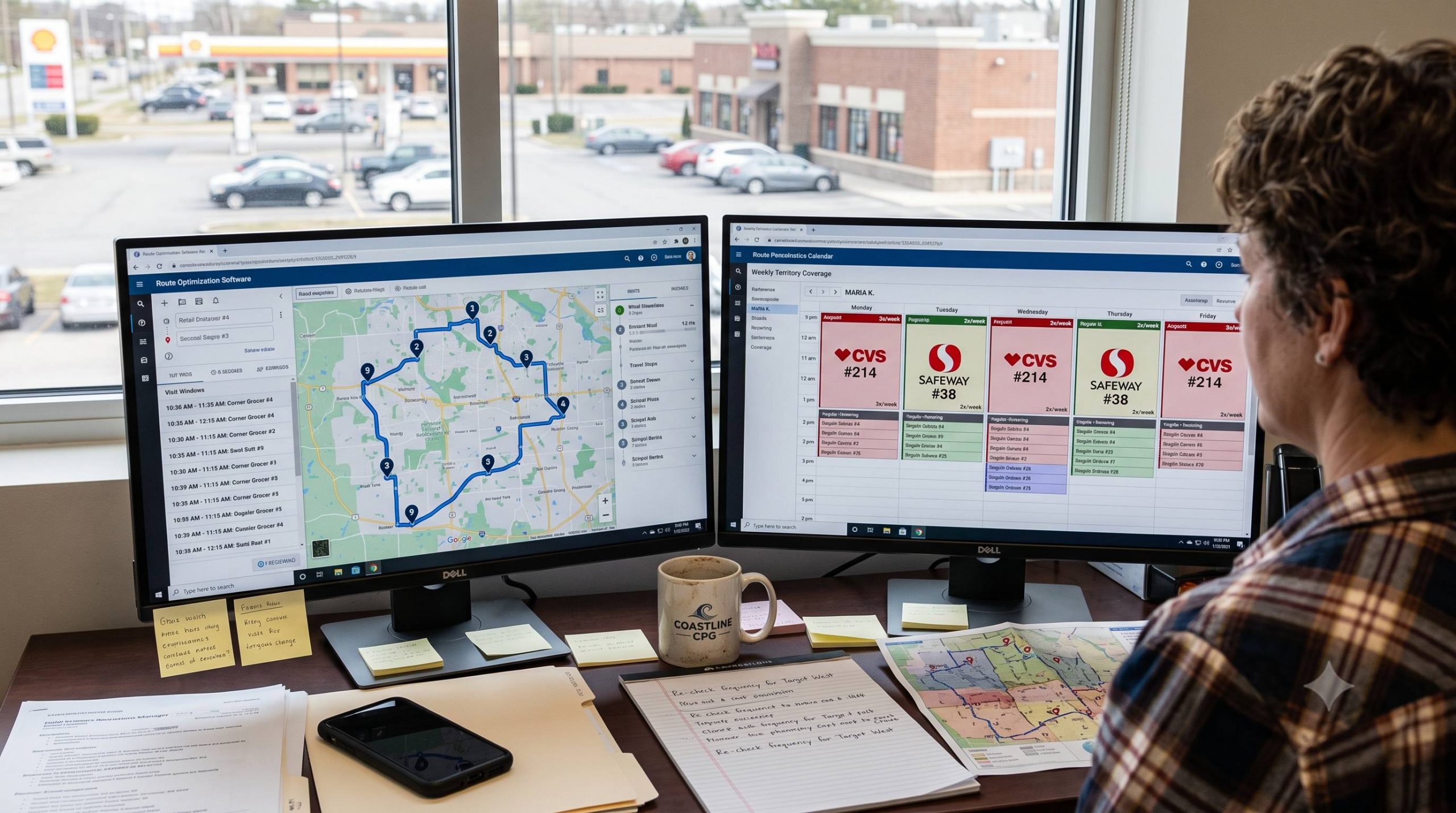
Though they are closely related, but they answer different operational questions.
Route optimization asks:
What’s the most efficient way to complete today’s visits?
Beat planning asks:
Which accounts should be visited today, this week, and throughout the month?
Neither replaces the other.
A field representative can have a perfectly optimized route and still miss a high-value retailer that was supposed to receive a visit that week.
The shortest route isn’t necessarily the most productive route. That is the coverage crisis many field sales teams overlook.
Why Daily Route Optimization Can Still Leave Coverage Gaps
Imagine a sales rep responsible for 80 stores. Every morning, they open a spreadsheet, check recent visits, look at priorities, decide which accounts to visit, and then create a route.
The route may be optimized. The process isn’t. Over time, predictable problems appear:
- High-value accounts don’t receive their required visit frequency.
- Some stores are visited more often simply because they’re convenient.
- Territory overlaps creates unnecessary travel.
- Managers manually rebalance schedules.
- New representatives take weeks or months to understand their territories.
- Critical territory knowledge remains with experienced reps instead of the organization.
This creates an uncomfortable situation: the organization can optimize every route while still failing to optimize coverage. And administrative time is not cheap.
Salesforce’s State of Sales research found that sales representatives spend only 28% of their week actually selling, with the remainder going toward activities such as email, data entry, internal meetings, and other administrative work.
Every unnecessary planning task eats into an already limited selling window.
What Happens When Coverage Depends on Memory?
Field sales territories often contain knowledge that isn’t formally documented. A veteran representative may know:
- Which retailer needs a weekly visit
- Which accounts prefer morning appointments
- Which stores need extra merchandising attention
- Which locations frequently have stock issues
- Which accounts can be grouped efficiently
- Which customers should never be skipped
That knowledge is valuable. But if it lives exclusively in someone’s head, the business has a problem. When representatives change territories or leave, that knowledge can disappear with them. New hires then have to reconstruct the territory through trial and error while managers spend time rebuilding schedules.
The result is a classic brain-drain trap: the company owns the customer relationships, but the operating knowledge belongs to individuals.
A structured beat planning system changes that by turning territory knowledge into a repeatable operating model.
How Beat Planning Complements Route Optimization
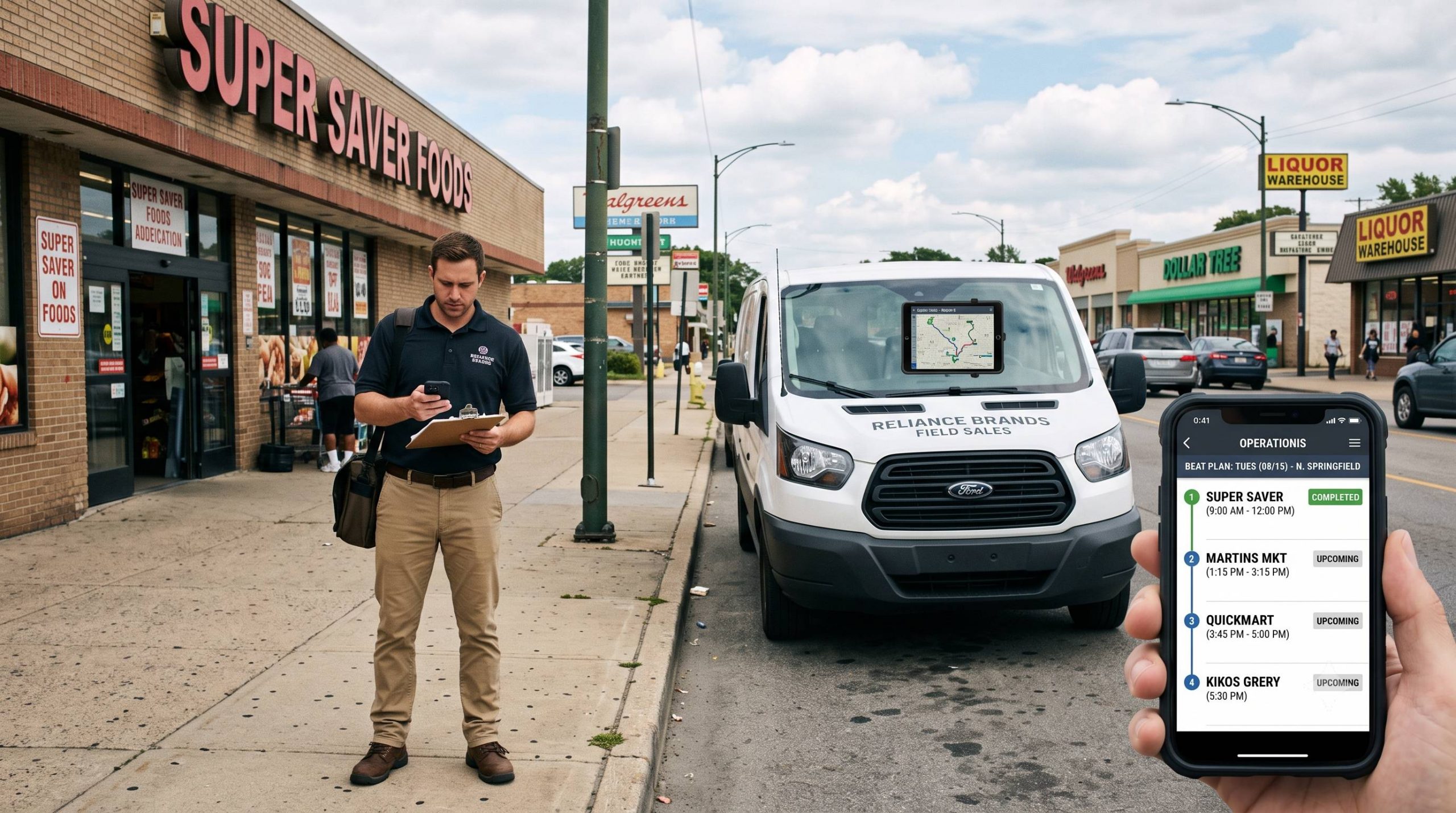
Beat planning establishes the coverage framework. Route optimization then makes the resulting daily trips more efficient. A practical workflows looks like this:
1. Build the Store Network:
Centralize every retail location with relevant information such as geographic coordinates, contact details, territory ownership and preferred visit windows. This creates a single operational view of the field network.
2. Define Visit Requirements:
Not every account needs the same level of attention. A national grocery chain might require several visits per week, while a smaller independent retailer may need one visit.
Beat planning software can use these requirements to create recurring schedules based on account priorities and service expectations.
3. Assign Territory Ownership:
Map stores to specific field representatives. This creates accountability while reducing territory overlap and accidental coverage gaps. Instead of asking, “Who is visiting the store?”, managers have a defined ownership structure.
4. Creating Recurring Beats:
This is where beat planning moves beyond daily route planning. Organizations can establish recurring weekly, monthly, or quarterly schedules. In some markets, this is also referred to as a Permanent Journey Plan.
Rather than asking representatives to reinvent their schedules every morning, the business establishes a repeatable visitation rhythm.
5. Optimize the Daily Routes:
Now route optimization does what it does best. Once the day’s required visits are known, the system can determine an efficient sequence based on locations, time windows, working hours, and other constraints.
The result is a simple but important shift: Beat planning decides the visits. Route optimization improves the journey.
How LogiNext Brings the Two Together
LogiNext brings recurring field planning and route optimization into a connected workflow.
Instead of treating territory planning, visit scheduling and daily routing as separate spread sheets, LogiNext provides a structured approach to managing the entire field operation.
With LogiNext, organizations can:
- Centralize store data across territories and representatives
- Set visit frequencies based on account requirements
- Assign territory ownership to specific field representatives
- Create recurring schedules for predictable coverage
- Generate daily trips automatically from established plans
- Optimize routes around operational constraints
- Give representatives visibility into their assigned visits and sequences through the mobile experience.
- Monitor execution so managers can understand planned versus completed field activity
LogiNext’s field sales planning capabilities combine journey planning, recurring schedules, territory management, and route optimization to help organizations manage field operations at scale.
That distinction matters because the objective isn’t simply to produce a better map. It’s to create a better operating rhythm.
The Business Impact: From Efficient Routes to Reliable Coverage
When route optimization operates within a structured beat planning model, field sales leaders gain visibility into both travel efficiency and account coverage. The key outcomes include:
1. Consistent Store Coverage:
Every account receives its intended visit frequency instead of relying on individual memory or daily decisions.
2. Better Workforce Utilization:
Managers can identify overloaded territories, underutilized representatives, and inefficient travel patterns, helping them make more informed resource decisions.
3. Faster Territory Onboarding:
New representatives inherit established territories and recurring schedules instead of starting with a blank spreadsheet.
4. Less Administrative Work:
Representatives spend less time deciding where to go. Managers spend less time rebuilding schedules and more time coaching their teams.
5. More Productive Field Time:
When planning is automated, representatives can spend more time with retailers and less time preparing for the day’s travel.
This matters because the U.S. retail environment is enormous. The National Retail Federation estimates that retail sales in the United States reached $5.3 trillion in 2025, highlighting the scale of the market that field sales and merchandising organizations operate within.
At that scale, even small coverage inefficiencies can compound quickly.
Also Read: How LogiNext Delivery Software Brings Clarity to Driver Run Sheets
Frequently Asked Questions
1. What is route optimization?
Route optimization is the process of determining the most efficient sequence for visiting multiple locations while considering factors such as distance, travel time, traffic, time windows, working hours, and operational constraints.
2. What is beat planning?
Beat planning is a recurring field-visit planning approach that determines which customer accounts representatives should visit and how frequently. It creates a structured visitation rhythm rather than requiring teams to plan from scratch every day.
3. Is beat planning the same as route optimization?
No. Beat planning focuses on which accounts should be visited and how often, while route optimization focuses on how representatives can travel between those locations efficiently. They address different parts of the field planning process.
4. What is beat planning software?
Beat planning software automates recurring field visit schedules based on factors such as account priorities, visit frequency, territories, time windows, and representative availability. It can then connect those schedules with daily route optimization.
5. Can route optimization improve field sales?
Yes. Route optimization can reduce unnecessary travel and help representatives complete required visits more efficiently. Its impact is greater when routes are generated from a structured account coverage and territory plan.
6. What is a Permanent Journey Plan?
A Permanent Journey Plan is a recurring schedule that defines which customer locations a field representative should visit and when. It is commonly used to create predictable, repeatable field coverage.
Conclusion
Route optimization is essential for making field travel more efficient, but efficient travel alone doesn’t guarantee effective coverage. Field sales teams also need to know which accounts require visits, how frequently they should be visited, who owns each territory, and whether those visits actually happen.
That’s where beat planning adds another layer of intelligence.
By combining recurring visit schedules, territory ownership, account requirements, route optimization, and field execution, organizations can move away from reactive daily planning and toward a more predictable operating model.
LogiNext helps field sales teams bring these pieces together in one platform. Explore LogiNext’s field sales planning capabilities to build recurring journeys, optimize daily routes, improve territory execution, and give your teams more time to focus on what matters: the customer.
Like
 |  |  |




@LogiNext