



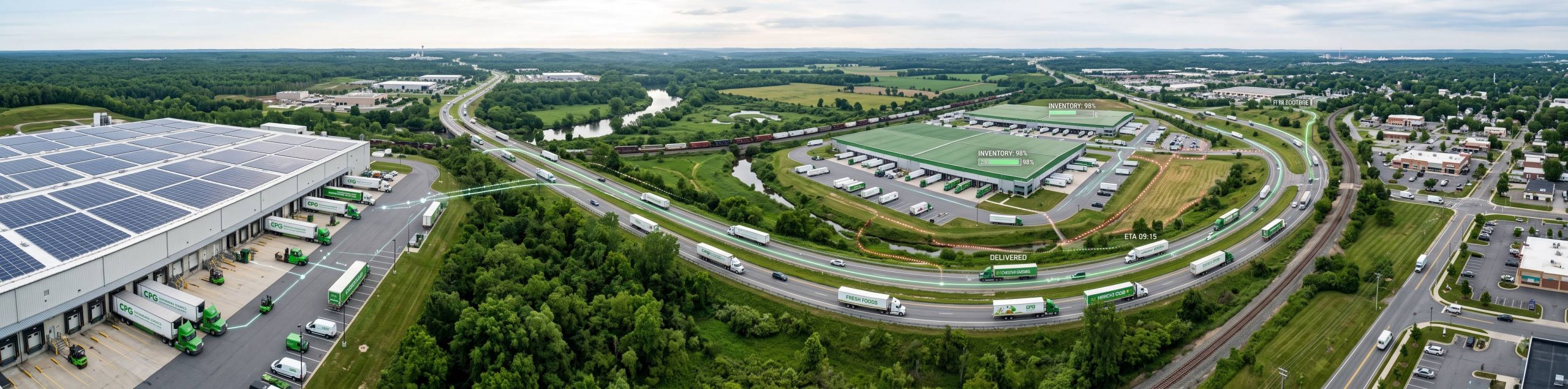
Supply Chain Visibility Is the Missing Link to CPG Sustainability
Sustainability has become a business priority for consumer packaged goods (CPG) companies. Governments are introducing stricter environmental regulations, consumers are demanding greater transparency, and investors are paying closer attention to ESG performance. Yet, despite ambitious sustainability goals, many CPG brands struggle to measure and improve their environmental impact because they lack one essential capability: supply chain visibility.
A sustainable supply chain cannot be built on assumptions. Companies need real-time data on inventory, transportation, supplier performance, emissions, and product movement across every stage of operations. Without that visibility, reducing waste, lowering emissions, and improving resource utilization becomes nearly impossible.
Modern supply chain visibility software gives organizations the intelligence needed to make sustainability measurable instead of aspirational. It transforms fragmented logistics data into actionable insights that help businesses reduce costs while achieving environmental goals.
Why Sustainability Starts with Visibility
Most sustainability initiatives fail because companies cannot identify where inefficiencies actually exist.
A shipment may be delayed because of supplier issues. Vehicles may be running half empty. Warehouses may be overstocking products that eventually expire. Drivers may spend hours in traffic because of inefficient route planning.
According to the International Energy Agency (IEA), freight transport accounts for nearly 8% of global energy-related CO₂ emissions. As global freight demand continues to rise, improving logistics efficiency has become one of the fastest ways to reduce emissions.
This is where supply chain visibility becomes critical. Instead of reacting to problems after they occur, businesses can monitor operations continuously and respond before disruptions create additional waste.
The Sustainability Challenge Facing Modern CPG Supply Chains
CPG supply chains are among the most complex in the world.
Raw materials come from multiple suppliers. Manufacturing takes place across different facilities. Products move through warehouses, distributors, retailers, and finally reach consumers.
Each handoff creates another opportunity for delays, inventory inaccuracies, excess transportation, or product spoilage.
Research from Gartner shows that end-to-end visibility remains one of the biggest challenges facing supply chain leaders. Limited access to real-time operational data makes it difficult to balance customer expectations with sustainability objectives.
Many organizations still rely on disconnected spreadsheets, manual reporting, and siloed systems. These approaches may provide historical information, but they rarely support proactive decision-making.
An effective supply chain visibility solution connects every stakeholder through a single source of truth. Enabling faster decisions across procurement, transportation, warehousing, and delivery operations.
Upstream Supply Chain Visibility Reduces Environmental Risk
Sustainability begins long before products reach warehouses.
The sourcing of raw materials often represents one of the largest contributors to environmental impact. Companies cannot improve supplier sustainability if they have limited insight into supplier operations.
This is why upstream supply chain visibility has become increasingly important.
Businesses need visibility into supplier performance, production schedules, inventory availability, transportation delays, and sourcing risks. Early identification of disruptions allows procurement teams to adjust production plans before shortages create costly emergency shipments or production downtime.
Greater supplier visibility also helps companies verify responsible sourcing practices and improve compliance with environmental regulations. Rather than discovering problems weeks later, organizations can act immediately using live operational data.
Real-Time Data Helps Reduce Waste Across the Network
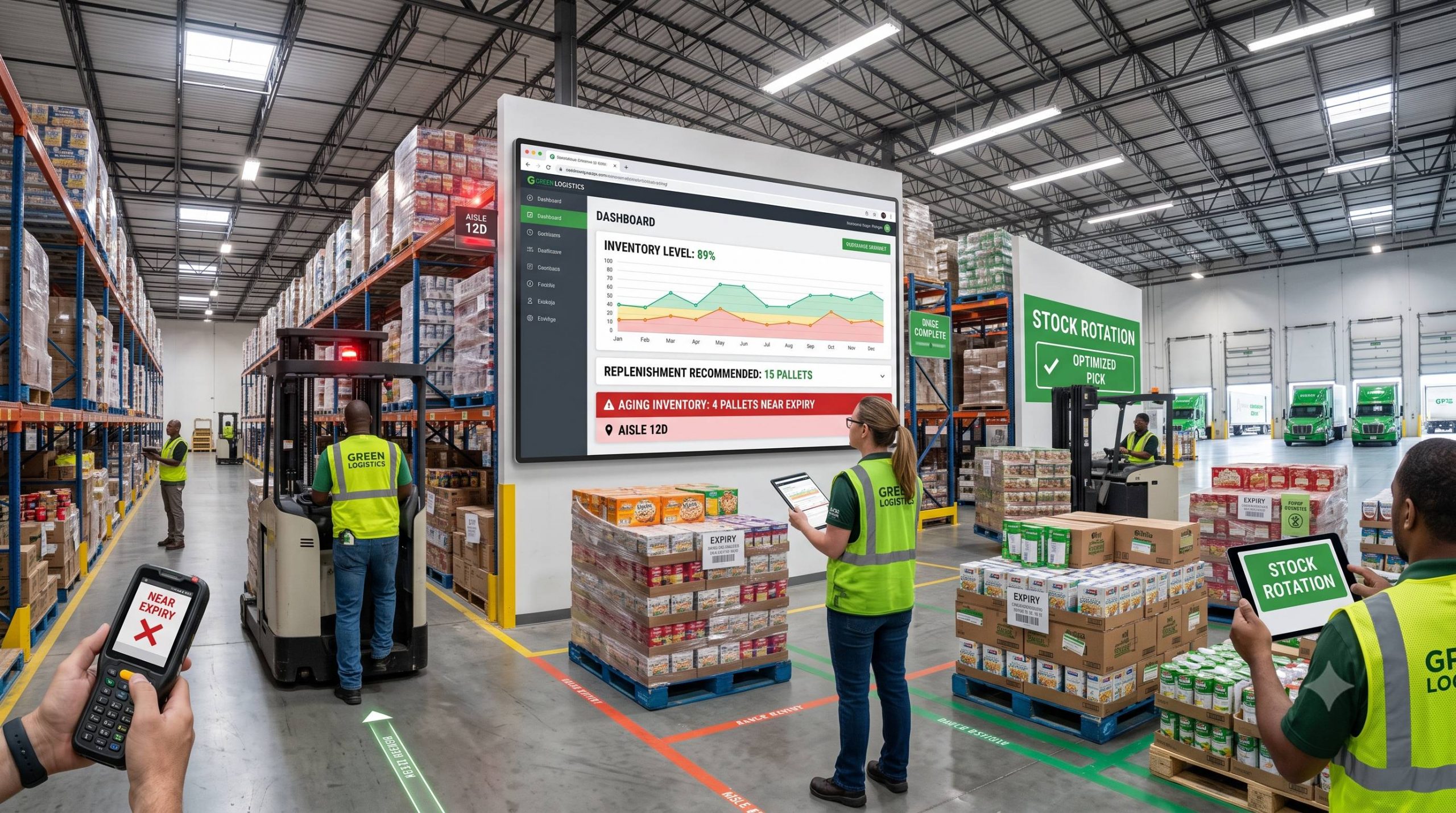
Waste remains one of the biggest sustainability challenges in the CPG industry. Products expire. Inventory becomes obsolete. Excess stock occupies warehouse space. Vehicles travel partially loaded.
Without accurate operational data, companies often overcompensate by producing more inventory than necessary. Real-time supply chain visibility changes that approach.
Businesses can monitor inventory movement across warehouses, identify slow-moving products, predict replenishment requirements, and optimize transportation capacity using live information.
According to McKinsey, companies that digitize supply chain operations can significantly improve inventory performance while reducing operating costs and improving service levels.
Better visibility allows planners to make decisions based on actual demand instead of forecasts alone. The result is less waste, lower storage costs, and improved sustainability.
Smarter Transportation Lowers Carbon Emissions
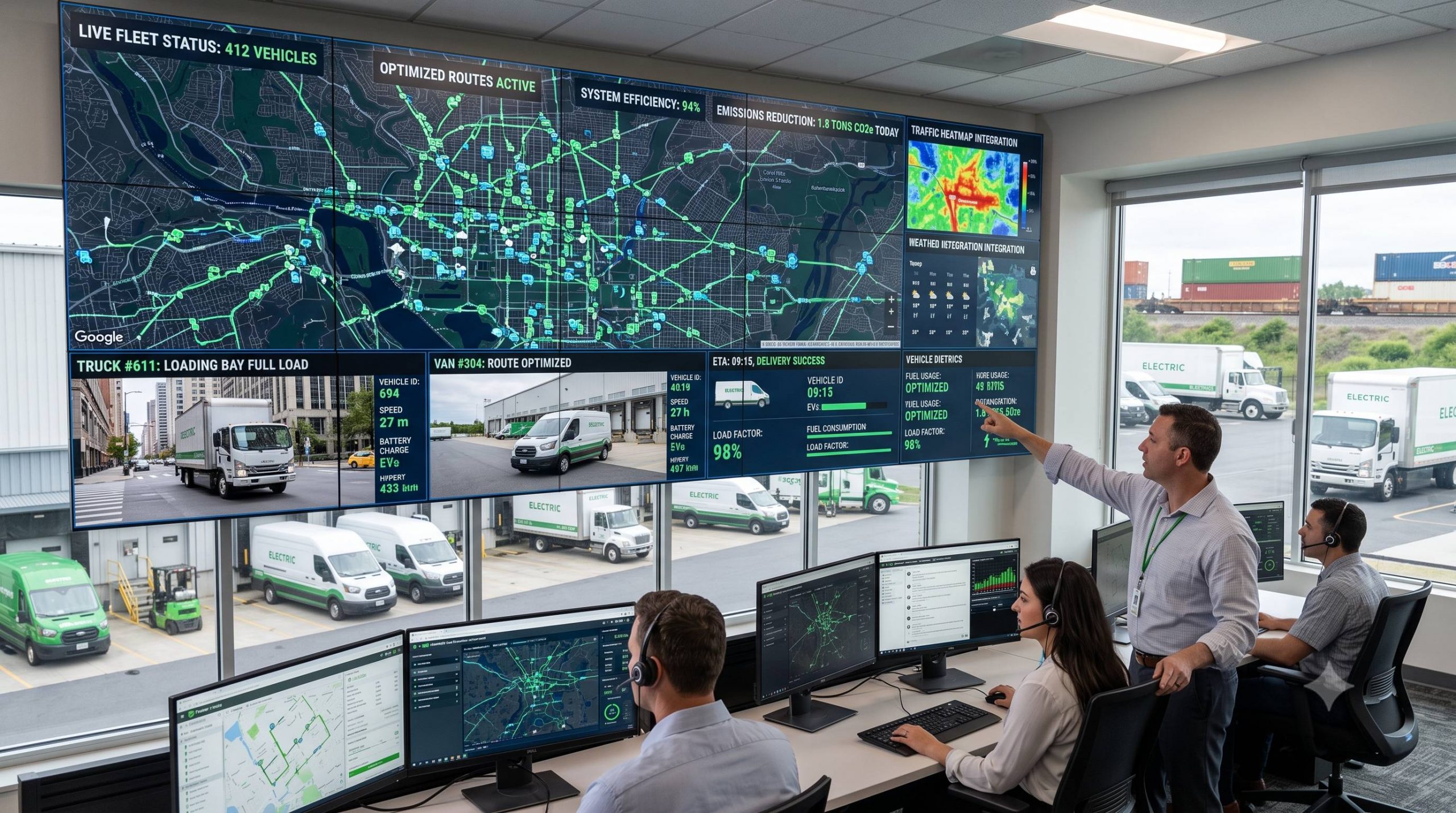
Transportation represents one of the largest sources of emissions for CPG organizations.
Poor route planning, empty miles, vehicle idling, and fragmented dispatching increase fuel consumption while reducing profitability.
An intelligent supply chain visibility solution enables logistics teams to monitor fleet performance in real time. Dispatchers can identify delays, reroute vehicles around congestion, consolidate deliveries, and improve vehicle utilization.
When combined with AI-powered route optimization, companies can reduce unnecessary mileage while maintaining customer service levels. This creates measurable environmental benefits alongside operational savings.
Efficient transportation is no longer just about faster deliveries. It has become an important component of corporate sustainability strategies.
Visibility Makes Sustainability Reporting Easier
Sustainability reporting requirements continue to expand across global markets. Organizations are increasingly expected to disclose emissions, resource utilization, supplier practices, and operational performance.
Collecting this information manually is both time-consuming and error-prone.
Modern supply chain visibility software automatically captures operational data across transportation, warehousing, and supplier networks. Businesses can generate accurate sustainability reports using consistent data instead of relying on spreadsheets collected from multiple departments.
Automated reporting also improves regulatory compliance while giving leadership greater confidence in ESG disclosures. More importantly, it helps organizations measure actual progress rather than estimated performance.
AI Is Transforming Efficient Supply Chain Visibility
Artificial intelligence is changing how organizations interpret operational data. Traditional dashboards tell businesses what has already happened.
AI-powered platforms go further by predicting disruptions, recommending corrective actions, and automating routine decisions. This creates efficient supply chain visibility across the entire logistics network.
AI can forecast inventory shortages before they occur, identify suppliers at risk of delays, recommend optimized delivery routes, and predict customer demand using historical and real-time information.
Instead of simply monitoring operations, businesses gain the ability to continuously improve them. This proactive approach supports both sustainability objectives and financial performance.
As supply chains become more dynamic, AI-driven visibility will become a competitive necessity rather than a technology upgrade.
Why CPG Companies Need Visibility Now
Consumer expectations continue to evolve.
Customers increasingly want sustainable products, accurate delivery updates, ethical sourcing, and transparent supply chains. At the same time, governments are introducing stricter environmental regulations, while supply chain disruptions remain unpredictable.
Meeting these expectations requires more than isolated sustainability initiatives. It requires complete supply chain visibility across suppliers, warehouses, transportation networks, and delivery operations.
Organizations that invest in modern supply chain visibility software can identify inefficiencies faster, reduce emissions, optimize inventory, improve supplier collaboration, and build more resilient supply chains.
Sustainability is no longer measured only by environmental commitments. It is measured by operational execution. Visibility provides the data needed to turn sustainability goals into measurable business outcomes.
Build Sustainable Supply Chains with LogiNext
Sustainability starts with knowing exactly what is happening across your logistics network.
LogiNext’s AI-powered supply chain visibility solution delivers real-time tracking, predictive analytics, intelligent alerts, automated workflows, and end-to-end operational visibility. Businesses gain the insights needed to optimize transportation, reduce waste, improve supplier collaboration, and create efficient supply chain visibility that supports both profitability and sustainability.
As CPG supply chains continue to grow in complexity, visibility is no longer optional. It has become the foundation for building smarter, greener, and more resilient operations.
Ready to make sustainability measurable? Book a demo with LogiNext today and discover how real-time visibility can transform your supply chain.
1

|

|

|




@LogiNext