




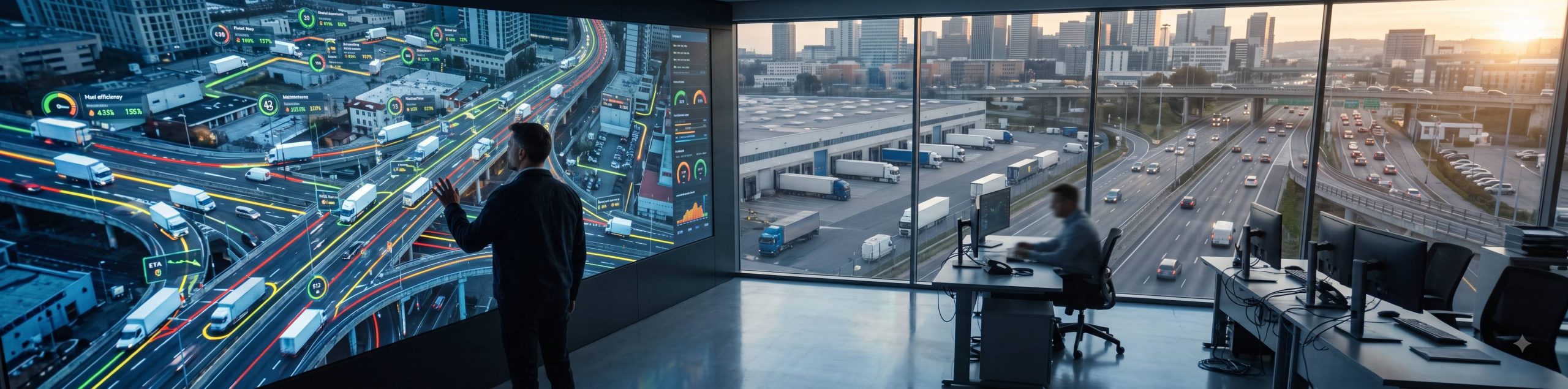
From GPS Dots to Business Decisions: The New Era of Fleet Management
There was a time when fleet management meant one thing: knowing where your vehicles were. If a truck appeared as a moving dot on a map, operations managers considered it a win.
That isn’t enough anymore.
Customers expect accurate ETAs. Fuel prices remain unpredictable. Driver shortages continue to pressure logistics businesses. At the same time, every unnecessary mile, idle minute, and delayed delivery eats directly into margins. Modern fleet management software has evolved from being a tracking tool into a decision-making engine that helps businesses optimize every aspect of fleet operations.
Today’s leaders are no longer asking, “Where is my vehicle?” They’re asking, “How can every trip become more profitable?”
Fleet Management Has Outgrown GPS Tracking
GPS tracking changed logistics forever. Dispatchers finally had visibility into vehicle locations without making endless phone calls.
But visibility alone doesn’t solve operational problems.
A vehicle parked for two hours could be waiting at a customer’s dock, stuck in traffic, taking an unscheduled break, or dealing with a mechanical issue. Location tells you what happened. It rarely tells you why.
That realization has completely changed fleet management over the past decade. Instead of simply collecting location data, businesses now combine vehicle diagnostics, driver behavior, routing intelligence, maintenance records, and customer commitments to understand the complete picture. Industry experts describe this shift as moving from vehicle tracking to operational intelligence.
The map is no longer the product. It is simply the starting point.
Data Is Everywhere. Intelligence Is the Competitive Advantage.
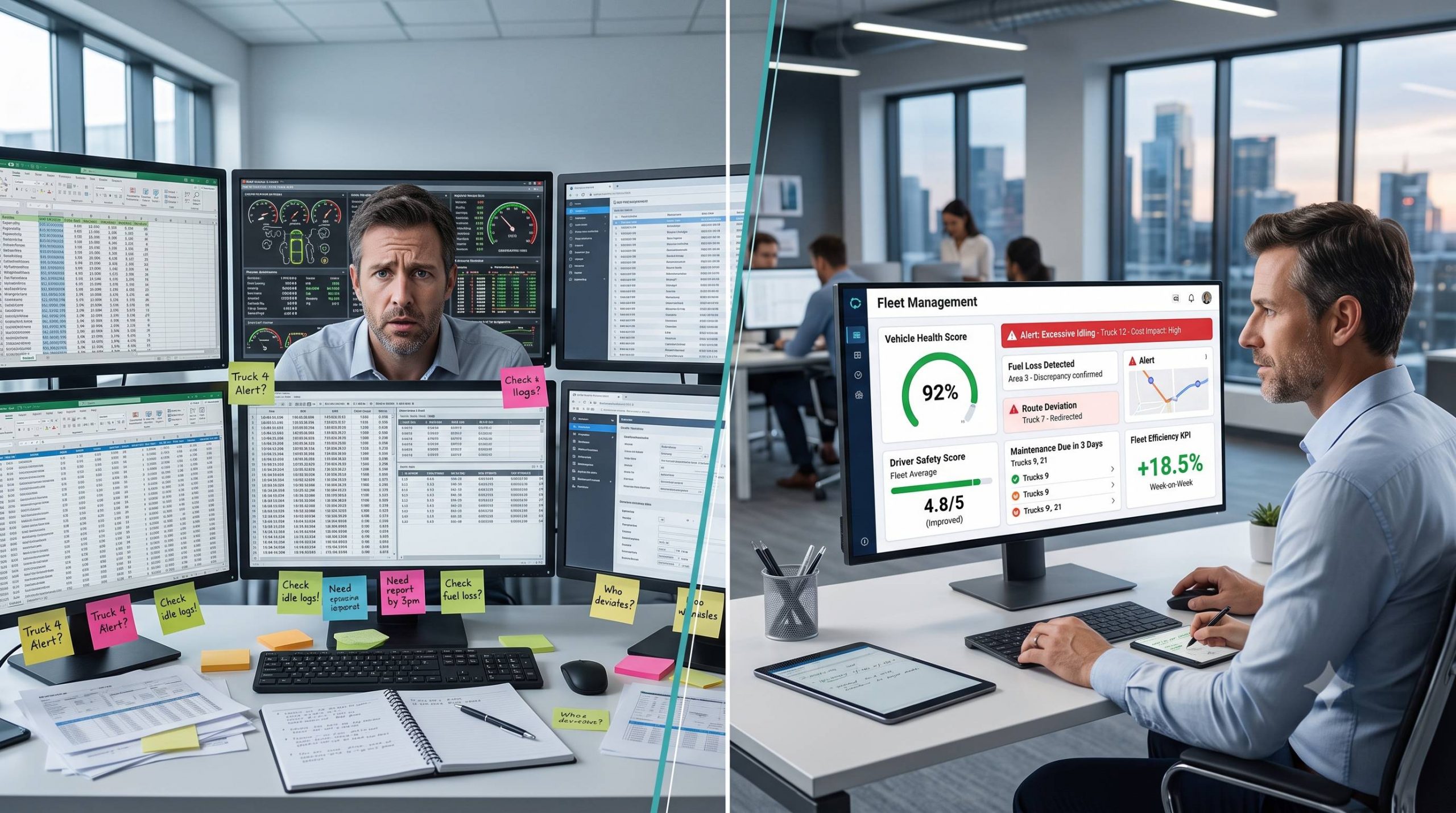
Modern commercial vehicles generate thousands of data points every day. Telematics systems capture information such as:
- Fuel consumption
- Engine diagnostics
- Idle time
- Speed and acceleration
- Harsh braking
- The pressure
- Maintenance alerts
- Driver hours
- Route deviations
The challenge isn’t collecting this data. The challenge is making it useful.
An efficient fleet management strategy filters the noise and highlights only the exceptions that require attention.
Instead of monitoring every vehicle manually, managers receive alerts only when something unusual happens. That could be excessive idling, unexpected fuel loss, unsafe driving, or a maintenance issue before it becomes a roadside breakdown.
This shift allows fleet managers to spend less time watching dashboards and more time improving operations.
Why AI Is Becoming the Brain Behind Fleet Operations
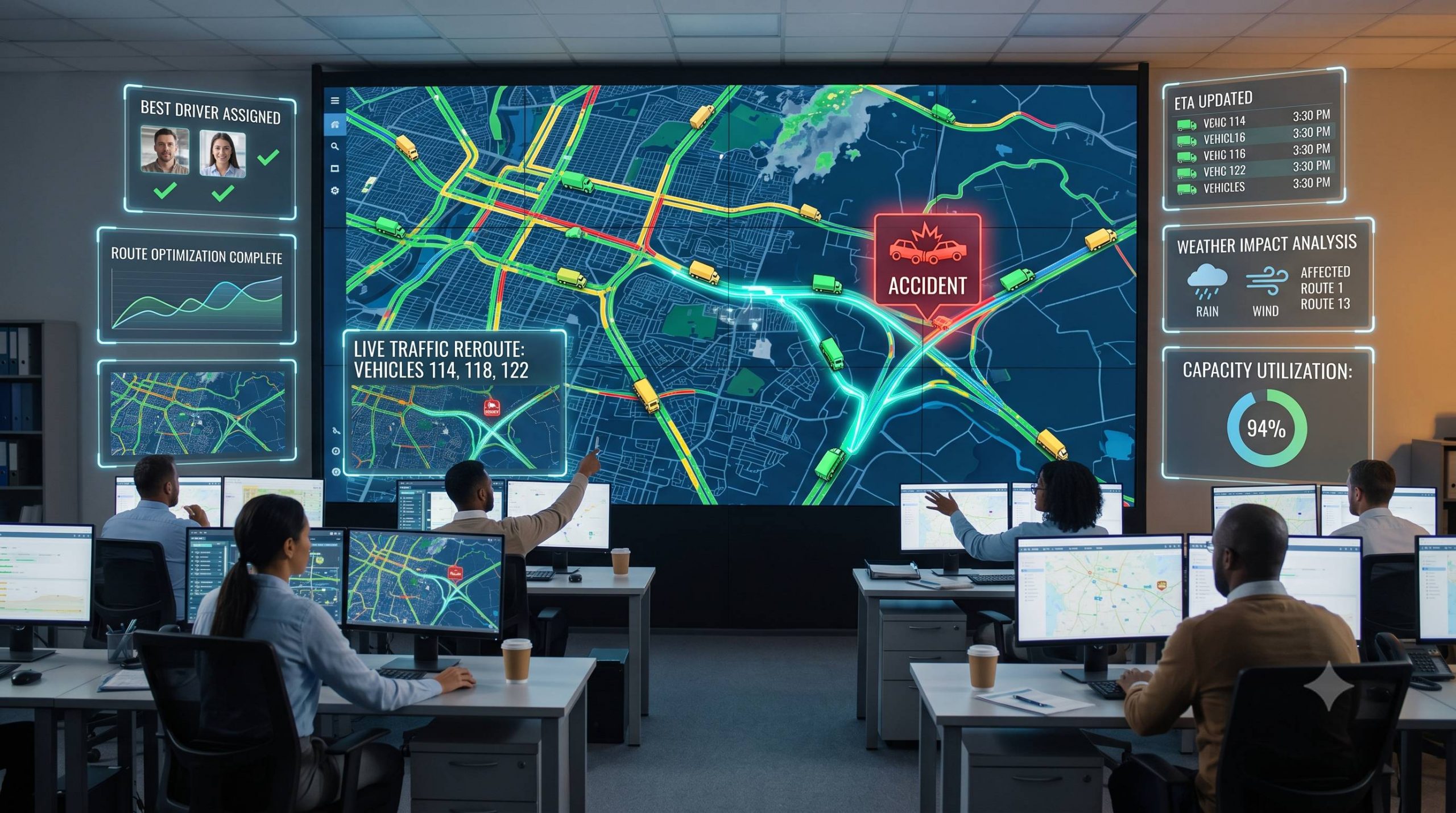
Artificial intelligence has become one of the biggest accelerators in modern fleet management software. Rather than replacing dispatchers, AI helps them make faster and better decisions.
AI can analyze thousands of variables simultaneously, including:
- Historical delivery patterns
- Live traffic conditions
- Driver availability
- Vehicle capacity
- Customer delivery windows
- Weather conditions
- Road restrictions
Instead of manually deciding which driver should take the next job, an AI powered fleet management software platform recommends the most efficient assignment within seconds.
McKinsey estimates that AI-enabled supply chain planning can reduce logistics costs by up to 15% while improving inventory levels and service performance.
That isn’t just automation. It’s intelligent decision-making at scale.
Fleet Management Is No Longer Just About Vehicles
One of the biggest misconceptions in logistics is that fleet management is about trucks. It isn’t. It’s about moving an entire operation efficiently.
An intelligent fleet management system connects multiple business functions into one platform, including:
- Route optimization
- Driver management
- Vehicle health monitoring
- Customer communication
- Proof of delivery
- Compliance
- Fuel management
- Performance analytics
When these systems operate independently, managers spend hours switching between spreadsheets, emails, telematics dashboards, and customer service tools.
An integrated fleet management solution eliminates those silos. Instead of asking multiple teams for updates, operations leaders receive one unified view of what’s happening across the business.
Predictive Maintenance Is Replacing Reactive Repairs
Breakdowns rarely happen without warning. The warning signs are usually hidden inside vehicle data.
Engine temperature fluctuations, abnormal fuel usage, excessive idling, or recurring fault codes often indicate future maintenance issues.
A modern fleet management system continuously monitors these indicators.
Rather than scheduling maintenance based solely on mileage or calendar dates, vehicles can be serviced based on actual operating conditions.
This reduces:
- Unexpected breakdowns
- Emergency repair costs
- Vehicle downtime
- Delivery disruptions
According to industry research, predictive maintenance significantly improves vehicle availability while reducing maintenance costs through earlier intervention.
For logistics businesses operating hundreds or thousands of vehicles, those savings quickly become substantial.
Driver Performance Is Finally Measurable
Drivers have always influenced operating costs. Now businesses can actually measure how.
Modern fleet management software captures driving patterns such as:
- Harsh braking
- Rapid acceleration
- Speeding
- Excessive idling
- Sharp cornering
Instead of using this information to punish drivers, successful companies use it for coaching.
Small improvements in driving behavior reduce:
- Fuel consumption
- Tire wear
- Accident risk
- Insurance claims
- Vehicle maintenance
The result is a safer workforce and lower operating costs.
Good data creates better habits. Better habits create better margins.
The Future of Fleet Management Is Connected
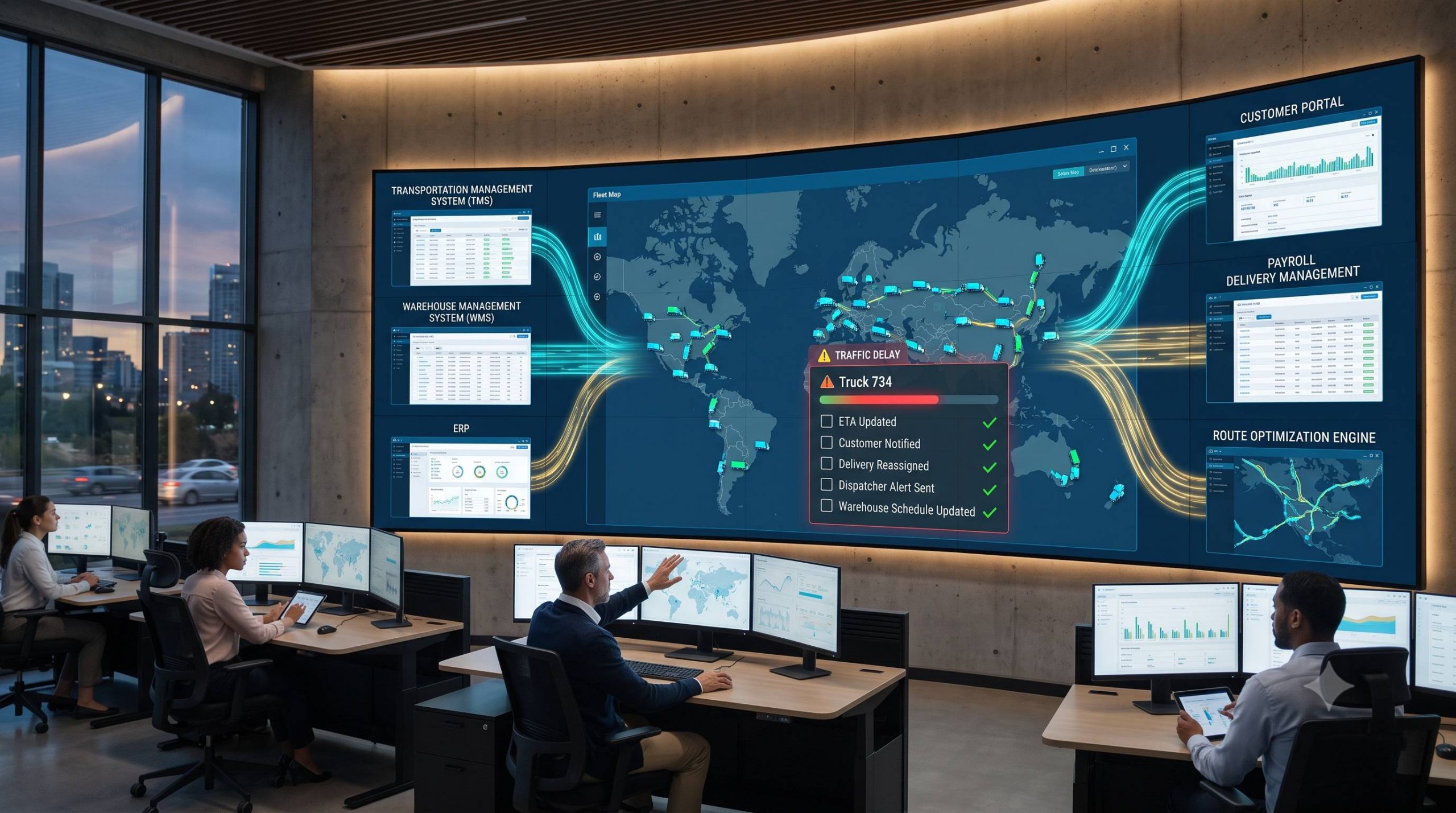
The next evolution isn’t collecting more information. It’s connecting information.
The best fleet management solution doesn’t operate in isolation. It connects seamlessly with:
- Transportation management systems
- Warehouse management platforms
- ERP software
- Payroll
- Customer portals
- Delivery management systems
- Route optimization engines
This creates a continuous flow of operational intelligence across the organization. For example, when a vehicle experiences an unexpected delay, the system can automatically:
- Recalculate ETAs
- Notify customers
- Reassign deliveries if required
- Update dispatch teams
- Trigger operational alerts
No manual intervention required. That’s what operational intelligence looks like.
Final Thoughts
The evolution of fleet management isn’t really about better GPS. It’s about better decisions.
Modern fleets generate enormous amounts of data every minute. The competitive advantage comes from turning that data into actions that reduce costs, improve customer satisfaction, increase vehicle utilization, and keep drivers safer.
If your fleet is still focused on tracking vehicles, you’re only seeing half the picture. The real opportunity begins when every mile becomes a source of insight. Click on the red button below and book a demo with LogiNext today.
“” 21
 |  |  |




@LogiNext