




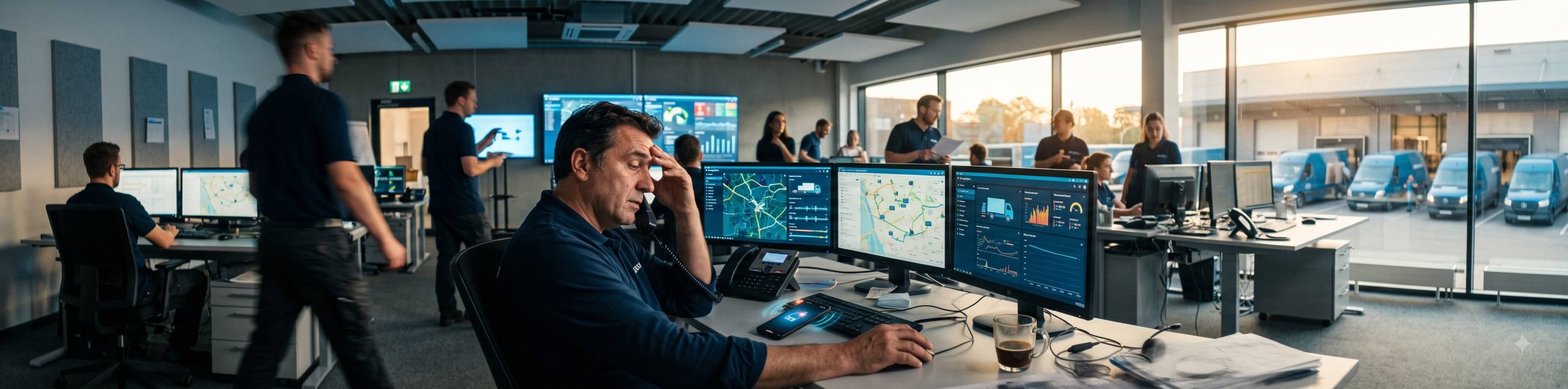
Dispatchers Are Quiet Quitting Too. Nobody’s Talking About It.
It’s 9:15 a.m. A driver has called in sick. A customer wants to change a delivery address. Sales has squeezed in a handful of urgent orders, and another customer is asking for an updated ETA. Before the first cup of coffee is finished, the dispatcher has already solved ten problems. This is why courier dispatch software has become indispensable for modern logistics.
Dispatchers aren’t struggling because they lack experience. They’re struggling because the tools they rely on often create as much work as they remove.
The logistics industry has spent years discussing driver shortages, rising fuel costs, and growing customer expectations. Yet one role rarely gets the same attention: the dispatcher. Every successful delivery begins with a decision made at the dispatch desk. When dispatchers are overwhelmed, delays multiply, communication suffers, and customer satisfaction starts to decline long before a driver leaves the depot.
The Dispatcher Is Expected to Fix Everything
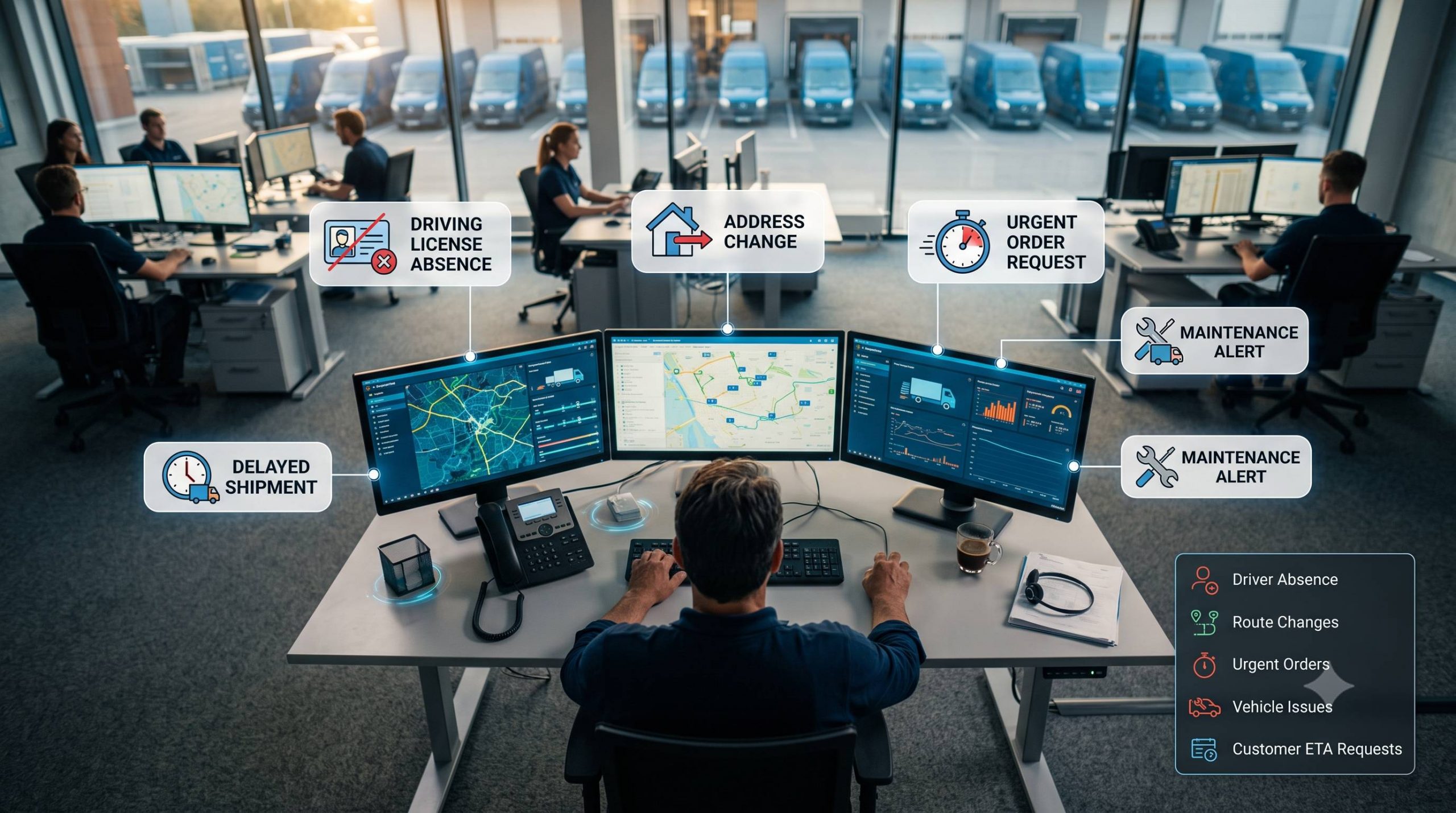
A dispatcher’s day rarely follows a plan. Drivers call with delays, customers request last-minute changes, vehicles break down, and new orders keep arriving. Every disruption lands on one desk, and every decision needs to be made quickly.
As delivery volumes continue to rise, so does the pressure. According to Statista, global retail e-commerce sales are expected to surpass $8 trillion by 2028, creating millions of additional deliveries every day. More deliveries don’t just mean more drivers on the road. They also mean more routes to plan, more exceptions to handle, and more customer expectations to manage.
Many dispatch teams are still expected to coordinate all of this through spreadsheets, phone calls, emails, and messaging apps. Instead of focusing on improving operations, they spend much of their day reacting to problems as they appear. Over time, constant firefighting becomes the job description.
Burnout Doesn’t Always End With a Resignation
When people hear the phrase “quiet quitting,” they often picture someone who has mentally checked out of work. In logistics, it can look very different. Dispatchers continue showing up every day, but constant pressure gradually chips away at their energy, confidence, and ability to stay proactive.
The effects are subtle at first. Manual assignments take longer, communication gaps become more frequent, and small errors begin to creep into daily operations. Eventually, these issues show up as missed delivery windows, frustrated customers, rising overtime costs, and lower fleet productivity. Burnout doesn’t stay at the dispatch desk. It spreads across the entire operation.
Complexity Isn’t the Problem. Friction Is.
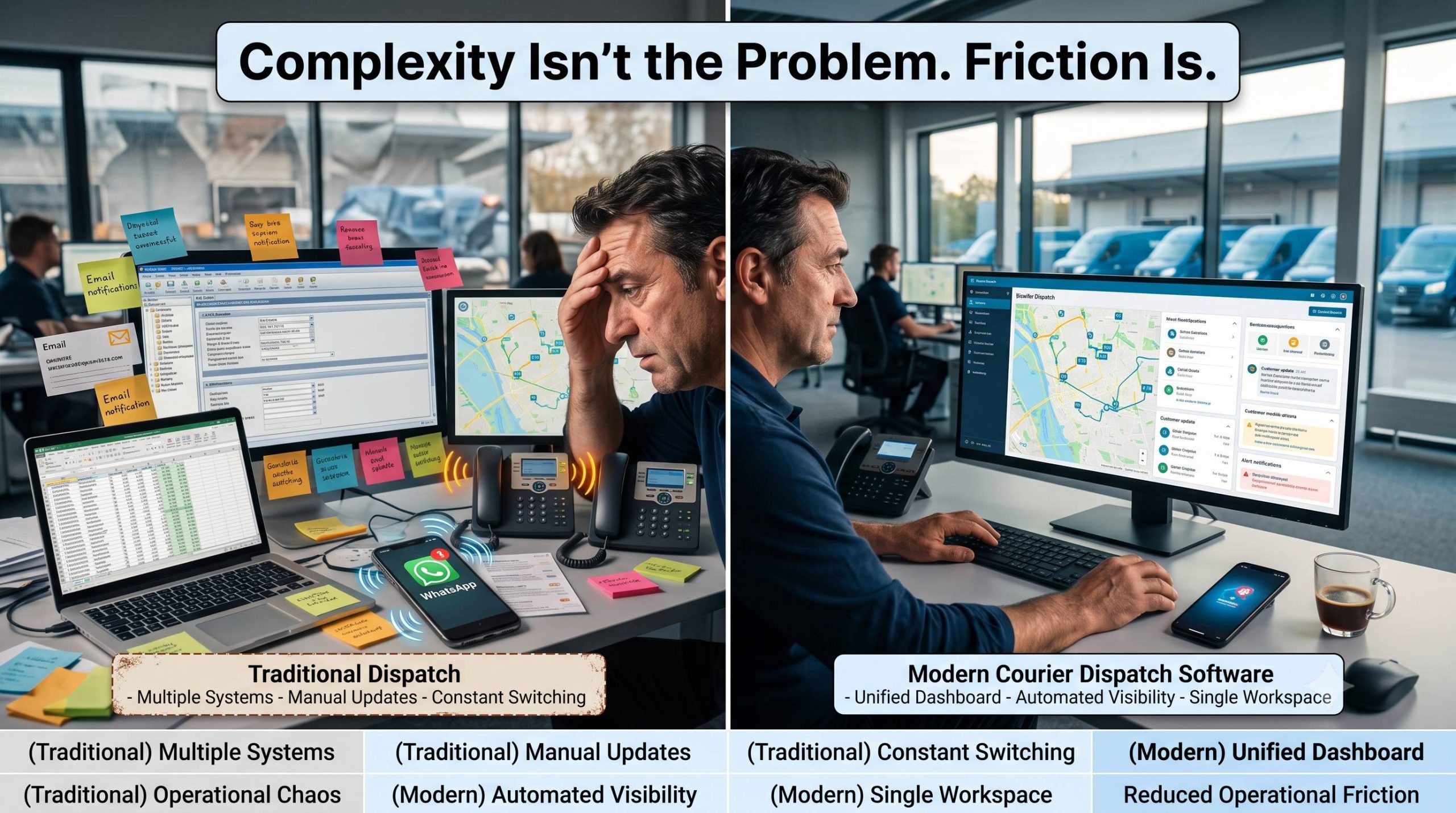
Logistics has never been simple, and nobody expects it to be. The real challenge isn’t complexity. It’s the amount of unnecessary friction built into everyday workflows.
Imagine having to switch between an ERP system, a spreadsheet, a GPS tracking platform, WhatsApp, email, and multiple phone calls just to dispatch today’s deliveries. None of these tasks are difficult on their own, but together they consume valuable time and attention.
This is where courier software makes a meaningful difference. Instead of forcing dispatchers to chase information across disconnected systems, it brings orders, drivers, delivery updates, and customer information into one place. The result isn’t just faster dispatching. It’s fewer interruptions and a much smoother workday.
Every Phone Call Is a Visibility Problem
One of the biggest hidden costs in logistics isn’t fuel or maintenance. It’s the time spent answering questions that shouldn’t require a phone call in the first place.
Customers want to know where their orders are. Drivers need updated instructions. Customer support teams ask for delivery statuses. Sales teams want priority orders pushed through. Each conversation may only take a few minutes, but together they consume hours of a dispatcher’s day.
Modern courier delivery software improves visibility for everyone involved. Real-time tracking, delivery updates, and centralized communication reduce the need for constant follow-ups. Thereby, allowing dispatchers to focus on resolving genuine operational issues instead of repeating the same information throughout the day.
Good Dispatch Isn’t About Moving Faster
Many businesses believe dispatch success is measured by how quickly deliveries are assigned. In reality, good dispatch is about maintaining control when plans inevitably change.
An efficient courier dispatch software platform helps dispatchers organize deliveries, monitor fleet activity, and manage exceptions without constantly rebuilding schedules. Instead of reacting to every disruption manually, they have the information needed to make informed decisions quickly.
This becomes increasingly important as operations scale. A business managing 50 deliveries today may be handling 500 tomorrow. Processes that worked with a small fleet often break down under higher volumes. Standardized workflows and centralized visibility help dispatch teams grow without increasing operational chaos.
Better Tools Create Better Workdays
Technology is often discussed in terms of efficiency, automation, and cost savings. While those benefits matter, they only tell part of the story. Better technology also creates a better working environment for the people responsible for keeping deliveries on track.
With courier software, dispatchers spend less time searching for information, coordinating through multiple channels, and manually updating delivery statuses. Instead, they can focus on solving exceptions, supporting drivers, and improving delivery performance. The job doesn’t become easier because logistics become less demanding. It becomes easier because unnecessary work is removed from the process.
Research from McKinsey has consistently shown that logistics organizations investing in digital workflows improve operational resilience and productivity. While software cannot eliminate every disruption, it helps teams respond to those disruptions with greater consistency and far less stress.
Why Courier Dispatch Software Matters More Than Ever
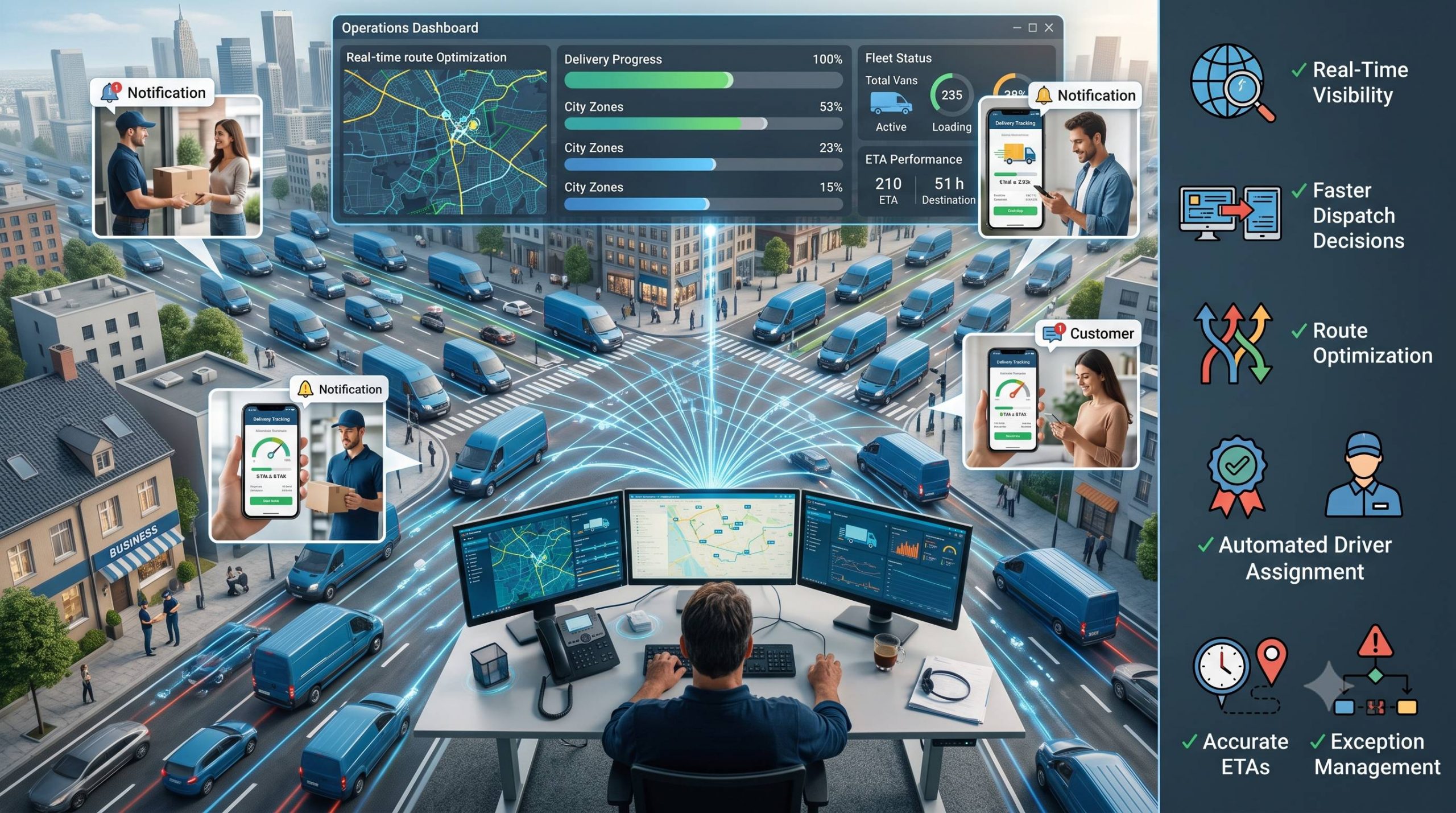
Customer expectations continue to evolve. Same-day delivery is becoming standard, delivery windows are shrinking, and businesses are expected to provide accurate updates at every stage of the journey. Meeting these expectations requires more than adding vehicles or hiring more drivers.
Modern courier delivery operations depend on well-supported dispatch teams. The right courier dispatch software helps reduce manual effort, improve coordination, and give dispatchers the visibility they need to stay ahead of problems instead of constantly reacting to them. That leads to smoother operations, happier customers, and a workforce that’s better equipped to handle growing delivery volumes.
Final Thoughts
Dispatchers are the quiet force behind every successful delivery, yet they’re often expected to manage growing complexity with outdated processes. Investing in the right courier dispatch software isn’t just about improving operational efficiency. It’s about giving dispatch teams the visibility and support they need to perform at their best.
If you’re looking to simplify dispatch, reduce manual coordination, and build more efficient courier delivery operations, LogiNext can help. Explore how LogiNext’s courier dispatch software streamlines delivery workflows, improves visibility, and helps your dispatch team stay in control as your business grows. Book a demo today.
2

|

|

|




@LogiNext