




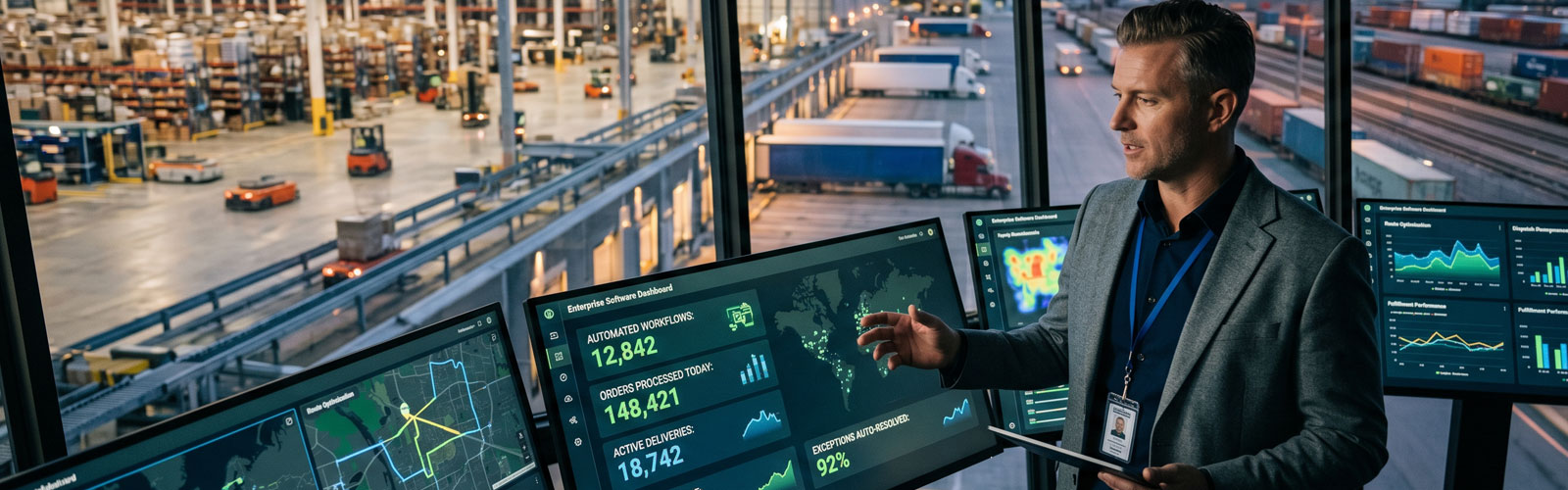
Logistics Automation: The Key to Managing Complex Logistics Workflows at Scale
The logistics industry is operating in an environment of unprecedented complexity. Rising customer expectations, growing shipment volumes, multi-carrier networks, and increasing pressure to control costs have transformed logistics operations into a highly dynamic ecosystem. In response, logistics automation has emerged as a critical capability for organizations seeking to improve efficiency, accuracy, and scalability.
Many logistics companies still rely on manual processes for order allocation, route planning, dispatching, shipment tracking, exception handling, and customer communication. While these methods may have worked in the past, they often struggle to keep pace with today’s supply chain demands. As operations expand, manual workflows create bottlenecks that lead to delays, errors, and increased operational costs.
This is where modern automation technologies are making a measurable impact. By streamlining repetitive processes and enabling real-time decision-making, logistics automation helps organizations build more resilient and agile supply chains.
Why Logistics Workflows Are Becoming More Complex
Modern logistics operations involve far more than simply moving goods from one location to another. Businesses must coordinate multiple stakeholders, including warehouses, transportation providers, drivers, customers, and suppliers.
At the same time, customer expectations continue to evolve. According to industry reports, more than 90% of consumers expect visibility into their deliveries, while same-day and next-day delivery services continue to gain popularity. These expectations create additional pressure on logistics teams to maintain speed, accuracy, and transparency across every stage of fulfillment.
The challenge becomes even greater when businesses operate across multiple regions, transportation modes, and delivery networks. Without automation, managing these interconnected processes often requires significant manual intervention.
As a result, organizations are increasingly investing in logistics workflow automation to reduce operational complexity and improve service performance.
The Hidden Costs of Manual Logistics Operations
Many logistics companies underestimate the impact of manual processes on overall performance. While individual tasks may seem manageable, inefficiencies accumulate quickly across the supply chain.
Common challenges include:
- Delayed order processing
- Manual route adjustments
- Inaccurate shipment updates
- Data entry errors
- Limited visibility into operations
- Slow exception management
- Higher labor costs
Research consistently shows that manual workflows increase the likelihood of operational errors. It also reduces an organization’s ability to respond quickly to disruptions.
When teams spend significant time on repetitive administrative tasks, they have less capacity to focus on strategic initiatives that drive growth.
This is one of the primary reasons companies are adopting logistics automation software to eliminate routine tasks and improve operational consistency.
How Logistics Automation Improves Operational Efficiency
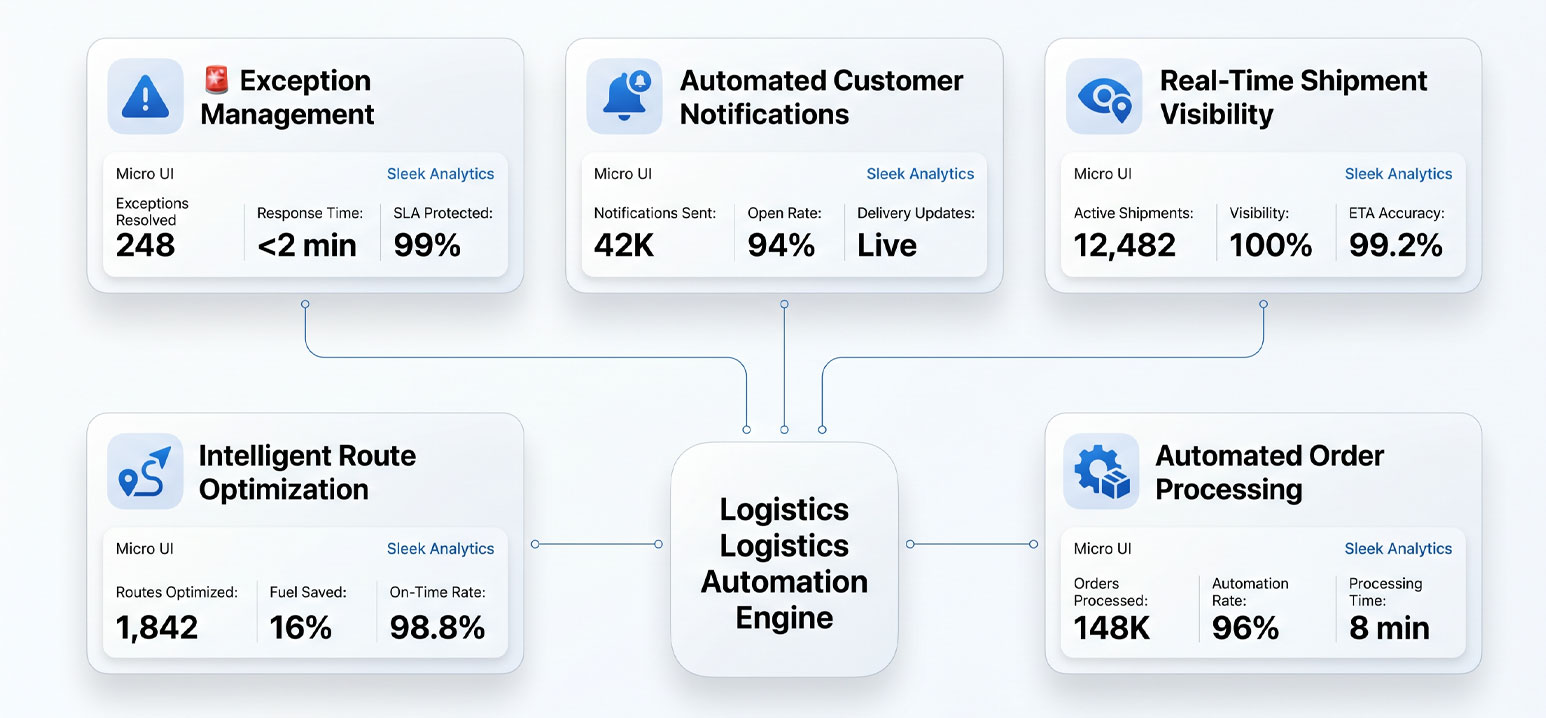
Automation allows logistics organizations to replace repetitive manual activities with intelligent, rule-based workflows. Instead of relying on multiple teams to process information, automated systems can execute tasks instantly and accurately.
Some of the most impactful applications of logistics automation include:
Automated Order Processing
Orders can be automatically validated, assigned, and routed based on predefined business rules. This reduces processing times and minimizes human error.
Intelligent Route Optimization
Advanced algorithms analyze traffic conditions, delivery windows, driver availability, and route constraints to identify the most efficient delivery plans. Dynamic route optimization enables businesses to adapt quickly when disruptions occur.
Real-Time Shipment Visibility
Automation integrates data from vehicles, mobile devices, and IoT sensors to provide continuous shipment tracking. This visibility enables logistics teams to proactively address delays before they impact customers.
Automated Customer Notifications
Customers receive real-time updates regarding shipment status, estimated arrival times, and delivery confirmations without requiring manual intervention.
Exception Management
Automated workflows can detect delivery exceptions, route deviations, and service failures in real time, enabling faster corrective actions.
These capabilities help organizations create a more responsive and scalable logistics operation.
The Growing Importance of Logistics Management Software
As logistics networks become increasingly data-driven, companies need centralized platforms that can manage operations across multiple functions.
Modern logistics management software serves as the foundation for automation. It does by connecting transportation, dispatching, tracking, customer communication, and analytics into a single ecosystem.
Rather than operating through disconnected spreadsheets and standalone tools, businesses gain a unified view of their logistics operations. This allows decision-makers to identify inefficiencies, monitor performance metrics, and make informed operational adjustments.
Organizations that invest in comprehensive logistics management solutions are often better positioned to handle demand fluctuations, seasonal peaks, and unexpected disruptions.
Why Logistics Workflow Automation Delivers Long-Term Value
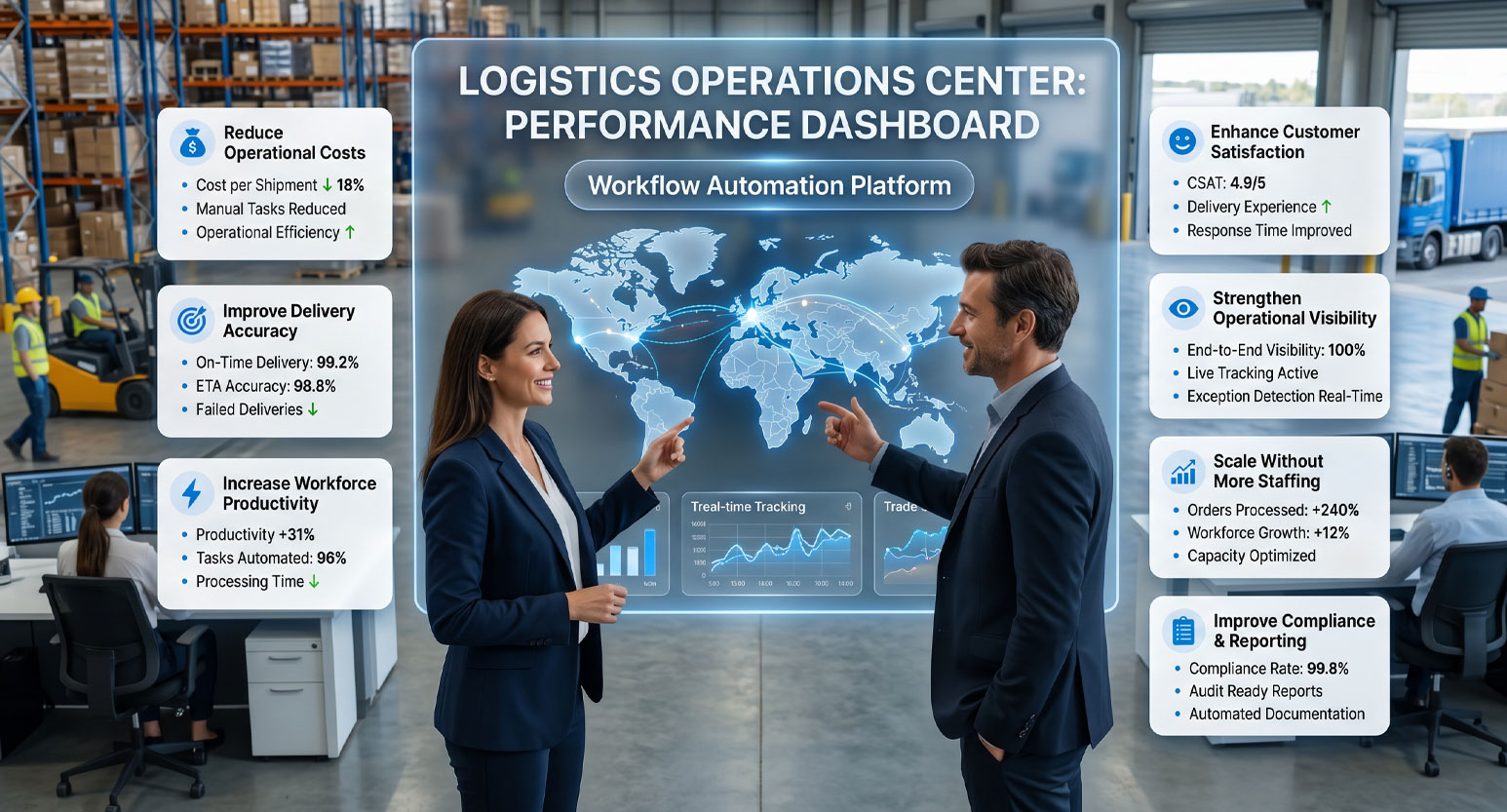
The benefits of logistics workflow automation extend beyond immediate efficiency improvements. Automation helps businesses:
- Reduce operational costs
- Improve delivery accuracy
- Increase workforce productivity
- Enhance customer satisfaction
- Strengthen operational visibility
- Support business growth without proportional increases in staffing
- Improve compliance and reporting capabilities
As shipment volumes continue to rise, these advantages become increasingly important. Companies that automate critical workflows can scale operations more effectively while maintaining consistent service quality.
Furthermore, automation enables employees to focus on exception handling, customer engagement, and strategic planning instead of repetitive administrative tasks.
The Role of Logistics Software in Building Future-Ready Operations
The future of logistics will be shaped by technologies such as artificial intelligence, machine learning, predictive analytics, and advanced automation.
However, these innovations require a strong digital foundation. Modern logistics software provides the infrastructure needed to integrate data, automate workflows, and generate actionable insights.
Businesses that continue to rely on fragmented systems may struggle to keep pace with evolving customer expectations and competitive pressures. In contrast, organizations that embrace digital transformation can improve operational agility and create a stronger foundation for long-term growth.
This is why many industry leaders are shifting from isolated automation projects to comprehensive, end-to-end logistics automation strategies.
Conclusion
As logistics operations become more complex, automation is no longer a competitive advantage, it is a business necessity. From order processing and route optimization to shipment visibility and exception management, logistics automation helps organizations improve efficiency, reduce costs, and deliver superior customer experiences.
The right combination of logistics automation software, logistics workflow automation, and logistics management software can transform fragmented operations into a connected, intelligent logistics ecosystem.
For businesses looking to modernize logistics operations, improve delivery performance, and gain end-to-end visibility, LogiNext provides a powerful platform designed to automate critical workflows, optimize transportation processes, and support scalable growth. Explore how LogiNext can help your organization build smarter, faster, and more resilient logistics operations. Click on the red button to know more.
“”
 |  |  |




@LogiNext