





Stop Reacting, Start Predicting: The New Playbook for Transportation Risk Management
Transportation risk has evolved. It is no longer about responding to delays or disruptions after they occur. Today, the real competitive advantage lies in predicting failure before it happens. This shift is being powered by modern transportation software, which is transforming how enterprises manage uncertainty across logistics networks.
From unpredictable weather to driver shortages and urban congestion, risk is everywhere. Yet most logistics teams still operate reactively. That approach is expensive, inefficient, and increasingly unsustainable. A new playbook is emerging, one that combines data, automation, and AI to move from reactive firefighting to proactive control.
Why Reactive Transportation Management Is Failing
Traditional logistics operations rely heavily on static planning and manual intervention. Even with legacy transportation management software, decision-making often happens after a disruption has already impacted delivery timelines.
Here’s the problem:
- Delays are identified too late
- Route deviations go unnoticed until escaltion
- Fleet inefficiencies compund over time
According to a Gartner report, over 50% of supply chain leaders struggle with real-time visibility, which directly impacts their ability to mitigate risks proactively. The cost is significant. Missed SLAs, increased fuel consumption, and poor customer experience all stem from delayed decision-making.
A traditional transportation management system simply was not designed for dynamic, real-time environments.
The Shift: From Visibility to Predictability
Visibility was the first step. Predictability is the next frontier.
Modern transportation management platforms are moving beyond tracking shipments. They are now capable of forecasting disruptions before they happen. This is where AI powered transportation management changes the game.
Instead of asking “What went wrong?”, businesses can now ask:
- What is likely to go wrong next?
- When will it happen?
- How can we prevent it?
Predictive capabilities allow logistics teams to simulate multiple scenarios, identify risks early, and take corrective action in advance.
What Predictive Transportation Risk Looks Like
An efficient transportation management system today integrates multiple data streams and continuously analyzes them. These include:
- Historical delivery performance
- Real-time traffic data
- Weather forecasts
- Driver behavior patterns
- Vehicle health and telematics
By combining these inputs, advanced transportation software can identify patterns that signal potential failure.
Example Scenarios:
- A delivery route consistently shows delays during specific hours → system suggests alternative routing before dispatch
- A vehicle shows early signs of engine stress → maintenance scheduled proactively
- Driver exceeds safe driving thresholds → alerts triggered to prevent incidents
This is not theoretical. McKinsey estimates that companies using AI in supply chain operations can reduce logistics costs by up to 15% while improving service levels.
Core Capabilities of a Predictive TMS
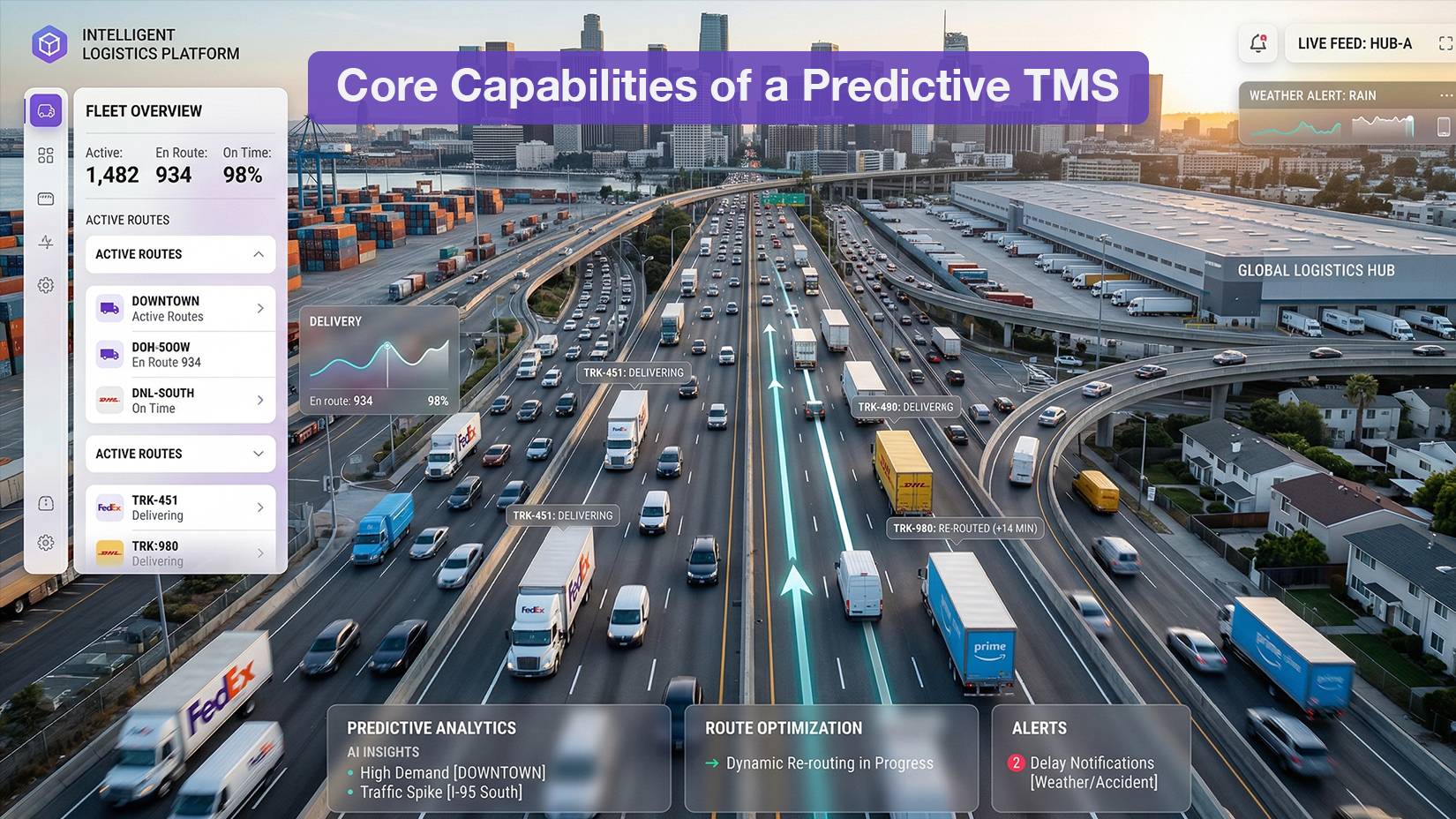
To truly predict failure, your transportation management software must go beyond basic planning. Here are the essential capabilities:
1. Real-Time Data Integration:
A modern transportation management system must ingest live data from multiple sources. Static data is not enough. Real-time inputs enable faster and more accurate predictions.
2. Machine Learning Models:
AI models learn from past disruptions and continuously improve forecasting accuracy. This is the backbone of AI powered transportation management.
3. Dynamic Route Optimization:
Instead of fixed routes, the system adjusts routes in real time based on changing conditions. This is critical for maintaining delivery reliability.
4. Automated Alerts and Recommendations:
An advanced transportation management platform does not just highlight risks. It recommends actions. This reduces dependency on manual decision-making.
5. End-to-End Visibility:
From order allocation to last-mile delivery, an efficient transportation management system ensures full transparency across the supply chain.
The Business Impact of Predicting Failure
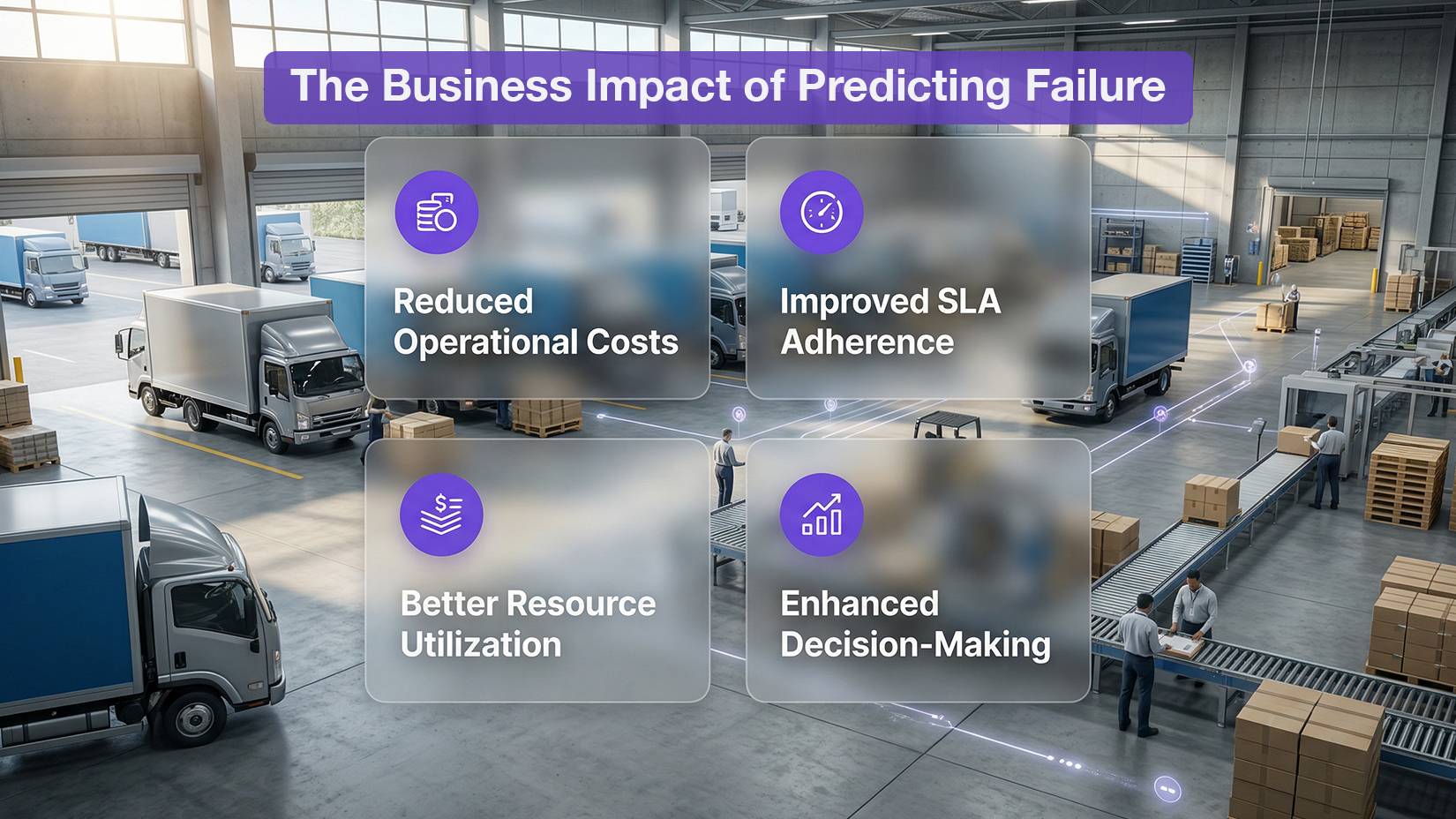
Predictive risk management is not just a technology upgrade. It directly impacts business outcomes.
1. Reduced Operational Costs:
Early intervention prevents costly disruptions. Fuel wastage, detention charges, and re-deliveries are minimized.
2. Improved SLA Adherence:
Predictive insights ensure deliveries stay on track. This strengthens customer trust and retention.
3. Better Resource Utilization:
Fleet, drivers, and routes are optimized continuously. Idle time is reduced. Productivity increases.
4. Enhanced Decision-Making:
With a modern transportation management system, decisions are data-driven, not assumption-based.
According to Deloitte, companies leveraging predictive analytics in logistics see up to 20–30% improvement in operational efficiency.
Breaking Down the New Playbook
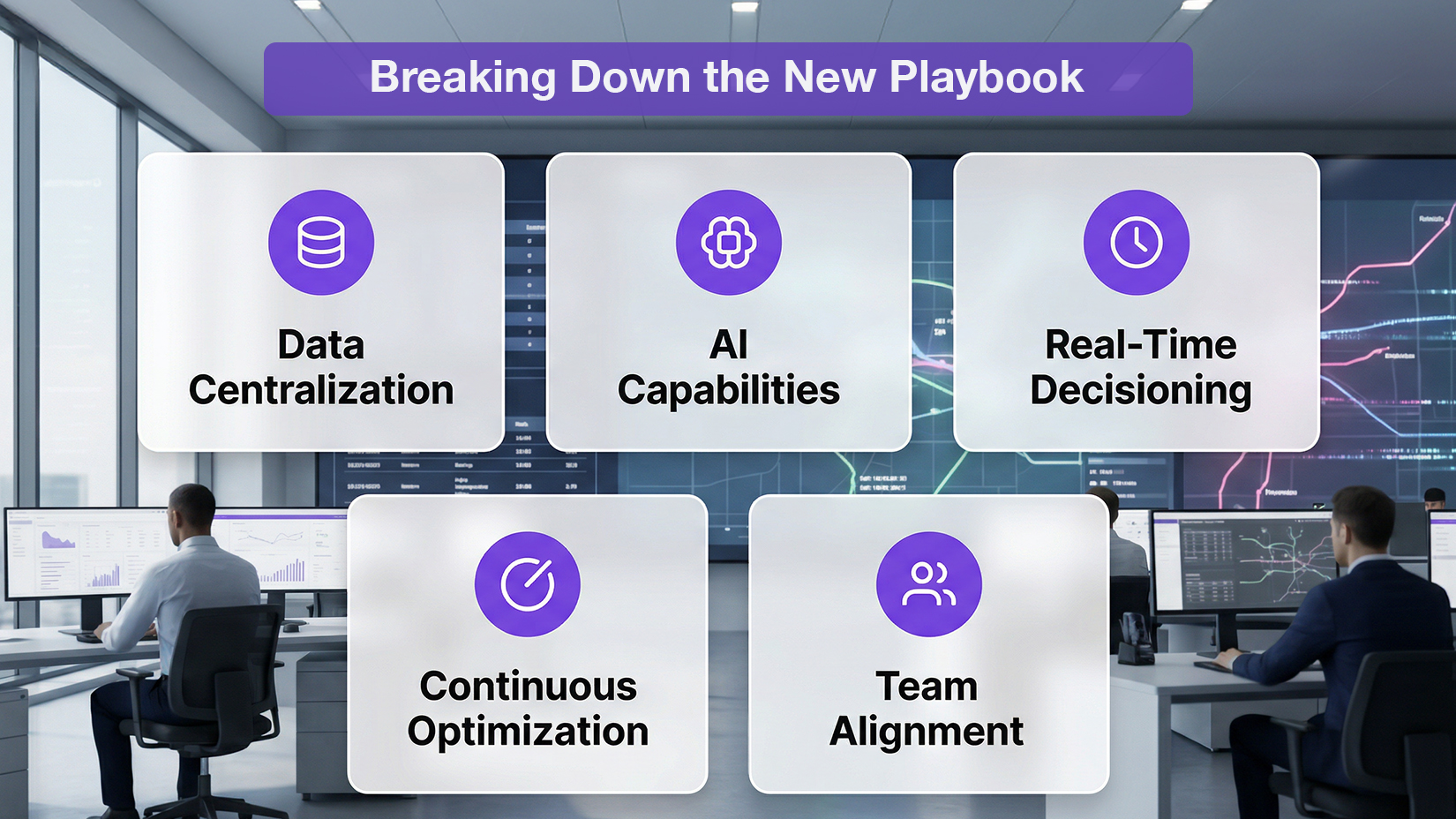
To implement predictive transportation risk management effectively, organizations need to rethink their approach.
Step 1: Centralize Data
Disparate systems create blind spots. A unified transportation management platform ensures all data flows into a single system.
Step 2: Invest in AI Capabilities
Adopting AI powered transportation management is no longer optional. It is essential for scalability and resilience.
Step 3: Enable Real-Time Decisioning
Your transportation software should support real-time interventions, not delayed responses.
Step 4: Focus on Continuous Optimization
Risk patterns evolve. An efficient transportation management system must continuously learn and adapt.
Step 5: Align Teams and Processes
Technology alone is not enough. Operations teams must be trained to act on predictive insights.
The Future of Transportation Risk Management
The future is autonomous, intelligent, and predictive.
We are moving towards systems where:
- Dispatch decisions are automated
- Risks are identified before human intervention
- Supply chain become self- optimizing
A next-gen transportation management system will not just support operations. It will drive them.
The companies that adopt this approach early will gain a significant competitive advantage. Those that delay will continue to absorb avoidable losses.
Conclusion: Predict Before It Costs You
Transportation risk is inevitable, but failure does not have to be. Modern transportation software uses AI and real-time data to help businesses predict and prevent disruptions, setting a new standard for logistics.
LogiNext’s AI powered transportation management solution combines visibility, predictive analytics, and automation to build an efficient transportation management system that reduces risk and improves performance. If you are still reacting, you are already behind. Move to predictive transportation management with LogiNext.
“” 66
 |  |  |




@LogiNext