

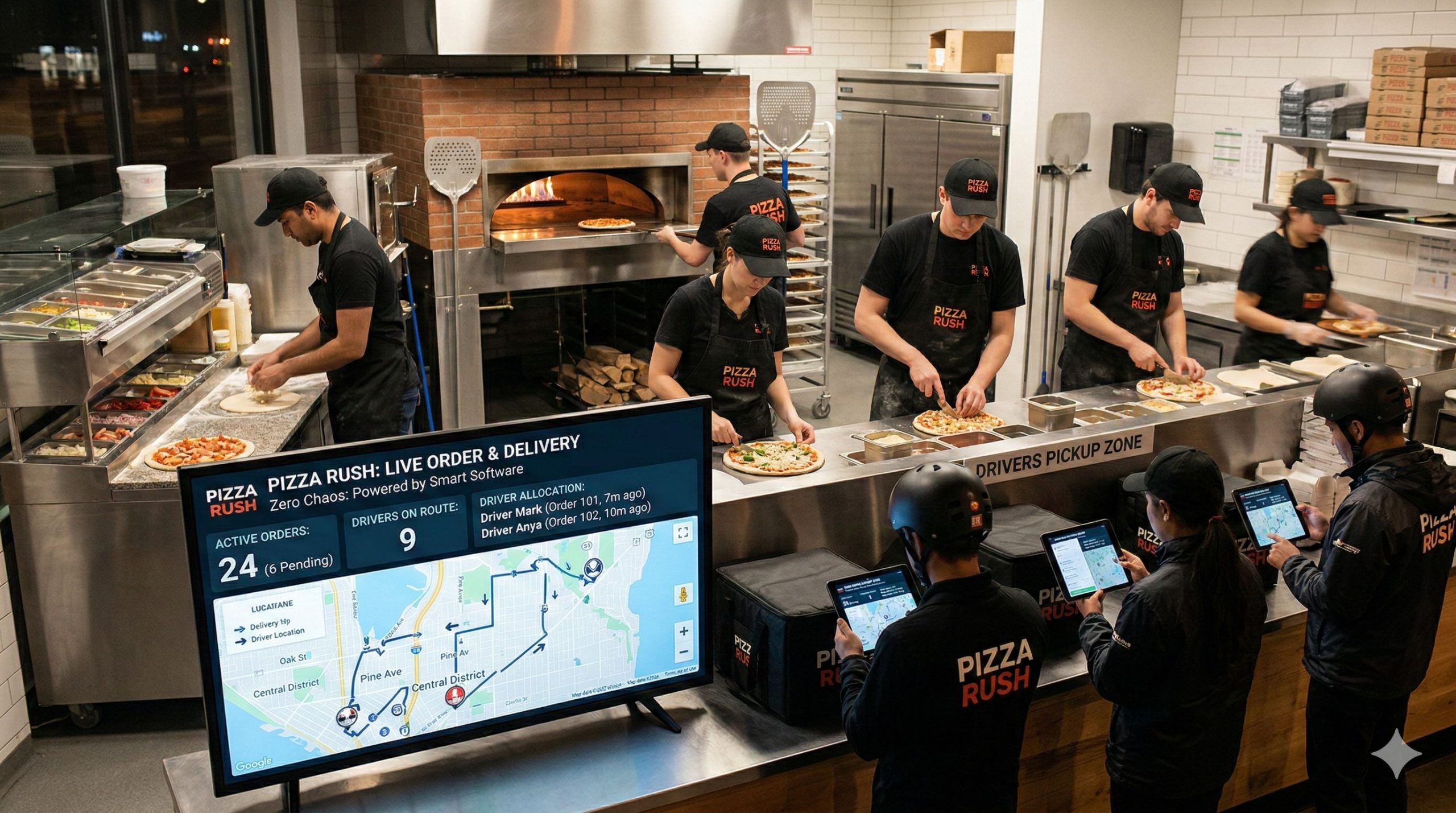
Pizza Rush, Zero Chaos: Powered by LogiNext
In today’s hyper-competitive food industry, restaurant delivery software has become the foundation of scalable growth. Pizza brands no longer compete only on taste. They compete on speed, accuracy, and visibility. As digital orders surge, operational control determines whether peak hours generate profit or problems.
Friday night. Orders spike. Phones ring nonstop. Delivery partners wait at the counter. Customers refresh tracking links every few minutes.
According to Statista, the global online food delivery market is projected to surpass $1 trillion in the coming years. Meanwhile, McKinsey & Company reports that digital ordering now accounts for over 40% of total restaurant sales in key markets. Delivery is no longer an add-on. It is the core revenue engine.
Yet growth brings complexity. More customization, channels and pressure. Without structured restaurant delivery management software, chaos becomes routine.
The Real Problem: Volume Without Visibility
A pizza order is rarely “just a pizza.” It is thin crust, half-and-half toppings, extra cheese on one side, no olives, add jalapeños, separate billing, and a delivery fee based on neighborhood.
Now multiply that by 300 orders in two hours.
Most restaurants still rely on fragmented tools. One system for POS. Another for aggregators. A spreadsheet for driver allocation. Manual calls for dispatch.
The result?
- Missed modifiers
- Wrong addresses
- Idle drivers
- Delayed dispatch
- Refunds and re-deliveries
In high-volume QSR environments, traditional workflows collapse. What restaurants need is an integrated restaurant delivery system that connects ordering, routing, dispatch, and tracking into a single intelligent workflow.
Why Restaurant Delivery Software Is a Strategic Asset
Delivery is not just about speed. It is about predictability. Modern restaurant delivery software provides:
- Real-time order orchestration
- Automated driver allocation
- Dynamic route optimization
- Live customer tracking
- Digital proof of delivery
- Accurate payout reconciliation
With an advanced restaurant delivery management platform, restaurants can reduce delivery delays by up to 25% and improve driver productivity by 20–30%. This is based on industry benchmarks reported by Gartner in logistics automation studies.
In short, the right restaurant delivery management software transforms delivery from reactive firefighting into a structured, scalable operation.
Peak Hours Without Panic
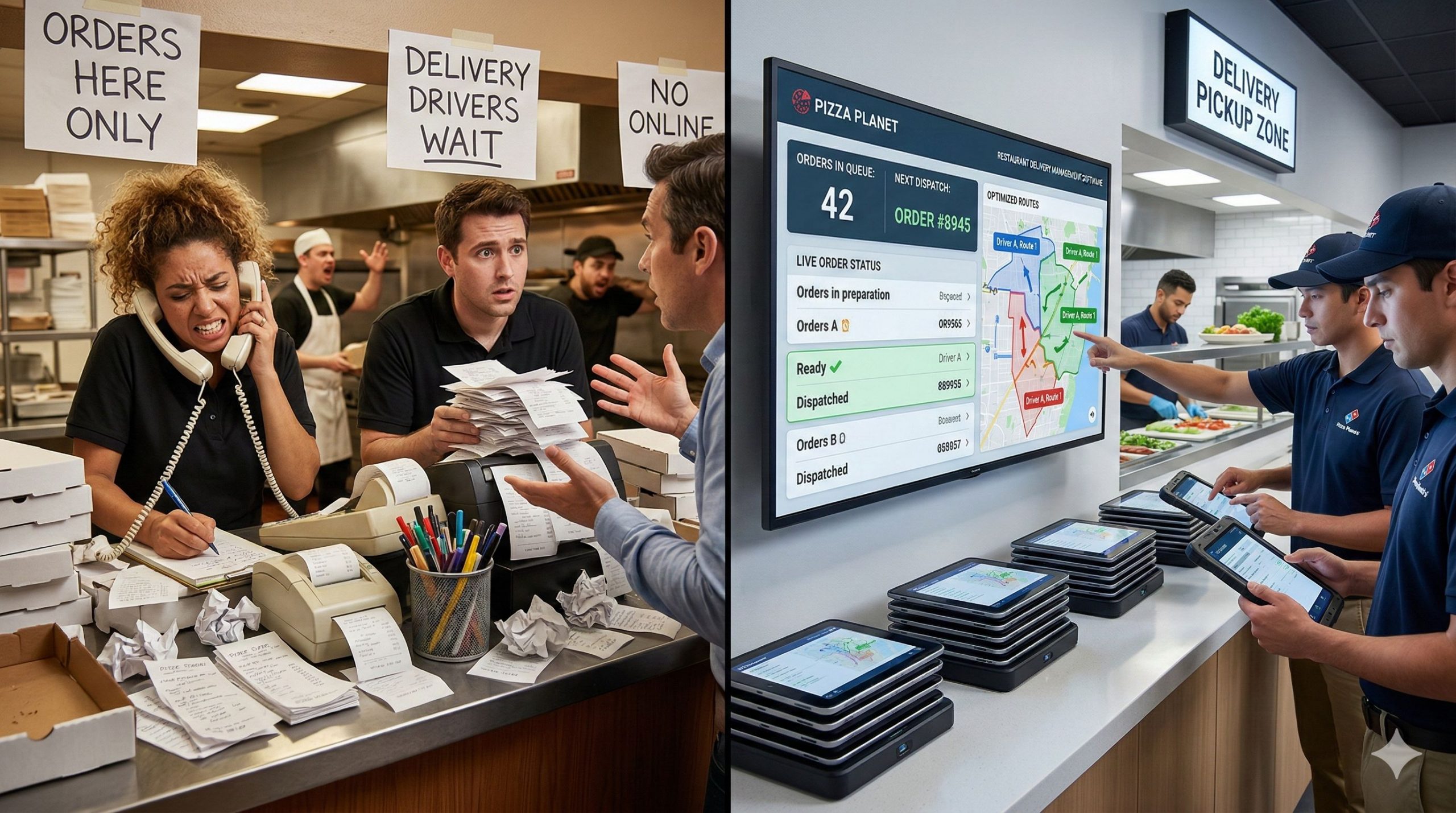
Pizza brands face predictable surges. Game nights. Weekend evenings. Festival days. Discount campaigns. The challenge is not average demand. It is in peak demand.
LogiNext’s automated restaurant delivery management software is designed for surge control. It intelligently:
- Clusters order by geography
- Assign drivers based on proximity and load
- Calculates neighbourhood-based delivery fees
- Prevents driver overloading
Instead of manual decision-making, the system uses real-time data to manage capacity.
For QSR chains operating multiple outlets, this level of orchestration becomes critical. A robust QSR delivery software solution ensures every store operates with standardized efficiency, regardless of order volume.
From Counter Chaos to Coordinated Control
When orders come from multiple channels – WhatsApp, app, website, third-party aggregators, the complexity increases. Without centralized control, restaurants face:
- Duplicate orders
- Manual re-entry errors
- Dispatch mismatches
- Delayed communication
A unified restaurant delivery system consolidates all channels into a single dashboard. Every order enters the same operational pipeline. No confusion. No missed instructions.
With integrated restaurant delivery management, managers gain full visibility:
- Order status
- Kitchen preparation time
- Driver ETAs
- Customer communication logs
This visibility is what separates scalable brands from struggling outlets.
Smarter Routing Means Faster Deliveries
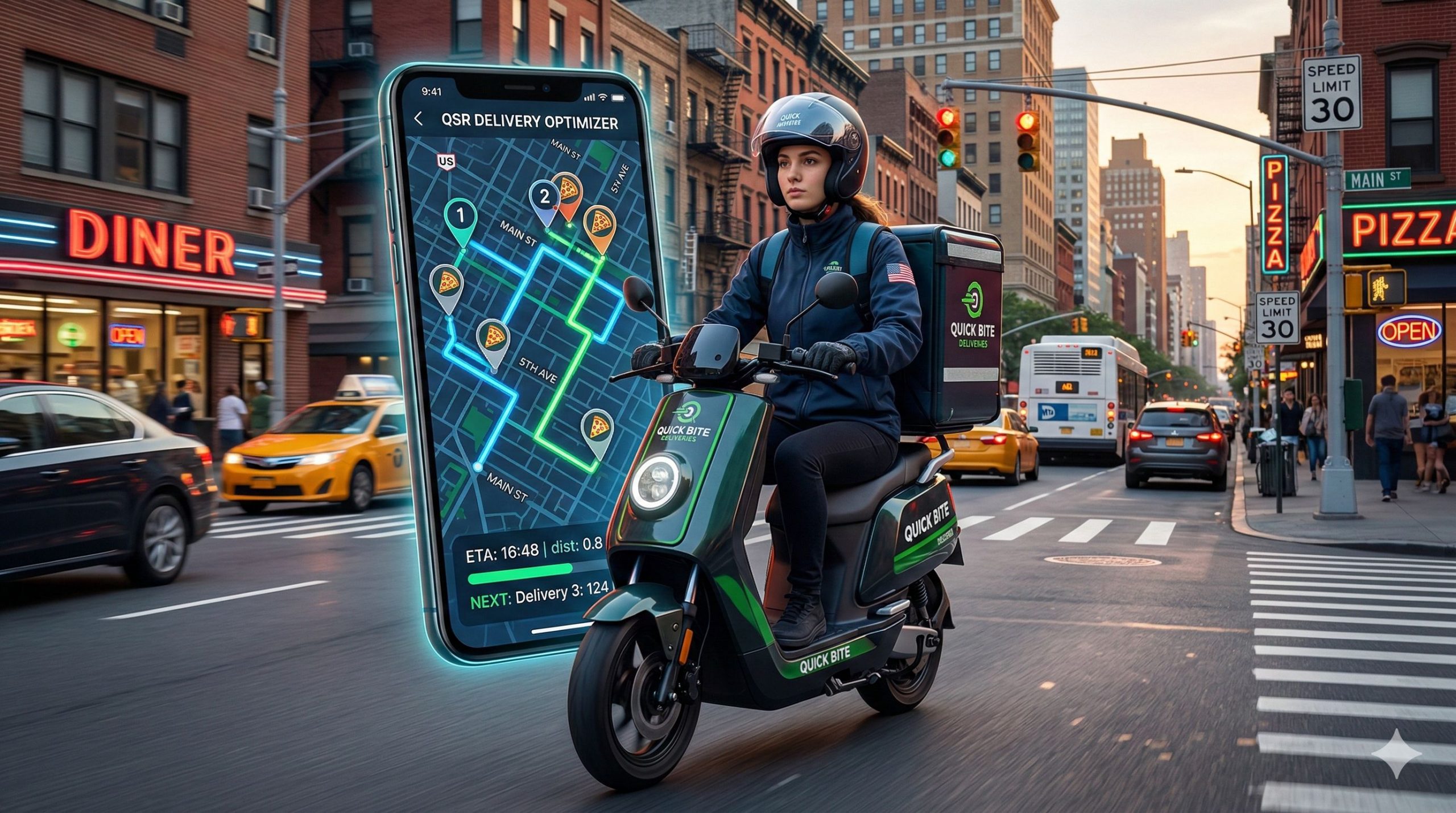
Distance alone does not determine delivery time. Traffic, driver load, and order batching matter. Advanced restaurant delivery software uses AI-powered route optimization to:
- Reduce fuel costs
- Minimize idle time
- Batch nearby deliveries
- Adjust routes dynamically
According to Deloitte, route optimization technologies can reduce last-mile costs by up to 15%. In a margin-sensitive industry like food service, that percentage directly impacts profitability.
With intelligent restaurant delivery management software, pizza brands move from guesswork to data-driven dispatch.
Driver Performance and Fair Payouts
Driver dissatisfaction creates churn. Churn creates inconsistency. Inconsistency hurts customer experience. An effective QSR delivery software solution includes:
- Automated payout calculations
- Distance-based compensation
- Incentive tracking
- Performance dashboards
With automated restaurant delivery management software, payouts are linked to actual trips, verified delivery timestamps, and geofenced proof of completion.
Transparency builds trust. Trust reduces turnover. Reduced turnover stabilizes operations.
Customer Experience: The Real Differentiator
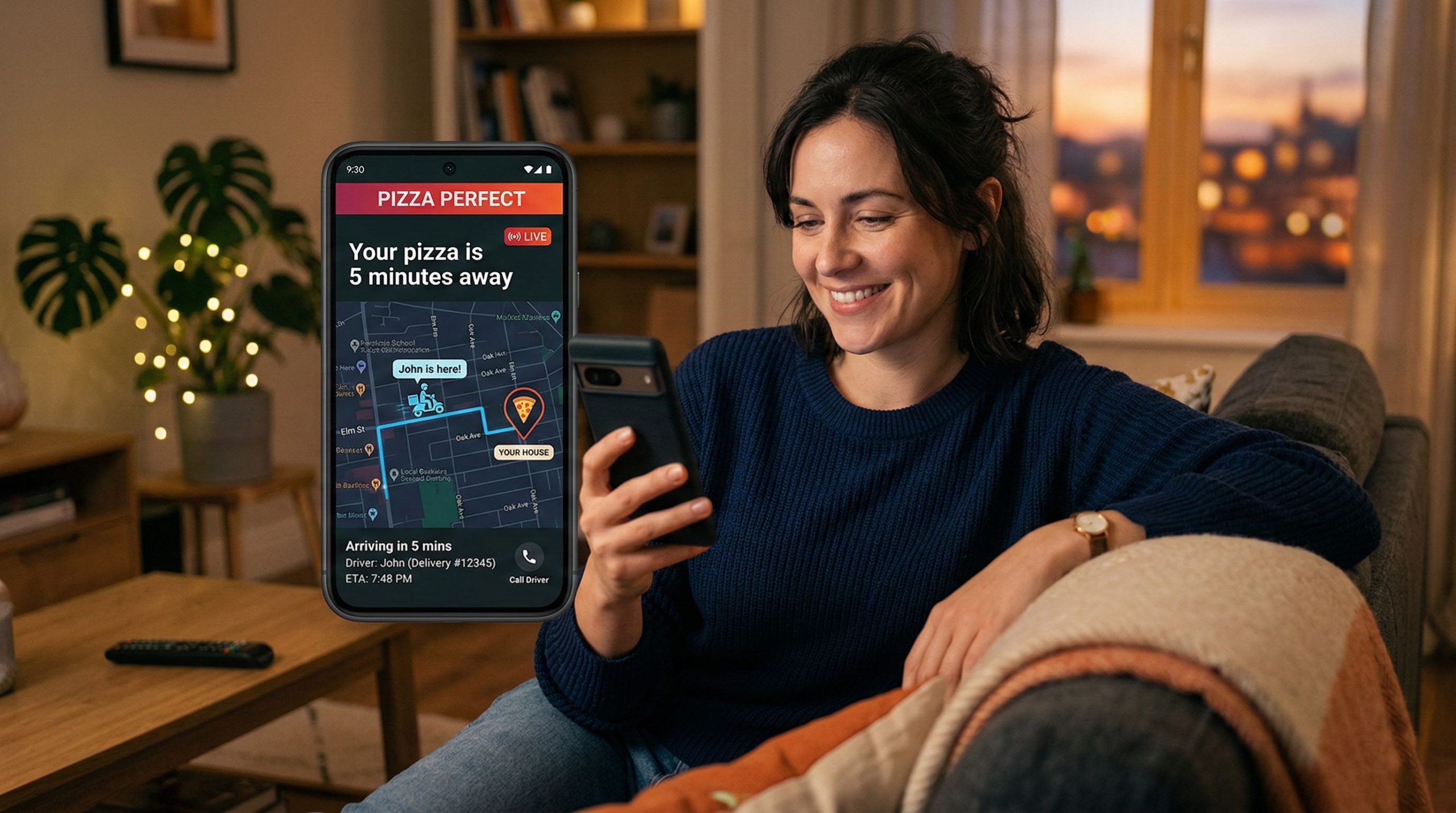
Customers expect visibility. They want real-time tracking, accurate ETAs and proactive updates.
Research from PwC shows that 73% of consumers consider customer experience a key factor in purchasing decisions. In delivery-driven QSR models, experience begins after checkout.
A comprehensive restaurant delivery management software platform enables:
- Branded tracking pages
- Automated SMS updates
- Live driver tracking
- Feedback capture
The result is fewer “Where is my order?” calls and higher repeat rates. Modern restaurant delivery is not just about speed. It is about communication.
Multi-Outlet Scaling Without Operational Breakdown
Expansion introduces complexity. More outlets mean more drivers, more territories, more reporting layers. Without a centralized restaurant delivery system, scaling multiplies inefficiencies.
LogiNext enables:
- Centralized command centers
- Outlet-level performance dashboards
- Standardized dispatch protocols
- Territory-based driver allocation
With enterprise-grade restaurant delivery management, leadership teams gain macro-level insights while store managers retain micro-level control.
Conclusion
Growth in food service now depends on delivery precision. Fragmented tools and manual dispatching can no longer support rising order volumes.
With advanced restaurant delivery software, a unified restaurant delivery system, and intelligent restaurant delivery management software, restaurants gain automation, visibility, and control. LogiNext enables structured, data-driven restaurant delivery management that scales efficiently and protects margins as demand grows.
Ready to elevate your delivery operations? Connect with LogiNext and transform every order into a seamless, profitable experience. Click on the red button to know more.
44

|

|

|




@LogiNext