




Retail Is Moving from Reaction to Anticipation with Retail Logistics Software
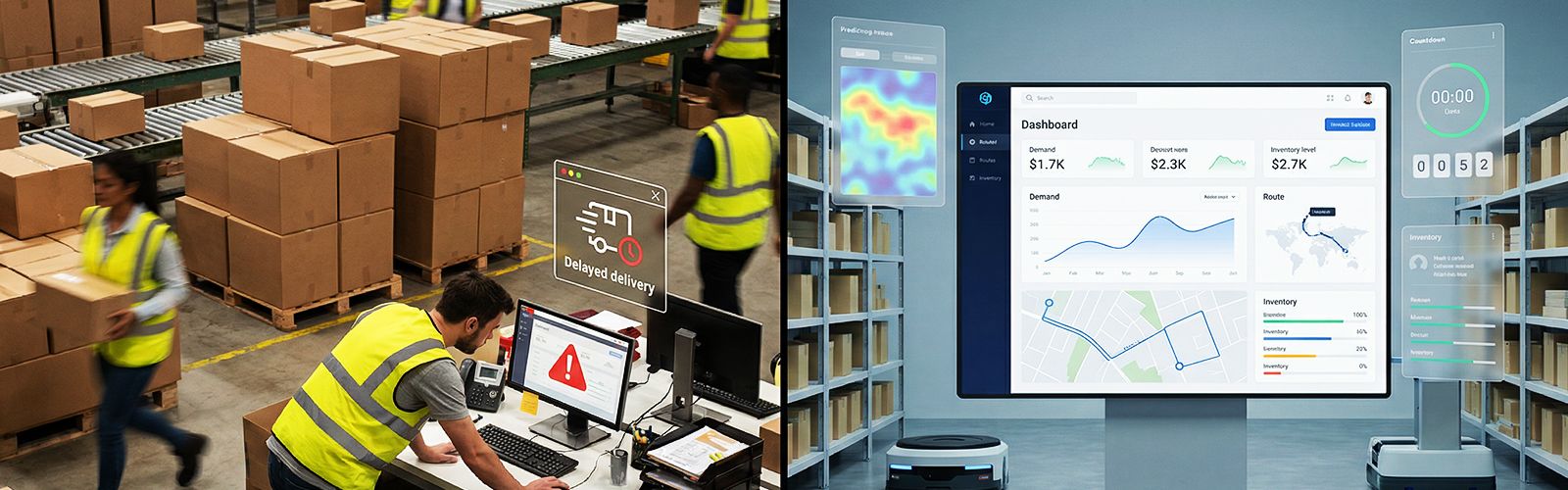
Retail logistics software is redefining how modern retailers plan, execute, and optimize their supply chains. What was once a reactive operational function is now becoming predictive and intelligence-driven. As ecommerce expands, fulfillment windows shrink, and customer expectations intensify, retailers can no longer afford to respond to disruptions after they occur. They must anticipate them.
This structural shift is transforming retail logistics management from manual coordination into data-backed orchestration. By integrating inventory, warehousing, transportation, and retail delivery management into a unified framework, retailers are building systems that prevent problems instead of merely correcting them.
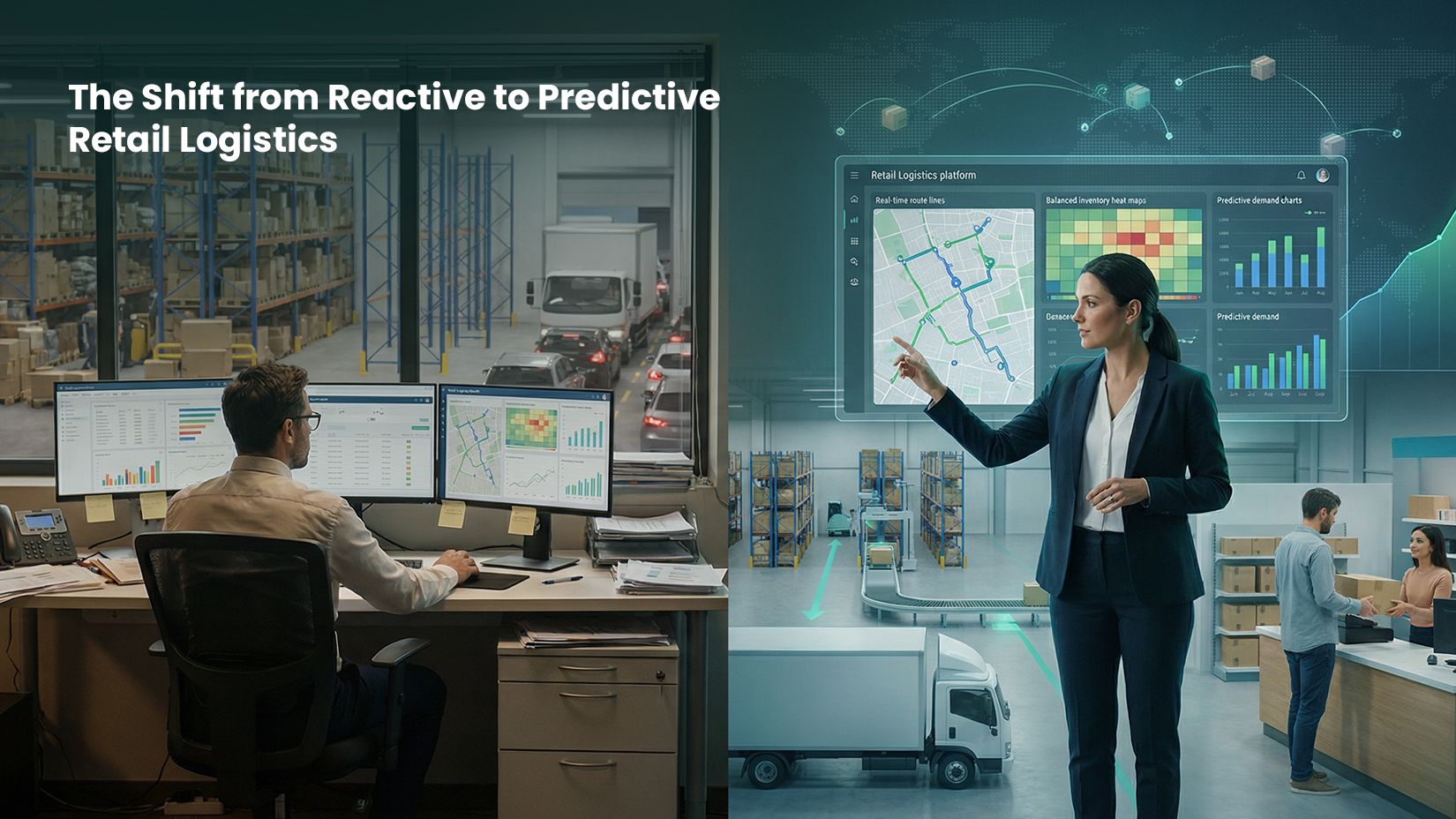
The Shift from Reactive to Predictive Retail Logistics
Market Pressures Are Reshaping Retail Logistics Management
Global ecommerce continues to grow at a sustained pace, with online sales projected to exceed $6 trillion in the near term. Customers increasingly expect rapid fulfillment, flexible returns, and real-time delivery visibility. These demands place immense strain on retail logistics management frameworks that were originally designed for slower, more predictable supply chains.
Traditional systems relied heavily on historical averages and manual oversight. Warehouses, transportation teams, and retail outlets frequently operated in silos. This fragmentation limited visibility and slowed response times. As a result, stock imbalances, delayed shipments, and inefficient routing became common challenges.
In a competitive environment defined by speed and precision, reactive logistics processes introduce risk. Retailers require systems that identify potential disruptions before they escalate.
The Limitations of Disconnected Systems
A fragmented approach to retail logistics management creates operational blind spots. Without a centralized retail logistics system, data remains dispersed across departments, reducing coordination and increasing reliance on manual decision-making.
Disconnected systems struggle to support omnichannel fulfillment models such as buy-online-pickup-in-store or ship-from-store. They also limit the ability to dynamically rebalance inventory or optimize delivery routes in real time. These limitations directly impact service levels and operational costs.
Retail logistics software addresses these structural inefficiencies by consolidating operational intelligence into a unified platform.
How Retail Logistics Software Enables Anticipation
Unified Operations Through an Integrated Retail Logistics System
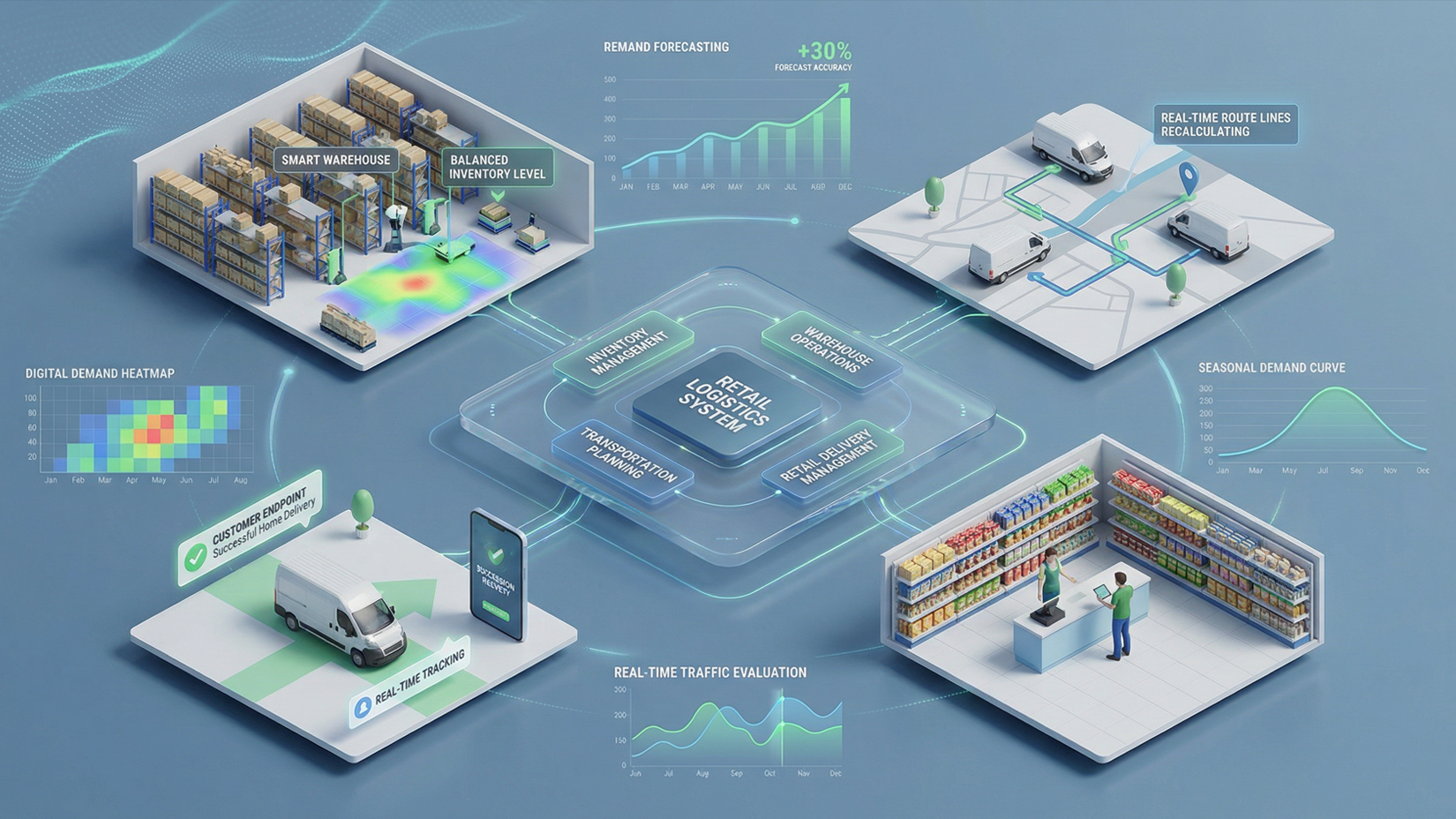
Modern retail logistics software connects inventory management, warehouse operations, transportation planning, and retail delivery management into a synchronized ecosystem. A comprehensive retail logistics system ensures that operational data flows seamlessly across all nodes, enabling coordinated execution.
Real-time monitoring of demand signals, warehouse throughput, and fleet availability allows retailers to anticipate bottlenecks and adjust proactively. For example, when demand surges in a specific geography, inventory can be repositioned before stockouts occur.
When transportation disruptions arise, routes are recalibrated instantly to maintain service commitments. This integration transforms retail logistics management from static planning into adaptive control.
The Strategic Role of AI Powered Retail Logistics Software
The predictive capabilities of AI powered retail logistics software significantly enhance this transformation. Machine learning models analyze historical sales trends, seasonal variations, promotional activity, and external variables to improve demand forecasting accuracy.
Industry data suggests that predictive analytics can improve forecast precision by up to 30 percent. Improved forecasting reduces excess inventory, lowers carrying costs, and minimizes markdowns. AI powered retail logistics software also enhances route optimization by evaluating traffic patterns, delivery density, and service constraints in real time.
As algorithms continuously learn from operational outcomes, recommendations become more accurate. Retail logistics management evolves into a self-improving system capable of adapting to changing market conditions.
Retail Delivery Management as a Competitive Advantage
Optimizing the Last Mile
Last-mile fulfillment often accounts for more than half of total logistics expenses in ecommerce-centric retail models. At the same time, it represents the most visible component of the customer experience.
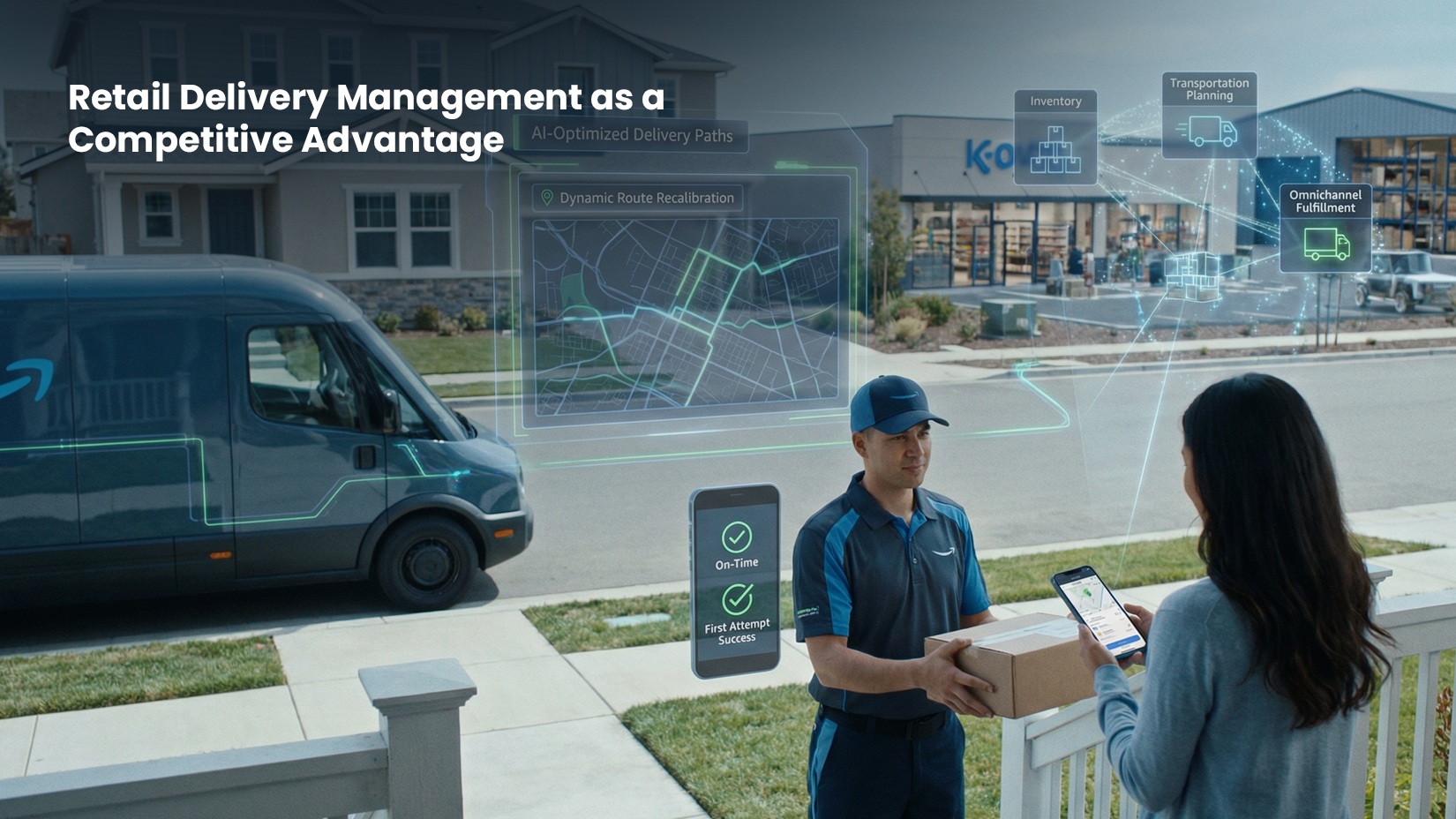
Retail delivery management, when embedded within retail logistics software, automates dispatching, optimizes route planning, and provides real-time tracking capabilities. This integration ensures that delivery decisions are aligned with inventory availability and service-level agreements.
A unified retail logistics system reduces failed delivery attempts, improves first-attempt success rates, and strengthens on-time, in-full performance. These improvements translate directly into higher customer satisfaction and improved retention metrics.
Supporting Omnichannel Fulfilment
Omnichannel retail introduces complexity that cannot be managed effectively through manual coordination. Customers expect seamless transitions between digital and physical channels, including flexible pickup and return options.
Retail logistics software enables centralized decision-making across fulfillment nodes. By integrating store inventory data with transportation planning, a retail logistics system can determine the most cost-effective and time-efficient fulfillment source automatically.
Retail delivery management therefore becomes an extension of omnichannel strategy rather than a standalone function.
Driving Margin Protection and Sustainable Growth
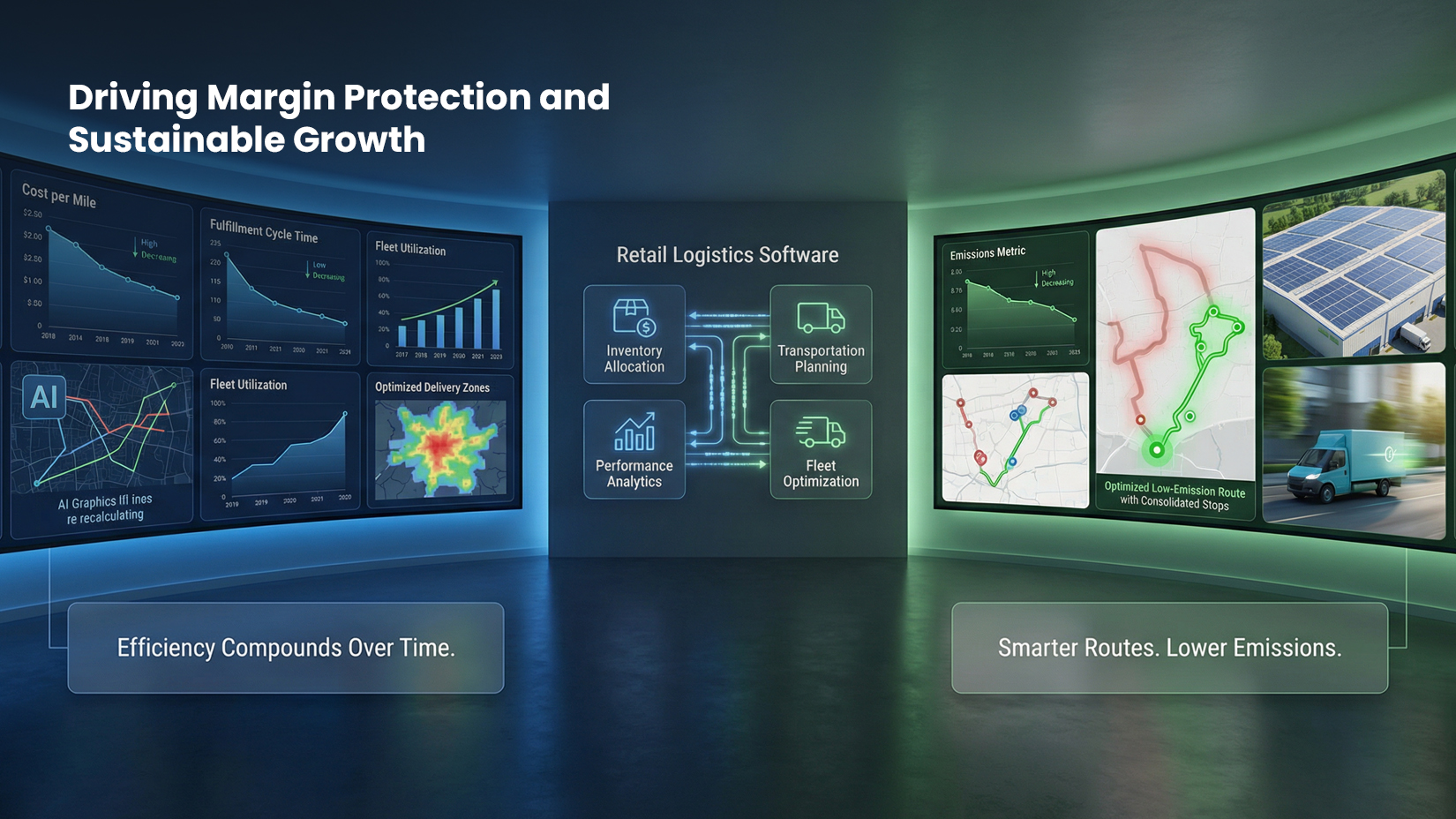
Strengthening Financial Performance Through Intelligent Retail Logistics Management
Retail margins remain under pressure due to rising transportation costs, labor shortages, and supply chain volatility. Efficient retail logistics management directly influences profitability by reducing unnecessary expenses and improving asset utilization.
Retail logistics software provides detailed performance analytics, including cost per mile, cost per delivery, and fulfillment cycle time. These insights support continuous improvement initiatives and informed strategic planning.
AI powered retail logistics software enhances this impact by dynamically optimizing routes and inventory allocation based on real-time data. As efficiency gains accumulate, cost savings compound over time.
Advancing Sustainability Objectives
Sustainability considerations are increasingly central to retail strategy. Retail logistics software contributes to environmental goals by reducing redundant mileage, consolidating deliveries, and enabling smarter fleet utilization.
A modern retail logistics system can model alternative routing scenarios to minimize emissions without compromising service levels. By embedding environmental intelligence into operational planning, retailers align logistics performance with broader sustainability commitments.
Also Read: 3 Retail Risks LogiNext Solves with Intelligent Retail Logistics Management
Conclusion
Retail is shifting from reactive logistics management to predictive execution powered by retail logistics software. A unified retail logistics system enhances visibility, while AI powered retail logistics software improves forecasting, routing, and retail delivery management performance.
LogiNext enables retailers to modernize retail logistics management with intelligent, enterprise-grade retail logistics software. If your organization is ready to move from operational reaction to strategic anticipation, it is time to explore how LogiNext can drive measurable efficiency and competitive advantage. Click on the red button to book a demo today!
“” 72
 |  |  |




@LogiNext