




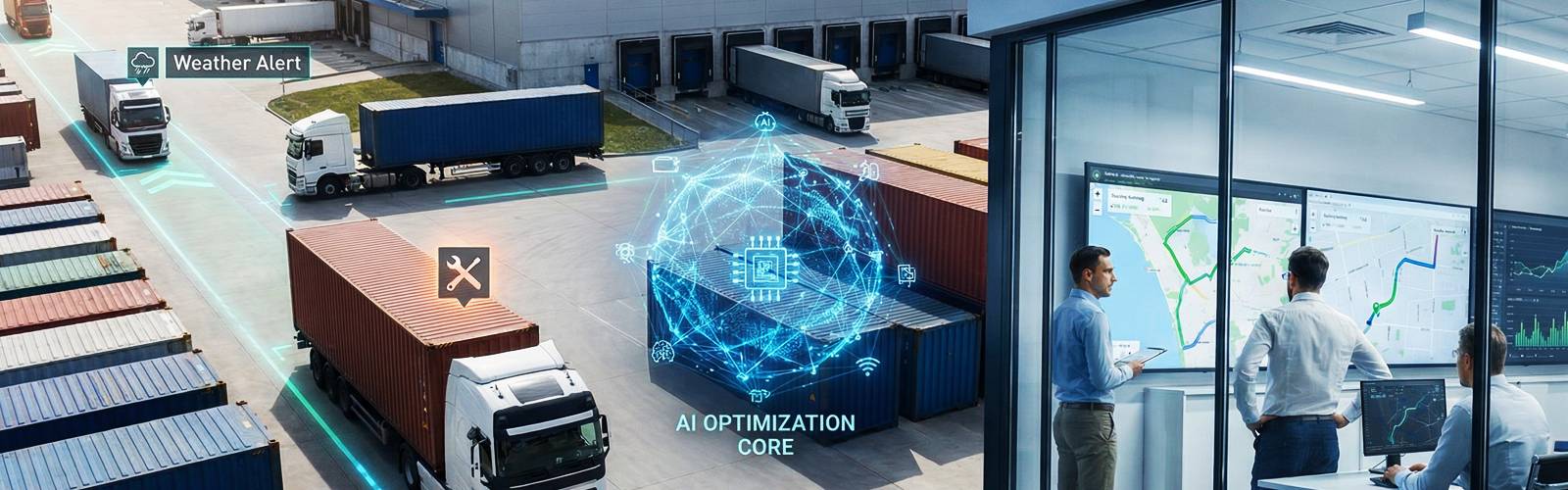
The Predictive Revolution: How IoT and AI Are Redefining Freight Logistics Software
The world of logistics is not getting calmer anytime soon. With larger freight networks, faster shipments, sharper customer expectations and disruptions arriving without any warning. To stay ahead, businesses require more than operational visibility, they need foresight. This is where IoT (Internet of Things) and AI (Artificial Intelligence) step in. Thereby, reshaping freight logistics software to move goods with precision, predictably and control.
The old model was reaction-driven. Something went wrong → teams scrambled → delays and costs followed. The new model is anticipation-driven. Systems detect a risk → predict the impact → respond automatically before humans even realize there’s a problem.
Welcome to the era of proactive, predictive freight operations built for today’s volatility.
What Is Freight Logistics Software?
Freight logistics software is a centralised platform that helps shippers, carriers and 3PLs plan, automated and optimize their end-to-end freight operations. It unifies load planning, dispatching, tracking, routing, and documentation. It does this, while integrating with IoT devices, telematics, and driver apps to deliver uninterrupted visibility into every vehicle and shipment.
Modern platforms also include forecasting powered by AI, risk detection and automated decision-making. This foundation helps in enabling AI powered freight management, advanced freight tracking solutions and efficient freight dispatch software to work together. It also enhances accuracy, cost control and reliability.
How IoT and AI Strengthen the Freight Technology Stack
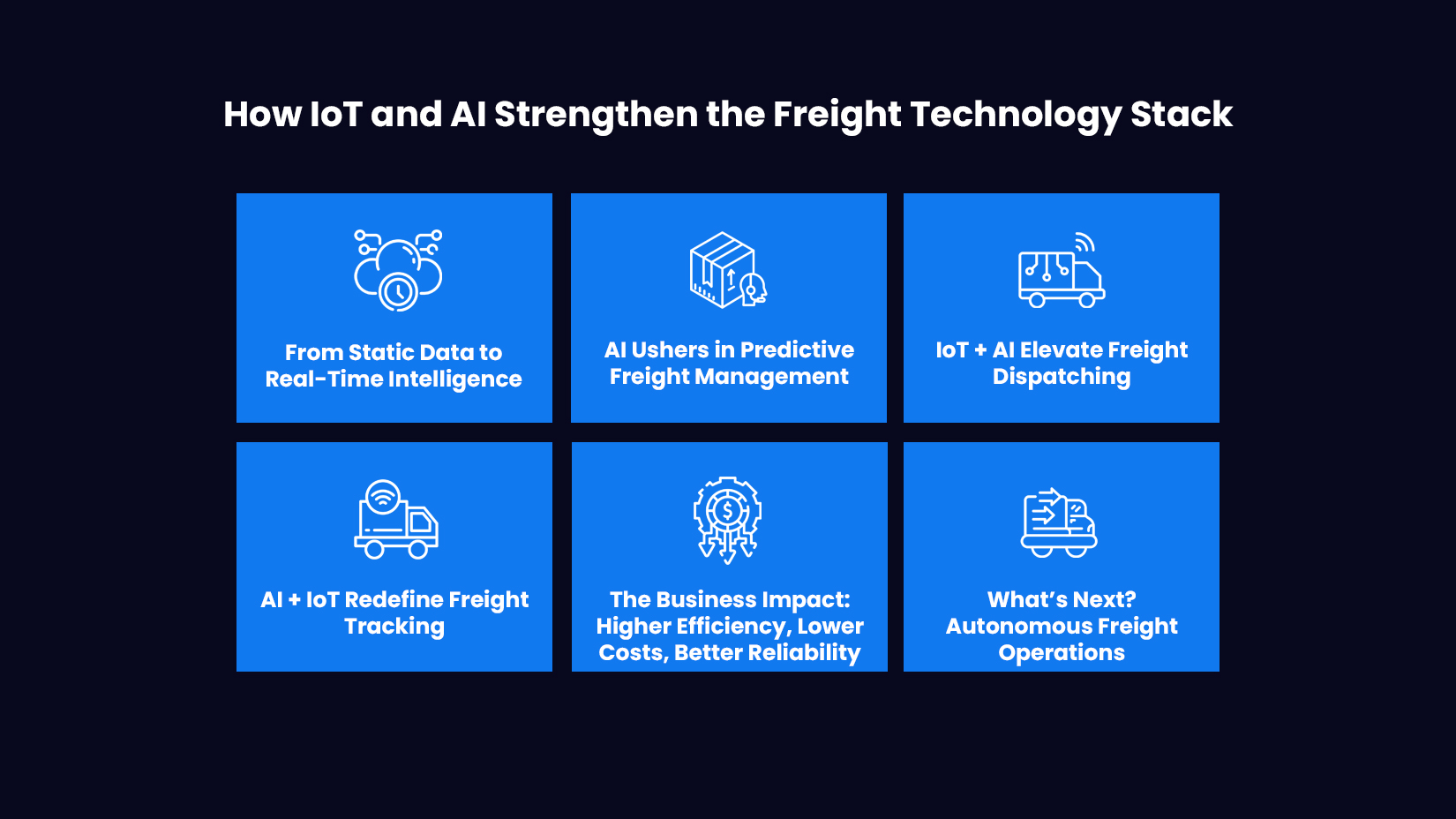
1. From Static Data to Real-Time Intelligence:
Freight operators used to rely on manual check-ins, late updates and outdated dashboards. IoT changed that dynamic. Connected sensors now serve real-time data on:
– Location
– Vibration and shock
– Temperature and humidity
– Fuel usage
– Vehicle diagnostics
– Load integrity
A report by McKinsey states that IoT enabled tracking can reduce shipment by up to 50%. It also increases asset utilisation by 15-20%.
When this data feeds into freight logistics software, businesses gain continuous, precise visibility, eliminating guesswork and enhancing decision-making.
2. AI Ushers in Predictive Freight Management:
IoT supplies raw data and then AI transforms it into actionable insight. This pairing boosts accuracy, prevents failures and improves delivery speed.
Predictive Maintenance
Unplanned breakdowns can cost fleets somewhere around $500-$800 per day. AI helps in analyzing patterns in engine data, pressure variations and driver behavior to predict failures ahead of time. Thereby, ensuring maintenance becomes preventive not reactive.
Proactive Route Optimization
AI evaluates traffic, weather, stops, historical trends and driver performance to recommend the most efficient routes. Companies that use AI-driven routing see:
– 10-15% reduction in fuel usage.
– 25% faster delivery cycles.
Sharp Demand Forecasting
AI examines seasonality, market trends, supply behavior, and region-specific consumption patterns to predict demand accurately. This improves planning, reduces empty miles, and boosts profitability, all within modern freight and logistics software platforms.
3. IoT + AI Elevate Freight Dispatching:
Freight dispatching has always been a stressful job. But with AI and IoT, it becomes a highly optimized and proactive process.
Automated Dispatching
The latest freight dispatching software uses the following criteria to dispatch freight:
– Capacity
– SLA priorities
– Driver avaialbility
– Vehicle type
– Location proximity
Automated dispatching slashes manual dispatching time by as much as 70%.
Dynamic Re-Routing
In the event of delays due to weather changes, accidents, or traffic congestion, freight dispatching software automatically re-routes drivers and provides real-time ETAs.
Real-Time Risk Alerts
IoT sensors monitor temperature variations, unauthorized access to freight doors, and route irregularities. AI analyzes the data and suggests solutions to mitigate risks, which in turn lowers exceptions by 30-40%.
4. AI + IoT Redefine Freight Tracking:
Traditional freight tracking allowed you to know where your shipment was. But with the latest freight tracking software, you get all the information you need:
– Live location
– Shipment condition
– ETA accuracy
– Driver performance
– Compliance status
– Predicted risks
Accurate Predictive ETAs
AI-powered freight tracking software improves ETA accuracy by up to 90-95%, increasing customer satisfaction and trust.
End-to-End Condition Monitoring
IoT sensors monitor humidity, orientation, shock, and temperature, which is particularly important for pharmaceutical, perishable, and temperature-sensitive shipments.
Proactive Alerts
Software alerts teams about delays, shipment conditions, or SLA violations well in advance.
All thanks to the capabilities of freight logistics software.
5. The Business Impact: Higher Efficiency, Lower Costs, Better Reliability:
The IoT and AI bring significant business benefits to freight operations.
Operational Performance
– 20-40% reduction in unscheduled downtime
– 15-25% improvement in on-time delivery
– 10-20% reduction in operating costs
– Substantial reduction in human error
Customer Experience
– Accurate ETAs
– Real-time visibility
– Automatic updates
– Higher reliability
This level of visibility inspires trust and loyalty.
Sustainability
Optimized routes and predictive maintenance reduce fuel use and emissions, supporting ESG goals.
6. What’s Next? Autonomous Freight Operations:
As sensor accuracy improves and AI models mature, freight operations will transition from predictive to autonomous. The future will bring:
– Auto-adjusting routes
– AI-led dispatch decisions
– Automated exception resolution
– Fleet-wide digital twins
– Zero-manual freight coordination
Those who adopt AI-driven freight management, freight tracking systems, and comprehensive freight and logistics software will set the pace for the next decade of logistics.
Also Read: LogiNext Wins “Best TMS Platform of the Year 2026”: A Milestone for Global Logistics Innovation
Conclusion: Freight Leaders Win by Acting Early
The game has changed. The transition from reactive to predictive freight operations is no longer a choice, it’s the new norm. Organizations that upgrade their freight technology portfolio today will master costs, eliminate delays, and provide customers with an unparalleled experience tomorrow.
If you want to build predictive, real-time, future-ready freight operations, LogiNext gives you the platform to do it. From automated dispatching to AI-driven routing to end-to-end visibility, LogiNext helps enterprises scale smarter, faster, and with absolute control.
Ready to upgrade your freight network? Let LogiNext transform it. Click on the red button to book a demo today.
87

|

|

|




@LogiNext