


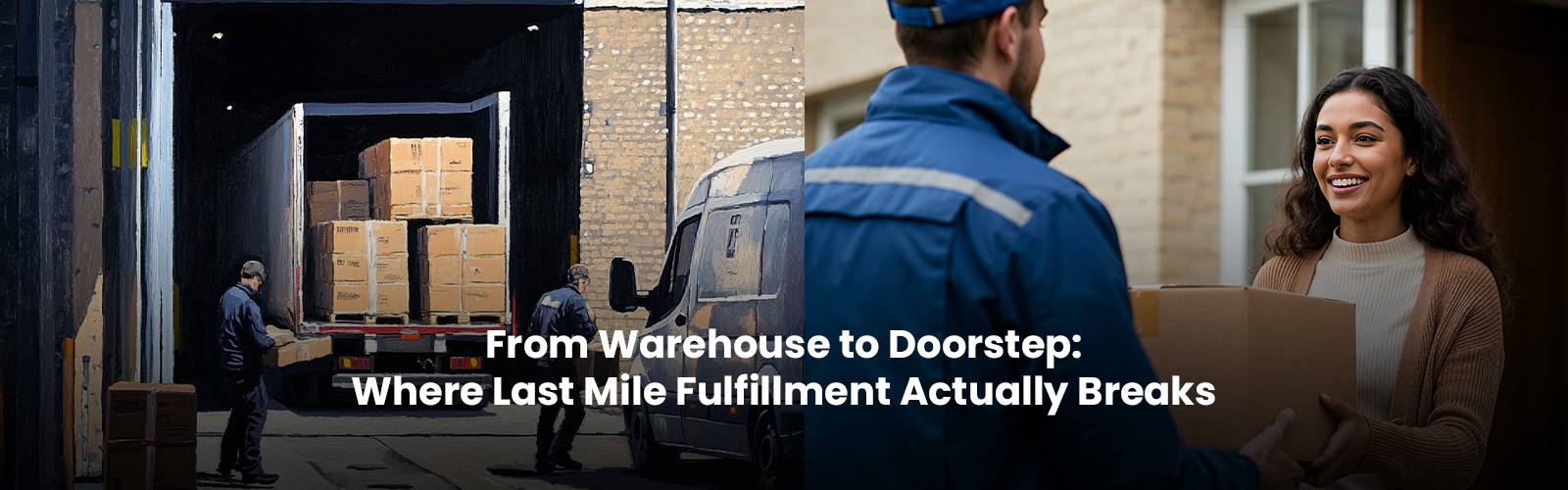
From Warehouse to Doorstep: Where Last Mile Fulfillment Actually Breaks
Last mile fulfillment is where logistics promises are either kept-or publicly broken.
Orders can be picked flawlessly, be packed on time, and dispatched with military precision. But the final stretch from the distribution hub to the doorstep of the customer is often the most fragile, the costliest, and the most error-prone stretch in any supply chain.
Industry data illustrates this painfully well. The last mile makes up over 50% of all delivery costs, according to a slew of logistics studies. Meanwhile, customer patience for delays shrinks with each passing day. Over 70% of consumers report that the speed of delivery has a direct impact on brand loyalty. This gap between expectations and execution explains why last mile fulfillment has become the defining battlefield of modern logistics.
This article breaks down where last-mile fulfillment actually fails, why last-mile fulfillment challenges persist. And how enterprises can fix structural last-mile fulfillment bottlenecks using the right technology.
The Illusion of Control Before the Last Mile
Upstream logistics are predictable.
Warehouses operate within controlled variables: inventory is scanned and slotted and moved within known constraints. Transportation to regional hubs follows planned routes, fixed schedules, and contractual SLAs.
Then the last mile begins.
Last mile logistics moves from structured environments into chaos. Urban congestion, fragmented delivery points, unpredictable customer availability, weather disruptions, and driver variability all collide in this final phase. This is where last mile fulfillment shifts from process-driven operation to exception-driven.
And exceptions scale fast.
Where Last Mile Fulfillment Breaks Down
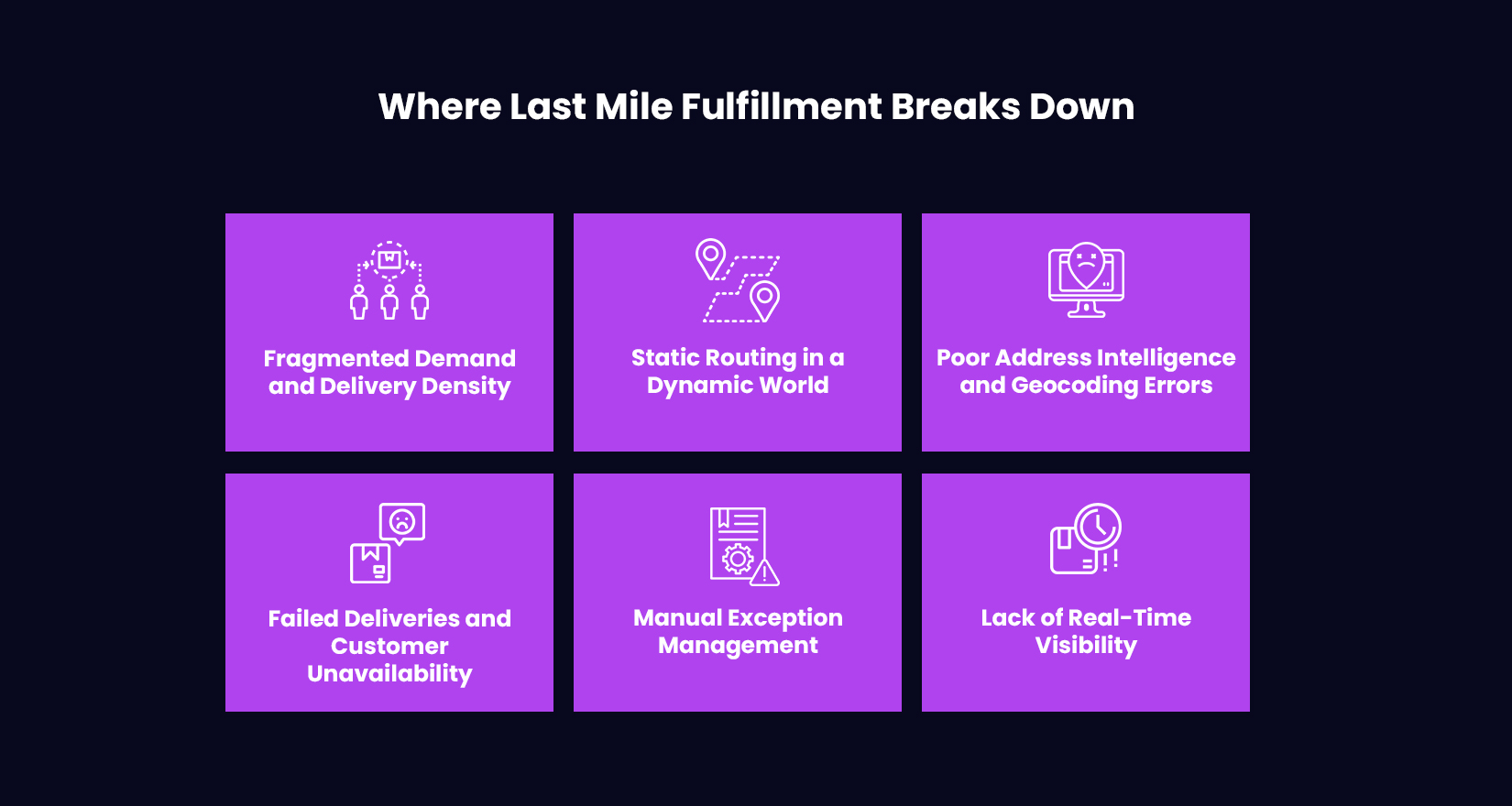
1. Fragmented Demand and Delivery Density:
The growth of e-commerce has substituted bulk shipments with millions of single-order deliveries. Instead of delivering pallets to stores, fleets now make one-parcel deliveries at a time to homes, offices, lockers, and even gated communities.
This fragmentation leads to severe last mile fulfillment bottlenecks:
– Lower drop density.
– More stops per route.
– Higher fuel and labor costs.
Increased risk of failed delivery attempts Without intelligent route planning, last mile delivery rapidly becomes inefficient and unprofitable.
2. Static Routing in a Dynamic World:
A number of organizations continue to use static route planning as part of their operational method of preparing routes. Despite any changes in traffic conditions etc. that may occur, the static route will not adapt.
With the challenges of last mile fulfillment, some of the most significant one is the inability to adapt routes. Drivers waste time by having an inefficient route. The increased fuel consumption and lower on-time delivery rates, mean that static routing represents a competitive disadvantage in today’s dynamic world.
3. Poor Address Intelligence and Geocoding Errors:
A very large percentage of last mile deliveries fail simply due to bad addresses (the addresses on record are incorrect!). The incorrect pin number, the incomplete address, the duplicate address, and the non-standard address formatting all contribute to the following results:
– More time for delivery.
– A lot more frustrated drivers.
– More customer support tickets.
– More repeat deliveries.
In dense urban areas and emerging markets, address ambiguity becomes a major bottleneck in the last mile fulfillment process. Last mile delivery software systems that lack the ability to provide advanced geocoding and address validation are losing efficiency on daily basis.
4. Failed Deliveries and Customer Unavailability:
Failed delivery attempts are one of the most expensive last mile fulfillment challenges. Each failed attempt compounds costs across fuel, labor, fleet utilization, and customer experience. Common causes include:
– Customers not available at delivery windows.
– Inaccurate ETA communication.
– Lack of delivery preferences.
– No real-time coordination between drivers and recipients.
Every failed delivery resets the cost clock. At scale, this can erode margins faster than rising fuel prices.
5. Manual Exception Management:
In last-mile fulfilment logistics, exceptions are part of the business, but how the exceptions are managed can break a fulfilment operation. What breaks fulfillment operations is how those exceptions are handled. Many teams still manage exceptions through:
– Phone calls.
– WhatsApp messsages.
– Spreadsheets.
– Manual dispatcher intervention.
This is a reactive approach that won’t grow with an increase in order volume and will continue to grow slower, make more mistakes and become invisible to company leadership. Unresolved exceptions may become SLA breaches, cause negative feedback and loss of future customers.
6. Lack of Real-Time Visibility:
To control a situation you must first be able to see it. One disadvantage to last-mile fulfilment operations is the lack of real-time visibility to orders, drivers and delivery status.
When a team’s operation does not include live tracking, their response will always be late. With the demand for real-time updates, proactive alerts, and accurate ETAs, the last-mile fulfilment software products that do not provide end-to-end visibility simply cause brands to lose their trust before the package arrives (or doesn’t arrive).
The Cost of Ignoring Last Mile Fulfillment Challenges
The financial impact of broken last mile fulfillment is measurable:
– Failure to meet business expectations, increase costs by 15–30%. Failed deliveries drive higher delivery and customer acquisition costs. Loss of customers leads to higher marketing, promotional, and discount costs.
– Higher customer service demand on staff creates backlogs of unanswered inquiries that slow down response time.
– Customer service representatives will eventually get bombarded with questions such as, “Where is my order?” and will get beaten up from continued rescheduling or delivery complaints.
– A company’s reputation suffers public relations damage through negative online reviews and public backlash due to poor performance. Customer trust erodes through word-of-mouth recommendations based on their negative experiences.
If executed poorly, a poorly executed last mile logistics program will be evident to the public. Through low customer ratings and negative reviews across all review channels (social media, Yelp, etc.).
Why Technology Is No Longer Optional
Solving last mile fulfillment challenges requires more than operational discipline. It requires purpose-built last mile logistics software designed for real-world variability.
Modern last mile delivery software must deliver:
– Dynamic route optimization.
– Real-time visibility and tracking.
– Automated exception management.
– Accurate geocoding and address intelligence.
– Predictive ETAs and proactive customer communication.
– Scalable orchestration across fleets and regions.
Without these capabilities, last mile fulfillment remains reactive instead of resilient.
How LogiNext Fixes Broken Last Mile Fulfillment
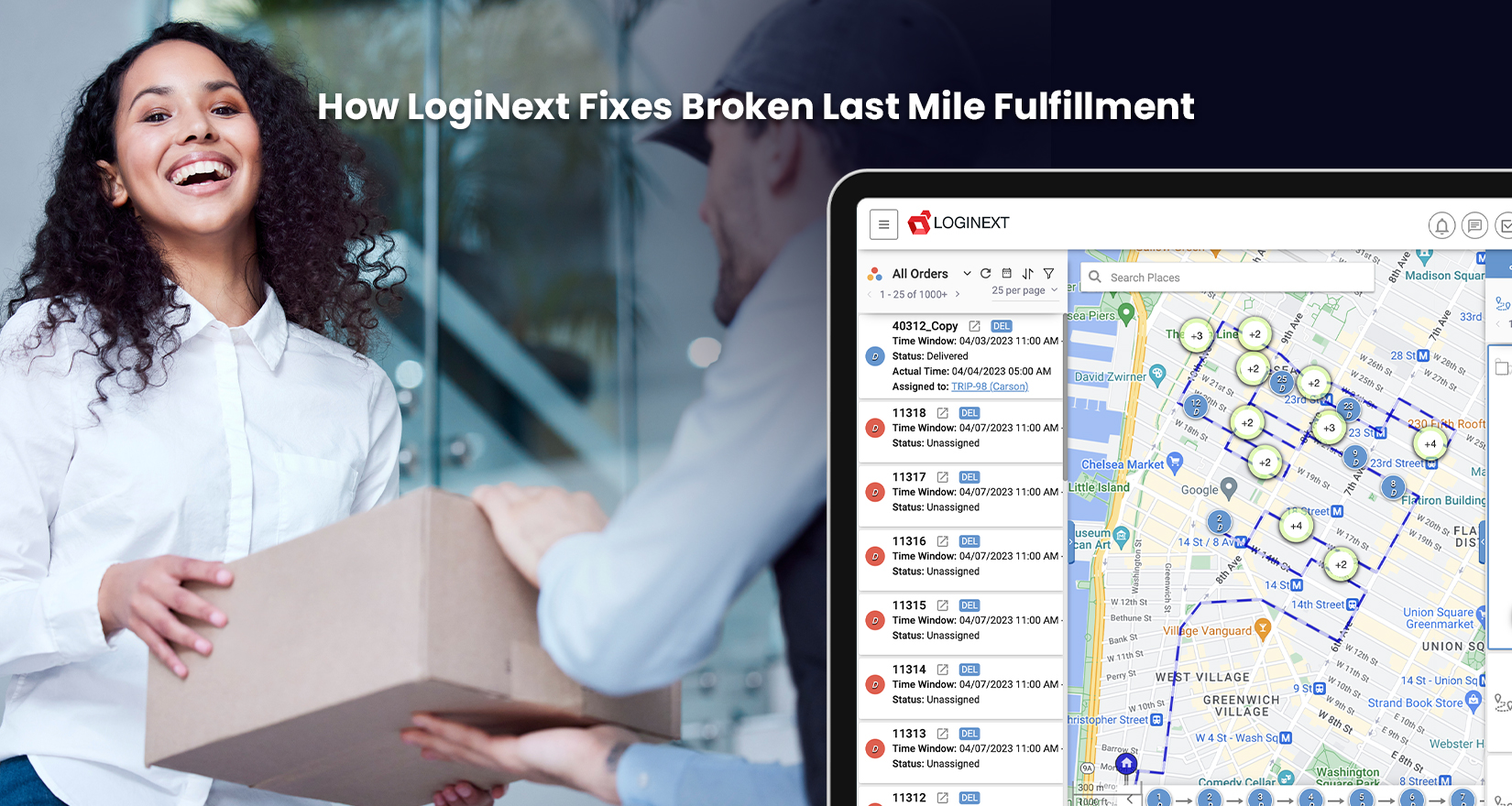
The purpose of LogiNext is to fill the gaps in the last mile fulfillment process that result in failure.
LogiNext is a robust, enterprise-class last mile logistics platform designed to help companies transition away from manual emergency handling and towards the automation of intelligent orchestration.
Key Capabilities:
– Optimized route planning using AI algorithms that adapt in real-time to the presence of traffic, delays, and new orders.
– Complete transparency on the status of all drivers, all orders, and all deliveries.
– Ability to identify, triage, escalate and resolve exceptions before they impact on-time performance.
– Detailed location information through automated geocoding and address validation to minimize the number of missed deliveries.
– Tools to keep customers informed with precise ETAs and proactive notification about any issues with delivery.
LogiNext addresses the issues that slow or block last mile fulfillment for companies. It does this by decreasing delivery costs, increasing on-time delivery rates, and enabling their customers to receive an exceptional customer experience consistently at scale.
Conclusion: Why the Last Mile Decides Who Wins
The effects of inadequate last-mile fulfillment are becoming more apparent as the demands and expectations around delivering goods have increased. As such, companies are being faced with challenges and bottlenecks related to last-mile fulfillment. A company’s inability to overcome these challenges and bottlenecks results in decreased profitability, decreased customer confidence, and decreased scalability.
Improved software systems, which allow increased visibility and smarter execution of last-mile deliveries, will provide businesses with improved control, resiliency, and predictable execution of last-mile delivery. According to LogiNext, investing in last-mile technology will allow you to generate an improved business model by transforming your last-mile operations and creating a competitive advantage. So take the leap and book a demo with LogiNext. Click on the red button to know more.
“” 89
 |  |  |




@LogiNext