



Urgent Is Inevitable. Chaos Isn’t: Rethinking Delivery Management
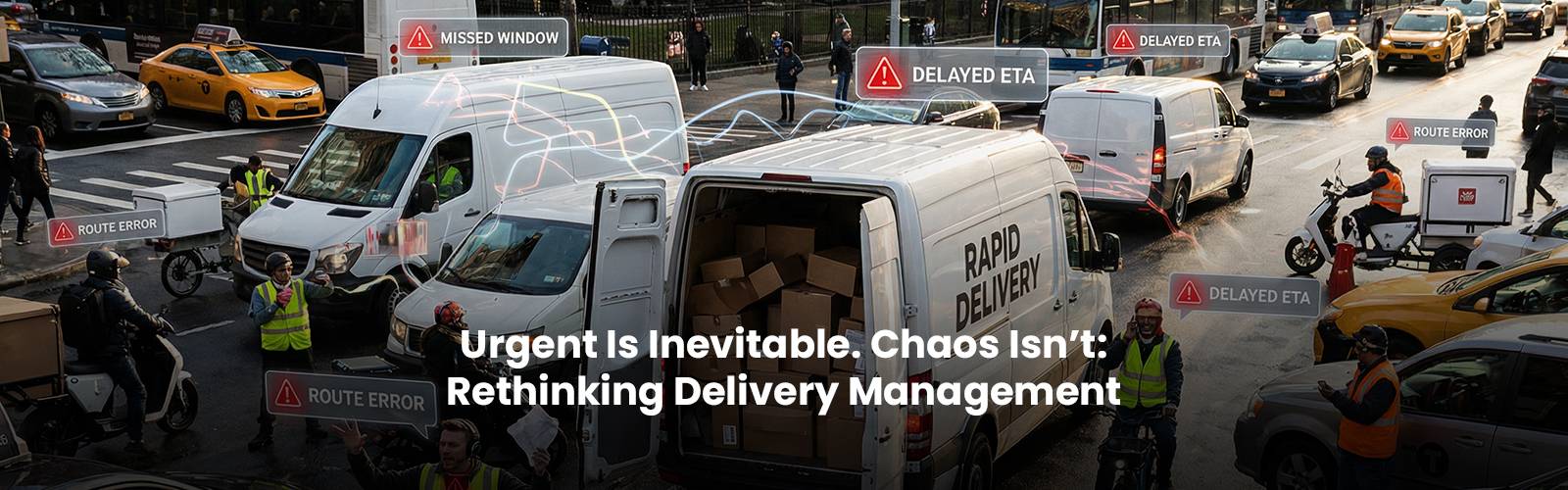
In modern logistics, urgent has become the most expensive word in operations. Same-day orders, customer escalations, route changes, and vehicle breakdowns arrive without warning, quietly eroding margins, delivery performance, and customer trust. For many organizations, the lack of robust Delivery Management Software turns every interruption into a costly scramble rather than a controlled response.
The problem is not urgency itself. The real issue lies in how most logistics teams manage it. Without a structured approach, urgent requests hijack daily plans, overwhelm dispatchers, and push delivery teams into reactive mode.
This is where a modern delivery management platform shifts from a support tool to a strategic necessity. This blog explores why interruptions derail delivery operations, the hidden costs of reactive decision-making, and how the right delivery management approach enables organizations to manage urgency proactively instead of firefighting endlessly.
Why Urgent Requests Keep Disrupting Deliveries
The failure of most logistics operations is not a result of a poor plan. Rather, it is the failure of the logistics plan due to pressure.
Urgent delivery interruptions can happen for any number of reasons. But there are typically four main reasons that you will find:
– Last-minute additions to orders by high-value customers.
– Changes to addresses and/or delivery windows after the package has already been dispatched.
– Capacity disruptions due to lack of vehicle or driver availability.
– External disruptions (e.g. traffic congestion, weather).
According to McKinsey, Logistics companies face daily volatility in their delivery routes of 20%-30% that is driven by unanticipated events. Most logistics operators still use manual coordination, spreadsheets, and phone calls to deal with these disruptions, resulting in a level of chaos that looks like flexibility.
The result is chaos disguised as flexibility.
The Real Cost of Managing Deliveries Reactively
When urgency is handled manually, the impact spreads quickly.
– Higher costs per delivery, resulting from the inefficiency of re-routing packages..
– Dispatcher burnout due to the constant “firefighting” nature of the job.
– Lower on time delivery rates resulting from ad hoc decisions.
– Poor customer experience due to inconsistent communication and information reporting.
According to Gartner, companies with either no or limited access to real-time visibility into the status of their deliveries incur up to a 15% higher logistics cost than transport providers that are more digitally mature than they are.
Reactive delivery management not only slows delivery operations down. But adds to the inefficiency of delivery operations every time that a delivery request is made in an urgent manner.
Why Traditional Tools Can’t Handle Urgency at Scale
Most companies think that they have a system to manage deliveries however they are mostly using different tools that are not cooperating with one another and are fragmented.
Some of the issues companies face when using traditional tools to manage urgent deliveries include:
– Static route plans that cannot adapt in real-time.
– No centralized visibility across orders, drivers, and exceptions.
– Manual decision-making during disruptions.
– Delayed customer notifications.
A Basic Delivery Management System will only “Track Deliveries” whereas a Modern Delivery Management System will “Manage Deliveries”.
That distinction defines whether urgency becomes manageable or destructive.
What Proactive Interruption Management Looks Like

Proactive Delivery Operations do not take away from the opportunity to have urgent Delivery Requests. They absorb them in an intelligent manner.
The following is a breakdown of the methods that leading organizations use to handle Interruptions at scale:
1. Real-Time Visibility Across the Delivery Network:
Without visibility, urgency can feel like it is random and unpredictable. Advanced or Modern Delivery Management Software enables you to have a live view of:
– All active orders and their corresponding delivery windows.
– The Real Time Locations and Capacities of the Vehicles on the Delivery Routes.
– The Availability and Performance of the Drivers.
– The Real Time Exception Information as it occurs.
Deloitte estimates that Providing Real Time Visibility can increase Delivery Reliability by 25%. When teams see disruptions early, they can act decisively instead of reacting late.
2. Dynamic Route Re-Optimization:
When urgency is introduced to the delivery process, static routing does not work anymore. By using a modern DMS (Delivery Management System), companies will automatically recalculate their delivery routes continually based on factors such as:
– New order priorities.
– Traffic & Road Conditions.
– Vehicle Constraints
– SLA Commitments.
Through this method of continually recalculating their delivery routes, delivery companies can insert urgent orders with the least disruption possible to their existing deliveries.
Companies using Dynamic Routing report between 10 and 20% in reduced fuel consumption and greater on-time performance.
3. Automated Exception Handling:
Delivery disruptions typically follow predictable patterns. With Intelligent Automation, Delivery Management Software is now able to automate:
– Flag high-risk deliveries
– Trigger predefined workflows.
– Recommend corrective actions.
– Escalate only when human intervention is required.
Because of this automation, a dispatcher does not have to spend time evaluating most delivery disruptions. The dispatcher can focus on those deliveries that require immediate attention while ensuring that the delivery of critical products is handled properly.
4. Smart Capacity Utilization:
Often times the concept of urgency exposes existing Capacity Gaps within the Company. An Effective Delivery Management System will analyze the following factors in terms of capacity planning:
– Vehicle utilization trends.
– Idle capacity windows.
– Driver productivity metrics.
Because of this knowledge, a company should be able to take on urgent orders without increasing the size of their fleet or the driver overtime.
Capgemini estimates that companies with better capacity planning strategies can free up to 12% of their operational costs.
5. Proactive Customer Communication:
Not communicating leads to increased frustration. The best-in-class last mile delivery software provides the following to customers:
– Automated delay notifications.
– Updated ETAs in real time.
– Transparent status updates.
According to Salesforce, 76% of Customers expect proactive communication when a delivery is disrupted. When organizations communicate proactively, even when the situation is urgent, it builds Trust with the customers.
From Firefighting to Forecasting: The Strategic Shift
Organizations that operate with a manual dispatch process will treat urgency as an exception. Organizations that are digitally mature will treat urgency as data.
Every disruption to a delivery creates data that digitally mature organizations will use to forecast, improve delivery processes and continuously refine. A modern delivery management system captures insights from every disruption:
– Root causes of delays
– Frequency of urgent order types.
– Regional volatility patterns
– SLA risk trends
Over time, this data enables forecasting, better planning, and continuous optimization. Customers will be able to predict urgency instead of being disrupted by it.
Final Thoughts: Urgent Is Not the Enemy
Urgent requests will never disappear, and customer expectations will only continue to rise. The organizations that succeed are not those that attempt to eliminate interruptions, but those that manage them intelligently. With the right Delivery Management Software, urgency becomes manageable, predictable, and even profitable, transforming disruption from a liability into a competitive advantage.
Stop letting urgent delivery derail. Build systems that anticipate change, adapt in real time, and maintain control under pressure. Because in modern logistics, excellence is not about avoiding disruption, it is about mastering it. Discover how a modern delivery management platform can help you stay in control, even when everything changes. Click on the red button to book a demo with LogiNext and stay ahead of the curve.
47

|

|

|




@LogiNext