




Track and Trace, Reimagined: How AI Is Transforming Logistics Management
Modern logistics management depends on visibility. Without accurate, real-time shipment tracking, supply chains slow down, customer trust erodes, and operational costs rise. Yet one of the most critical functions supporting logistics management is track and trace. This remains one of the most repetitive and labor-intensive tasks in the industry.
Track and trace is the process of continuously monitoring a shipment’s status from pickup to delivery and reviewing its movement history when issues arise. It underpins customer communication, performance reporting, and exception handling. But it also consumes significant operational bandwidth.
According to industry reports, manual tracking activities can cost up to $25 per shipment in labor alone. When scaled across thousands of shipments, that number becomes operationally unsustainable. This is where AI agents embedded in modern logistics management software are transforming the landscape.
Why Track and Trace Has Been So Hard
Traditionally, track and trace meant:
- Logging into multiple carrier portals
- Checking delivery statuses
- Calling partners for updates
- Updating internal systems
- Communicating changes to customers
This is tedious manual labor, the kind that invites errors and distracts from strategic work. With growing shipment volumes, manual processes simply don’t scale.
When logistics teams rely on disconnected spreadsheets or siloed logistics software systems, visibility collapses. Data isn’t synchronized. Exceptions go unnoticed. Customer service teams scramble. And management lacks a clear picture of what’s happening across the operation.
That’s where an AI-powered logistics management solution steps in.
What AI Agents Actually Do
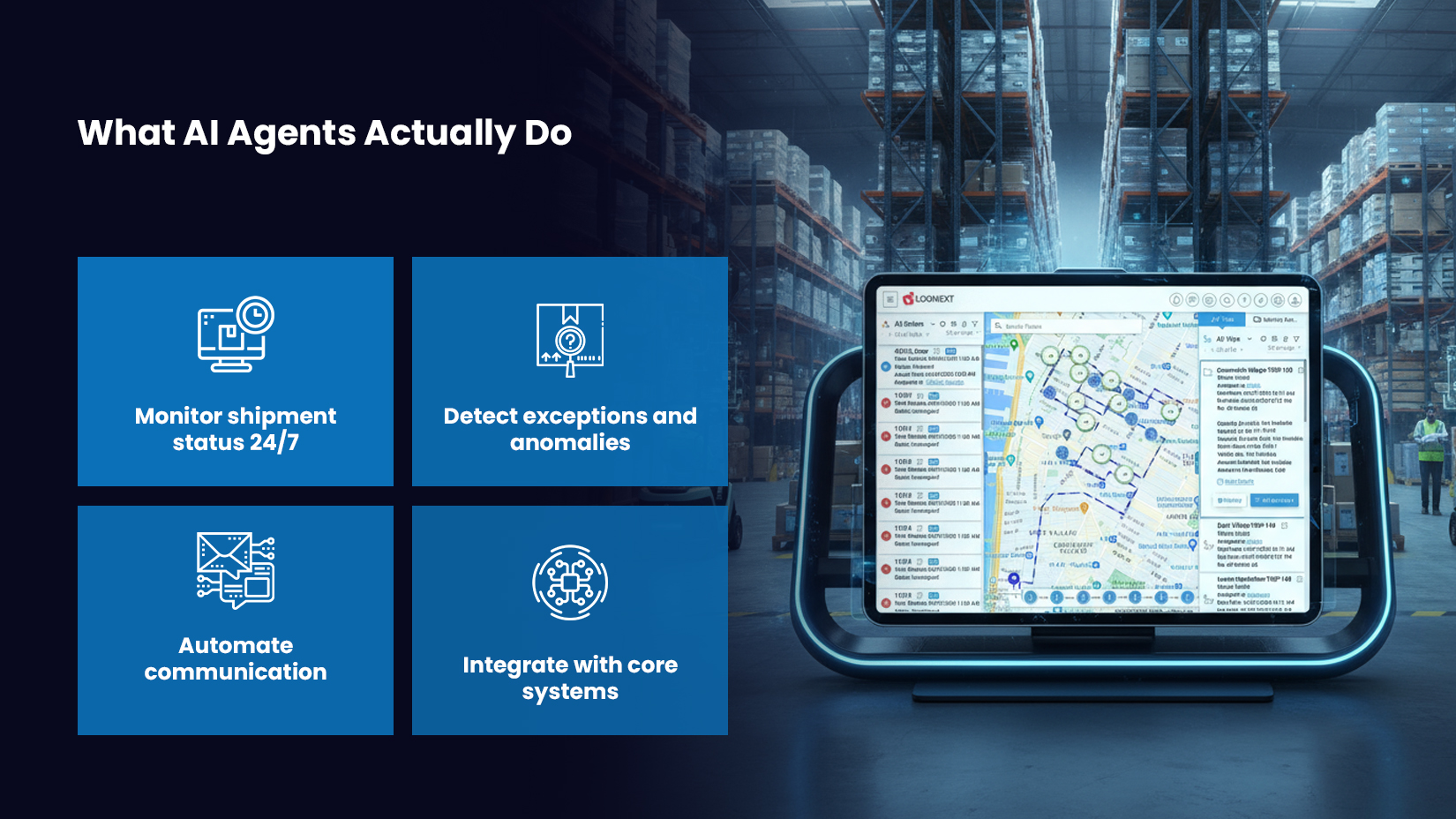
AI agents are software entities designed to monitor, interpret, and act on operational data without constant human supervision. In the context of track and trace, they:
1. Monitor Shipment Status 24/7:
AI agents continuously ingest data from carriers, IoT sensors, GPS feeds, and internal systems. They catch updates the moment they happen day or night.
2. Detect Exceptions and Anomalies:
If a delivery is delayed, rerouted, or stuck in transit, AI flags it instantly. It can even initiate corrective actions automatically.
3. Automate Communication:
Instead of manual email threads or calls, AI drafts carrier requests, sends confirmations, and updates stakeholders often without human intervention.
4. Integrate with Core Systems:
Unlike bolt-on tools, AI agents embedded in a robust logistics management system pull context from your existing workflows, business rules, and historical data. Thereby, making decisions smarter and more reliable.
Real-World Results: From Repetitive Work to Strategic Value
AI agents aren’t theoretical magic, they’re delivering measurable results today.
One logistics organization achieved 98% automation of its track and trace workload. It did by deploying a dedicated AI worker within its existing operational ecosystem. Within a week, the AI handled nearly all tracking updates that humans used to do manually. Thus, saving roughly an hour per person per day in repetitive communication tasks.
Across the wider industry, AI and automation are hitting notable milestones:
- Up to 50% of repetitive logistics tasks are now automated with AI tools.
- AI automation improved operational efficiency by 30% in logistics warehouses.
- Companies using AI for real-time tracking saw customer satisfaction scores increase as delivery predictability improved.
These aren’t small wins. They’re transformational improvements directly tied to better logistics management software and the systems that power them.
The Technology Behind AI Agents
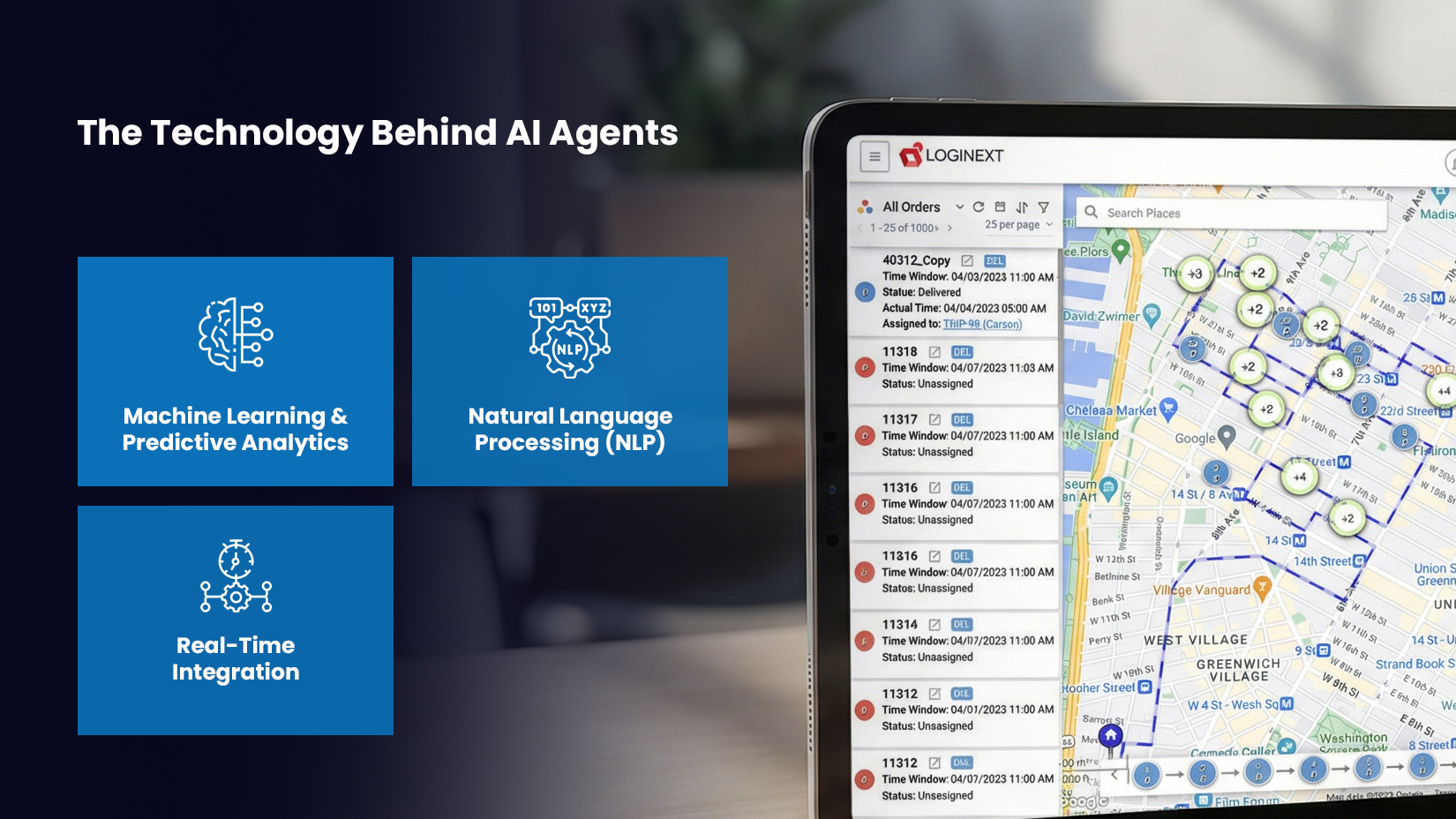
To deliver consistent value, AI agents need to be part of a larger ecosystem, not isolated tools. Here’s how modern AI capabilities support superior track and trace performance:
Machine Learning & Predictive Analytics
AI models analyze historical shipment data to forecast arrival times, identify delivery risk patterns, and proactively alert teams before problems arise. These predictive insights elevate a logistics management solution from reactive to proactive.
Natural Language Processing (NLP)
AI agents use NLP to interpret carrier messages, extract shipment identifiers, and draft professional updates. Thereby, replacing manual data entry with automated accuracy.
Real-Time Integration
Connected systems ensure that every update from GPS ping to carrier upload feeds straight into an AI-enhanced logistics management system. This real-time data flow is critical for both visibility and decision speed.
When AI Agents Make Sense for Logistics Teams
Implementing AI in track and trace doesn’t have to be a leap of faith. Smart teams start with:
- High-volume lanes where manual work is most pervasive
- Common carriers with frequent status changes
- Exception-prone routes that demand attention
- Pilot programs that run AI agents in tandem with human teams until confidence builds
Iterative rollouts reduce risk and help teams build trust in automation. Once validated, broader deployment follows.
What This Means for Logistics Management
AI agents free logistics professionals from the drudgery of constant monitoring. They reduce manual errors, boost responsiveness, and enable staff to focus on higher-value functions like exception strategy, carrier relations, and customer engagement.
In practical terms, AI and automation are now:
- Driving deeper operational transparency
- Reducing overall supply chain friction
- Supporting faster, more accurate decision-making
- Enhancing the effectiveness of logistics software investments
Over time, this translates into lower costs and higher service levels, a clear competitive edge.
The Future: Beyond Track and Trace
AI agents integrated with AI powered logistics software aren’t stopping at track and trace. The next wave will expand into:
- Autonomous planning suggestions
- Predictive supply chain disruption alerts
- Intelligent load balancing across carriers
- Dynamic ETA adjustments based on live conditions
These capabilities shift logistics from reactive to anticipatory, reshaping industry expectations around reliability and responsiveness.
Conclusion: The New Standard in Logistics Management
Track and trace no longer needs to drain operational time. With AI embedded into modern logistics management software, repetitive monitoring becomes automated, exceptions become proactive, and visibility becomes continuous. This is what structured logistics automation looks like in practice.
The future of logistics management belongs to organizations that operate with intelligence, not manual intervention. Advanced AI powered logistics software transforms a traditional logistics management system into a predictive, scalable engine built for growth.
If you are ready to move beyond manual tracking, LogiNext offers a comprehensive logistics management solution designed to deliver real-time visibility, automation, and measurable efficiency gains. The shift to intelligent logistics starts now. Click on the red button to know more.
2

|

|

|




@LogiNext