



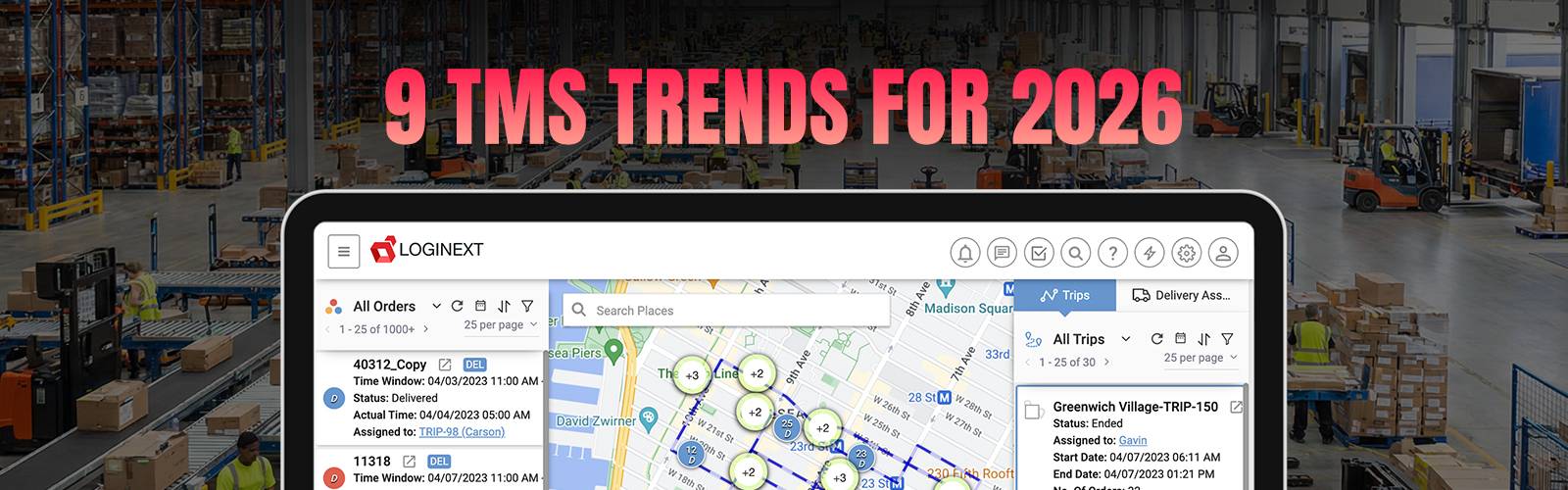
The Next Phase of Transportation Technology: 9 TMS Trends for 2026
Transportation management is no longer a support function. In 2026, it’s the strategic backbone that connects demand signals with real-time execution, customer experience, and cost control. Modern supply chains demand smarter decisioning, deeper automation, better visibility, and next-generation transportation management technology to keep pace. With AI adoption accelerating and customer expectations rising, today’s leaders must rethink how they invest in transportation management software and transportation management solutions to win.
According to industry analysts, the transportation management software market is projected to continue rapid growth through the decade. As businesses standardize real-time optimization and predictive planning in their workflows.
Let’s unpack the 9 defining TMS trends for 2026 shaping the future of transportation technology across industries.
The 9 Transformative TMS Trends Defining 2026
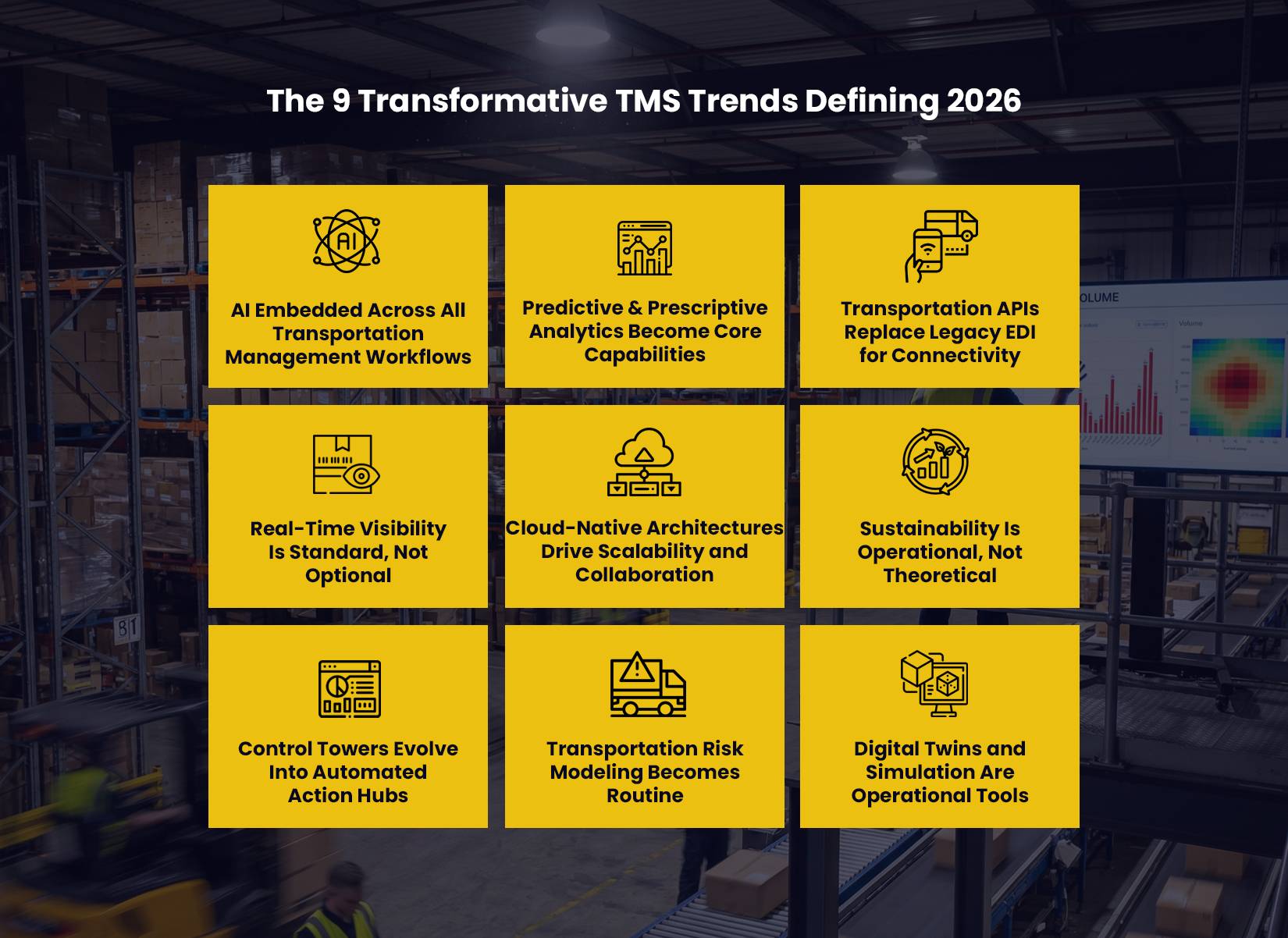
1. AI Embedded Across All Transportation Management Workflows:
AI is no longer a bolt-on feature. In 2026, it’s the connective tissue of advanced transportation management systems. Smart algorithms now do more than plan routes. They anticipate disruptions, suggest alternate carriers, and adjust plans automatically when variables shift.
Rather than simply supporting planners, transportation software now provides actionable recommendations. Its based on historic patterns and live signals, helping teams optimize delivery schedules and cost levers faster.
2. Predictive & Prescriptive Analytics Become Core Capabilities:
Data without foresight is noise. The evolution from descriptive dashboards to predictive analytics gives transportation management solutions the edge in complex environments.
Instead of reacting to shipment delays or congestion after the fact, predictive layers can simulate outcomes and recommend optimal actions before risks materialize. Thereby, cutting response times and freight costs. This shift transforms TMS platforms from reporting tools to decision engines.
3. Transportation APIs Replace Legacy EDI for Connectivity:
Legacy EDI has long been the backbone of carrier communication. But 2026 marks a definitive pivot: modern transportation software increasingly integrates via APIs. They provide real-time rate access, smoother onboarding, and high-fidelity shipment status updates across ecosystem partners.
APIs enable tighter integration between TMS, warehouse systems, fleet telematics, and customers. Bridging data silos and delivering a unified view of operations, critical for scalable transportation management technology.
4. Real-Time Visibility Is Standard, Not Optional:
Customers expect accurate ETAs. Shippers demand live insights. Transportation management solutions are embedding real-time tracking and visibility deeply into workflows.
IoT devices and telematics feed into transportation software to provide minute-by-minute status and enable proactive alerts. This up-to-the-second view increases operational control and enhances customer communication, boosting satisfaction and reducing exception handling.
5. Cloud-Native Architectures Drive Scalability and Collaboration:
The SaaS model is now the de-facto approach for leading transportation management software platforms. Cloud-native architectures enable:
– Rapid updates without downtime.
– Seamless access from any location.
– Easier integration across partners and systems.
This shift dramatically reduces infrastructure overhead and improves collaboration across global teams and partners.
6. Sustainability Is Operational, Not Theoretical:
Environmental metrics have moved from annual reports to day-to-day decisions. Today’s transportation management technology includes emissions scoring, eco-route planning, and green carrier selection within routing engines.
Rather than measuring carbon after the fact, sustainability feeds directly into transportation planning, balancing cost, speed, and environmental impact for shipments across lanes and modes.
7. Control Towers Evolve Into Automated Action Hubs:
Traditional control towers were dashboards showing what has happened. In 2026, they are execution hubs that do things:
– Trigger corrective workflows.
– Reallocate capacity automatically.
– Recommend alternate plans in real time.
This evolution reduces manual oversight and empowers transportation teams to act, not just observe.
8. Transportation Risk Modeling Becomes Routine:
Resilience is a new KPI. With global disruptions still unpredictable, transportation management software now includes risk scoring based on weather, geopolitical volatility, port congestion, and carrier performance.
Organizations can use these risk models to forecast potential weak points, adjust network design proactively, and build contingency plans that keep deliveries on track even in tumultuous conditions.
9. Digital Twins and Simulation Are Operational Tools:
Digital twin technology, virtual counterparts of physical assets and networks, was once a nice-to-have. Now it’s a business-critical tool embedded in advanced TMS solutions.
Transport planners and operators can simulate “what if” scenarios, test route changes, and model the impact of shifting demand patterns without touching live systems. This capability turns planning into a strategic, data-backed advantage.
Why These Trends Matter for Transportation Management in 2026
The shift in transportation management is clear: businesses are moving from reactive systems to connected, predictive, and action-oriented platforms. Transportation management software is no longer just a logistics tool. It’s a strategic asset that helps companies deliver faster, cut costs, support sustainability, and maintain resilience.
Here’s how these trends translate into real business outcomes:
– Lower operational costs via automated planning and dynamic routing.
– Higher delivery reliability through enhanced real-time visibility.
– Stronger customer satisfaction with proactive communication and transparency.
– Better resource allocation enabled by predictive planning and simulation.
By redefining what transportation technology can do, 2026 is shaping up to be a watershed year for forward-thinking shippers and carriers.
Conclusion
Transportation management in 2026 is defined by intelligence, scalability, visibility, and execution. Leaders who adopt modern transportation management solutions and invest wisely in it will unlock agility and competitive advantage.
No sugar-coating: the firms that win are those that treat TMS not as a cost center, but as a strategic engine for operational excellence. The trends outlined here aren’t optional, they’re the roadmap to staying relevant in the next phase of global logistics. So, to stay relevant you need the best TMS provided by LogiNext. Click on the red button and book a demo today.
“”
 |  |  |




@LogiNext