





Super Bowl Sunday Is Not Chaos. It’s a Logistics Software Audit.
Every year, the Super Bowl becomes more than just a football game. It becomes a national supply chain event, powered quietly by logistics software working overtime behind the scenes. While millions tune in for touchdowns, commercials, and halftime spectacles, operations teams brace for something far more intense. Compressed, high-velocity demand that tests every layer of execution.
Super Bowl Sunday isn’t unpredictable chaos. It is scheduled, concentrated demand that pushes your systems to their operational limits. Behind every chicken wing platter, bulk pizza order, and last-minute grocery delivery is software making rapid decisions, allocating fleet capacity, recalculating routes, protecting SLAs, and managing customer expectations in real time.
This day doesn’t create operational weakness. It exposes it.
It’s a Feast for the Ages and a Test for Logistics
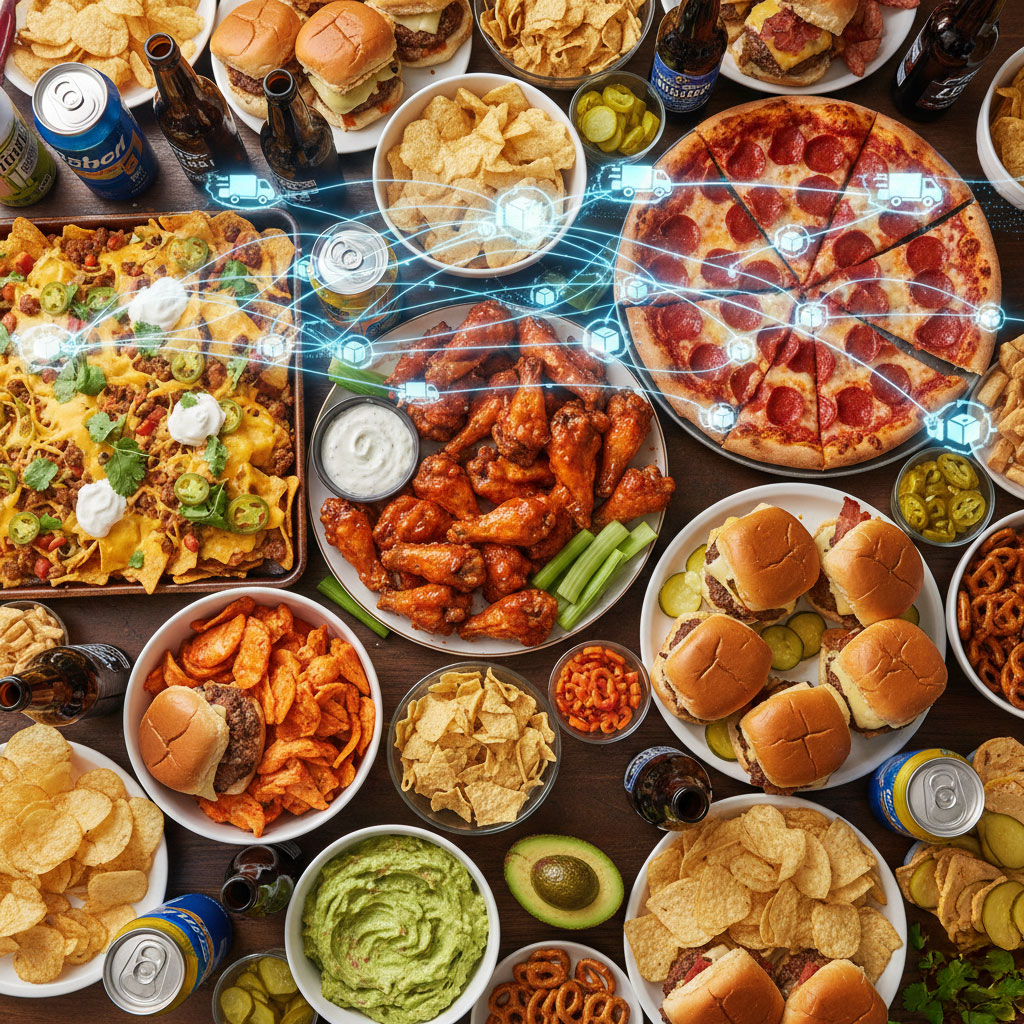
Super Bowl Sunday isn’t just about touchdowns. It’s about food touchdowns. Across the United States, fans stock up on chicken wings, pizzas, nachos, sliders, chips, dips, and enough guacamole to keep avocados in business year-round. Delivery platforms see massive spikes in wings and pizza orders, while grocery stores experience last-minute surges for beverages, desserts, and party trays.
The pattern is predictable. Orders surge before kickoff. They spike again during halftime. They taper post-game. What changes each year is scale.
This is where strong logistics management software earns its reputation. A normal Sunday can be handled with average planning. Super Bowl Sunday compresses a week’s demand into a few high-intensity hours. That compression stresses warehouse throughput, route optimization, driver allocation, and customer communication simultaneously.
Weak systems scramble. Mature systems adapt.
The Role of a Logistics Management System

A well-architected logistics management system (LMS) doesn’t simply show where shipments are. It orchestrates movement under constraint.
On a day like this, your LMS should already understand historical surge patterns by geography and product category. It should pre-allocate fleet capacity to high-density zones, optimize route clusters before dispatch, and dynamically resequence deliveries based on real-time prep times and traffic conditions.
If your dispatch team is manually reshuffling routes while customers are placing halftime snack orders, your logistics management software is acting as a tracking interface, not as an intelligent command center.
Tracking is passive. Orchestration is strategic.
Visibility Isn’t Enough, Intelligence Wins

Most operational failures don’t originate on the road. They begin in blind spots: disconnected warehouse systems, siloed dispatch tools, delayed driver updates, or static routing models that fail under pressure.
A unified logistics management system eliminates those blind spots by integrating fulfillment, dispatch, and last-mile delivery into a single operational view. But visibility alone does not create resilience.
This is where AI powered logistics management shifts the game. Instead of reacting to congestion or delays, AI models anticipate them. Instead of fixed route plans, the system recalculates continuously using traffic data, order density, and driver performance metrics. It flags potential SLA breaches before they become customer complaints.
Visibility tells you what is happening. AI powered logistics management tells you what will happen next. And that predictive capability is what keeps wings arriving before halftime.
When Timing Becomes the Product

On Super Bowl Sunday, delivery timing is part of the experience. Fans don’t just order food, they order synchronization. Wings need to arrive before kickoff. Pizzas need to land during pre-game analysis. Drinks need to be cold and early.
Industry research consistently shows that failed last-mile deliveries increase costs by 10–15% per order and reduce repeat purchase likelihood. On high-emotion days like the Super Bowl, the reputational impact is amplified. A late order doesn’t feel like a delay; it feels like a disruption.
Strong logistics management protects both margin and memory. Weak systems turn peak demand into negative brand moments.
Food, Culture, and Operational Pressure

Ask fans what they love most about Super Bowl Sunday and you’ll get varied answers: the halftime performance, the iconic commercials, the rivalry narratives, or simply the food spread at the watch party.
But behind every platter of wings, loaded nachos, barbecue sliders, and stacked dessert trays is a tightly coordinated chain of fulfillment and delivery. Add social media spikes, flash promotions, and same-day ordering, and the operational pressure intensifies further.
Your logistics software is not just moving inventory. It is enabling shared experiences at scale. That makes execution non-negotiable.
Scaling Without Breaking

Super Bowl Sunday proves one thing clearly: growth without intelligent systems is expensive.
A modern LMS should be able to forecast high-velocity SKUs like wings and pizza, optimize fleet density based on time-of-day demand curves, prioritize SLA-sensitive deliveries, and automatically trigger exception workflows when thresholds are crossed.
This is not dispatching. It is orchestration across constraints – fleet, inventory, time windows, and customer expectations, executed at machine speed.
Organizations that invest in AI powered logistics management do not fear surge events. They convert them into operating leverage. Higher order density improves route efficiency. Predictive models reduce exception rates. Real-time coordination lowers cost per delivery.
That is how volatility becomes advantageous.
Also Read: LogiNext Wins “Best TMS Platform of the Year 2026”: A Milestone for Global Logistics Innovation
Final Whistle
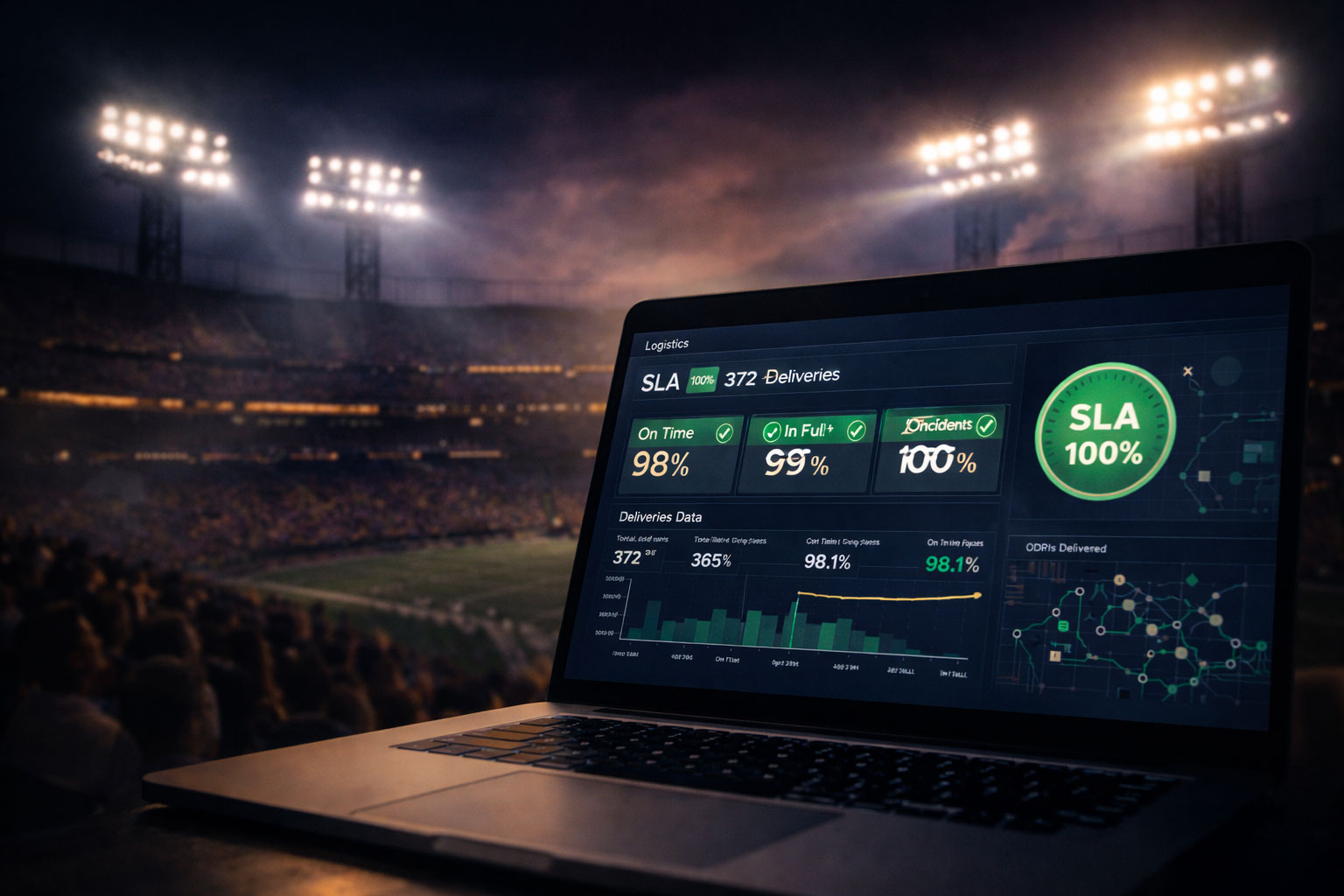
The Super Bowl crowns a champion on the field. Off the field, it quietly crowns operational maturity.
If your logistics software transforms extreme, compressed demand into controlled execution, you are built for scale. If it falters under predictable pressure when wings surge, pizza orders double, and grocery carts overflow, you did not experience chaos. You experienced an audit.
In logistics management, audits are valuable only when they lead to smarter systems and stronger execution. With LogiNext, you can turn every surge, every peak, and every complex delivery challenge into predictable, on-time performance. Optimize routes, gain real-time visibility, and scale confidently. So your next “Super Bowl Sunday” feels like a victory for operations, not stress.
1

|

|

|




@LogiNext