





Smarter Trade, Faster World: How Intelligent Logistics Is Redefining Efficiency
Global trade has never been more complex or more time-sensitive. With supply chains spanning continents and customer expectations rising, businesses can no longer rely on traditional systems. This is where intelligent logistics steps in.
Powered by data, automation, and AI, intelligent logistics is transforming how goods move across borders. From faster customs clearance to predictive routing, companies are shifting toward smarter, more adaptive operations. The result? Faster trade, lower costs, and stronger resilience.
What Is Intelligent Logistics?
At its core, intelligent logistics refers to the integration of advanced technologies. Technologies such as AI, IoT, and data analytics into logistics operations. An intelligent logistics system connects every node of the supply chain, warehouses, fleets, ports, and customers, into a single, data-driven ecosystem.
Unlike traditional logistics software, these systems do not just track operations. They analyze, predict, and optimize them in real time.
Today, intelligent logistics software is becoming the backbone of global trade. Enabling businesses to move from reactive decision-making to proactive optimization.
Why Trade Efficiency Needs an Upgrade
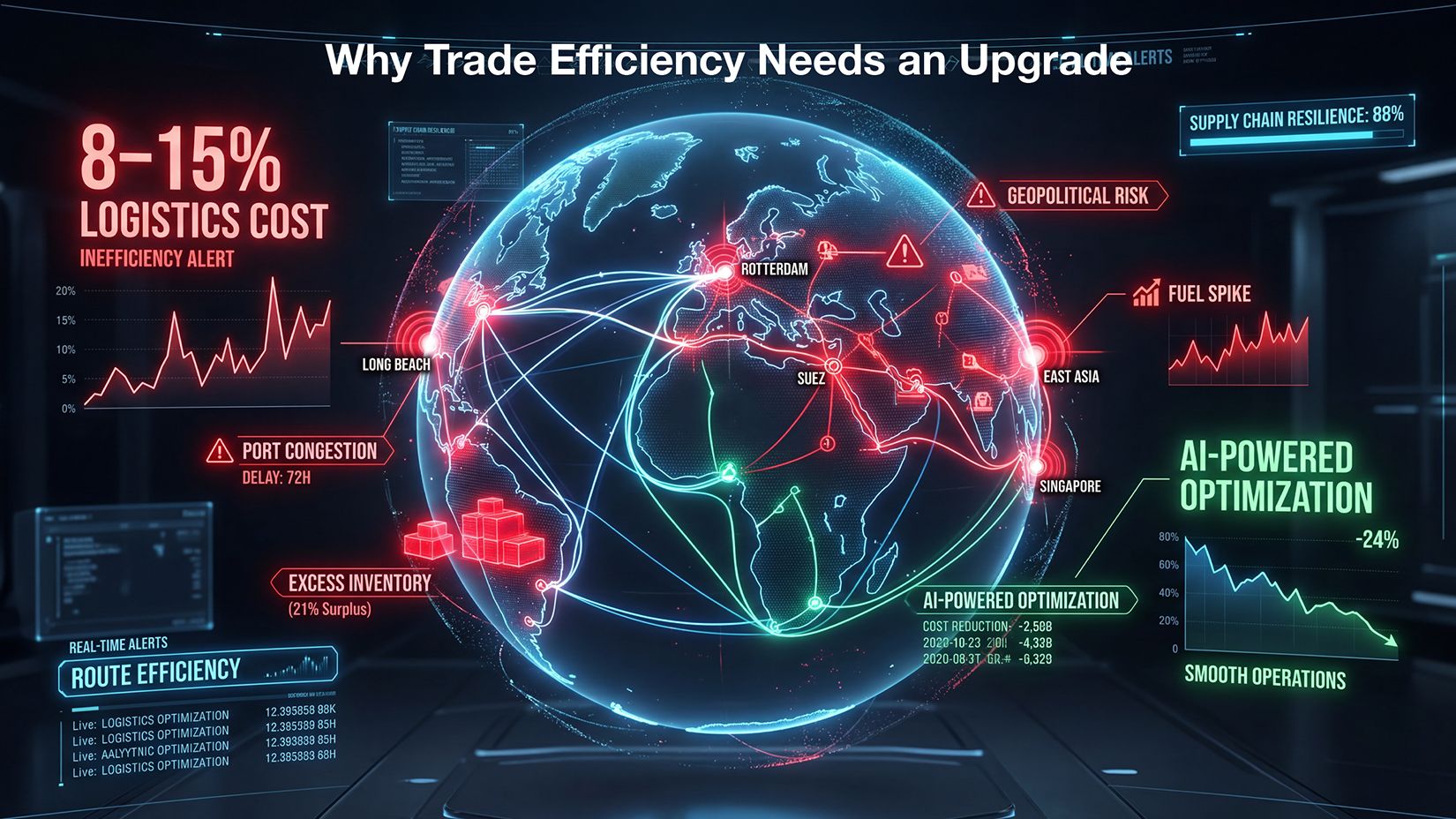
Trade inefficiencies are no longer minor setbacks, they directly impact profitability and competitiveness. Logistics costs already account for 8–15% of a product’s final price. Inefficiencies like delays, poor routing, and excess inventory only increase this burden. At the same time, global supply chains are becoming more unpredictable due to disruptions such as port congestion, fuel volatility, and geopolitical tensions.
Traditional logistics software often operates in silos and reacts to problems after they occur. This reactive approach is no longer sufficient in a fast-moving trade environment. Intelligent logistics, on the other hand, uses real-time data and predictive analytics to anticipate disruptions and optimize decisions proactively.
By shifting from reactive to data-driven operations, businesses can maintain smoother trade flows, reduce costs, and improve overall efficiency.
Key Ways Intelligent Logistics Improves Trade Efficiency
1. Real-Time Visibility Across the Supply Chain:
One of the biggest challenges in global trade is lack of visibility. Traditional logistics software often operates in silos, creating blind spots.
An intelligent logistics system eliminates these gaps by providing real-time tracking and predictive insights.
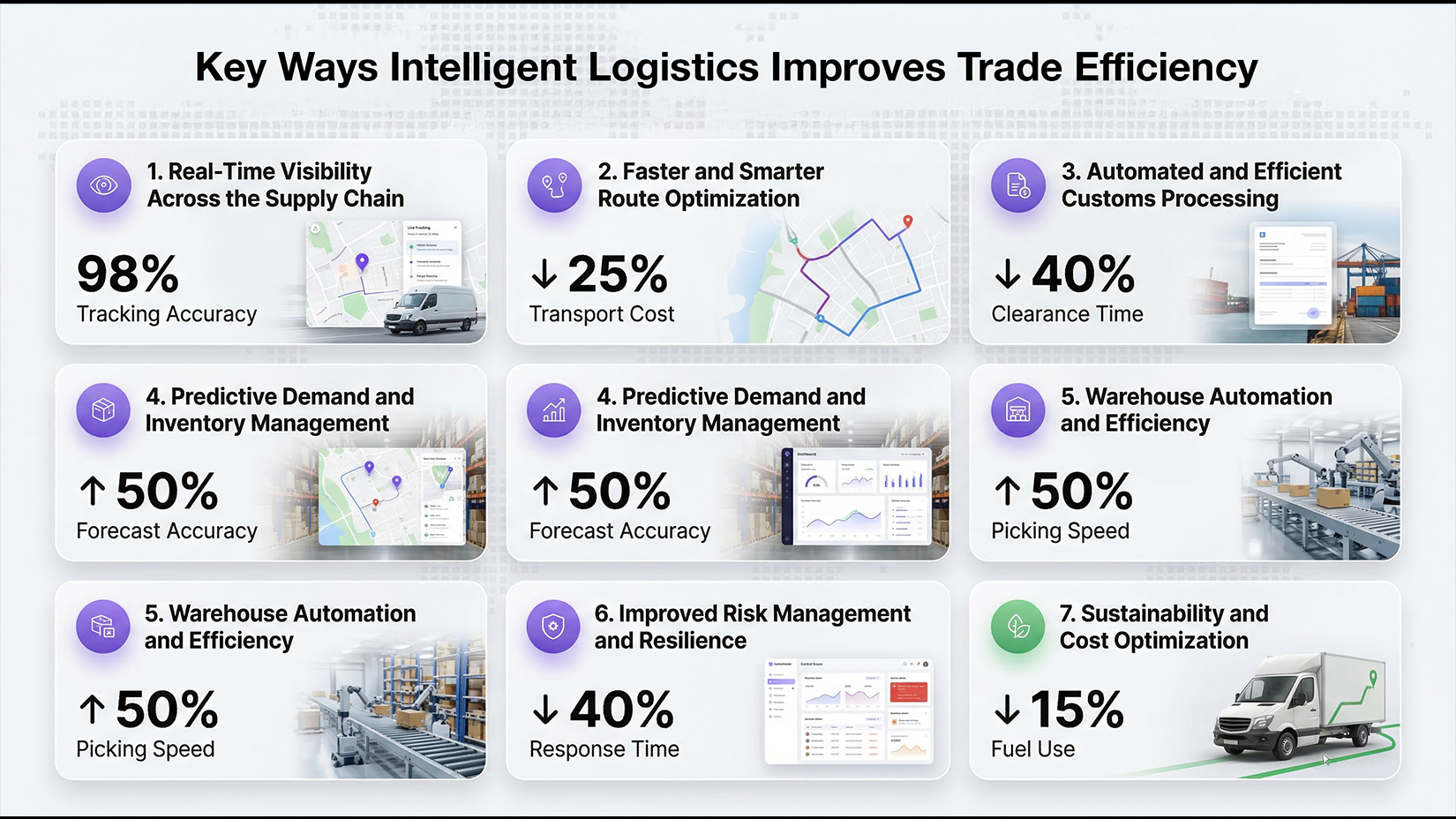
- AI-driven tracking improves shipment accuracy from 85% to 98%
- 65% of logistics firms now use AI for real-time tracking
This level of visibility allows businesses to identify delays early and take corrective action before disruptions escalate.
2. Faster and Smarter Route Optimization:
Transportation inefficiencies can drain both time and money. Intelligent logistics uses AI algorithms to determine the most efficient routes based on traffic, weather, and demand.
- AI-driven route optimization reduces transportation costs by up to 25%
- It can also cut overall logistics costs by 15-20%
With AI powered logistics software, companies can dynamically reroute shipments, ensuring faster deliveries and lower fuel consumption.
3. Automated and Efficient Customs Processing:
Cross-border trade often slows down at customs due to manual documentation and compliance checks.
Intelligent logistics software streamlines this process through automation:
- AI reduces customs clearance time by up to 40%
- Automated document processing cuts manual effort by nearly 60%
By digitizing documentation and ensuring compliance accuracy, intelligent systems significantly reduce delays at borders.
4. Predictive Demand and Inventory Management:
Overstocking and stockouts are two sides of the same expensive coin. Intelligent logistics uses predictive analytics to balance inventory levels.
- AI-driven forecasting improves accuracy by up to 50%
- Inventory systems reduce stockouts by 30%
An intelligent logistics system ensures that the right products are available at the right place and time, without tying up excess capital.
5. Warehouse Automation and Efficiency:
Warehouses are no longer just storage spaces. They are becoming intelligent hubs powered by robotics and AI.
- AI-powered robots increase picking efficiency by 30-50%
- Automation reduces manual labor costs by up to 40%
By integrating logistics software with robotics, companies can scale operations while maintaining speed and accuracy.
6. Improved Risk Management and Resilience:
Global trade is unpredictable. Intelligent logistics systems use data to anticipate risks and respond proactively.
- 58% of companies using AI report fewer shipment delays
- AI reduces supply chain response times by up to 40%
This shift from reactive to predictive logistics is critical in today’s volatile trade environment.
7. Sustainability and Cost Optimization:
Efficiency is not just about speed, it is also about sustainability.
- AI reduces fuel consumption by around 10-15%
- Emissions can drop by 5-10% through optimized routing
An intelligent logistics system helps businesses achieve both cost savings and environmental goals, without compromising performance.
The Role of AI Powered Logistics Software in Global Trade
AI powered logistics software is transforming global trade by enabling faster, smarter decision-making across the supply chain. Instead of relying on static planning, businesses can now respond dynamically to real-time conditions such as demand fluctuations, traffic, and weather disruptions.
An intelligent logistics system leverages AI to optimize routing, automate dispatching, and improve inventory planning. It can predict potential delays, recommend corrective actions, and continuously refine operations based on new data. This reduces manual intervention while improving accuracy and speed.
As more companies invest in digital transformation, intelligent logistics software is becoming central to modern trade operations. It acts as a control tower, connecting all supply chain functions and ensuring seamless coordination, ultimately driving higher efficiency and better service levels.
The Future of Intelligent Logistics
The future of intelligent logistics lies in greater automation, connectivity, and sustainability. Emerging technologies such as autonomous vehicles, AI-driven control towers, and digital twins are already reshaping how supply chains operate.
An advanced intelligent logistics system will not only automate processes but also self-optimize by continuously analyzing data and making real-time adjustments. This will reduce human intervention while improving speed, accuracy, and resilience.
Sustainability will also become a core focus. Future software will prioritize fuel efficiency, emission reduction, and resource optimization alongside cost and performance. As global trade grows more complex, AI powered logistics software will become a standard requirement. Thus, enabling businesses to stay agile, efficient, and competitive in a rapidly evolving environment.
Also Read: LogiNext Wins “Best TMS Platform of the Year 2026”: A Milestone for Global Logistics Innovation
Conclusion
Global trade is accelerating, and only businesses that adopt intelligent logistics software and AI powered logistics software gain faster operations, lower costs, and better control.
With LogiNext’s intelligent logistics system, you can optimize routes, improve visibility, and scale efficiently. Ready to upgrade your logistics? Discover how LogiNext can power smarter, faster trade. Click on the red button to know more.
Like

|

|

|




@LogiNext