




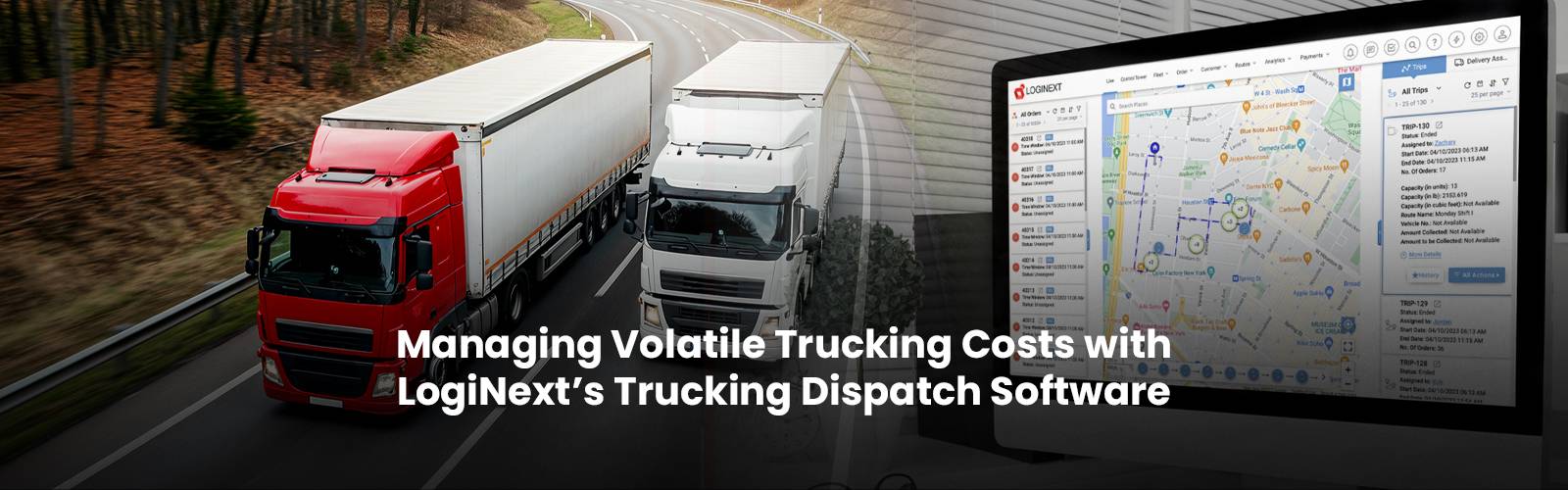
Managing Volatile Trucking Costs with LogiNext’s Trucking Dispatch Software
Trucking costs have always been subject to cyclicality; however, the volatility of late has truly brought cost control to the top of every logistics agenda. Fuel prices change each week, spot rates are constantly on the move, and driver wages continue upward. Against this backdrop, trucking dispatch software is no longer just a tool for routing or scheduling. But an important system in the management of cost risk throughout trucking operations. Without real-time intelligence at the level of dispatch, not even the best-planned logistics networks can protect margins.
Transportation now comprises more than 60 percent of the total cost of logistics, and trucking is the largest share of that. Even a 5 percent increase in operating costs can eradicate profitability for many carriers and enterprise shippers. Configuring dispatch operations for cost visibility and control used to be optional.
Why Trucking Costs Are Increasingly Volatile
A variety of structural forces is perpetuating sustained volatility in trucking operations.
Fuel accounts for 30-40% of all trucking costs, and diesel fuel has swung by double-digit percentage changes on a year-over-year basis. Driver compensation comprises almost one-third of operating expenses, fueled by ongoing labor shortages. Insurance premiums have risen by over 20% in the past five years, and maintenance outlays continue to climb as fleets operate older vehicles for longer periods of time.
Concurrently, the demand for freight became uneven. Rates on the spot market spike during capacity crunches and drop just as quickly when capacity rebalances. The result is the inability of static planning models to succeed. Because of this, trucking dispatching software has become pivotal for logistics leaders in stabilizing cost variations in real time.
The Cost Control Gap in Traditional Dispatching
Most logistics organizations still use dispatch models for stable markets. These models are heavily dependent on manual planning and fixed assumptions, resulting in predictable inefficiency.
Common cost leakages include excessive empty miles, underutilized vehicle capacity, inefficient routing, delayed response to disruptions, and a limited view into cost-per-trip performance. Even slight inefficiencies scale up rapidly. Industry studies show that empty miles alone can account for 15-20% of total fleet mileage. Thus, inflating fuel and labor costs directly.
A modern trucking dispatch solution does this by instead making continuous optimization take the place of static decision-making.
How LogiNext’s Trucking Dispatch Software Controls Costs
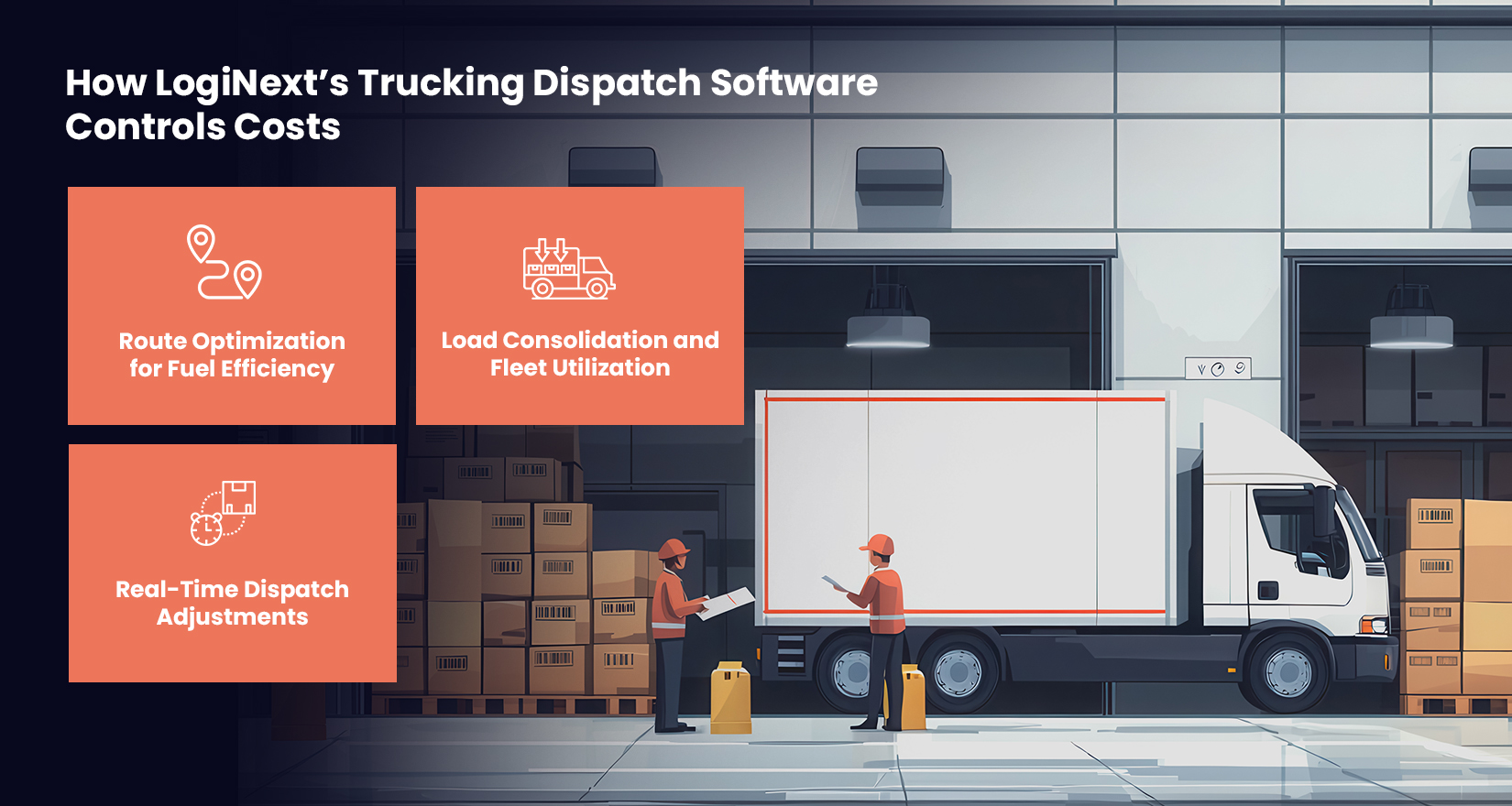
LogiNext is engineered as a trucking dispatch software for cost control, designed to reduce waste at every execution layer.
Route Optimization for Fuel Efficiency
Routing decisions have a direct impact on fuel consumption, driver hours, and asset productivity. LogiNext dynamically optimizes the routes using distance, real-time traffic, delivery windows, and vehicle constraints.
Smarter routing minimizes detours, congestion delays, and idle time. Fleets with intelligent routing typically see fuel savings of 10-15% and measurable reductions in delivery cycle times. This alone delivers immediate ROI for businesses deploying advanced trucking dispatching software.
Load Consolidation and Fleet Utilization
Underutilized capacity is one of the most prevalent margin killers in trucking. LogiNext consolidates compatible shipments and assigns them across the fleet efficiently.
By bettering the average load factor and decreasing empty miles, organizations can move higher volumes without adding vehicles. Improved utilization is a cornerstone benefit of any enterprise-grade trucking dispatch solution, especially in demand-fluctuating markets.
Real-Time Dispatch Adjustments
Planned routes rarely survive real-world conditions. Accidents, delays, missed pickups, and disruptions due to weather require immediate response.
LogiNext recalculates routes and assignments continuously in cases of disruptions. It prevents cascading delays, SLA penalties, and overtime costs. Capabilities for real-time adaptation separate modern trucking dispatch software from legacy dispatch tools.
Data-Driven Dispatching for Cost Visibility and Control
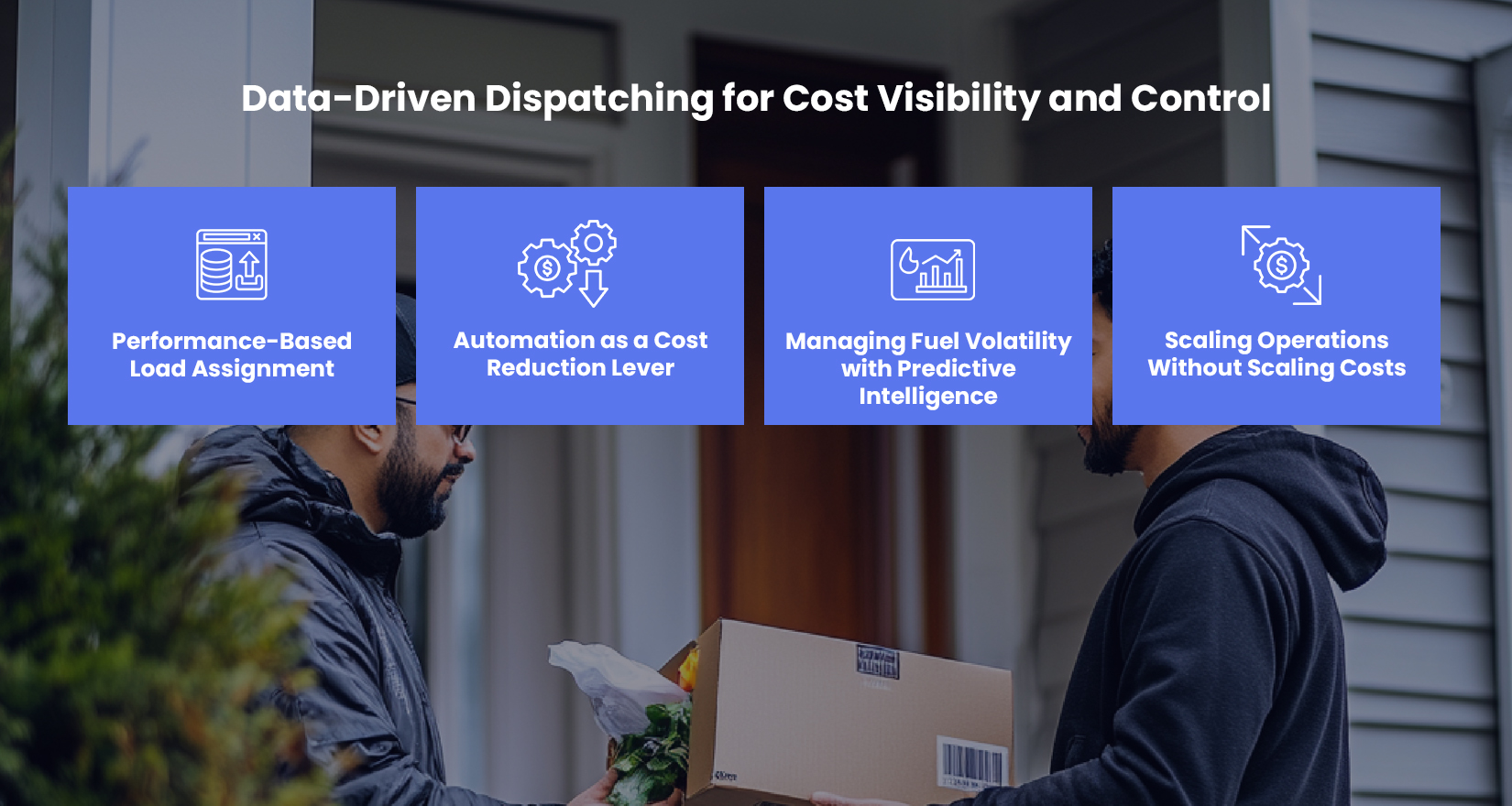
Beyond execution efficiency, cost control depends on visibility. Decisions about dispatch must be grounded in real data on operations, not intuition.
LogiNext provides in-depth insight into the cost per mile, cost per trip, cost per delivery, and cost performance by route, vehicle, or customer. This turns trucking software for logistics into a financial decision-support system rather than a task management tool.
Performance-Based Load Assignment
Historical performance data allows for smarter dispatching. LogiNext assigns loads based on prior efficiency, cost variance, and service performance.
Vehicles and routes with lower cost volatility are given priority for assignment. This serves to stabilize the average operating cost and reduce unexpected overruns. Performance-based dispatching is a key differentiating capability of trucking dispatch software for cost control.
Automation as a Cost Reduction Lever
Manual dispatching introduces errors, and it does not scale. As shipment volume increases, the cost of coordination grows disproportionately.
LogiNext automates load assignment, routing, driver communication, and status updates. Automation cuts administrative labor, dispatch errors, and improves response times. Industry benchmarks indicate that automation-driven dispatch can cut operational costs annually by 8-12%.
This automation-first approach is the very reason why modern enterprises are moving to centralized trucking dispatching software platforms.
Managing Fuel Volatility with Predictive Intelligence
Fuel still is the most volatile category of expenses. LogiNext adds predictive intelligence to routing and scheduling by factoring in mileage, idle time, congestion patterns, and stop density.
By minimizing wasteful fuel burn, fleets can cushion the shock of such price spikes. Most operations report an improvement in fuel efficiency by 5–10% or more after the implementation of intelligent dispatch systems. This further reinforces the financial value of trucking dispatch software for cost control.
Scaling Operations Without Scaling Costs
Growth usually magnifies inefficiency. Without intelligent systems, larger volume translates into more costs.
Logistic trucking software from LogiNext uses consistent optimization logic, irrespective of the fleet size or the complexity of the delivery. This helps your business scale operations without linear increases in fuel, labor, or administrative expenses.
Why Dispatch Is Now a Financial Control Function
Cost control no longer belongs to just the finance teams poring over spreadsheets and reports in modern logistics organizations. Dispatch has emerged as a front-line financial function, where day-to-day operational decisions directly shape margins. Each choice of routes, assignment of loads, and handling of exceptions comes with instantaneous cost implications that cumulate across fleets and delivery networks.
The data-driven trucking dispatch solution tightly connects route planning, load assignment, and real-time execution with financial performance. Every single dispatch decision influences fuel consumption, asset utilization, driver productivity, service levels, and customer profitability, often at that very moment, not after the invoice is raised or some quarter is closed.
Conclusion
Trucking cost volatility is not a temporary disruption. The price of fuel will continue to fluctuate. Capacity will be constrained. Operating margins will be under pressure.
LogiNext’s trucking dispatch software equips logistics teams with the intelligence, automation, and visibility required to operate profitably in this environment. By embedding cost control directly into the dispatch operations, organizations can move from reactive cost management to proactive financial discipline.
In a market where each mile counts, data-driven dispatching is no longer an option. It forms the basis of sustainable trucking operations. So, click on the red button and book a demo with LogiNext today!
56

|

|

|




@LogiNext