




AI Platform for Logistics Software: Automating the Supply Chain Smarter
Artificial Intelligence (AI) is not a future concept, it is already reshaping the global industries in the present. In the world of logistics AI has become a transformative force. Businesses today are under the pressure of delivering fast, cutting costs and managing disruptions. AI logistics software offers businesses the tools to do exactly that. It helps by automating expenses, predicting challenges and enabling smarter decision-making across the supply chain.
In a 2024 report by McKinsey, companies that have adopted AI in their logistics operations reported 15-20% reduction in transportation costs. They also reported a 30% improvement in inventory levels. These numbers are not something to be ignored, thereby making AI-powered platforms a necessity to stay competitive.
What is AI Logistics Software?
AI logistics software refers to digital platforms that integrate artificial intelligence to manage and optimize supply chains. Traditional systems operate on static rules and manual inputs, but AI systems learn from real-time data and historical patterns.
This enables the software to:
– Predict demand fluctuations with utmost accuracy.
– Real-time optimizing of routes by understanding traffic, weather and delivery constraints.
– Automating routing tasks like scheduling, invoicing, tracking.
– Enhancing visibility across the whole supply chain.
– Improve customer satisfaction through better delivery precision.
AI logistics system is not just executing instructions – it is thinking, adapting and evolving.
Why Businesses are Turning to AI Powered Logistics Software
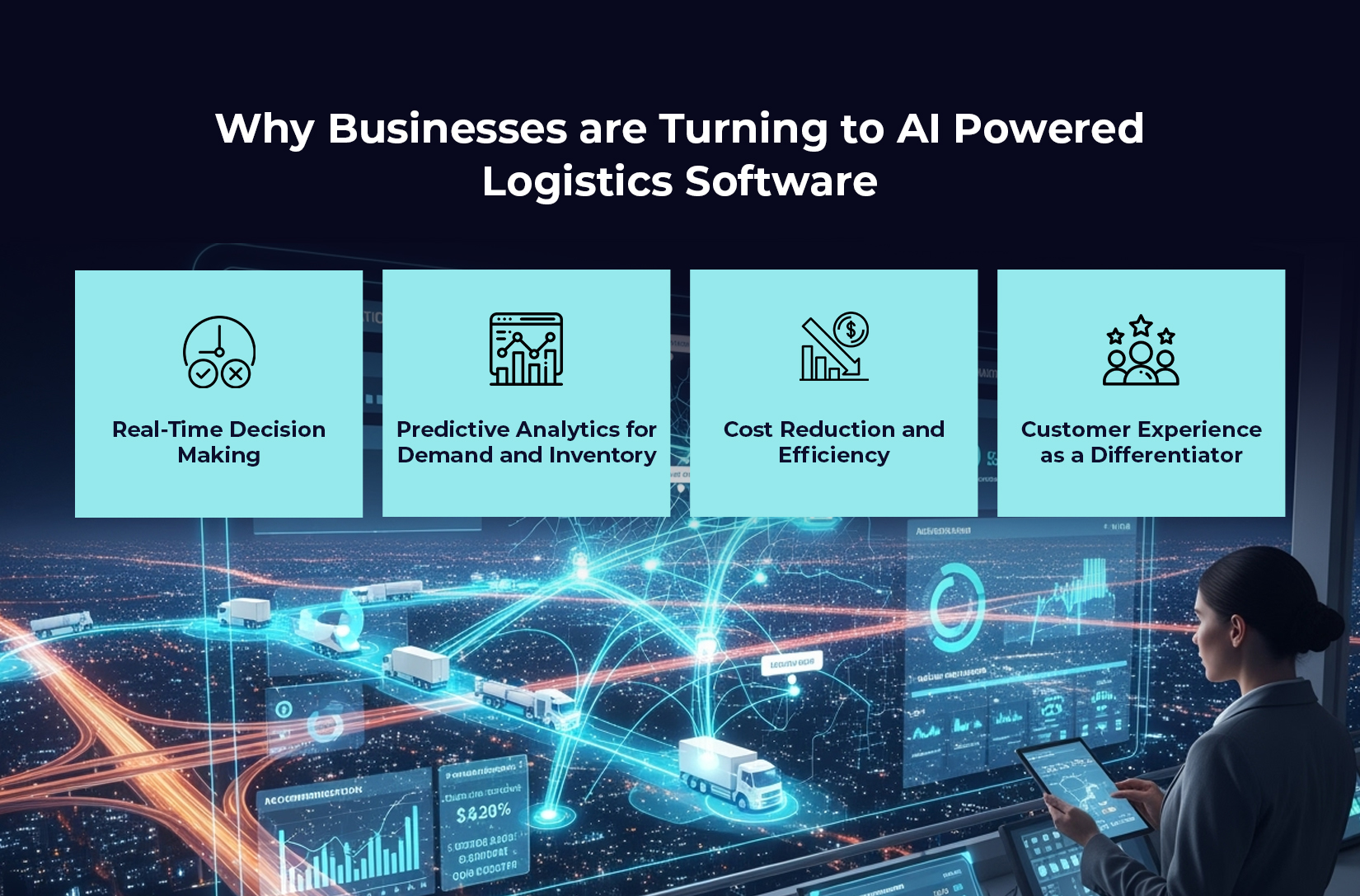
1. Real-Time Decision Making:
The traditional logistics model struggles with severe unpredictability. Such as, road closures, weather disruptions and sudden demand shifts. AI-powered logistics software is able to provide real-time analytics. This empowers companies to make data-driven decisions instantly. For example: if a storm disrupts a delivery route, the system will be able to automatically reroute vehicles, minimizing delays. This agility not only saves time but it also able to reduce the operational costs.
2. Predictive Analytics for Demand and Inventory:
Managing inventory has always been the act to balance – too much leads to wastage resources and too little leads to stockouts. AI enabled systems use predictive analytics to forecast demand with exceptional accuracy. A survey by Gartner found that over 60% of supply chain leaders using AI, found significant improvement in demand forecasting accuracy. This helps the business to reduce the excess stock, streamline warehouse operations and improve order fulfillment rates.
3. Cost Reduction and Efficiency:
Nearly 30% of logistics expenses are accounted by fuel. Company can reduce the fuel usage and delivery times by using AI-driven route optimization. By combining this with automated scheduling, it can lead to millions in annual savings for large-scale logistics providers.
4. Customer Experience as a Differentiator:
Today, the customer majorly demand for speed and transparency. AI logistics software has the ability to enable features like real-time shipment tracking, delivery notifications and accurate ETAs. These capabilities help in creating trust and customer loyalty, which is critical in a hyper-competitive markets.
Core Features of AI Logistics Systems
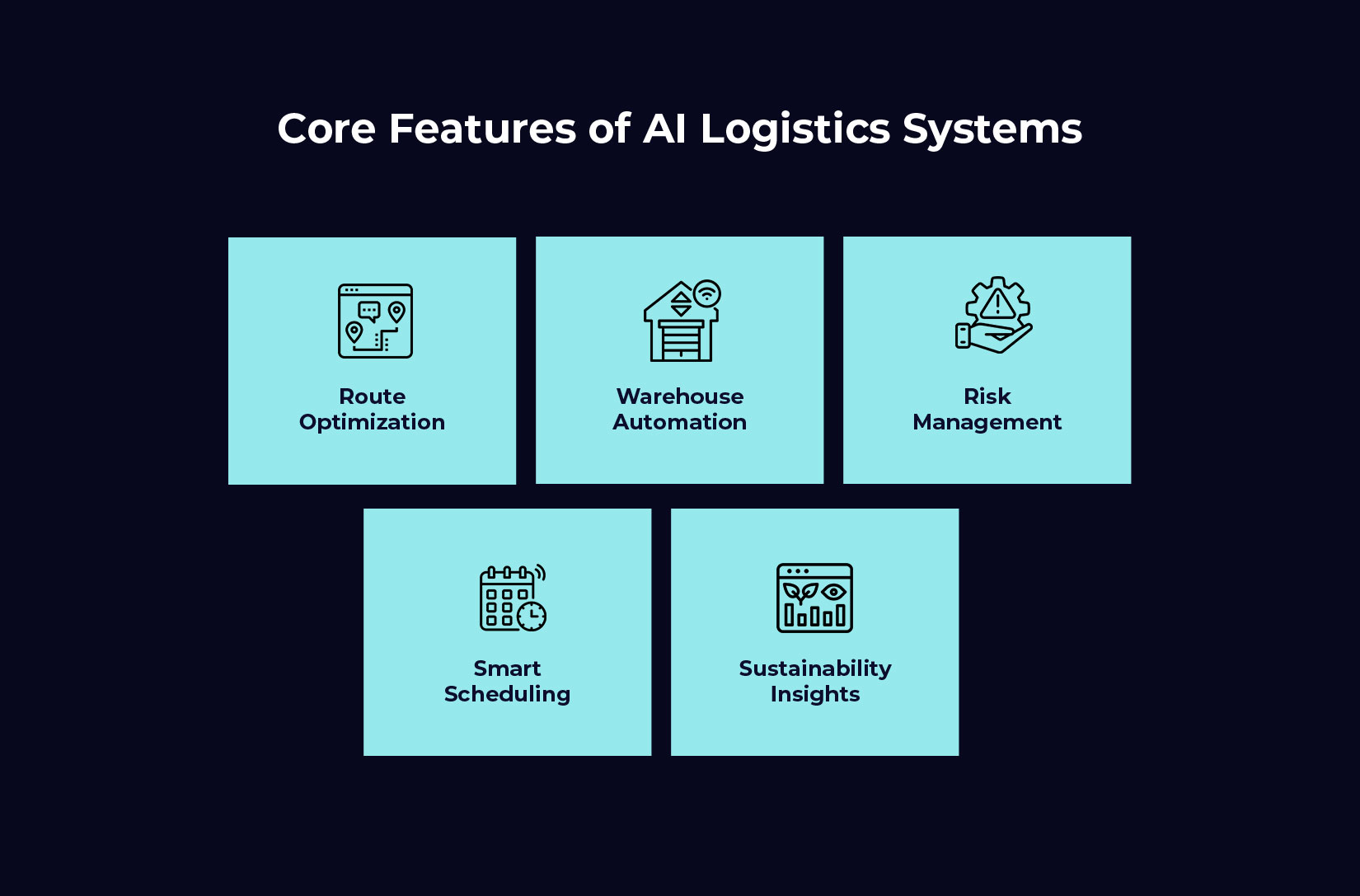
To understand how logistics software powered by AI transforms supply chains, let’s break down its core features:
1. Route Optimization:
Dynamic routing is able to analyze live traffic, fuel consumption and delivery constraints. By doing this, it reduces delays and maximizes fleet productivity.
2. Warehouse Automation:
Robotics combined with AI is a game changer for managing warehouses. It improves order picking, inventory tracking and storage utilization for faster fulfillment.
3. Risk Management:
AI has the ability to predict supply chain disruptions before they even occur. This enables businesses to create proactive contingency plans and be prepared for any disruptions.
4. Smart Scheduling:
The software is able to reduce the system downtime and improve operational efficiency. It does this by enabling automated dispatching, resource allocation and optimizing routes.
5. Sustainability Insights:
By optimizing routes, balancing load capacity and ensuring greener more sustainable logistical practices, AI helps organizations to cut emissions significantly.
Each of these features directly impacts the bottom line by reducing costs and improving reliability.
Real-World Use Cases of AI Powered Logistics Software
Last-Mile Delivery Optimization
The last mile accounts for up to 53% of total delivery costs. Companies like Amazon, DHL and others use AI logistics systems to plan efficient routes, reduce slack time and guarantee on-time deliveries.
Warehouse Robotics
Modern warehouses are now managed by AI-driven robots. They help in sorting, packaging and stock replenishment. For example, Ocado a UK-based grocery delivery giant, uses AI-powered warehouse automation to fulfill thousands of orders per hour.
Freight and Fleet Management
Operators in the field of transportation are implementing AI logistics software. This is done to gain real-time insights into the condition of their vehicles (including global positioning), predicting when maintenance may be needed over their lifetime and reducing the chances of a breakdown.
The Future of AI Logistics Software
The proliferation of AI in logistics will only continue to escalate, with MarketsandMarkets indicating that by 2030 the value of the global AI in logistics market will be valued at $41 billion, with a CAGR that is projected at 25%. This growth underscores the increasing need for automation, sustainability and resiliency in a global supply chain.
Furthermore, AI systems in logistics can be expected to focus on:
1. Autonomous Vehicles and Drones: Self-driving trucks and drones will introduce new delivery models that will decrease costs and improve delivery speed.
2. Blockchain Integration: Secure and transparent data sharing will engender trustworthy data sharing and traceability.
3. Sustainability Goals: AI will optimize resource usage to fulfill closely held carbon-neutral objective.
4. Hyper-Personalization: Predictive AI will deliver hyper-personalized customer logistics experiences.
Conclusion
The logistics supply chain is at a turning point. Traditional systems are not equipped to support the continued demands of today’s dynamic, global supply chains. AI logistics software provides the intelligence and automation needed to support better operations, manage costs, and improve the experience of the customer.
Companies who use logistics software as part of their AI strategy will provide streamlined processes. They will also be able to future proof their supply chains against certain disruptions. SFMS systems integrating AI enable machine augmentation not a replacement. AI provides the nuts and bolts of future, smarter supply chains.
It is no longer about replacement; it is about augmentation. AI empowers people to make smart decisions faster and at scale. In a highly competitive environment, AI, and other systems, can make the difference. So, to get the best AI powered logistics software you don’t need to wait anymore. Just click on the red button below and book a demo with LogiNext Solutions. Take the leap and empower your supply chain.
“” 95
 |  |  |




@LogiNext