




From Insights to Intelligence: How Logistics Management Is Entering a Smarter Era
For decades, logistics ran on hindsight. Reports were generated after deliveries were completed, delays were analysed after customers complained, and cost overruns after margins were already hit. That era is ending fast. Today, logistics management is moving from passive insights to active intelligence.
The shift is not cosmetic; it is structural. Logistics is no longer about knowing what happened; it is about knowing what will happen-and acting before it does. Driving this transformation is data maturity, full-blown artificial intelligence, and the rise of AI-powered logistics software that turns raw information into real-time decisions.
The Limits of Insight-Driven Logistics
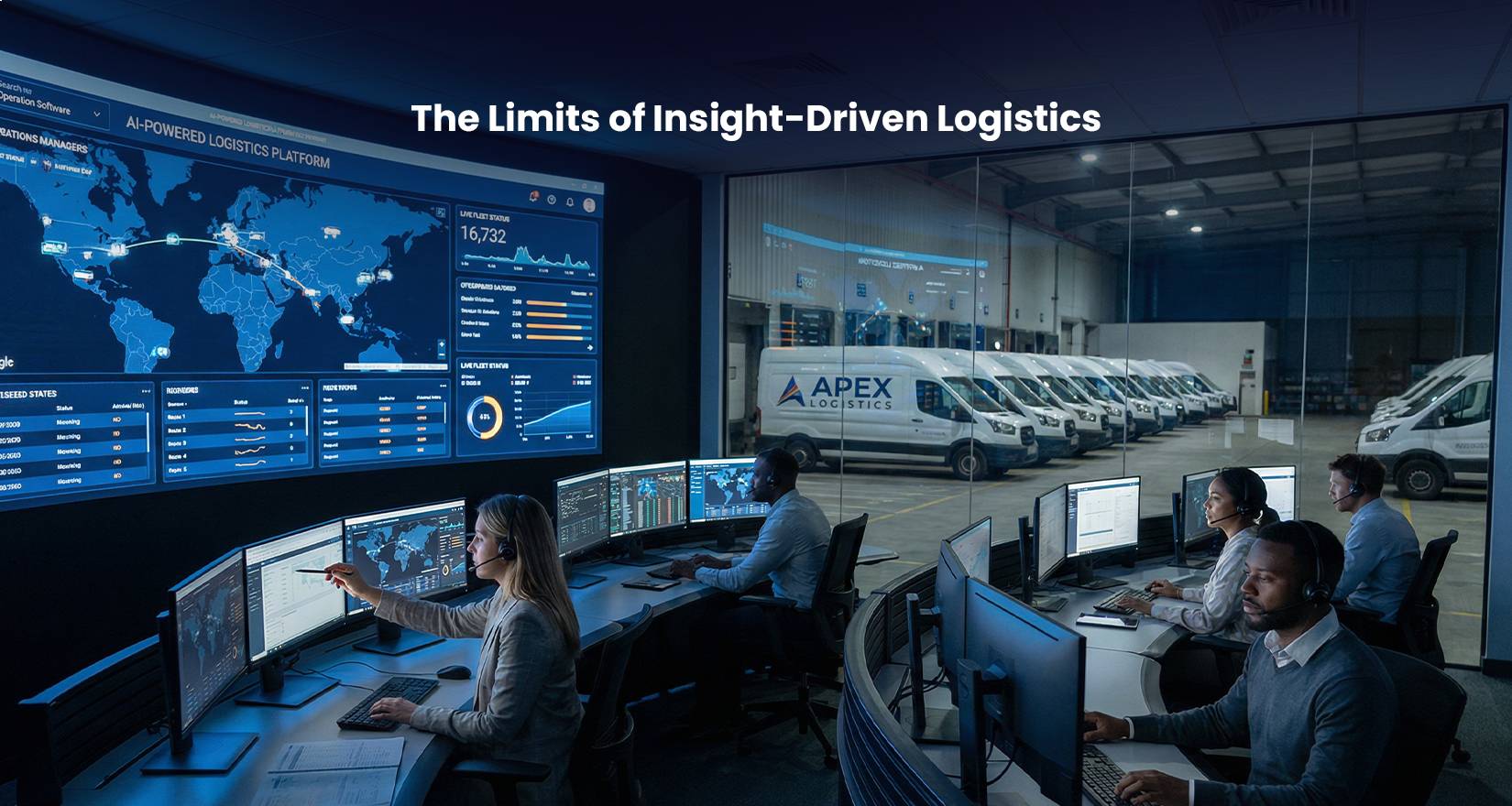
Traditional logistics management relied heavily on dashboards and historical data. KPIs like OTIF, delivery success rate, and average transit time were reviewed weekly or monthly. These insights were valuable, yet slow.
By the time an issue appeared on a report, the damage was already done.
According to Gartner, 50% of supply chain decisions in 2020 were grounded in static or historical data. That number is now rapidly declining as businesses realize that insights without action create no resilience.
Insight-driven logistics answers questions like:
– What went wrong?
– Where did the delays occur?
– Which routes underperformed?
But modern logistics management needs to answer tougher questions:
– What will go wrong next?
– Which orders are at risk right now?
– What is the fastest corrective action?
This is where intelligence takes over.
What Intelligence Really Means in Logistics
Intelligence in logistics is not about more data. It’s about better decisions.
Intelligent systems are ingesting live data from fleets, drivers, customers, traffic feeds, weather systems, and order management platforms. Constantly analysing patterns; learning from outcomes. Most importantly, they act.
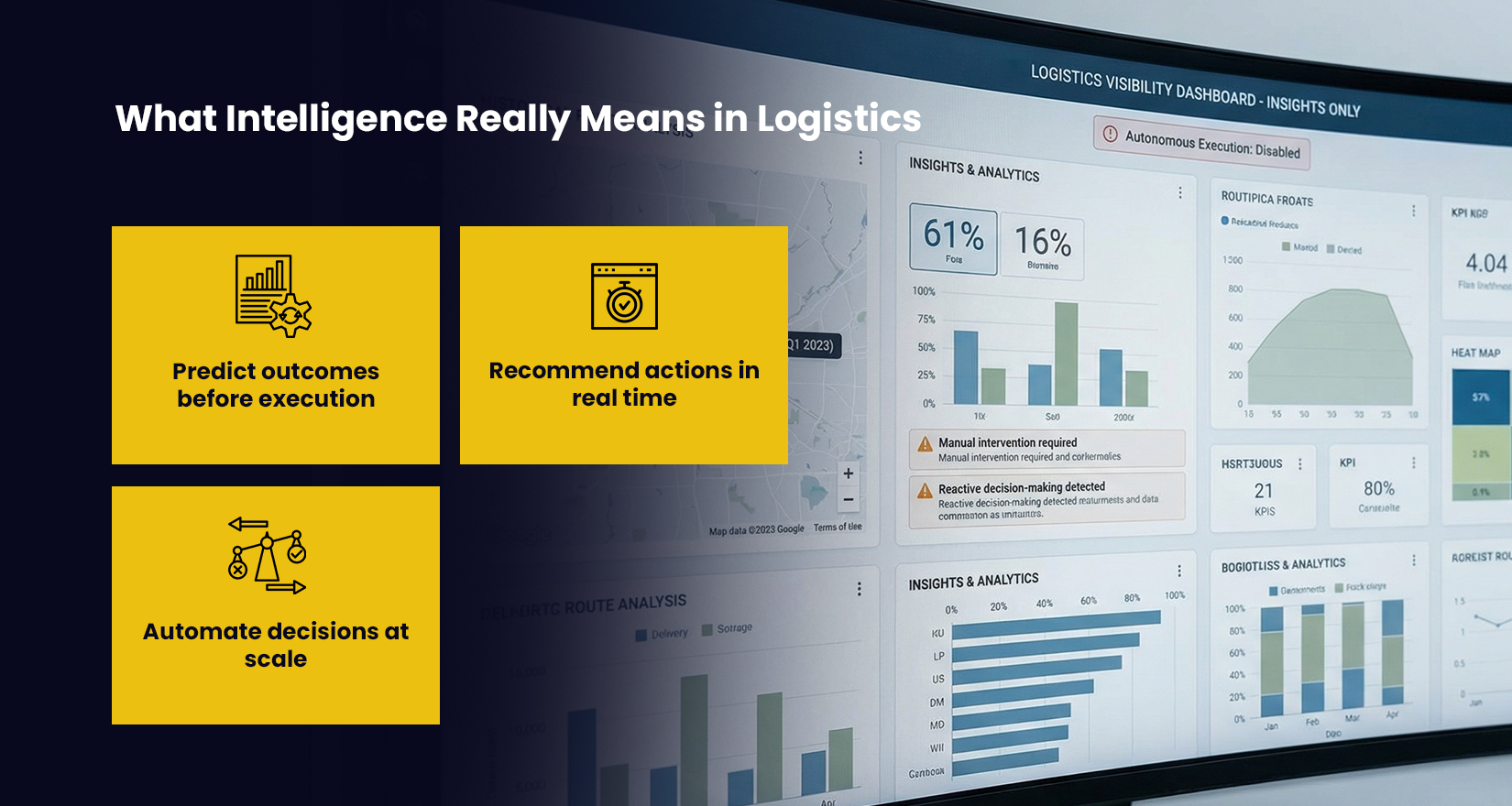
AI-powered logistics software does three things that their traditional systems cannot.
– Predict outcomes before execution.
– Recommend actions in real time.
– Automate decisions at scale.
McKinsey says AI-driven supply chains can cut logistics costs as much as 15% and increase service levels as much as 65%. None of these gains comes from dashboards. They come from intelligence embedded into operations.
The Role of AI in Modern Logistics Management
Artificial intelligence is the backbone of intelligent logistics management; it therefore allows systems to go beyond rules into reasoning.
Here is how AI powered logistics software is reshaping the industry:
Predictive Decision-Making:
AI models analyze millions of historical and live data points to predict delays, capacity shortages, and spikes in demand. ETAs are no longer static estimates. They are living predictions that update in real time.
This is a huge leap for logistics management, where uncertainty has always been the enemy.
Dynamic Route Optimisation:
The traditional routing engines are rule-based. Intelligent logistics software recalculates the route while considering real traffic congestion, driver availability, order priority, and service level agreements.
According to INRIX, traffic congestion costs businesses more than $74 billion annually in the U.S. alone. AI-based routing directly addresses this loss.
Autonomous Dispatching:
Dispatch decisions are once manual and experience-based. Today, logistics management software can assign orders automatically by analysing constraints in milliseconds.
This reduces human dependency and increases speed and consistency.
Why Data Alone Is No Longer Enough
Most enterprises already have data; what they lack is orchestration.
&nnsp;
Disconnected systems create fragmented views. Fleet data lives in one tool, order data lives in another, and customer updates sit elsewhere. To create intelligence, convergence is required.
Modern logistics software serves as a central nervous system. It connects streams of data, aligns stakeholders, and makes sure decisions are fully contextual.
Deloitte estimates that organisations utilising integrated logistics management platforms are 2.3 times more likely to outcompete others in delivery speed and cost efficiency. The message is clear. Data without intelligence is noise.
From Reactive to Proactive Logistics Operations
The greatest change in logistics management is behavioral.
There is reactive logistics, which responds to an exception after it has happened, while proactive logistics prevents the occurrence of exceptions altogether.
AI-powered logistics software picks up early warning signals:
– A driver running behind schedule.
– A fulfillment center nearing capacity.
– A high-risk delivery window.
A high-risk delivery window. Instead of escalation, the system triggers intervention. Routes are recalculated. Orders are reassigned. Customers are automatically notified. This is not optimization; this is anticipation.
Intelligence at Scale: Why Manual Control Breaks Down
As delivery networks expand, their complexity grows even faster.
Such factors as greater and more varied locations, larger sets of products involved, and more promises of faster delivery times lead to the need for more human supervision, but with this growth, the scale is not linear.
On the contrary, the intelligent logistics management systems support and enhance decision-making without corresponding increase in the number of employees. They create a standardized way of doing things based on best practices but still allow for adjusting to local conditions.
This is the reason why companies are merging their tools into a single software for logistics management instead of using separate solutions.
The global logistics software market, according to Statista, is projected to surpass $20 billion by 2027, mainly from the demand for AI and automation in the logistics sector.
Customer Experience Is Now a Logistics KPI
Logistics intelligence does not stop at operations. It directly impacts customer trust.
The delivery accuracy, early alerts and the ability to monitor the delivery process are all considered to be the minimum requirements. According to a Salesforce survey, 88% of clients indicate that the delivery experience plays a significant role in their repurchase decision.
Intelligent logistics software closes the gap between promise and performance. It aligns internal execution with external communication. In modern logistics management, customer experience is no longer downstream. It is designed into the system.
Final Thoughts
Logistics is no longer a cost center. It is a competitive weapon. The shift from insights to intelligence marks a defining moment for logistics management. Businesses that cling to reports and dashboards will always be one step behind. Those that invest in intelligent logistics software will operate in real time, at scale, with confidence.
The question is no longer whether AI powered logistics software will become standard. The question is how long companies can afford to wait before intelligence becomes a requirement, not an advantage.
In logistics, speed matters. Intelligence decides who has it. So, the best way to get the speed and intelligence is to take the leap of faith. By clicking on the red button below you are taking the first step to speed and intelligence. Book a demo with LogiNext today.
39

|

|

|




@LogiNext