





ETA Is the New KPI: Why Route Planning Matters More Than Ever
In today’s delivery-first economy, route planning has become far more than an operational necessity. It now directly influences customer satisfaction, delivery costs, and brand trust. Customers no longer evaluate delivery performance by how quickly an order ships out; they care about whether it arrives exactly when promised. That is why ETA has evolved into one of the most important logistics KPIs.
This shift is being driven by rising customer expectations. This is especially in the US market, where same-day and next-day delivery are increasingly becoming standard. Reports show that nearly 66% of consumers now expect same-day delivery, while failed deliveries significantly reduce repeat purchases.
As a result, businesses are turning to route planning software and smarter delivery systems. This is to improve ETA accuracy, optimize routes in real time, and reduce operational inefficiencies. Today, ETA is not just a delivery metric. It is a measure of customer trust.
Why ETA Has Become a Core Business Metric

ETA has become central to the delivery experience because modern customers expect visibility and precision. A vague “arriving by end of day” promise is no longer enough when customers are used to real-time tracking and live updates. The moment a delivery window is missed, the customer experience begins to break down.
This directly impacts customer support costs as well. Every missed or uncertain ETA often leads to support tickets, status calls, and frustration. Predictive ETA systems help reduce this by offering accurate, continuously updated delivery estimates. The ones, that adapt to real-world conditions like traffic, delays, and route changes.
For businesses, this means ETA is now tied to customer retention and profitability. A reliable ETA improves repeat purchase behavior, strengthens customer confidence, and reduces the cost burden created by delivery exceptions.
Traditional Routing Is No Longer Enough

Traditional routing methods, including manual scheduling and spreadsheet-based planning, are no longer capable of handling the complexity of modern logistics. Delivery operations today involve multiple moving variables such as live traffic, driver schedules, delivery time windows, stop density, and vehicle capacity constraints.
In the past, route planning focused largely on distance minimization. However, the shortest route does not always translate into the most efficient one. Urban congestion, road closures, and unpredictable traffic patterns can quickly make static routes ineffective.
This is why modern route planning systems rely on dynamic optimization. They continuously recalculate routes using real-time inputs, ensuring that ETAs remain accurate even when road conditions change unexpectedly. This level of agility has become essential in last-mile operations where delays directly impact customer experience.
Route Planning Is No Longer About . It Is About Accuracy
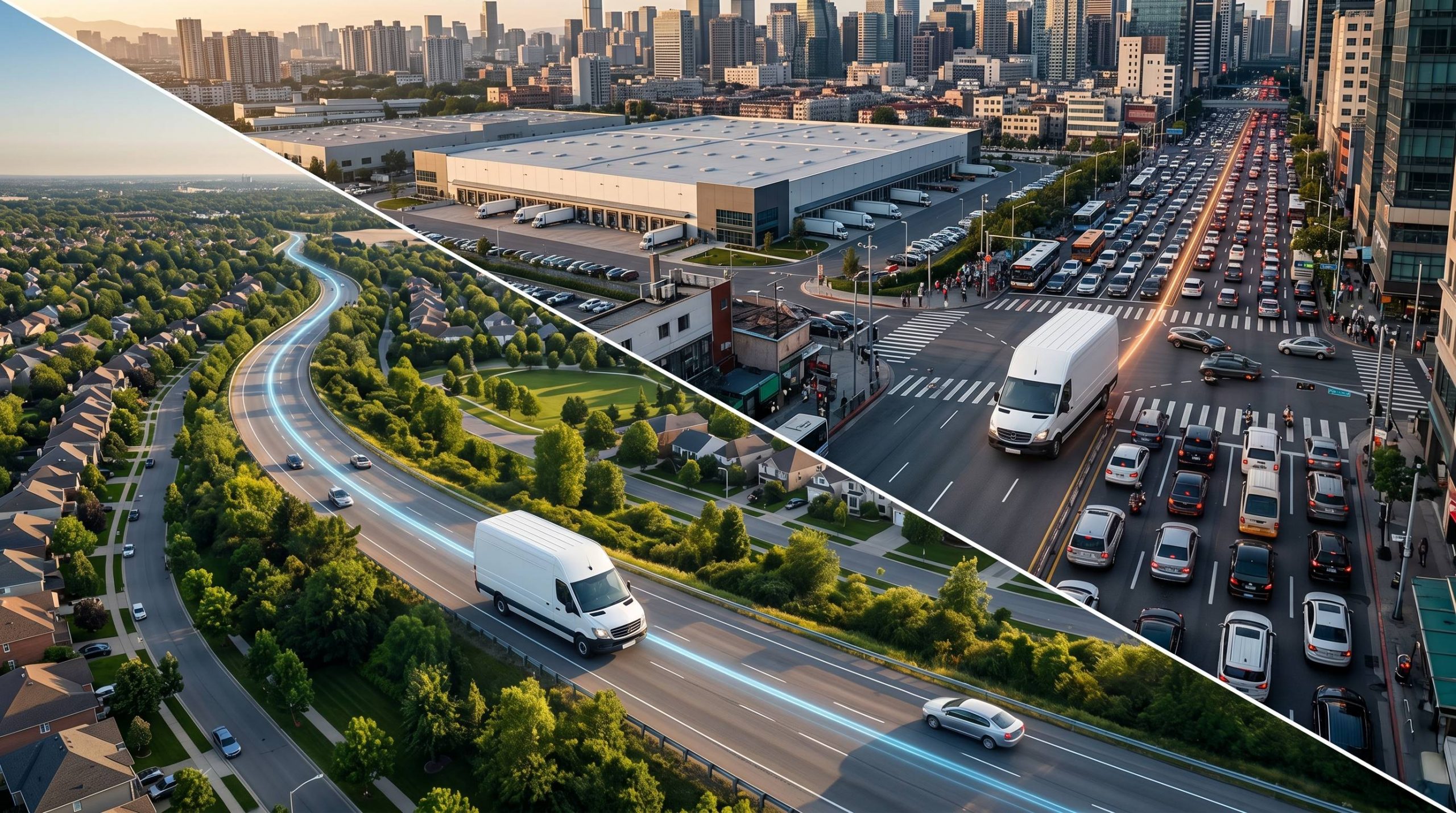
The biggest misconception in logistics is that faster delivery always comes from shorter routes. In reality, route efficiency today is driven by ETA accuracy rather than just mileage reduction. A slightly longer route may still be the better option if it avoids congestion and improves on-time performance.
A smart delivery route planner takes multiple operational factors into account, including traffic flow, historical delay patterns, driver performance, and time-sensitive deliveries. This allows businesses to create routes that prioritize reliability rather than just speed.
This shift is especially important because the last mile now accounts for more than 50% of total shipping costs, making every routing decision financially significant. Better route accuracy improves fleet utilization, reduces fuel waste, and minimizes repeat delivery attempts.
The Role of AI in Smarter ETA Predictions

This is where AI powered route planning is changing the game. AI-driven routing systems go beyond static maps and GPS navigation by using predictive intelligence to forecast delays before they happen.
These systems analyze historical traffic patterns, weather conditions, service times, driver behavior, and order density to improve ETA predictions continuously. Instead of reacting to disruptions, AI helps businesses anticipate them and proactively reroute deliveries.
For companies operating at scale, this means fewer missed SLAs and better customer communication. In highly competitive delivery markets, predictive routing has become one of the strongest differentiators. ETA is no longer just an estimate; it is now an intelligent promise powered by data and machine learning.
Why Route Planning Matters More Than Ever

The importance of delivery route planning has grown significantly due to rising order volumes and shrinking delivery windows. In the US alone, parcel volumes continue to grow rapidly, while customer patience continues to shrink.
At the same time, logistics costs are under immense pressure from fuel prices, labor costs, and urban congestion. Businesses cannot simply add more drivers or vehicles to solve this problem. That approach increases costs without necessarily improving ETA performance.
The smarter solution lies in better routing intelligence. Businesses that invest in the best route planner can optimize fleet movement, improve on-time delivery rates, and protect margins in an increasingly competitive market.
Conclusion: Turning ETA Into a Competitive Advantage with LogiNext
ETA is no longer just a logistics metric. It has become the KPI that defines delivery excellence. Customers remember delays, missed windows, and poor communication far more than they remember fast shipping claims.
This is why businesses need intelligent software for route planning that combines AI-driven optimization with real-time ETA visibility. Better routes lead to lower costs, stronger customer trust, and improved delivery performance at scale.
With LogiNext, businesses can transform route planning into a strategic advantage through smarter ETA predictions, dynamic routing, and real-time delivery intelligence. If your goal is to improve customer experience while optimizing costs, now is the time to make every ETA count with LogiNext. Click on the red button to book a demo today!
“”
 |  |  |




@LogiNext