



What Makes Route Planning Software Vital in Transportation?
As customer demands keep rising, businesses are seeking optimal delivery solutions. Logistics route planning software can help resolve delivery hassles and help operations managers get the best out of their fleets. As businesses turn to technology to handle delivery requirements, LogiNext has been helping with route planning, scheduling, and optimization. Route delivery software offers clean and intelligent routes that help drivers love their work.
Our best delivery route planner can help save time and handle multiple routes efficiently. Businesses that are into transportation and shipping utilize logistics route planning solutions to ensure faster and more efficient deliveries. Route delivery software additionally helps remove hurdles of delivery tracking and improve driver performance.
What is route planning?
Route planning is the process of getting the driver/ delivery associate to take the shortest and most sustainable route to complete the delivery. Advanced route planner makes use of artificial intelligence and machine learning to complete deliveries using the shortest route. This helps the business save fuel, reduce delivery time, decrease vehicle wear and tear, and improve customer satisfaction.
Key elements in route planning
We observed the need for route planning technology kept increasing, especially in the North America, Europe, and Asia Pacific markets. Here are the key elements that managers can improve their logistics operations using a route delivery software-
Fleet Management
Vehicle Inventory: Maintain an updated database of all available vehicles in the fleet, including their specifications, capacities, and availability.
Maintenance of Vehicle: Track vehicle maintenance schedules and ensure that vehicles are in optimal working condition to minimize breakdowns and delays.
Vehicle Assignment: Assign appropriate vehicles to drivers based on factors such as capacity, suitability for the route, and fuel efficiency.
Scheduling
Order Management: Receive and organize customer orders, including their delivery time windows, priorities, and special requirements for maximum customer satisfaction.
Time Slot Optimization: Schedule deliveries and pickups based on time windows, traffic conditions, driver availability, and route efficiency. These elements work together to optimize fleet operations, streamline scheduling, track routes in real-time, efficiently manage routes, and effectively manage drivers.
Load Balancing: Optimize the allocation of orders to drivers and vehicles to ensure balanced workloads and efficient resource utilization.
Scheduling
Real-Time GPS Tracking: Utilize GPS technology to track vehicles in real-time, monitor their locations, and update the route planning system accordingly.
Alerts and Notifications: Receive notifications or alerts when drivers deviate from planned routes, encounter delays, or require assistance.
Geofencing: Define virtual boundaries or geofences to track when vehicles enter or exit specific locations, such as customer sites or restricted areas.
Route Management
Route Optimization: Utilize route planning software to calculate the most efficient routes based on factors such as distance, traffic, and delivery constraints.
Dynamic Route Adjustments: Allow for real-time adjustments to routes based on changing conditions, such as traffic congestion, accidents, or last-minute order changes.
Alternative Routes:
Identify and provide alternative routes in case of road closures, construction, or other unexpected events that may affect the planned route.
Driver Management
Driver Availability and Assignments: Keep track of driver schedules, availability, and working hours to ensure efficient allocation of routes.
Monitoring Driver Performance: Monitor driver performance metrics, including on-time delivery rates, average travel time, and customer feedback, to identify areas for improvement.
Communication and Collaboration: Facilitate communication between drivers and dispatchers to relay route updates, customer requests, or changes in delivery instructions.
These elements work together to optimize fleet operations, streamline scheduling, track routes in real-time, efficiently manage routes, and effectively manage drivers.
Also Read: Benefits Of Using Multiple Delivery Route Planner Software
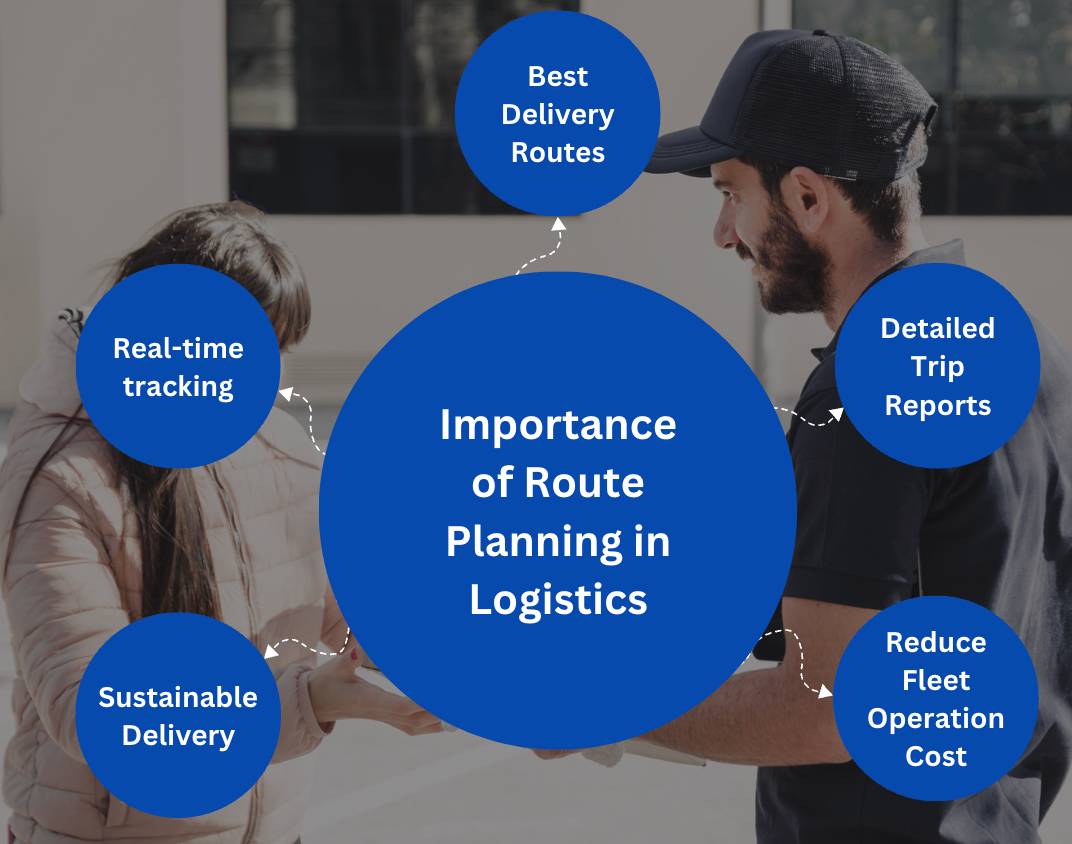
Why is route planning in logistics important?
Route delivery software will help improve fleet productivity without any additional cost. Logistics route planning and optimization software will be the key to unlocking true operational potential. Some of the best uses of route planning in logistics include-
Customers get real-time tracking information
As delivery associates plan their trips using a driver app, customers are alerted about their order movements. With customers no longer willing to wait for long to get orders delivered, this helps them be assured about their orders. As customer experience is crucial in the logistics industry, dynamic route planning system will be the key to offering customers real-time tracking information.
Best routes are selected for sustainable deliveries
Logistics route planner helps the business to plan the best routes to get orders delivered at the earliest. Creating routing strategies makes it easier to handle deliveries and help arrange and organize routes daily. This also makes the fleet more sustainable to handle deliveries that need to be delivered at multiple locations.
Reduce fleet operations cost
One of the biggest headaches for delivery businesses is the fleet operation cost. Whether it be the rising fuel costs or the need for vehicular maintenance. Dynamic route planning software will help drivers find the best routes to avoid traffic. This will help reduce vehicle idling, improve fleet efficiency, and reduce vehicle wear and tear. This also helps the operations team keep track of driver driving behavior and offers them instructions to reduce the fleet operations cost for last-mile deliveries.
Detailed routing reporting
Data will be the key for any business to grow. The use of route planning software will offer the operations team trip insights, helping improve delivery operations. Additionally, advanced route planning and scheduling will help improve the number of deliveries by 10-30% per month. This allows operations managers to develop better strategies to improve business profits.
What are the types of route planning?
The best logistics routing software for efficient delivery will help get the orders delivered using the best routes in a fast and accurate manner. Some of the key route planning types are as follows-
Dynamic route planning: Dynamic route planning helps drivers reroute on a real-time basis. The driver app will offer real-time driver location and can make changes to trips based on traffic levels or an emergency like a vehicle breakdown. Drivers can set the handover option from the driver app in case of vehicle breakdown to allocate orders to nearby drivers who would be traveling in the same route.
Hub to Hub route planning: A hub-to-hub route planning is crucial for middle-mile logistics. They are usually used to handle deliveries from one warehouse to another. Trips will be planned keeping the total distance between hubs, time for loading-unloading items from the vehicle, etc.
Which are the major industries that use route planning and optimization?
Any business that helps the customer deliver goods to stores should use logistics route planning and optimization software. Advanced route planning and optimization software helps with smart route planning to deliver within a set timeframe. It also helps the business ensure maximum customer satisfaction with timely delivery completion.
-Courier and postal service providers.
-Food delivery services.
-Grocery delivery services.
-eCommerce and retail delivery services.
-Pharmaceutical delivery services.
-Waste and garbage collection services.
-Transportation service providers.
Key features of route planner software:
Logistics route planner software can offer businesses several key features to help optimize their travel routes and navigate efficiently. Some of the key features for route planning:
1. Route Optimization:
Route delivery software analyzes multiple destinations and calculates the most efficient route. It considers factors such as distance, traffic conditions, road restrictions, and user preferences to help drivers reach the customer’s location at the earliest.
2. Multiple Stop Route Planning:
Route delivery software can plan for multiple stops along the route, allowing the operations managers to easily handle complex trips with various destinations easily planned for delivery.
3. Real-Time Traffic Updates:
The route planner software integrates with real-time traffic data to provide up-to-date information about traffic congestion, accidents, road closures, and alternative routes. This allows drivers to find the most sustainable routes to make deliveries faster for maximum customer satisfaction.
4. Interactive Maps:
The software displays interactive maps on the computer (PC) and mobile app that help visualize the planned route. Operations managers can zoom in and out, switch between different map views, and do more with planning trips.
5. Route Customization:
The operations team can customize their delivery routes by specifying preferences such as avoiding toll roads, highways, or certain areas. The software takes these preferences into account when calculating the optimal route.
6. Multi-Platform Accessibility:
Route planner software is often available on multiple platforms, including desktop computers, smartphones, and tablets. This allows the operations team to access their planned routes and directions from various devices.
7. Integration with Other Apps:
Route planner software can integrate with other applications or services, such as navigation apps, or vehicle tracking systems. This integration allows for seamless transfer of route information and enhances the overall user experience.
Benefits of the best logistics route mapping software for efficient delivery operations
Route mapping plays a crucial role in optimizing logistics operations. Here are some key benefits of route mapping for delivery operations:
1. Improve delivery efficiency:
Route mapping software helps identify the most efficient routes, considering factors such as distance, traffic conditions, and delivery schedules. By optimizing routes, logistics operations can reduce travel time, fuel consumption, and overall costs.
2. Enhanced delivery accuracy:
Accurate route mapping enables logistics companies to provide more reliable and on-time deliveries. By taking into account traffic conditions, road restrictions, and other variables, one can plan routes to avoid delays and ensure timely deliveries.
3. Reduced delivery cost:
Optimizing routes with route mapping software can lead to cost savings. By minimizing travel distances, fuel consumption, and vehicle wear and tear, businesses can reduce operational expenses and increase profitability.
4. Increased fleet productivity:
Efficient route planning and mapping help improve fleet productivity by maximizing the number of deliveries or pickups that can be completed within a given time frame. This results in better fleet utilization and allows businesses to handle more orders or shipments.
5. Better customer service:
With accurate route mapping, logistics companies can provide more precise delivery estimates to customers. This improves transparency and allows customers to plan accordingly. Additionally, timely deliveries and optimized routes contribute to improving customer satisfaction and loyalty.
6. Real-time tracking:
Many route mapping software solutions provide real-time tracking capabilities, allowing logistics operations managers to monitor vehicles and shipments throughout the delivery process. This helps in maintaining visibility, identifying potential issues, and providing real-time updates to the customer.
6. Compliance and Safety:
Route mapping software can consider specific road restrictions, regulations, or hazardous areas to ensure compliance and safety. By avoiding restricted zones or dangerous routes, logistics operations managers can reduce the risk of accidents or violations.
7. Data analysis and Insights:
Route mapping software often provides data and analytics capabilities, allowing businesses to analyze historical route data, identify trends, and make data-driven decisions. This helps in identifying areas for improvement, optimizing routes further, and enhancing overall operational efficiency.
8. Scalability and Flexibility:
Route mapping software can handle complex logistics operations with multiple stops, varying vehicle capacities, and changing delivery requirements. This helps logistics companies adapt to evolving business needs and efficiently manage their operations.
9. Integration with other systems:
Route mapping software can integrate with other logistics systems, such as fleet management, warehouse management, or order management systems. This integration streamlines data flow and improves overall operational visibility and efficiency.
Frequently Asked Questions:
Q. What are the benefits of a multi-stop route planner?
– Minimize Travel Distance
– Flexibility and Customization
– Enhanced Productivity
– Optimized Resource Allocation
– Sustainable Deliveries
Q. Which is the best route planner app?
LogiNext Mile is the best route planner app as it helps streamline operations and enhance productivity. The benefits include efficient route optimization, real-time tracking, a user-friendly interface, security, scalability, integration capabilities, reports and analytics, and customer support.
Q. What is a delivery route planner app?
A delivery route planner app is a mobile application that helps optimize and streamline delivery routes for businesses. It calculates the most efficient sequence of stops, considering factors like distance, traffic, and time constraints. This helps delivery drivers navigate between multiple destinations in the shortest time possible, reducing fuel costs and enhancing overall productivity.
Q. How to do route planning for logistics?
Route planning for logistics involves two key steps- Optimize Efficiency and Minimize Costs. Firstly, gather data on delivery locations, traffic patterns, and vehicle capabilities. Next, use route optimization software to generate the most efficient routes, considering factors like distance, traffic conditions, and delivery windows. After generating routes, review and adjust them as needed to accommodate any last-minute changes or unexpected circumstances. Finally, communicate the optimized routes to drivers on the driver app for successful implementation. By following these steps, logistics companies can streamline their operations and improve overall efficiency in route planning.
Q. What is the route planning process in logistics?
The route planning process in logistics involves several key steps. First, gather data on delivery locations, vehicle capabilities, and traffic conditions. Next, utilize route optimization software to generate efficient routes based on factors like distance and delivery windows. Then, review and adjust routes as needed to accommodate any changes or unexpected events. Finally, communicate optimized routes to drivers and provide them with navigation tools for successful implementation. This systematic approach helps logistics companies streamline operations and enhance overall efficiency in route planning.
Q. How does delivery driver route planner software help your business?
Delivery driver route planner software helps your business by optimizing delivery routes, reducing travel time and fuel costs, increasing driver productivity, and improving overall operational efficiency. It ensures timely and accurate deliveries, enhances customer satisfaction, and provides real-time tracking and analytics for better decision-making and resource allocation.
Q. Do you provide a free trial for route planning software?
Yes, we offer a 14-day free trial to all our prospects to check our route planning software.
Logistics route planning and optimization software is what your operation needs
Now’s the best time to get route planning software installed to improve business overall. Not only will it save delivery time but also help in processing more orders and improve profits. LogiNext’s route planning software will help businesses automate route planning, get optimized routes scheduled for drivers, offer real-time tracking, and ensure timely deliveries. Click on the red button below to connect with an expert. Know more about our route delivery software now!
“”
 |  |  |




@LogiNext