




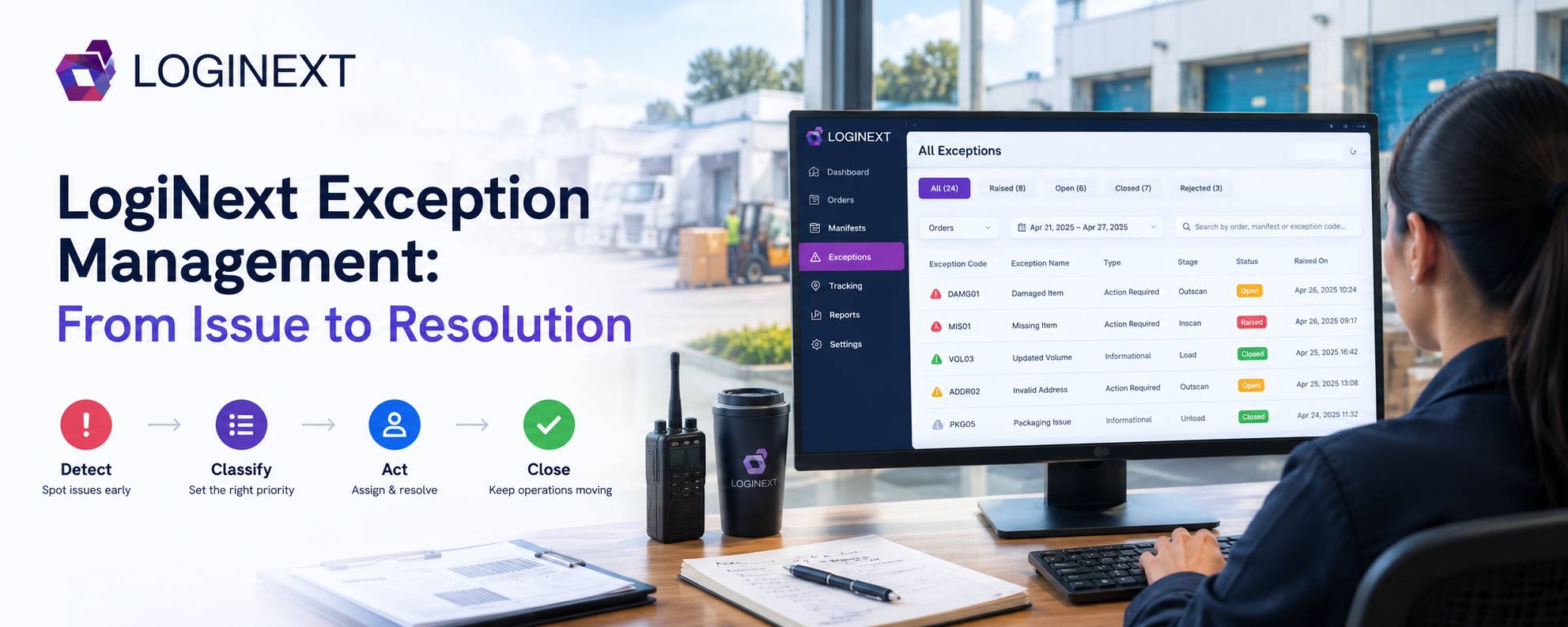
LogiNext Exception Management: From Issue to Resolution
Things go wrong in logistics. A package gets damaged, a scan is missed, a manifest contains an issue or an operational event changes the plan. The problem is not the exception, its what happens after they do. Effective exception management gives teams a structured way to identify issues, decide whether they need action, assign the right response and track them through resolution.
McKinsey’s research found that nine in ten supply chain leaders encountered supply chain challenges in 2024. Thereby, highlighting just how normal disruption has become.
That makes exception handling less of a fire-fighting exercise and more of an operational discipline. Here’s how logistics teams can build that discipline with the right processes and technology.
Key Takeaways
- Exception management should standardize what goes wrong and what happens next.
- Use event-based exceptions for repeatable, system-detectable conditions.
- Keep Action Required exceptions limited to issues that genuinely need to block progress.
- Configure exceptions at the stage where teams can act.
- Use a centralized exception queue to create ownership and visibility.
- Record resolution and rejection notes to build a stronger audit trail.
- Use exception mapping selectively to automate downstream outcomes.
- The right exception management software should connect issue detection with operational action, not simply generate more alerts.
What Is Exception Management in Logistics?
Exception management is the process of identifying, classifying, tracking and resolving operational issues that fall outside a defined logistics workflow.
A good exception management process answers five questions quickly:
- What went wrong?
- Where in the process did it happen?
- Does someone need to act?
- What should happen next?
- Has the issue actually been resolved?
Without those answers, an exception is just another notification competing for attention.
This matters because logistics performance depends heavily on visibility and timeliness. The World Bank’s Logistics Performance Index explicitly considers the ability to track and trace consignments and whether shipments reach consignees within the expected timeframe as core dimensions of logistics performance.
Why Does Exception Management Matter?
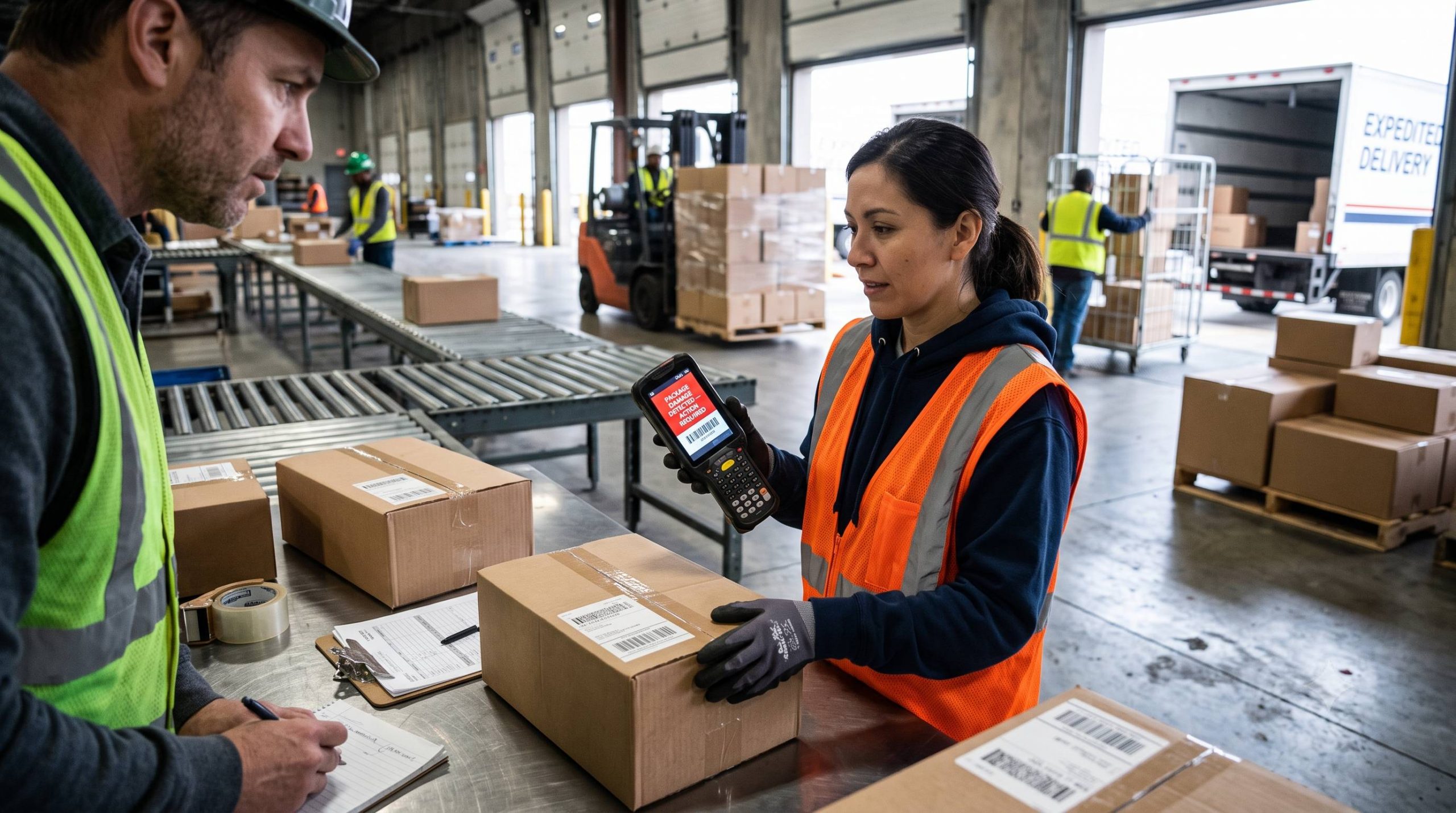
A missed exception rarely stays in one place.
A damaged package that isn’t flagged at the right scan point can become a failed delivery. A wrong operational status can create customer confusion. An issue buried in a spreadsheet or message thread can remain unresolved while the shipment keeps moving.
Effective exception management helps logistics teams:
- Prevent downstream rework by catching issues at the right stage.
- Prioritize critical problems instead of treating every alert equally.
- Create accountability by recording who handled an exception and what action was taken.
- Automate repeatable checks through event-based triggers.
- Improve operational visibility with a centralized exception queue.
- Standardize outcomes so similar problems receive similar treatment.
The importance of fixing problems at handoff points is particularly significant. McKinsey estimates that inefficient interactions between parties in logistics can account for 13% to 19% of logistics costs, representing up to $95 billion in annual losses in the U.S. economy.
In other words, the handoff isn’t the end of the process. It’s often where the trouble starts.
7 Best Practices for Exception Management
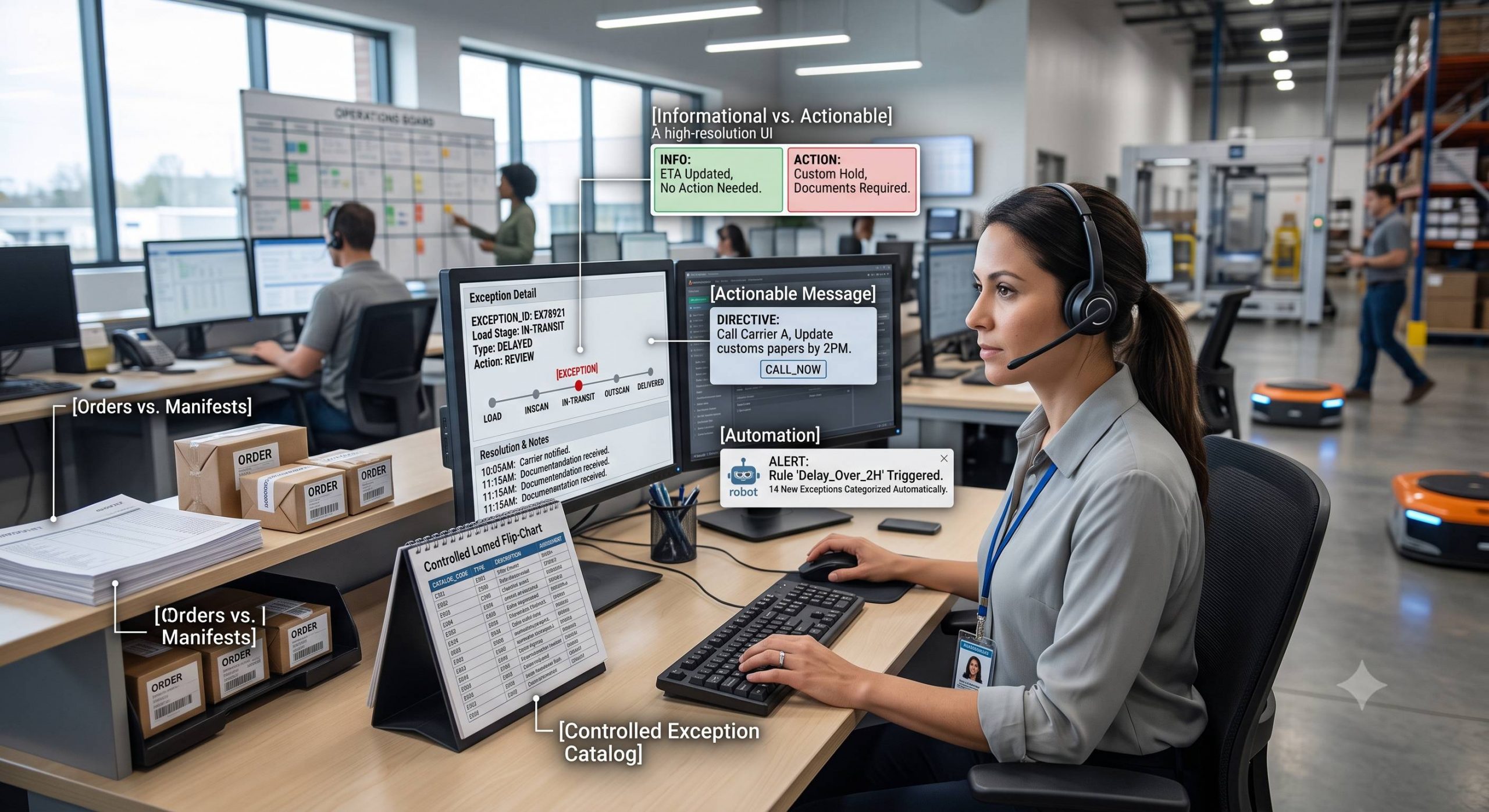
1. Build a Controlled Exception Catalog:
Start with a defined list of exceptions rather than letting every team create its own terminology.
In LogiNext, teams can manage exceptions through Settings → Exception Configuration. Codes and names can be standardized, while obsolete exceptions can be made inactive or removed.
The goal is simple: when two people encounter the same problem, they should be able to identify it the same way.
2. Automate What the System Can Detect:
Not every exception needs a human to raise it. LogiNext supports Manual and Event-based exceptions. Manual exceptions work well for issues a person discovers, such as damaged items. Event-based exceptions can automatically trigger when a configured event occurs.
That’s where automated exception handling becomes useful. If the system can reliably detect a repeatable condition, let it raise the flag instead of asking an employee to remember it.
For events that aren’t available in the configuration, LogiNext can support additional event setup.
3. Separate Information From Action:
Not every problem deserves a giant operational stop sign. LogiNext lets teams classify exceptions as Informational or Action Required.
- Informational: Records an issue that can be acknowledged while operations continue.
- Action Required: Blocks progress until the exception is resolved or rejected.
Use Action Required selectively. If everything blocks the workflow, nothing feels exceptional anymore.
4. Trigger Exceptions At the Right Stage:
An exception is only useful if it appears when someone can actually do something about it. LogiNext allows exceptions to be associated with stages including:
- Load
- Unload
- Inscan
- Outscan
For example, if a problem can be identified and corrected during an Inscan, surfacing it after the shipment has already moved further through the network defeats the purpose.
Good exception handling is therefore not just about what gets flagged. It’s about when.
5. Define the Right Operational Scope:
Exceptions can apply to Orders, Manifests, or Both. When appropriate, LogiNext also lets teams apply an exception raised on a Manifest to its constituent Orders.
This needs some restraint. If an issue affects one order, don’t turn it into a network-wide notification just because the software lets you.
6. Turn Exceptions into Accountable Work:
Once an exception is raised, it needs an owner and an outcome.
In LogiNext, teams can use Orders → All Exceptions to filter exceptions by status, including Raised, Open, Closed, and Rejected. They can also filter by Orders or Manifests and use date-based filtering.
When an exception is resolved or rejected, users can add Notes that are stored in Activity Logs. That creates something valuable: an operational record of not only what went wrong, but also what was done about it.
7. Standardize Downstream Outcomes:
The best exception management software doesn’t stop at recording problems. It can help connect an exception to the next operational action.
Through Settings → Order Lifecycle Management, LogiNext’s Exception Mapping allows configured exceptions to map to outcomes such as Attempted Pickup or Attempted Delivery, along with the corresponding reason.
Use this carefully. Only map high-confidence scenarios where the exception reliably represents the downstream outcome. Automation is helpful; automated mistakes are still mistakes.
How LogiNext Makes Exception Management More Practical
LogiNext brings exception configuration, operational workflows, monitoring, and resolution into the same logistics environment. Instead of maintaining exceptions as disconnected alerts, teams can:
- Configure standardized exceptions.
- Choose between manual and event-based triggers.
- Define whether an exception blocks progress.
- Control where exceptions appear in the workflow.
- Apply them to orders, manifests, or constituents.
- Monitor exceptions through a centralized queue.
- Resolve or reject exceptions with documented notes.
- Maintain an audit trail through Activity Logs.
- Map specific exceptions to downstream lifecycle outcomes.
This approach fits into a broader logistics orchestration software strategy, where planning, execution, visibility, and exception handling work together instead of living in separate operational silos.
And the case for connected workflows is getting stronger. McKinsey reported that 79% of surveyed supply chain leaders had implemented dashboards for end-to-end visibility in one of its Supply Chain Pulse surveys. Thus, showing how visibility has moved from a nice-to-have toward a core operational capability.
Also Read: How LogiNext Delivery Software Brings Clarity to Driver Run Sheets
Frequently Asked Questions
1. What is exception management in logistics?
Exception management is the process of identifying, classifying, tracking, and resolving logistics issues that fall outside normal operational workflows.
2. Why is exception management important?
It helps logistics teams identify problems earlier, prioritize critical issues, reduce rework, improve accountability, and maintain better operational visibility.
3. What is the difference between manual and event-based exceptions?
Manual exceptions are raised by authorized users when they identify an issue. Event-based exceptions are triggered automatically when a configured system event occurs.
4. What are Action Required exceptions?
Action Required exceptions are issues that block workflow progress until they are resolved or rejected. They should generally be reserved for problems that genuinely require intervention.
5. How can logistics software automate exception handling?
Logistics software can automatically detect configured events, raise exceptions, route them into centralized queues, and in some cases map exceptions to downstream operational outcomes.
Conclusion
Logistics will never run without exceptions. The goal isn’t to eliminate every unexpected event. It’s to make sure the right exception is identified, surfaced at the right moment, assigned the right action, and closed with a clear record.
That requires more than an alert system. It requires structured workflows, automation where it makes sense, operational visibility, and accountability from detection to resolution.
With LogiNext, logistics teams can bring these capabilities together in one environment, turning exception handling from reactive firefighting into a more consistent part of daily operations.
Want to see how LogiNext can help your team manage exceptions and streamline logistics workflows? Explore LogiNext’s platform and see what smarter exception management can look like for your operations.
Like
 |  |  |




@LogiNext