




How to Reduce Shipping Costs with Intelligent Logistics Software
For most logistics businesses, reducing shipping costs is no longer about finding cheaper carriers. The bigger opportunity lies in lowering cost per drop, the total cost of completing each successful delivery. Every unnecessary mile, failed delivery, traffic delay, or underutilized vehicle increases this cost. Intelligent logistics software helps businesses tackle these inefficiencies. It does by using AI, automation, and real-time data to optimize delivery operations from planning to proof of delivery.
Instead of making isolated improvements, it continuously identifies smarter ways to move goods faster, use resources more efficiently, and reduce operational costs. This article explores how intelligent logistics systems lower cost per drop, the key cost drivers to address, and the best practices for building a more cost-efficient delivery network.
Key Takeaways
- Cost per drop is a better measure of delivery efficiency than shipping costs alone.
- Intelligent logistics software lowers costs by optimizing routes, dispatch, fleet utilization, and delivery execution.
- AI helps reduce unnecessary mileage, failed deliveries, and manual planning.
- Continuous optimization delivers long-term savings without compromising service quality.
What Is Intelligent Logistics Software?
Intelligent logistics software is an AI-powered platform that uses real-time data to optimize transportation planning, route execution, dispatch, and fleet operations. Thereby, helping businesses reduce costs while improving delivery performance.
Unlike traditional logistics software, which often relies on fixed routes and manual decision-making, an AI powered intelligent logistics software adapts to changing conditions throughout the day. It considers factors such as traffic, delivery windows, vehicle capacity, driver availability, and customer priorities before recommending the most efficient course of action.
A modern intelligent logistics solution typically includes:
- AI-powered route optimization
- Automated dispatching
- Predictive ETAs
- Real-time fleet visibility
- Electronic Proof of Delivery (ePOD)
- Vehicle capacity optimization
- Delivery analytics and performance dashboards
The result is a delivery operation that completes more orders with fewer resources.
Why Cost per Drop Is the KPI That Matters
Shipping costs tell you how much you’re spending. Cost per drop tells you how efficiently you’re delivering.
It measures the average cost of completing a successful delivery by accounting for fuel, driver wages, vehicle usage, planning, and operational overhead. Because it reflects the entire delivery process, it is one of the most effective KPIs for identifying opportunities to improve profitability.
Consider a fleet completing 20,000 deliveries each month. Reducing cost per drop by just $1 results in annual savings of $240,000 without adding a single new customer. Small operational improvements become significant when applied across thousands of deliveries.
This is why many logistics leaders now focus less on reducing individual expenses and more on improving the overall efficiency of every delivery.
What Drives Cost per Drop?
Fuel prices often receive the most attention, but they are only one part of the equation. In most operations, cost per drop increases because of multiple inefficiencies working together.
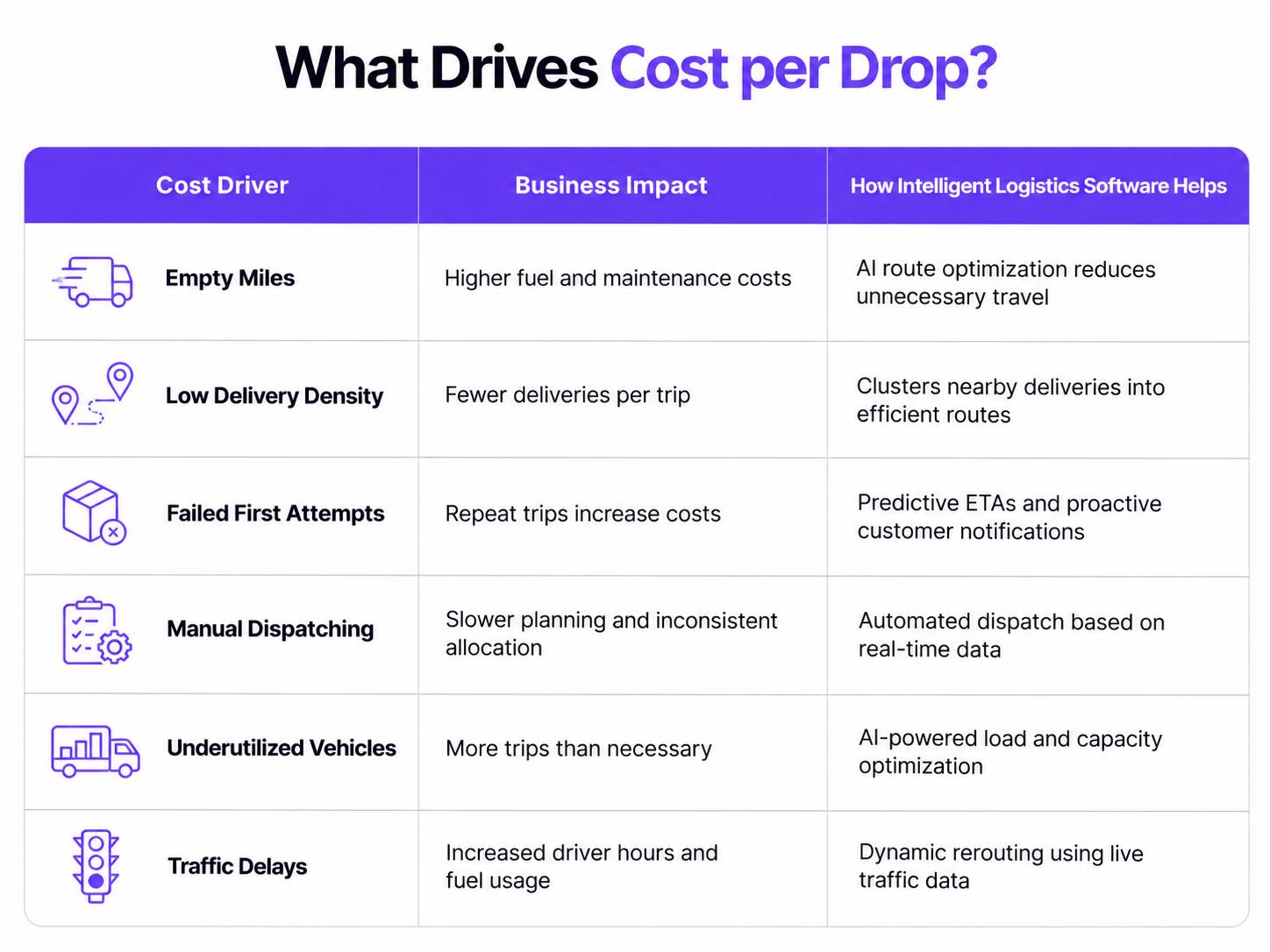
Rather than solving these challenges individually, an intelligent logistics system continuously analyzes live operational data to improve decisions across the delivery journey. The result is lower cost per drop, better fleet utilization, and a more resilient logistics operation.
Why Businesses Are Investing in Intelligent Logistics Software
Rising customer expectations and increasing transportation costs are putting greater pressure on delivery operations. According to the Capgemini Research Institute, the last mile accounts for approximately 41% of total supply chain costs. Thereby, making it one of the largest opportunities for cost optimization.
Meanwhile, McKinsey & Company estimates that poor coordination across logistics handoffs contributes to 13% to 19% of total logistics costs. While greater automation and real-time visibility can significantly reduce operational waste.
These findings highlight an important shift. Businesses are no longer reducing shipping costs by cutting service levels. They are investing in intelligent logistics software to make every delivery more efficient. Thus, improving cost per drop without compromising the customer experience.
How Intelligent Logistics Software Reduces Cost per Drop
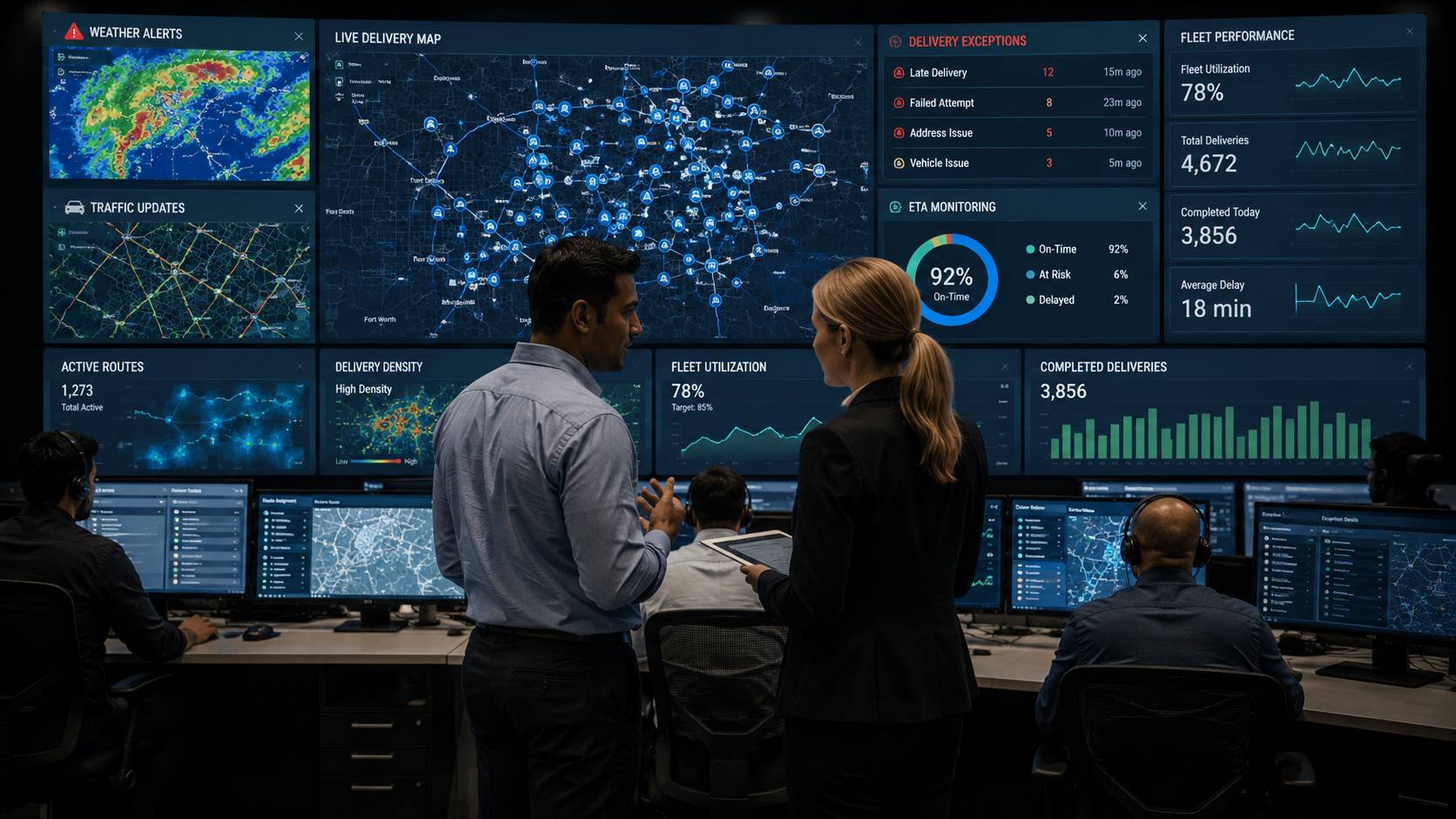
Lowering cost per drop isn’t the result of a single improvement. It comes from optimizing every stage of the delivery journey. An intelligent logistics system uses AI and real-time data to eliminate inefficiencies that increase shipping costs.
Real-Time Route Optimization
Dynamic routing adapts to traffic, weather, delivery windows, and new orders, helping drivers avoid delays, reduce unnecessary mileage, and complete more deliveries in less time.
Better Vehicle Utilization
AI analyzes delivery locations, shipment volumes, and vehicle capacity to maximize load utilization, reducing the number of trips required.
Automated Dispatch
Instead of relying on manual planning, an AI powered intelligent logistics software automatically assigns deliveries based on driver availability, vehicle capacity, proximity, and SLAs. This helps in improving productivity and reducing planning time.
Fewer Failed Deliveries
Predictive ETAs, automated customer notifications, real-time tracking, and electronic Proof of Delivery (ePOD) improve first-attempt delivery success. Thus, eliminating costly repeat visits.
How to Choose Intelligent Logistics Software That Lowers Cost per Drop
Not every logistics platform delivers measurable cost savings. The right solution should do more than digitize operations. It should continuously identify opportunities to reduce cost per drop through AI, automation, and real-time decision-making.
When evaluating an intelligent logistics solution, look for capabilities that directly impact delivery costs, including:
- AI-powered route optimization to reduce mileage and fuel consumption.
- Automated dispatch that assigns the right driver and vehicle for every delivery.
- Real-time fleet visibility to quickly respond to delays and disruptions.
- Predictive ETAs and proactive customer notifications to reduce failed deliveries.
- ePOD to eliminate paperwork and speed up delivery confirmation.
- Analytics dashboards that track KPIs such as cost per drop, vehicle utilization, on-time delivery, and first-attempt delivery success.
- Seamless integration with ERP, WMS, and TMS platforms to eliminate data silos.
Solutions like LogiNext combine these capabilities into a single platform, helping businesses optimize planning, execution, and post-delivery analysis. Rather than improving one part of the delivery process, they enable continuous optimization across the entire logistics operation.
Frequently Asked Questions
What is intelligent logistics software?
It uses AI, automation, and real-time data to optimize transportation planning, routing, dispatch, and delivery operations.
How does it reduce shopping costs?
By reducing unnecessary mileage, improving fleet utilization, automating dispatch, and minimizing failed deliveries.
What is the cost per drop?
Cost per drop is the average cost of completing one successful delivery, including fuel, labor, vehicle, and operational expenses.
Who should use an intelligent logistics system?
Retailers, manufacturers, distributors, e-commerce businesses, and logistics providers managing delivery operations.
Conclusion
Reducing shipping costs is about improving operational efficiency, not simply cutting expenses. By optimizing routes, automating dispatch, improving fleet utilization, and providing real-time visibility, intelligent logistics software helps businesses lower cost per drop while maintaining reliable service levels.
As delivery networks become more complex, organizations that adopt data-driven logistics will be better equipped to control costs, improve performance, and scale efficiently. If reducing transportation costs is a priority, measuring and improving cost per drop is the best place to start.
“” 37
 |  |  |




@LogiNext