



Logistics Route Optimisation: How AI Cuts Cost-Per-Drop by Up to 30%
Route optimisation software helps businesses reduce delivery costs by planning smarter routes, adapting to real-time disruptions, and improving fleet efficiency. Instead of simply finding the shortest path, AI-powered route optimization considers traffic, vehicle capacity, driver availability, delivery priorities, and customer time windows to make better routing decisions.
The result is lower cost-per-drop, improved fleet utilisation, and more deliveries completed with the same resources. In this article, we’ll explore how AI-powered route optimisation works, why traditional planning falls short, and where businesses achieve measurable cost savings.
Key Takeaways
- AI-powered route optimisation reduces cost-per-drop by improving routing decisions in real time.
- The biggest savings come from better fleet utilisation, lower fuel consumption, and fewer failed deliveries.
- Traditional route planning cannot adapt quickly to changing delivery conditions.
- Modern route optimisation software helps businesses improve efficiency without ex̵panding fleet size.
Why Is Cost-Per-Drop Rising?
Every logistics leader is under pressure to deliver faster while spending less. Fuel prices fluctuate, labour costs continue to rise, and customers expect same-day or next-day delivery without paying extra. At the same time, fleets are handling more orders, tighter delivery windows, and increasingly complex delivery networks.
Traditional planning methods assume the day’s plan will remain unchanged. Reality is very different. Drivers call in sick, traffic builds unexpectedly, customers modify delivery preferences, and urgent orders appear after vehicles have already left the depot. Without intelligent logistics route optimisation, dispatchers spend more time reacting to disruptions than improving operations.
According to McKinsey, transportation accounts for nearly half of total logistics costs for many businesses. Thereby, making routing one of the biggest opportunities to improve profitability.
How Does AI Route Optimisation Work?
AI-powered route optimisation continuously analyses real-time and historical data to identify the most efficient routes while adapting to changing conditions throughout the day.
Unlike traditional routing tools that create a single plan before vehicles leave the depot, AI continuously evaluates thousands of variables, including:
- Live traffic conditions
- Driver availability
- Vehicle capacity
- Customer priorities
- Delivery time windows
- Weather conditions
- Road restrictions
- Fuel consumption patterns
If traffic increases, deliveries are delayed, or new orders are added during the day, routes are recalculated within seconds to minimise disruption. Every completed delivery also helps the system learn from operational data, improving future planning and strengthening overall logistics route management.
Why Traditional Route Planning Falls Short
Many businesses still rely on fixed routes or basic GPS navigation. That approach works only until traffic, weather, vehicle issues, or customer requests disrupt the day’s schedule. Once that happens, dispatchers are forced to manually reshuffle deliveries, increasing planning time and reducing efficiency.
Traditional route planning asks, “What’s the shortest route?” AI-powered route optimisation asks, “What’s the smartest route based on what’s happening right now?”
That often means balancing driver workloads, reducing idle time, avoiding congestion, prioritising high-value deliveries, and improving vehicle utilisation instead of simply cutting driving distance.
Where Do Transportation Costs Add Up?
Reducing transportation costs isn’t just about lowering fuel consumption. Every route impacts driver productivity, fleet utilisation, maintenance expenses, delivery reliability, and planning efficiency. While some costs are fixed, many can be significantly reduced through intelligent route optimisation.
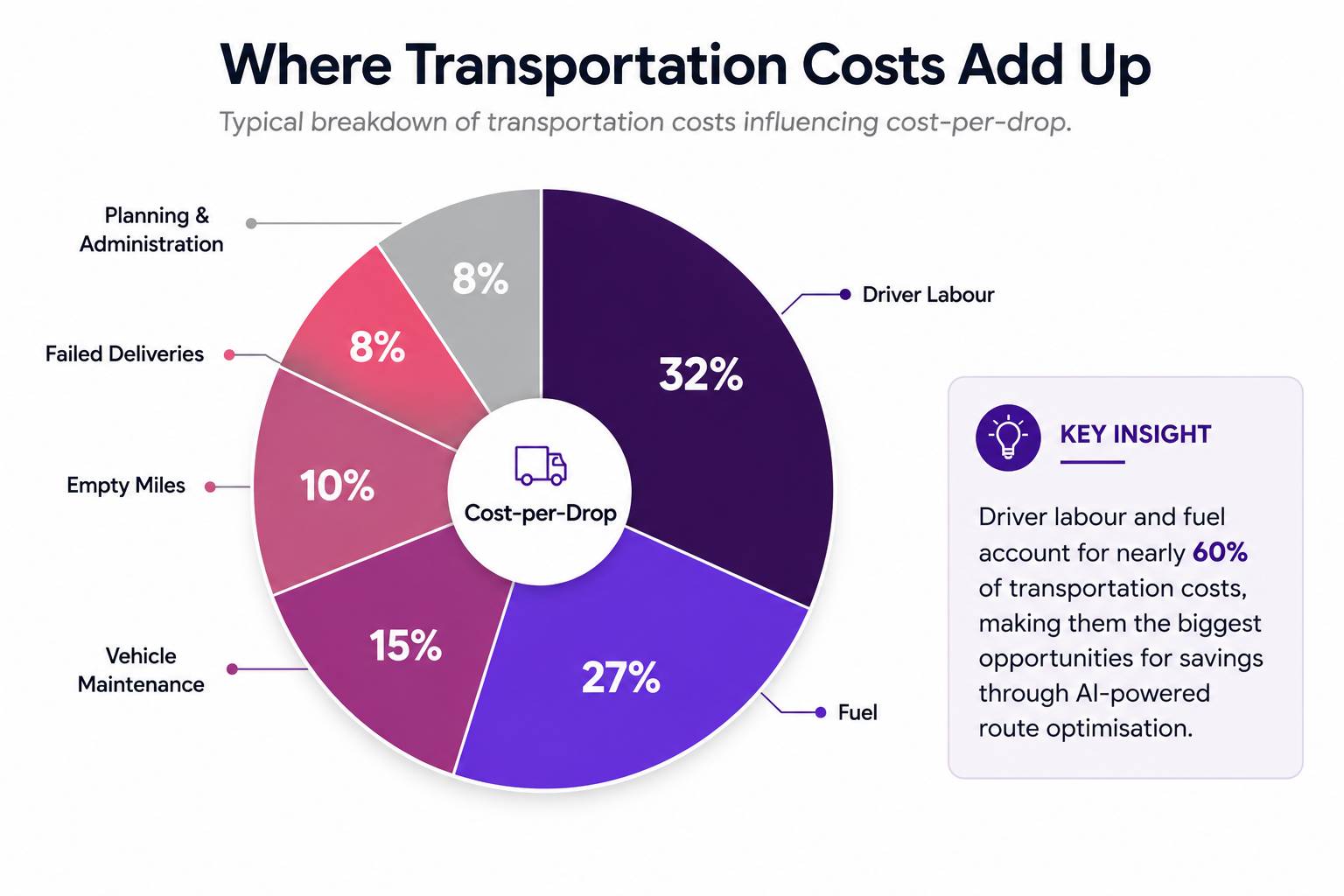
Typical Breakdown of Transportation Costs
What the Chart Tells Us
Driver labour and fuel account for nearly 60% of transportation costs, making them the biggest opportunities for operational savings. Empty miles, failed deliveries, and manual dispatching represent avoidable costs that AI-powered route optimisation can significantly reduce. Rather than improving a single metric, AI helps optimise the entire delivery operation, creating cumulative savings that lower overall cost-per-drop.
How AI Reduces Cost-Per-Drop
The biggest savings from route optimisation software don’t come from simply reducing driving distance. They come from improving every stage of delivery execution.
Better Fleet Utilisation
AI balances workloads across vehicles instead of overloading a few drivers while leaving others underutilised. This enables businesses to complete more deliveries without increasing fleet size.
Lower Fuel Consumption
Optimised routes reduce unnecessary mileage, idle time, and repeated road segments. According to the International Energy Agency, digital fleet optimisation plays an important role in reducing fuel consumption and transport emissions.
Higher Driver Productivity
Drivers spend less time in traffic, searching for addresses, or making unnecessary detours. Smarter routing allows more deliveries to be completed within the same shift while reducing driver fatigue.
Fewer Failed Deliveries
AI considers customer preferences, delivery windows, and historical delivery success when planning routes. This reduces repeat delivery attempts, saving both time and operational costs.
Smarter Dispatcher Decisions
Instead of manually adjusting hundreds of deliveries throughout the day, dispatchers receive intelligent recommendations or allow the system to automate route changes, improving logistics route management while reducing planning effort.
What Do Industry Benchmarks Show?
The impact of AI-powered route optimisation is no longer theoretical. Organisations across industries are reporting measurable improvements in delivery performance and operating costs.
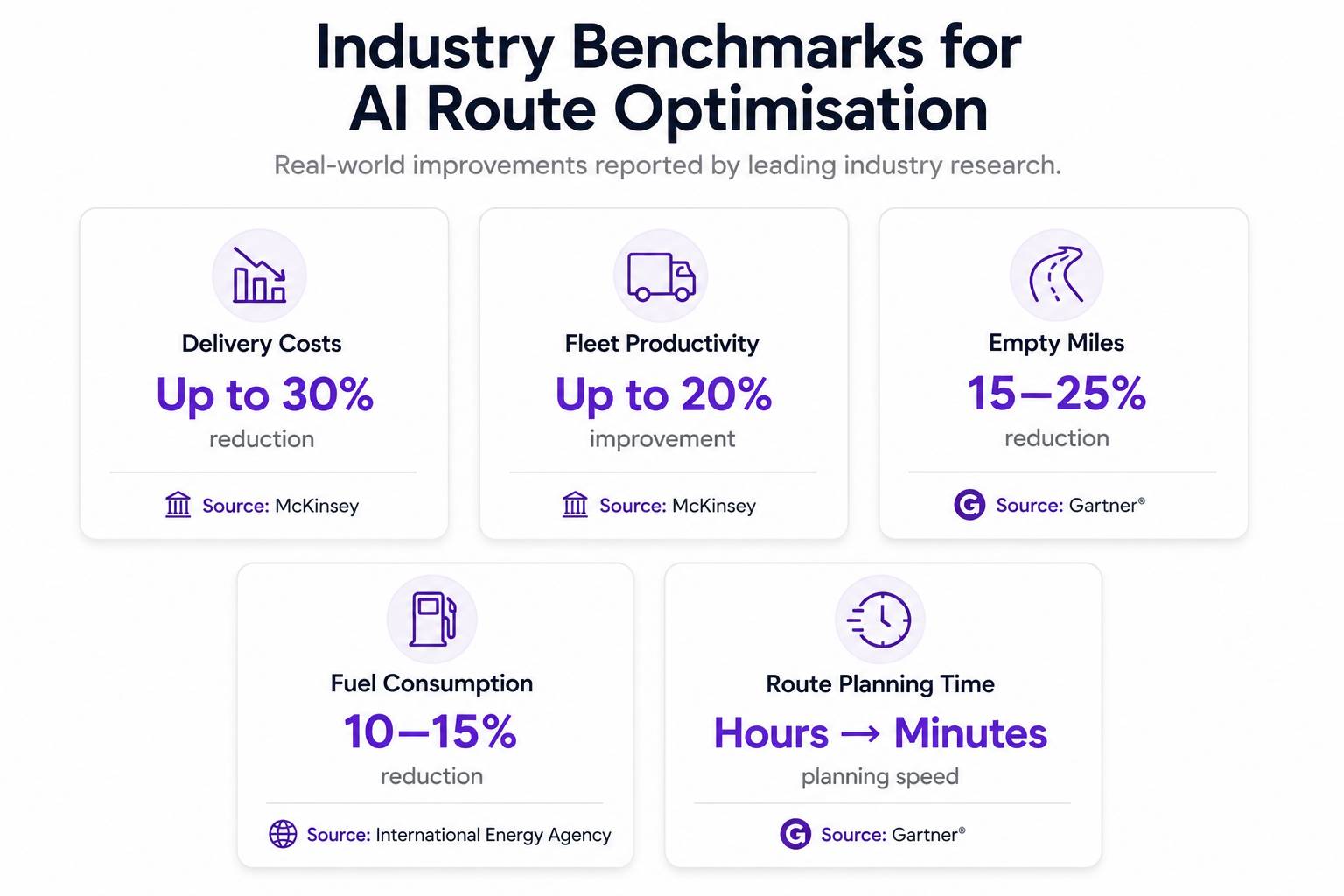
While results vary based on fleet size and operational maturity, one trend remains consistent: businesses using AI-powered route optimisation achieve lower operating costs while improving service levels.
What Should You Look for in Route Optimisation Software?
Not every solution delivers the same value. When evaluating route optimisation software, look for capabilities such as:
- AI-driven dynamic routing
- Real-time route recalculation
- Multi-vehicle optimisation
- Capacity-aware planning
- Predictive ETAs
- Driver performance analytics
- Electronic proof of delivery (ePOD)
- ERP, TMS, WMS, and CRM integrations
The most effective platforms become part of a broader logistics ecosystem, helping businesses optimise planning, execution, and customer experience from a single solution.
Frequently Asked Questions
1. What is route optimisation software?
Route optimisation software identifies the most efficient delivery routes. It does by considering factors such as traffic, delivery windows, driver schedules, and vehicle capacity.
2. How does AI improve route planning?
AI continuously analyses operational data and recalculates routes in real time, helping businesses respond quickly to disruptions and changing delivery priorities.
3. Can route optimisation software reduce fuel costs?
Yes. By reducing unnecessary mileage, idle time, and empty miles, AI-powered routing can significantly lower fuel consumption.
4. Who should use route optimisation software?
Any business managing multiple deliveries, field service operations, or vehicle fleets can benefit. Particularly organisations focused on improving last-mile delivery efficiency.
Conclusion
As delivery networks become more complex, finding the shortest route is no longer enough. Businesses need routing decisions that adapt to real-world conditions, optimise fleet performance, and reduce operating costs throughout the day.
AI-powered route optimisation software enables logistics teams to lower cost-per-drop, improve delivery reliability, and make better use of existing resources. For organisations looking to build a more efficient and scalable delivery operation, investing in intelligent route optimisation is becoming a competitive advantage rather than just a technology upgrade.
Solutions like LogiNext combine AI-driven route optimisation, predictive ETAs, real-time visibility, and enterprise automation to help businesses optimise every delivery from planning to proof of delivery. Whether you’re managing hundreds or thousands of daily orders, the right platform can turn smarter routes into measurable business outcomes.
“” 32
 |  |  |




@LogiNext